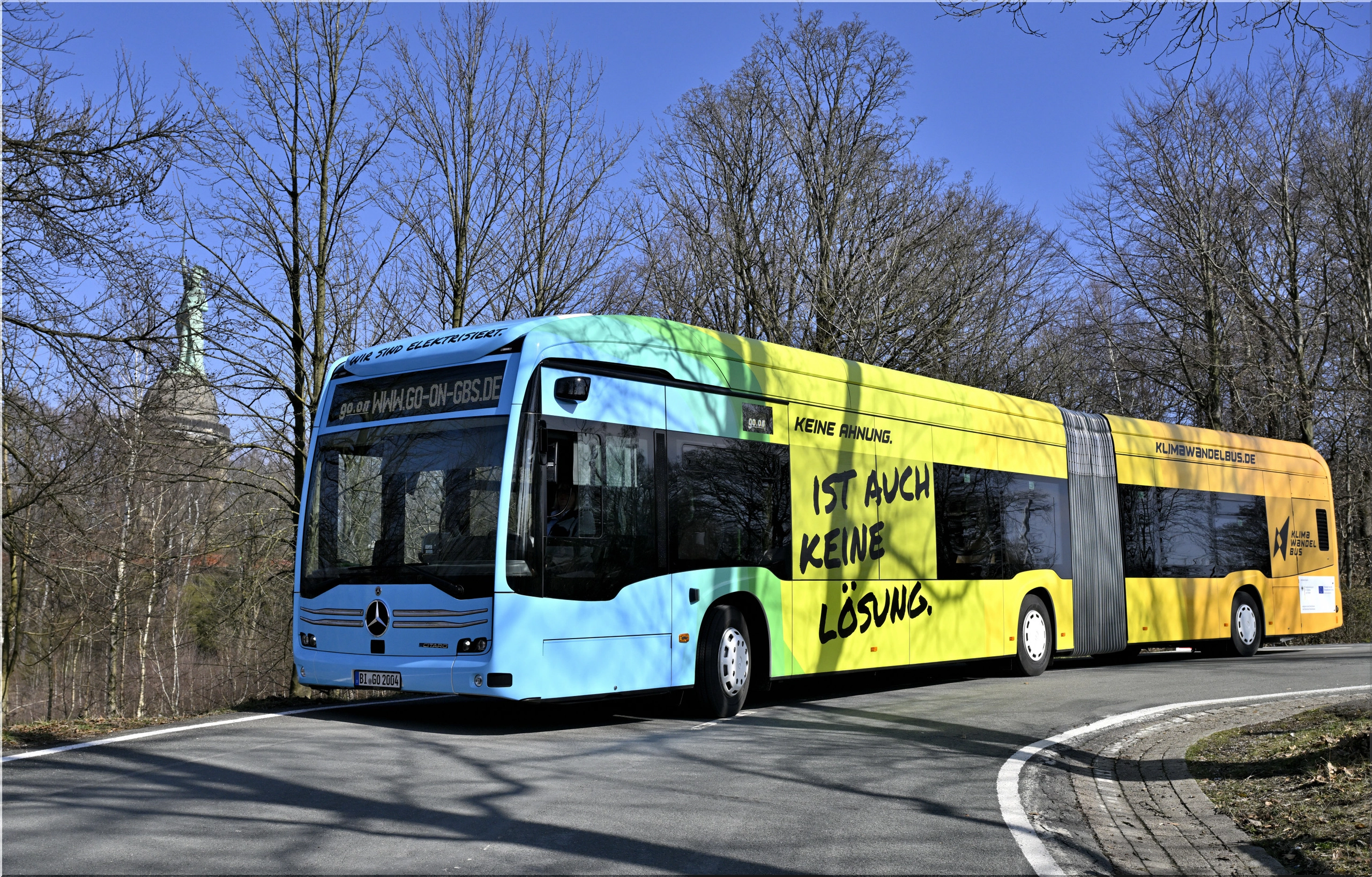
The Mercedes-Benz eCitaro KlimaWandelBus redefines what a city bus can do—not only in emissions reduction, but in public education. Launched in March 2025, this battery-electric bus now operates in the Teutoburg Forest/Egge Hills Nature Park, combining zero-emission transport with an interactive, mobile learning space focused on climate change awareness.
With its unique design, interactive modules, and regular service routes, this eCitaro serves as a moving classroom, delivering both people and knowledge.
Project Overview: A Bus With a Climate Mission
The KlimaWandelBus was developed by Naturpark Teutoburger Wald/Eggegebirge, in collaboration with:
- go.on Gesellschaft für Bus- und Schienenverkehr mbH
- Kommunale Verkehrsgesellschaft Lippe (KVG) mbH
The project has a clear dual purpose:
- Provide daily zero-emission transit service
- Function as a mobile climate education unit
This dual role gives the bus high utility across both operational and environmental goals.
Special Features: Designed to Educate While in Motion
This electric city bus stands out for more than just its drive system. Its interior and exterior design invite passengers to actively engage with climate change science and action.
Interior elements include:
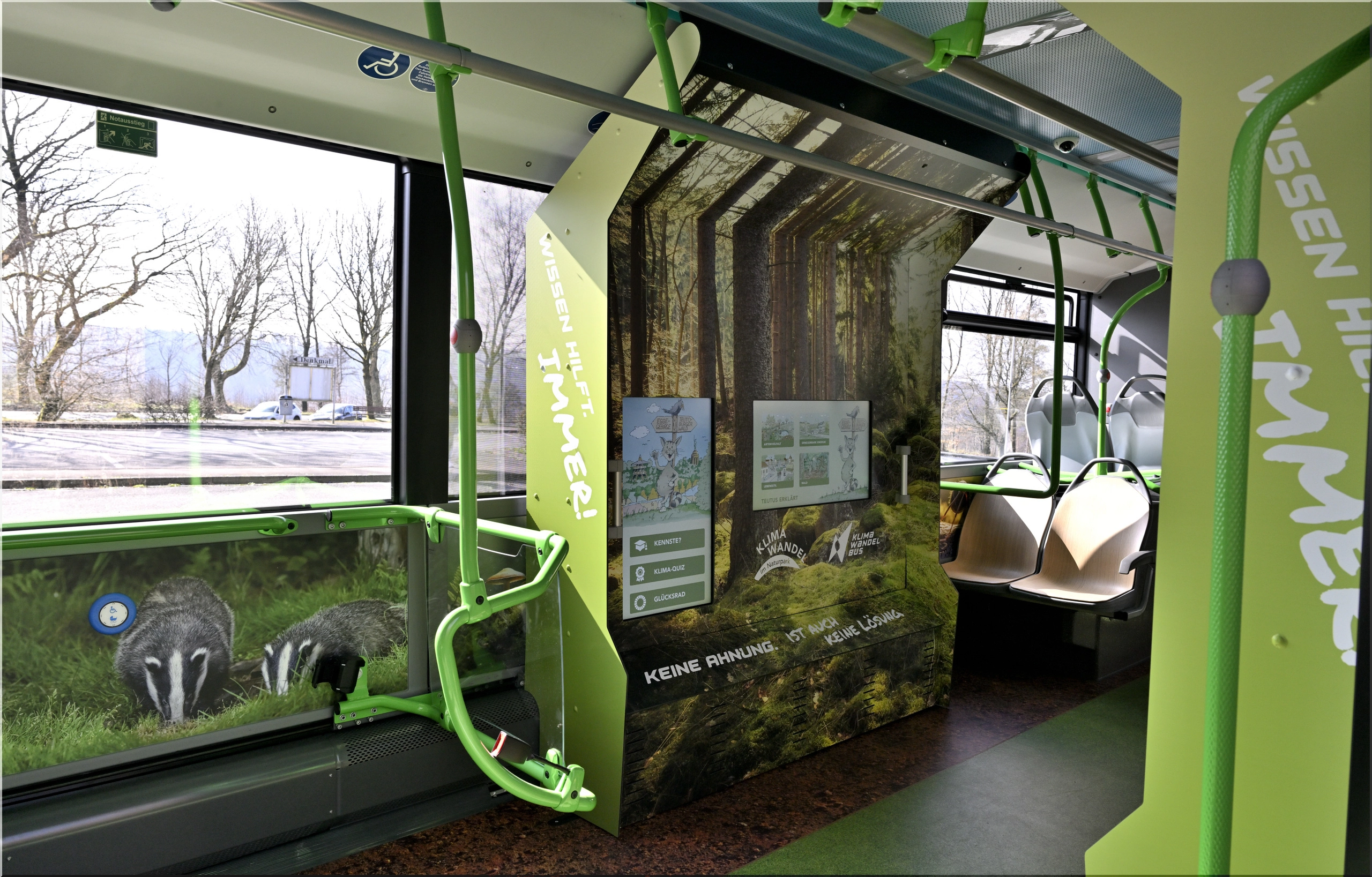
- Two touchscreen info modules near the front for visual and audio content
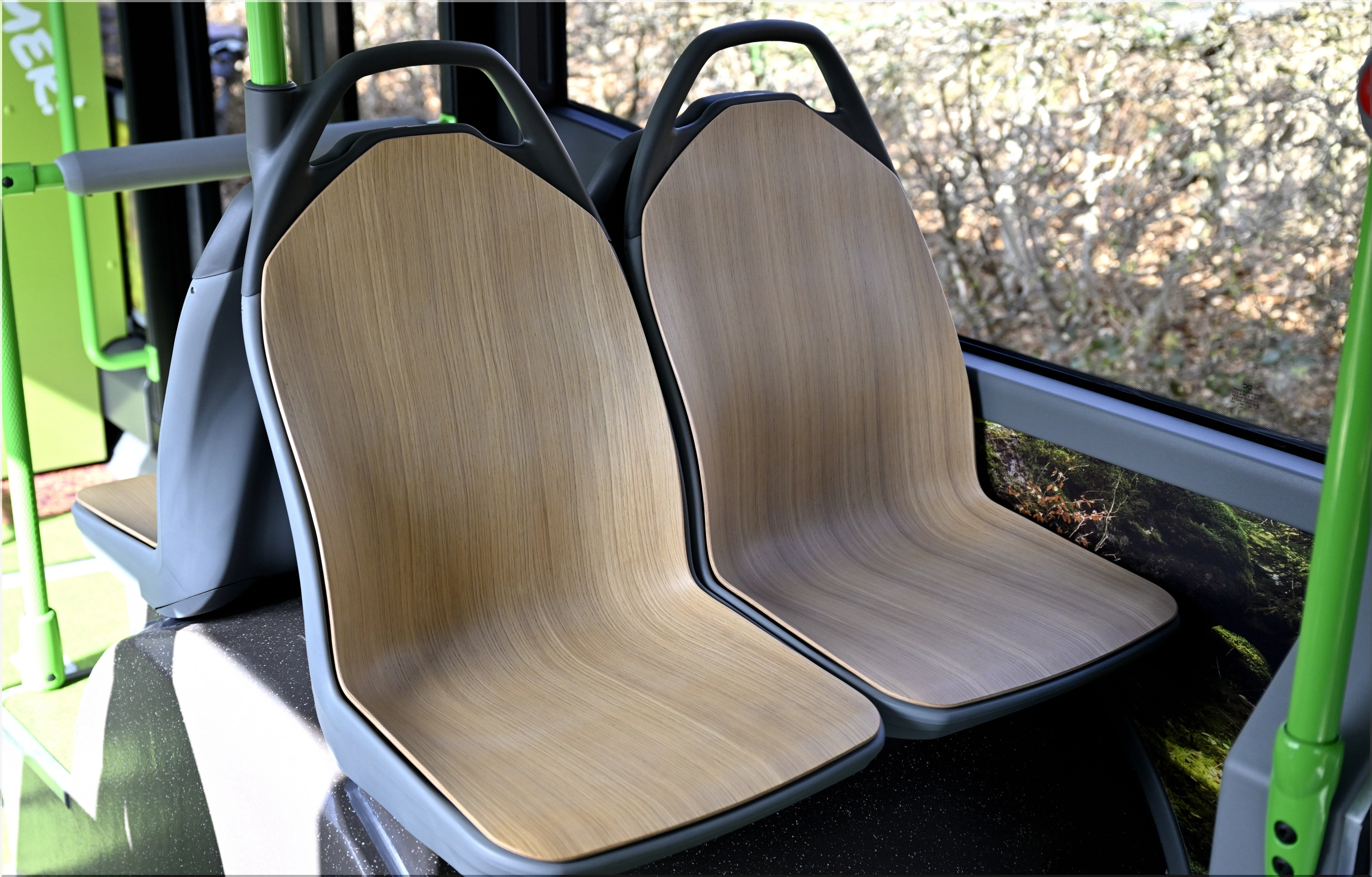
- Real wood-covered seats for tactile, sustainable aesthetics
- Printed floor textures: forest ground under seats, grassy path in aisle
- Large wall panels featuring trees and nature imagery
- Ceiling design with printed blue skies
These features simulate a natural environment inside the bus, reinforcing its role as a climate-focused educational space.
Route and Public Engagement Strategy
The KlimaWandelBus operates on standard routes in the region. Additionally, it will appear at:
- Schools and educational institutions
- Local events and environmental fairs
- Community outreach programs within the nature park
Its flexible deployment model allows it to reach a wide cross-section of the public—from daily commuters to schoolchildren.
Climate Change Education Modules: Learning While Riding
In the front area of the bus, passengers can interact with touchscreen modules. These provide:
- Explanations of climate change mechanisms
- Data visualizations of local and global impacts
- Interactive menus for age-appropriate learning
- Sound and animation integration for accessibility
This makes it possible for riders to engage with climate science in real time—during daily transit or while waiting at stops.
eCitaro Platform: Technical Backbone of the Project
The KlimaWandelBus is based on the Mercedes-Benz eCitaro, a vehicle known for its:
- Zero local CO₂ emissions
- Energy-efficient NMC battery systems
- Regenerative braking
- Quiet operation in urban areas
The Mercedes-Benz eCitaro was selected for this role due to its low environmental impact, ease of integration into existing fleets, and compatibility with educational retrofits.
eCitaro Key Specs:
| Feature | Specification |
|---|---|
| Battery Capacity | Up to 588 kWh |
| Charging | Depot plug-in and opportunity charging |
| Drive Output | 2 x 125 kW electric motors |
| Range (avg conditions) | Up to 280 km (174 miles) |
| Noise Level | Extremely low, under 75 dB |
Why Teutoburg Forest Chose This Format
The Teutoburg Forest/Egge Hills Nature Park covers 2,751 square kilometers. Its mission includes:
- Conservation of biodiversity
- Sustainable public engagement
- Accessible outdoor education
The KlimaWandelBus helps the park bring climate education into daily life. Unlike fixed-location museums or centers, the bus meets people where they are—on the road.
Making Climate Change Tangible
Traditional climate education often struggles with abstraction. This project addresses that with:
- Visual immersion through design
- Interactive tools for self-guided learning
- Physical presence in communities and schools
By integrating the message into public transport, the initiative creates repeated exposure—key to behavior change and awareness.
Public and Government Support
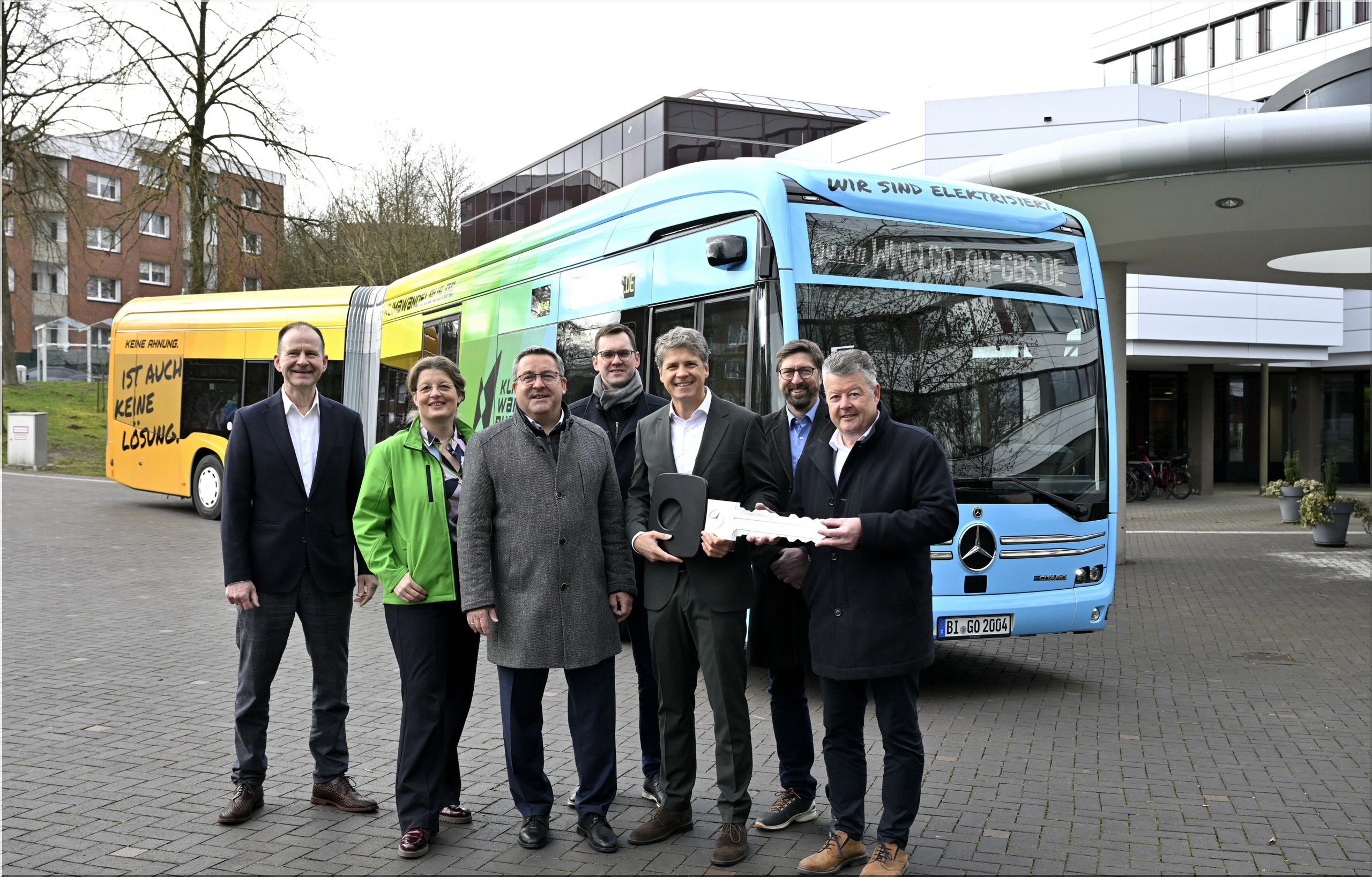
The official handover event on March 27, 2025, brought together:
- Daimler Buses executives
- Nature park leadership
- Transport company officials
- Local policymakers
Their shared goal: use electric mobility to educate, reduce emissions, and support local climate targets.
Participants included:
- Robert Wilhelm (Daimler Buses)
- Dörte Pieper (Nature Park)
- Dirk Hänsgen (go.on)
- Achim Oberwöhrmeier (KVG Lippe)
- Dr. Axel Lehmann (County of Lippe)
This mix of public and private coordination is essential for climate-focused transit infrastructure.
Broader Significance for Sustainable Transit
While this eCitaro has unique features, the model offers a scalable template for other regions.
Lessons from the KlimaWandelBus:
- Transit systems can educate
- Public buses can serve dual purposes
- Engagement increases when learning is mobile and visual
- Emission-free mobility reinforces the message of sustainability
Municipalities across Europe and the US could replicate this model with local adaptations and topic-specific modules.
Measurable Impact: Environmental + Educational
The project targets two types of measurable outcomes:
Environmental:
- Reduced local transport emissions
- Improved air quality in nature park zones
- Lower noise pollution in rural and urban edges
Educational:
- Number of passenger interactions with modules
- Volume of schools and community groups reached
- Pre- and post-exposure surveys on climate knowledge retention
This creates a feedback loop that can improve both the bus’s teaching function and route effectiveness.
Conclusion: Mobility Meets Messaging
The Mercedes-Benz eCitaro KlimaWandelBus merges electric transit with climate science education in a format that is both functional and informative.
Its success in the Teutoburg Forest Nature Park sets an example: public transport can do more than move people—it can inform them.
For cities and rural areas alike, projects like this suggest a new direction: climate engagement, built into everyday mobility.
- Add new comment
- 133 views