
Honda rarely reveals concepts without a defined business case. The Honda Base Station Prototype fits that pattern. This lightweight, modular camping trailer targets buyers priced out of large RVs and overwhelmed by overbuilt overland rigs. Honda aims squarely at accessibility, cost control, and ease of use.
The significance runs deeper than design. Honda is testing whether mainstream buyers want camping hardware that matches modern compact SUVs instead of demanding heavy-duty trucks. That shift reflects real market behavior, not enthusiast fantasy.
What the Honda Base Station Prototype Is
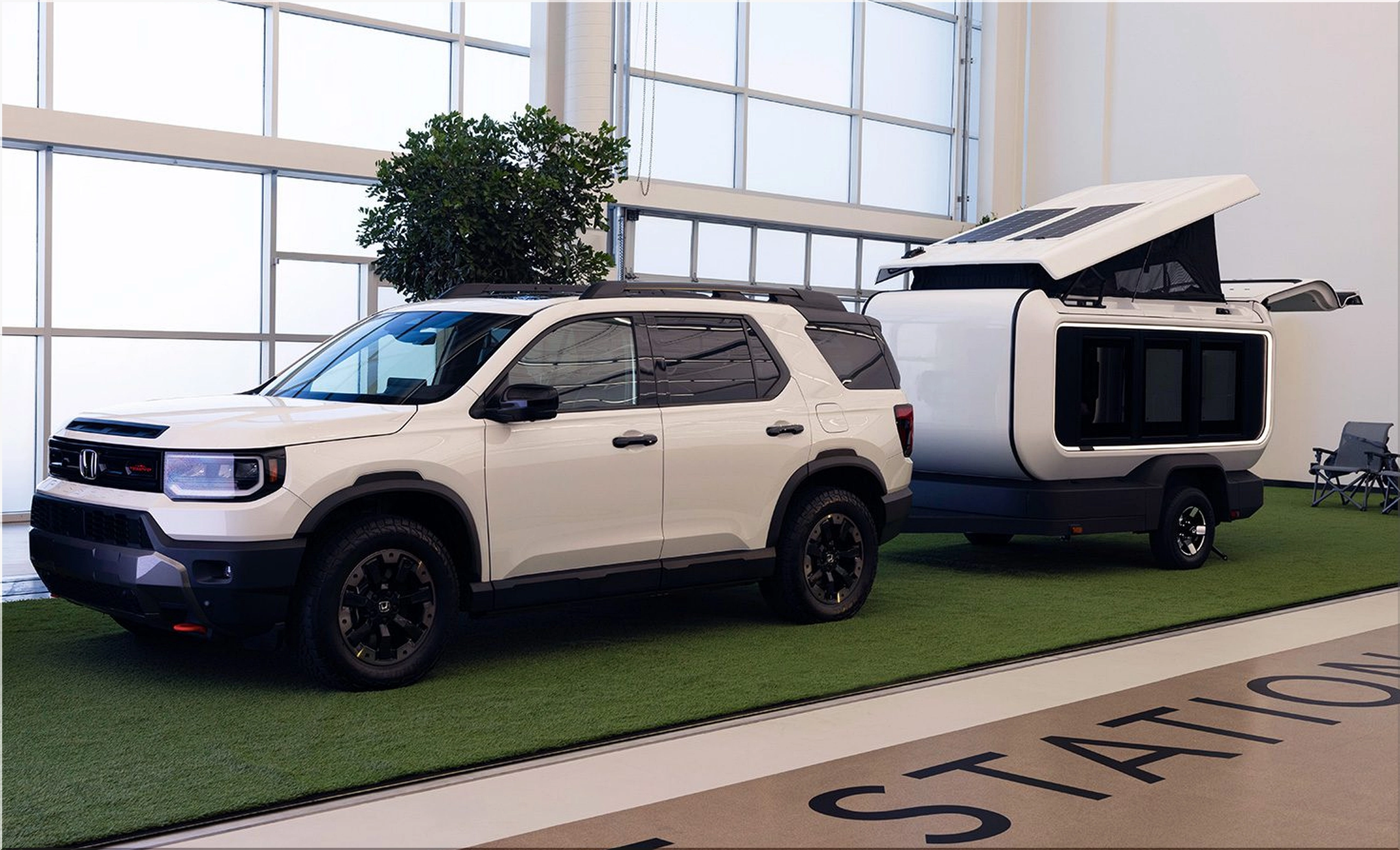
The Honda Base Station Prototype is a compact, towable travel trailer engineered to work with small and midsize vehicles. Honda designed it to operate within the towing limits of popular crossovers, including the CR-V, Passport, Ridgeline, and Pilot.
This approach matters because over half of US households that own SUVs do not own trucks. Honda designed the Base Station to remove the upgrade barrier that blocks many buyers from entering trailer ownership.
Key objectives behind the concept include:
- Reducing curb weight to support lower towing capacities
- Maintaining interior volume through efficient packaging
- Supporting both short trips and extended stays
- Allowing buyers to configure features instead of overpaying
Honda positions the Base Station as a starting point, not a niche toy.
Core Design Philosophy
Honda applies its Man Maximum Machine Minimum philosophy aggressively here. Engineers focused on reducing mechanical complexity while expanding usable space. That philosophy has guided Hondas automotive interiors for decades and now extends into camping equipment.
Design choices reflect that intent:
- Straight interior walls instead of tapered shells
- Minimal built-in furniture to allow reconfiguration
- Fewer fixed systems to reduce long-term maintenance
- Modular attachment points for accessories
This strategy lowers production cost and improves durability. Fewer moving parts mean fewer failure points in outdoor environments.
Exterior Layout and Towing Practicality
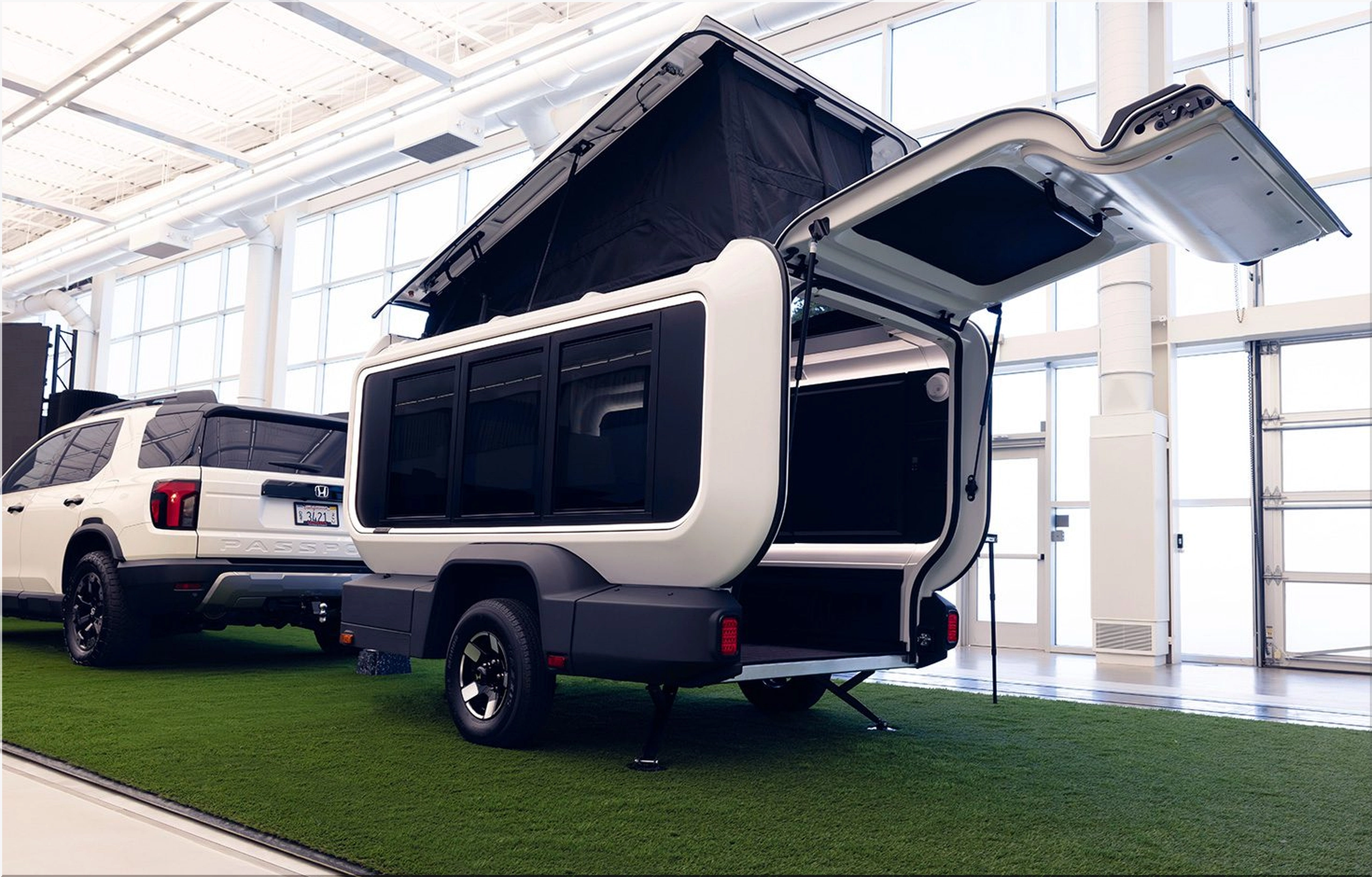
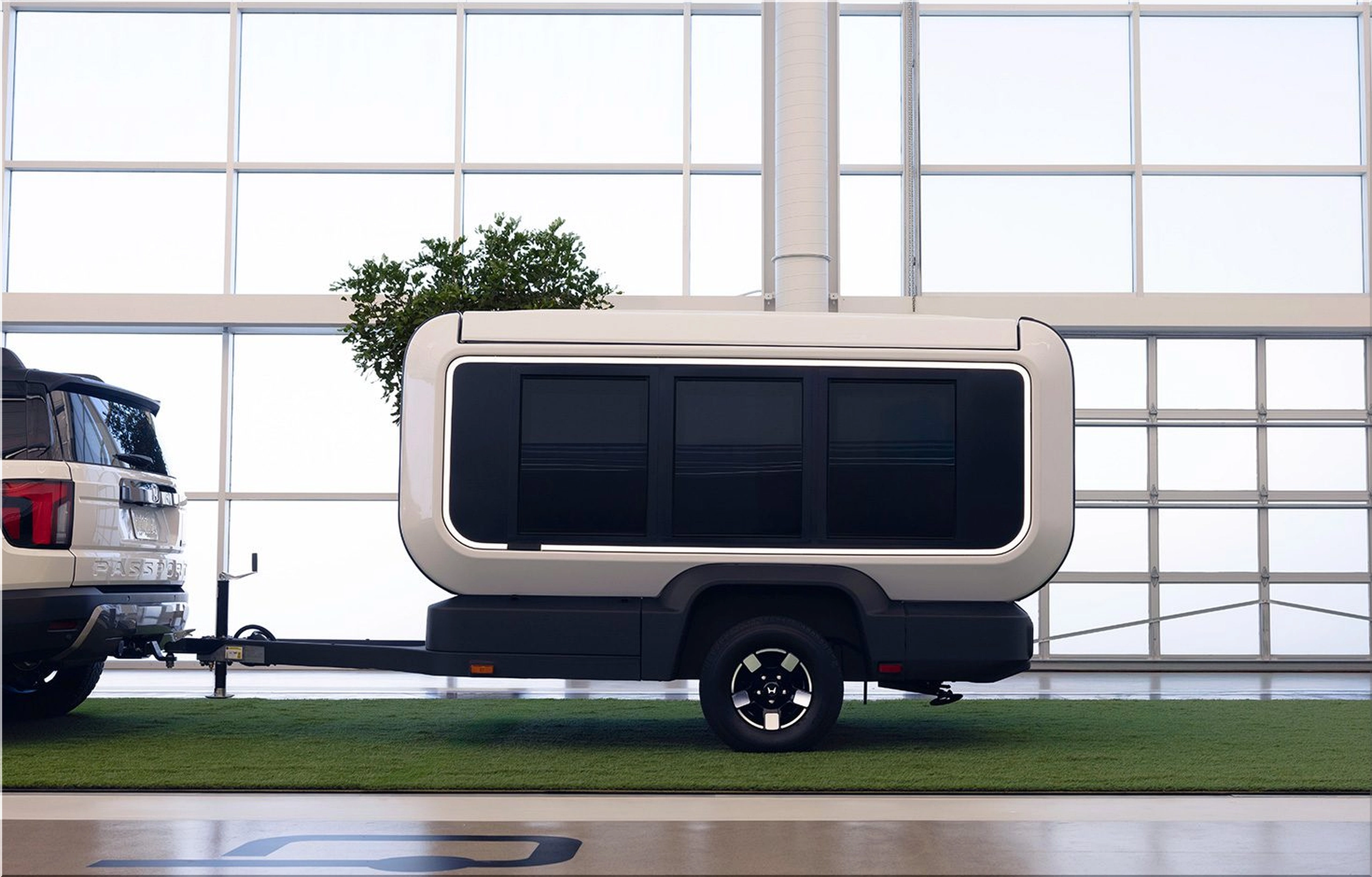
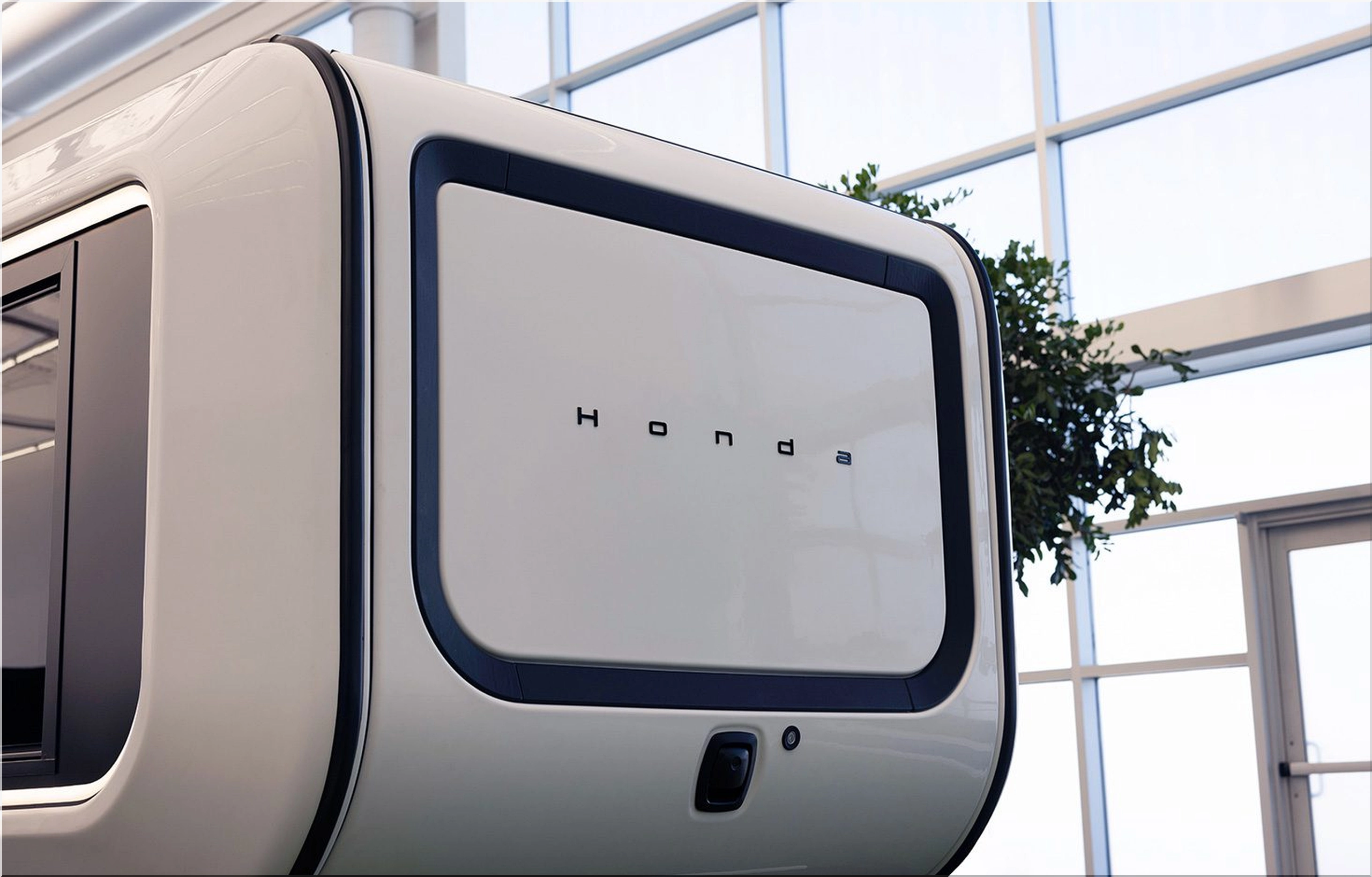
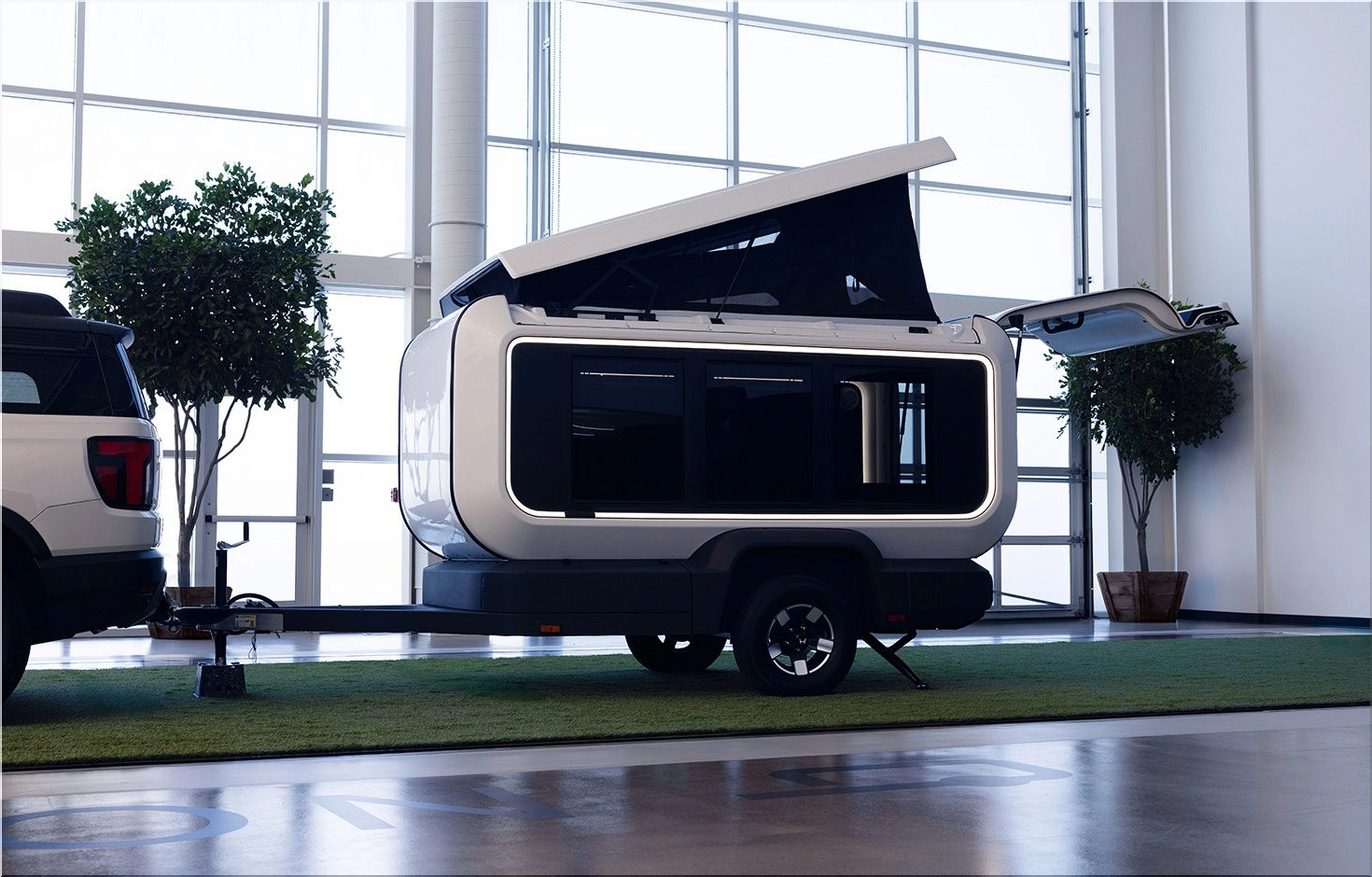
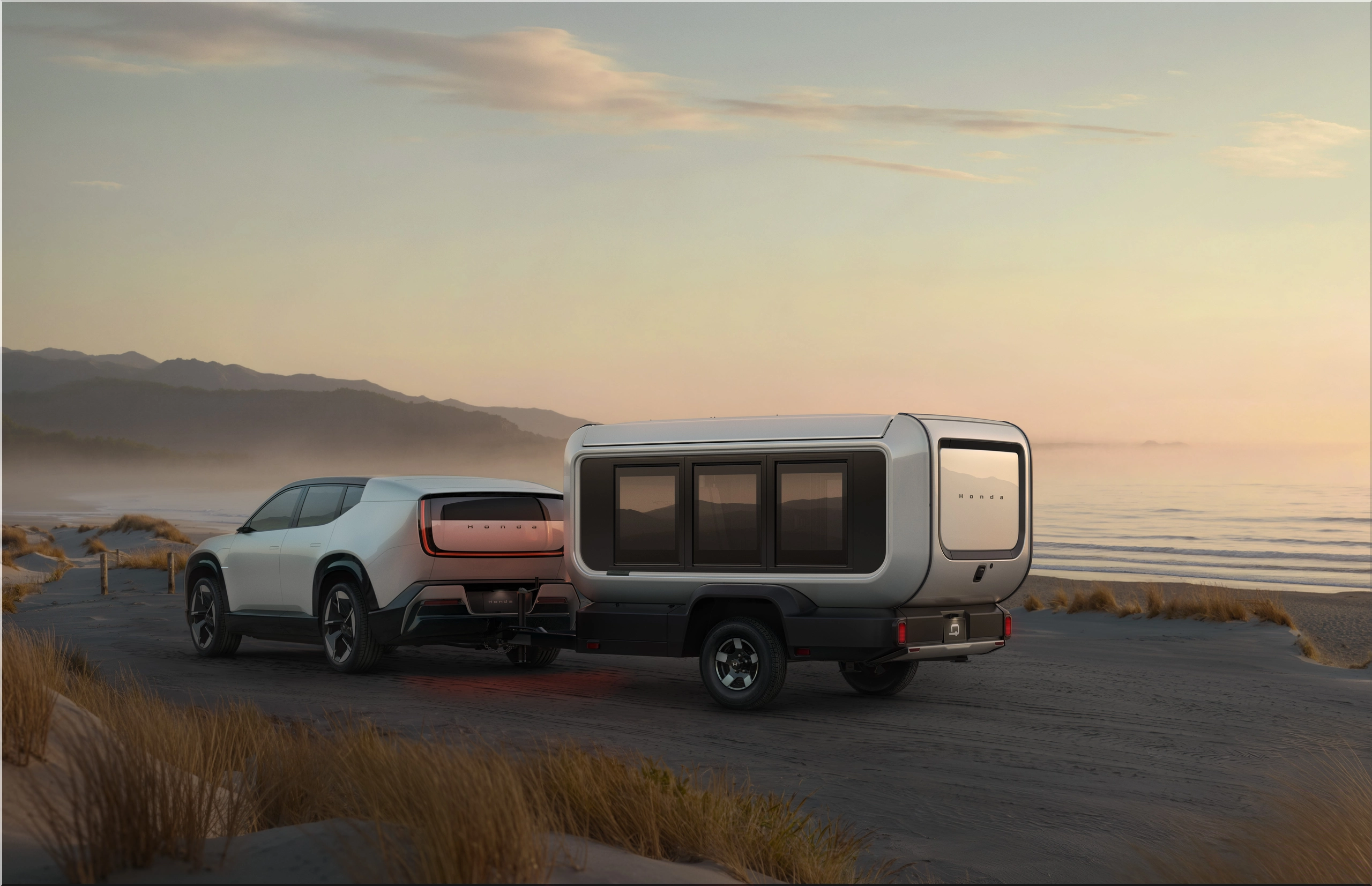
The Base Station Prototype uses a clean, rounded exterior that prioritizes aerodynamics and visibility. Honda avoided sharp edges and tall profiles that increase drag and reduce rearward sightlines.
The trailer rides on a single axle with a low mounting height. That reduces sway and keeps handling predictable at highway speeds. Honda also kept the tongue length short enough to maintain maneuverability in tight campsites and urban storage areas.
Exterior highlights include:
- Compact overall length designed for garage storage
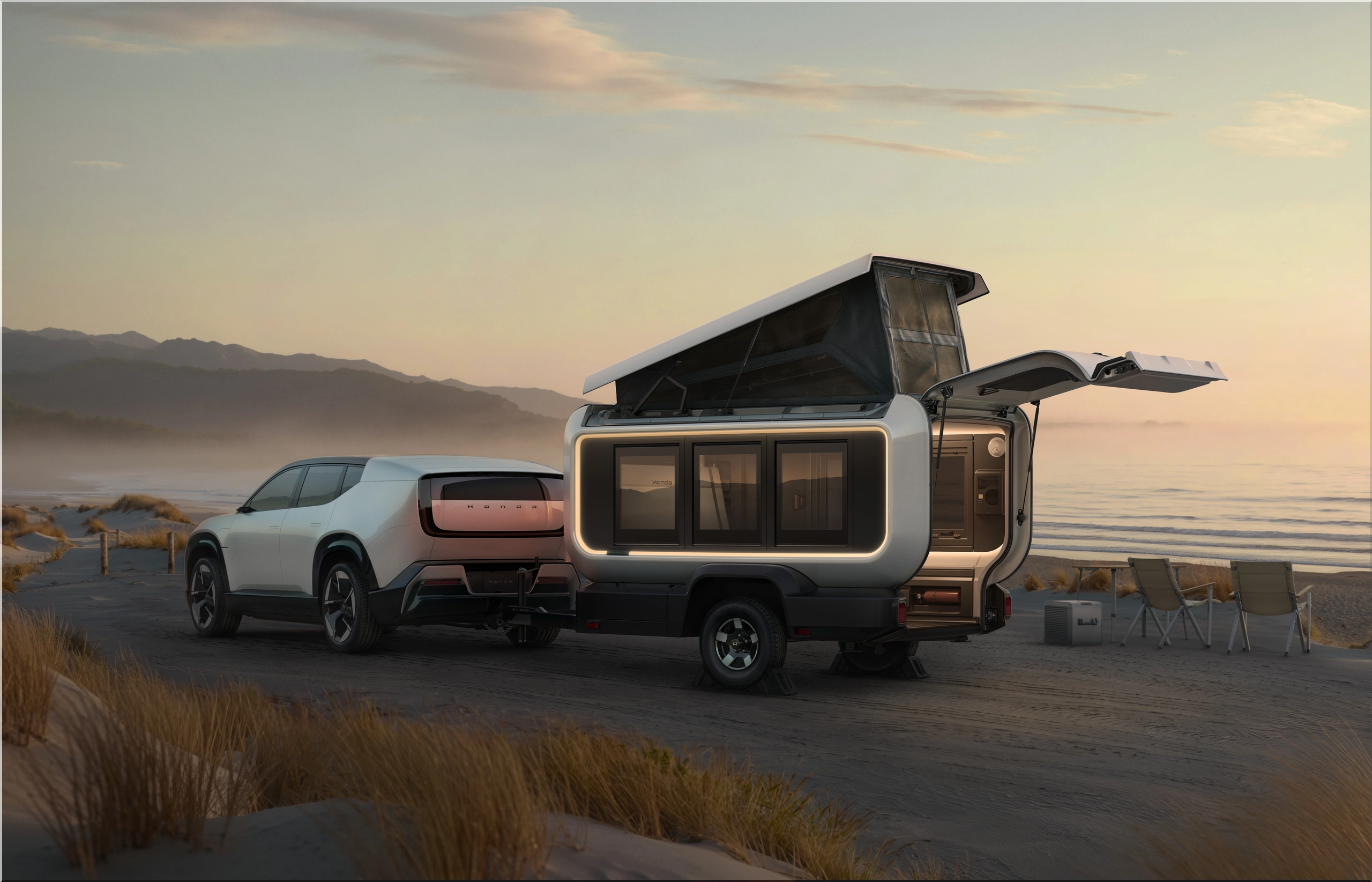
- Wide rear hatch for entry and cargo loading
- Large side openings for ventilation and daylight
- Smooth composite body panels for weight savings
These decisions reflect real-world towing scenarios, not showroom appeal.
Towing Specs and Target Vehicles
Honda has not released official weight figures, but internal targets keep the Base Station well below the towing limits of compact SUVs. Most vehicles in this segment tow between 1,500 and 3,500 pounds.
Expected compatibility includes:
- Honda CR-V and similar compact crossovers
- Honda Passport and midsize SUVs
- Honda Ridgeline and light-duty pickups
- Comparable vehicles from other manufacturers
This compatibility dramatically expands the addressable market.
Interior Packaging and Living Space
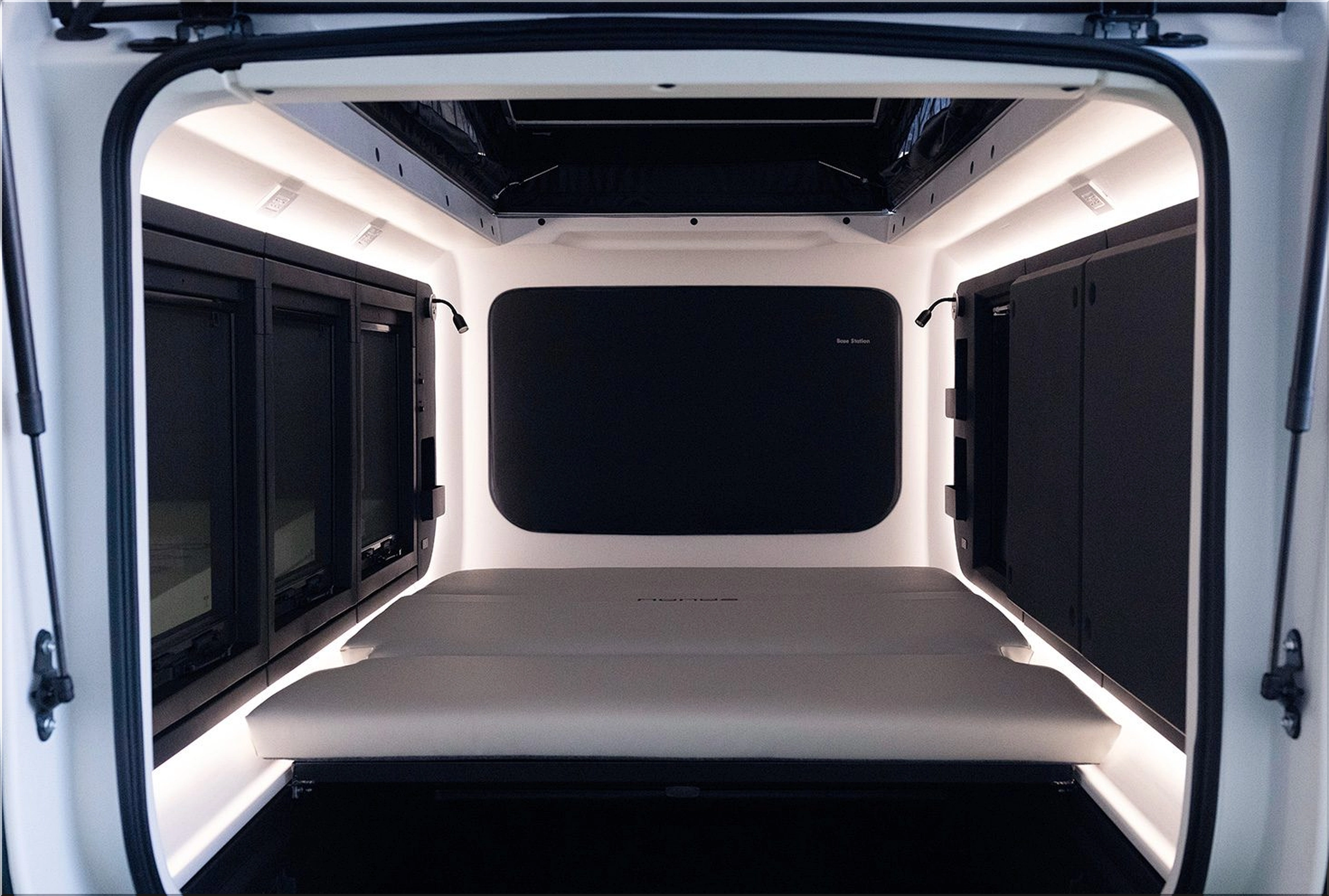
Inside, the Base Station Prototype prioritizes flexibility over permanence. Honda avoided fixed beds and immovable cabinetry. Instead, the interior converts between travel, lounge, and sleep modes.
The primary seating unit folds flat into a sleeping surface large enough for two adults. Optional upper bunks accommodate children without consuming daytime floor space. The interior height supports seated comfort and limited standing near entry points.
Interior design priorities include:
- Flat flooring for easy movement
- Vertical storage zones along the walls
- Neutral materials that resist wear and moisture
- Easy-clean surfaces suited for outdoor use
Honda focused on function over visual clutter.
Lighting and Visibility
Large panoramic windows dominate the side profile. Honda paired them with programmable ambient light rings mounted around the frames. These lights adjust brightness and color temperature.
This system serves practical needs:
- Soft illumination for nighttime setup
- Reduced eye strain compared to overhead lights
- Improved campsite visibility without attracting insects
Lighting often gets ignored in campers. Honda treated it as core infrastructure.
Modular Systems and Accessories
The modular camping trailer concept defines the Base Station. Honda designed the trailer as a platform rather than a fixed product. Buyers select systems based on how and where they camp.
Planned modules include:
- Exterior kitchen with induction cooktop
- Running water sink with onboard storage
- External shower system
- Climate control module
- Integrated inverter and battery system
Each module attaches independently. Owners can add or remove components without redesigning the trailer.
Power Strategy
Honda integrated a lithium-based battery system to support off-grid use. The battery powers lighting, climate systems, and cooking equipment without requiring a generator.
The system supports:
- External campsite hookups
- Portable generator input
- Solar charging compatibility
This layered approach gives users flexibility across different camping environments.
Manufacturing Intent and Pricing Targets
Honda has not confirmed production timelines. Company leadership emphasizes pricing discipline as the deciding factor. Honda aims to compete directly with lightweight travel trailers, not premium adventure rigs.
Market benchmarks suggest a wide pricing band:
- Entry configurations near $17,000 USD
- Fully equipped builds approaching $50,000 USD
This structure mirrors Hondas automotive trim strategy. Buyers pay for capability, not branding.

How the Honda Base Station Compares to Rivals
The lightweight trailer segment includes many small manufacturers but few large brands. Most competitors offer fixed layouts with limited customization.
Lightweight Camping Trailer Comparison
| Trailer Model | Approx. Price (USD) | Sleeps | Tow Vehicle Class | Modular Systems |
|---|---|---|---|---|
| Honda Base Station Prototype | $17,000 to $50,000 | Up to 4 | Compact SUV | Yes |
| Airstream Basecamp | $40,000 to $55,000 | 2 | Midsize SUV | Limited |
| Taxa Cricket | $25,000 to $35,000 | 2 to 4 | Compact SUV | Limited |
| Escapod Topo | $45,000 to $60,000 | 2 | Midsize SUV | Minimal |
| Typical teardrop campers | $10,000 to $20,000 | 2 | Compact SUV | No |
Honda stands apart through scalability and dealer-backed support.
Market Opportunity Honda Is Targeting
Camping participation continues to grow, driven by affordability pressures in travel and housing. First-time campers often rent equipment or rely on borrowed gear before purchasing.
This audience shares clear patterns:
- Urban or suburban living
- Limited storage space
- Crossovers instead of trucks
- Preference for simple setup and teardown
The lightweight travel trailer category addresses these needs directly.
Why Honda Has an Advantage Here
Honda enters this space with built-in advantages. Brand trust lowers buyer anxiety. Dealer networks simplify service. Financing options expand affordability.
These factors matter because many trailer startups struggle with:
- Parts availability
- Long-term support
- Resale confidence
Honda already solves those problems.
Design Risks and Open Questions
The Base Station remains a prototype. Several variables remain unresolved:
- Final curb weight and payload capacity
- Battery size and real-world runtime
- Climate system efficiency in extreme weather
- Long-term durability of modular attachment points
Pricing accuracy will determine success or failure.
What This Prototype Signals About Hondas Strategy
Honda increasingly treats mobility as an ecosystem. The Base Station fits alongside motorcycles, power equipment, generators, and outdoor accessories.
This strategy supports:
- Cross-selling opportunities
- Lifestyle-focused branding
- Accessory-driven revenue growth
Honda sees camping as an extension of mobility, not a separate industry.
Who the Honda Base Station Is For
This trailer targets buyers who want:
- Low towing stress
- Minimal storage challenges
- Configurable features
- Predictable ownership costs
It avoids the extremes of luxury RVs and bare-bones teardrops.
What Happens Next
Honda will track consumer response, dealer interest, and cost feasibility. If pricing aligns with expectations, production becomes realistic.
For the market, the Base Station Prototype sets a clear signal. Lightweight campers no longer need to feel compromised or overpriced.
- Add new comment
- 92 views