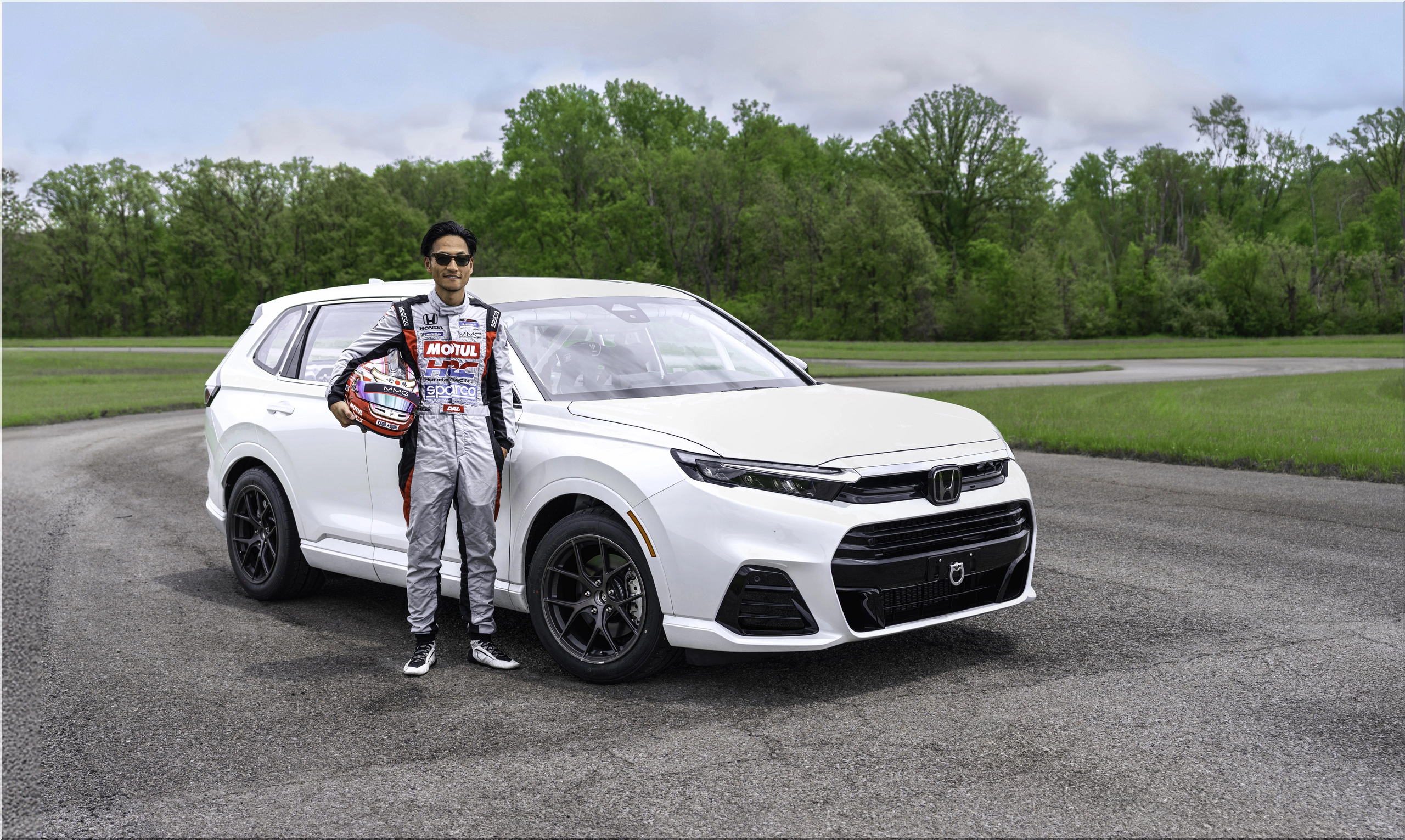
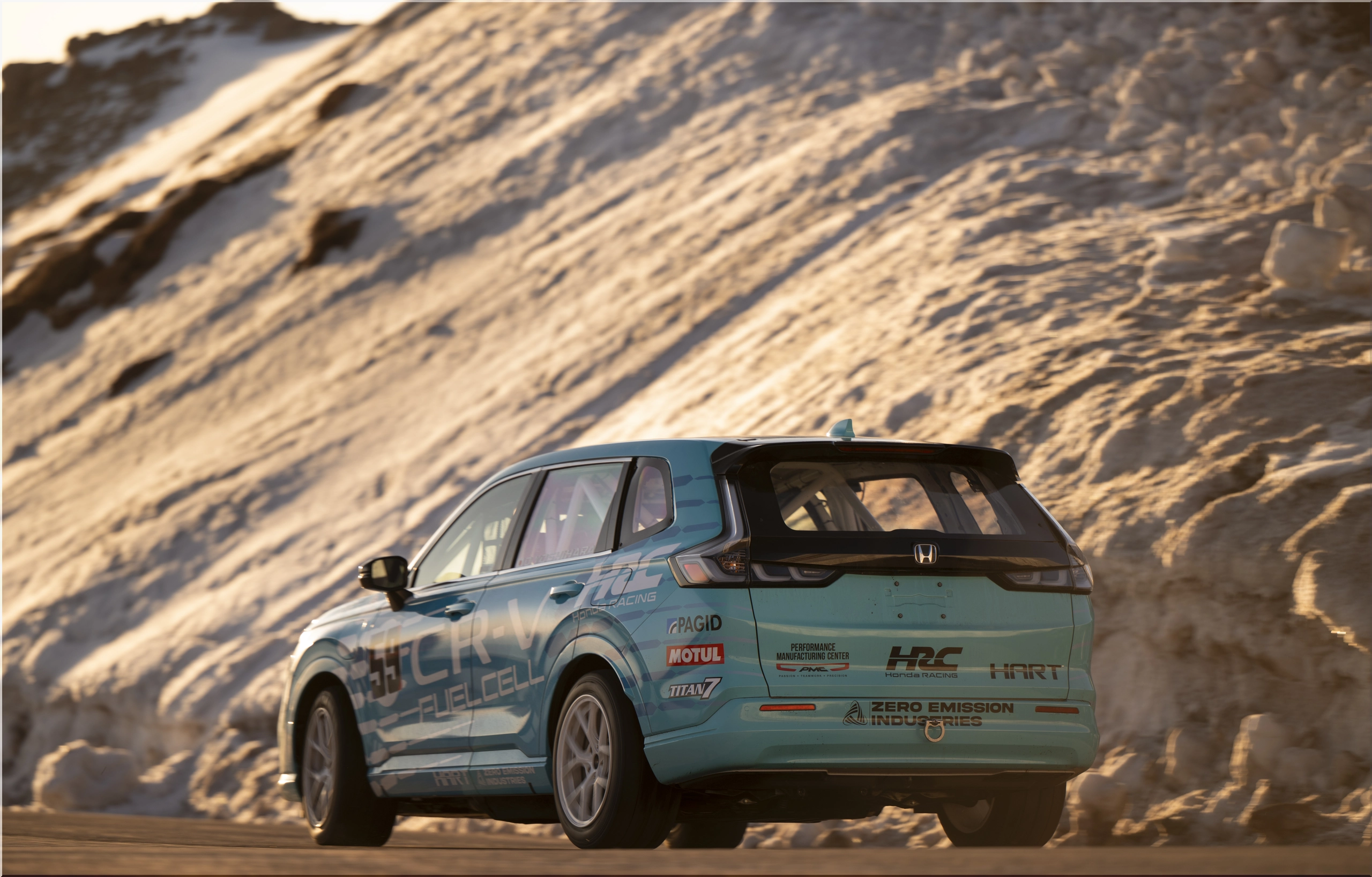
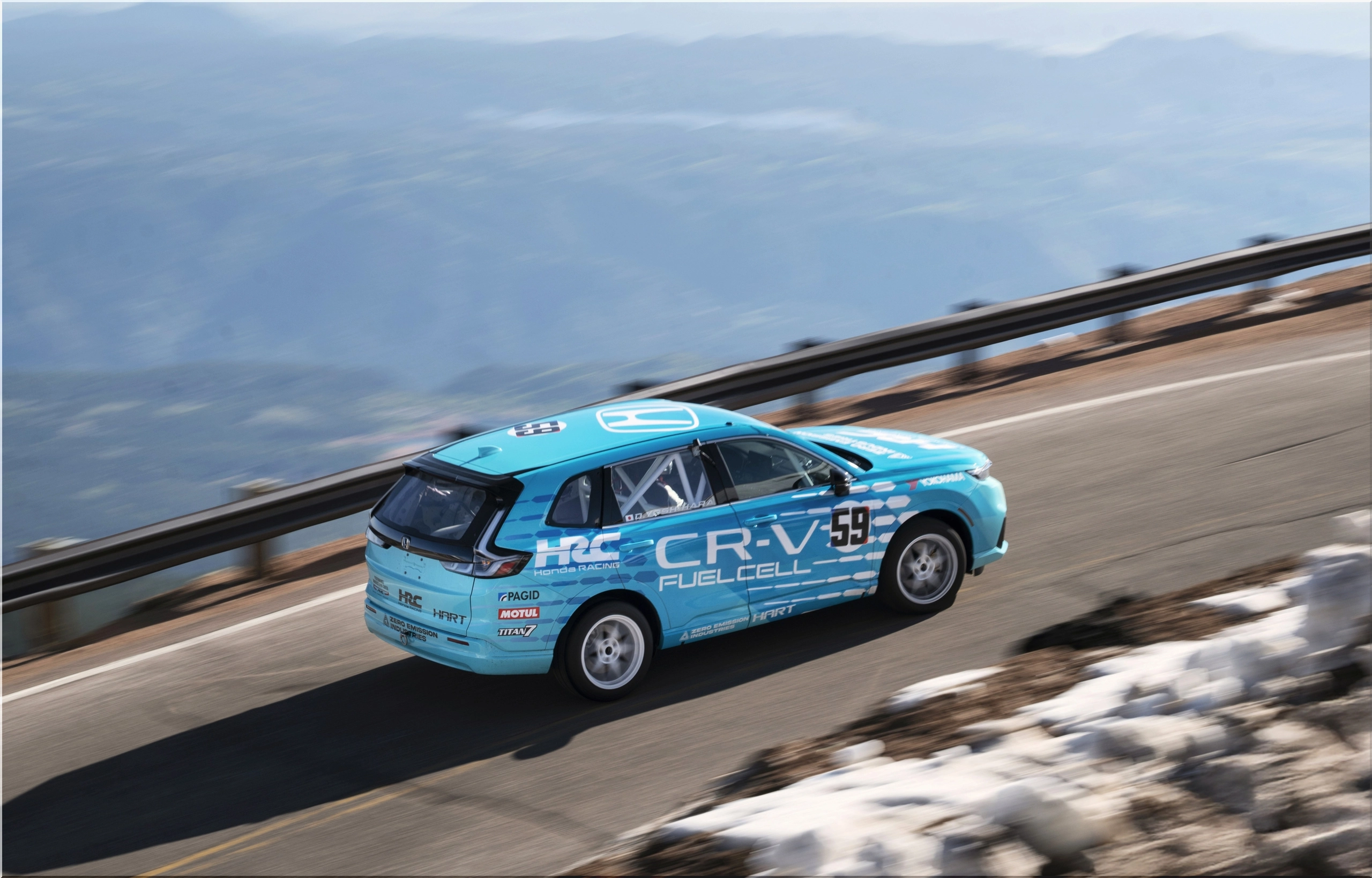
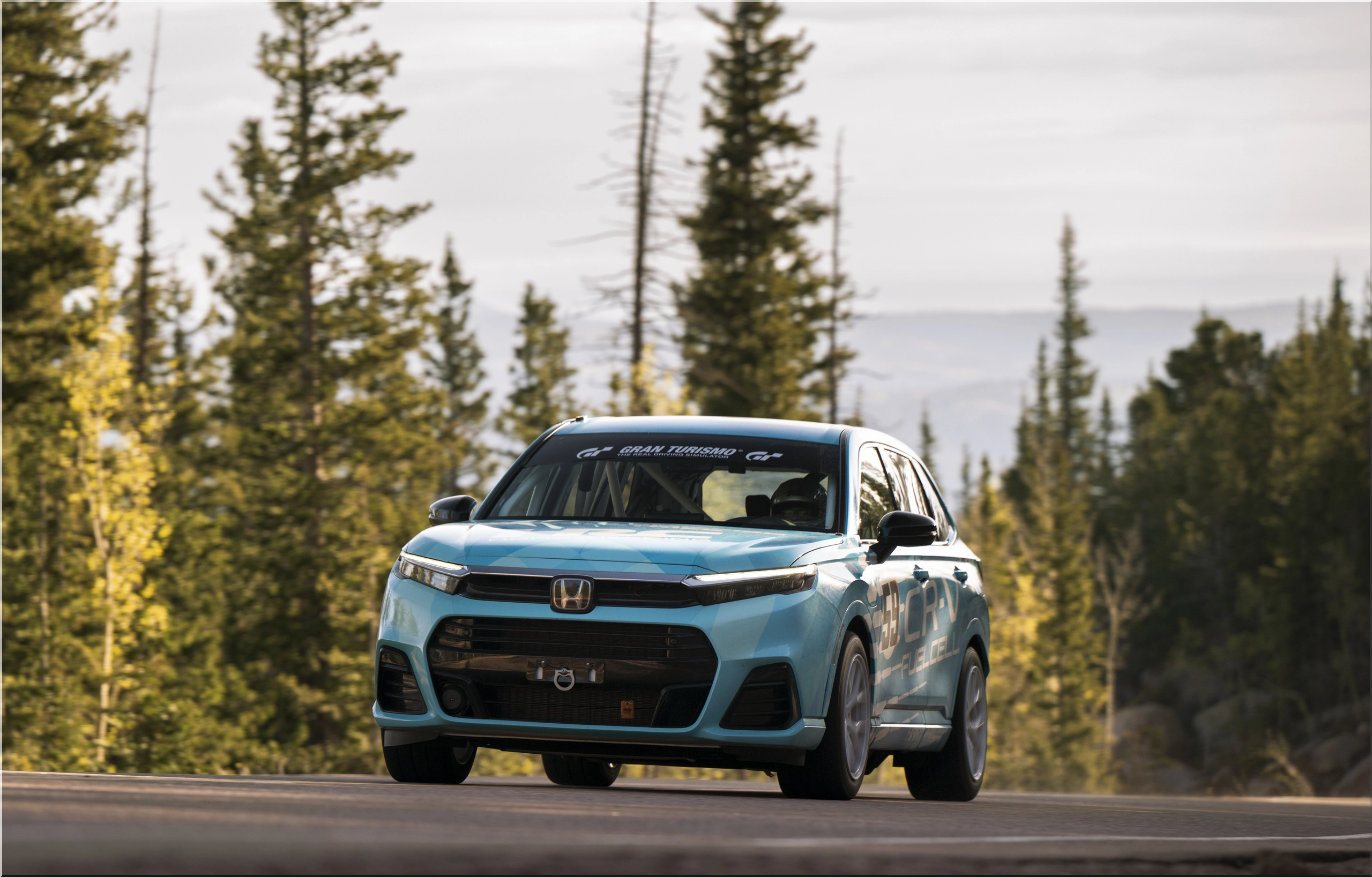
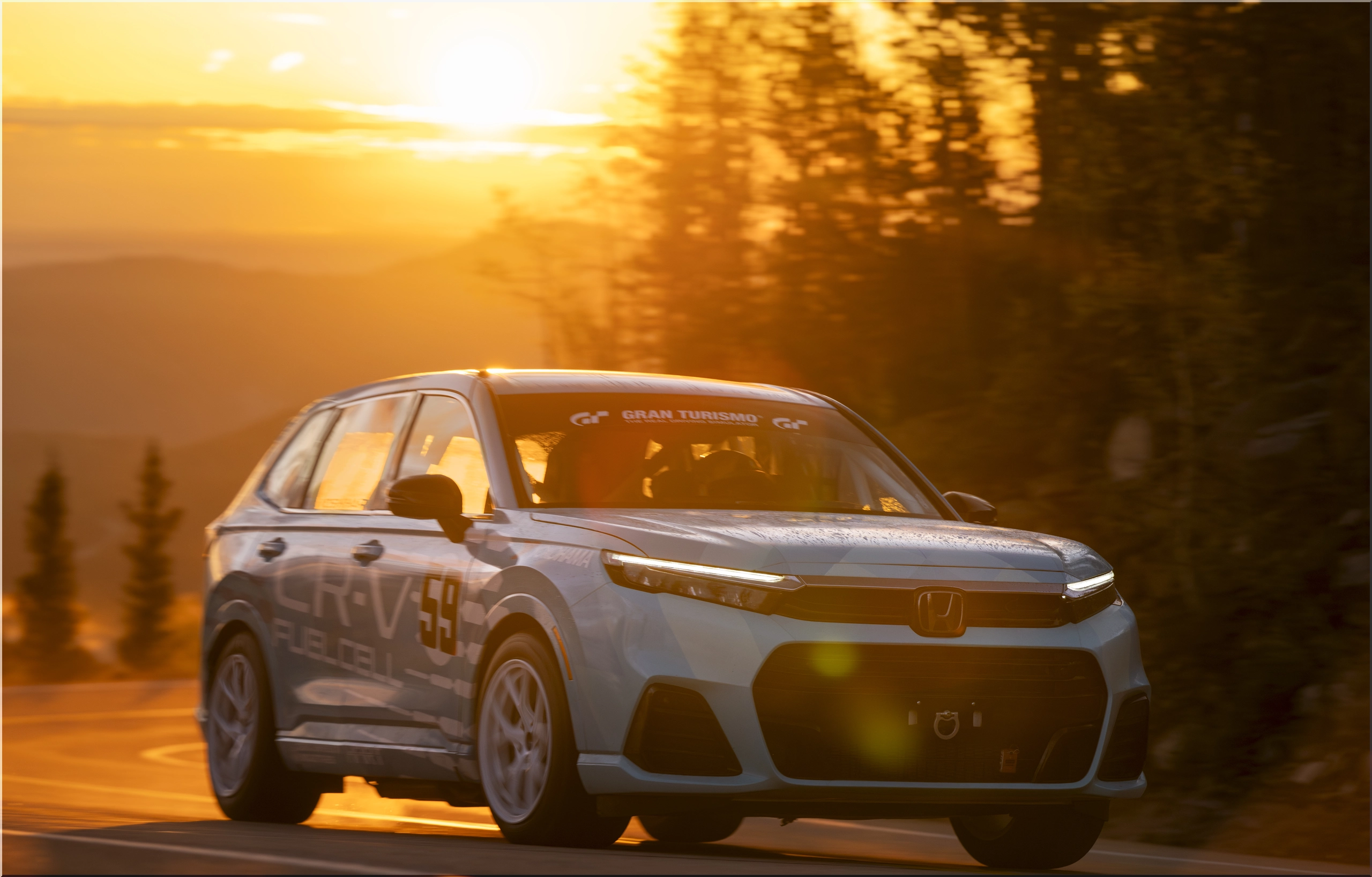
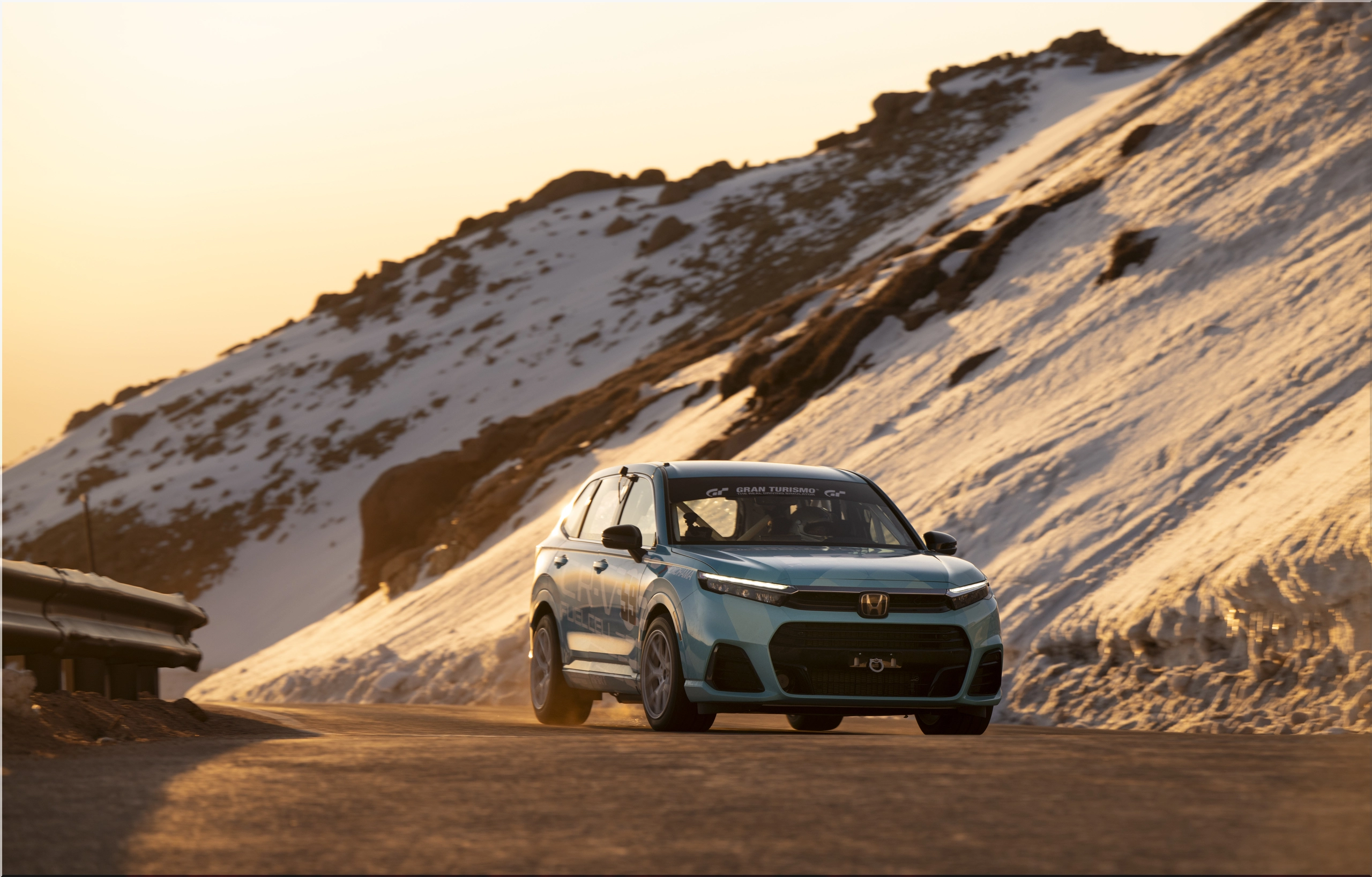
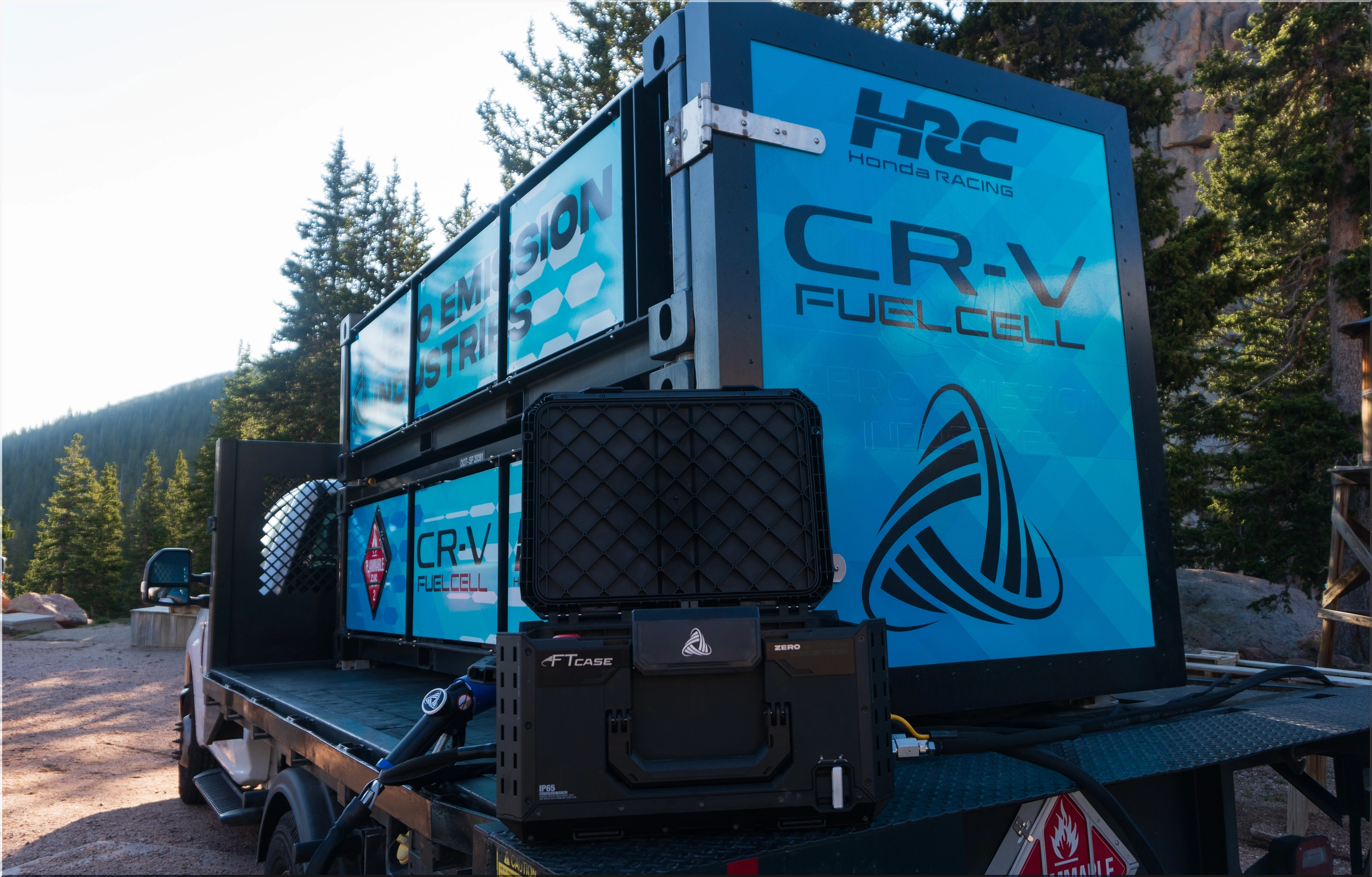
Honda enters the 2025 Pikes Peak International Hill Climb on June 22 with the CR‑V e:FCEV, marking the event’s first hydrogen-powered vehicle. The 12.42-mile course includes 156 turns and climbs to an elevation of 14,115 feet. Developed by HRC US, HART, Honda Japan, and PMC, the CR‑V e:FCEV retains its stock fuel-cell powertrain and receives targeted performance upgrades.
Powertrain & Performance
- 174 hp electric motor delivering 229 lb-ft of torque
- 4.3 kg hydrogen capacity stored in dual high-pressure tanks
- 17.7 kWh lithium-ion battery with 29 miles of EV-only range
- Total EPA range: 270 miles (241 hydrogen + 29 electric)
- Hydrogen refuel time: 3–5 minutes
- Fuel-cell module: 92.2 kW, operates from -22°F to 212°F
Built at Honda's Performance Manufacturing Center in Ohio, this is the only fuel-cell electric vehicle (FCEV) manufactured in the U.S.
Race Modifications
- 1-inch lowered suspension with sport springs and dampers
- Upgraded racing brake pads and rotors
- 18-inch lightweight wheels with 265/45R18 Yokohama Advan A052 tires
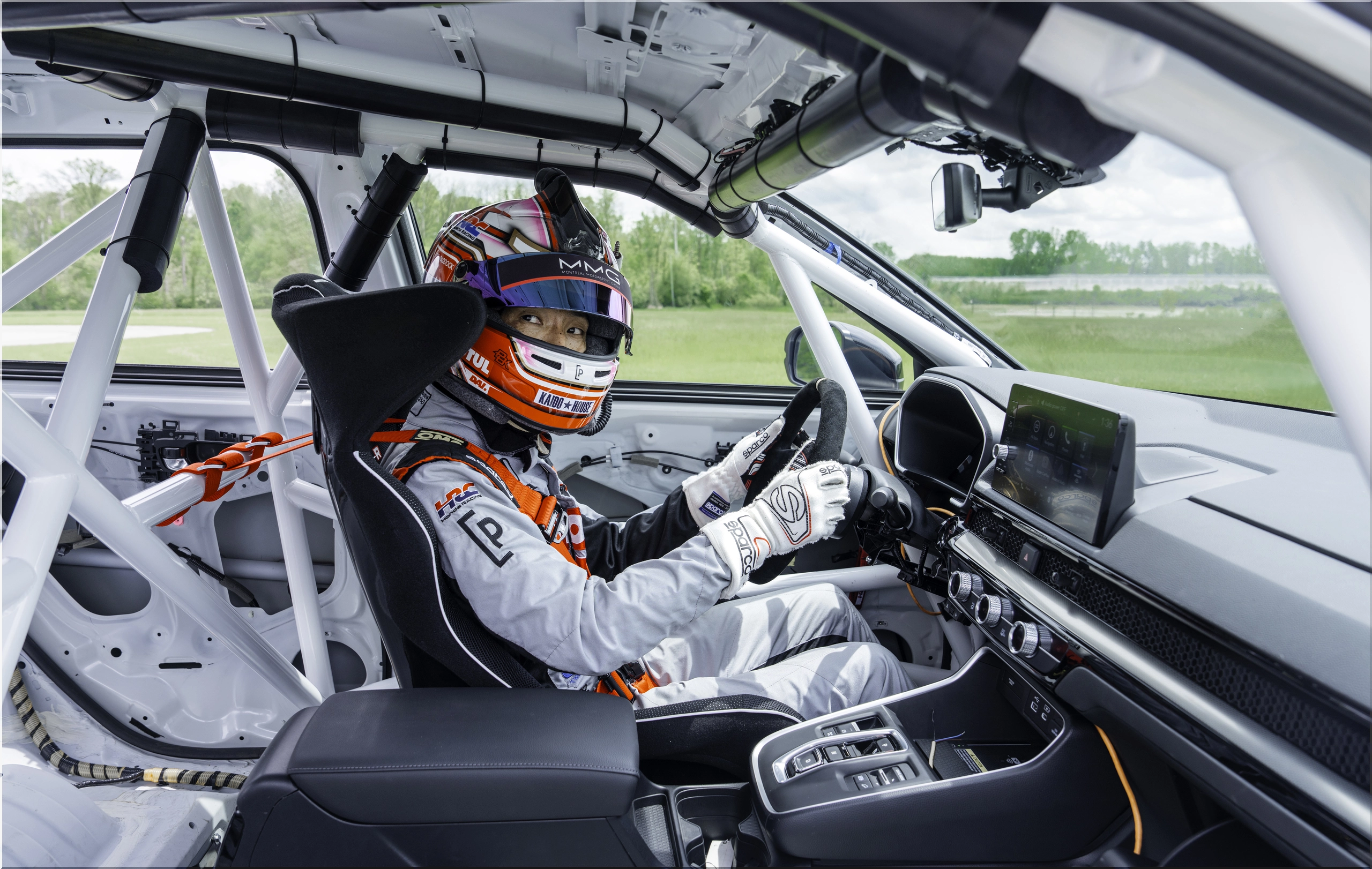
- Custom roll cage and racing seat from HART and PMC
No changes were made to the zero-emission powertrain, keeping the vehicle compliant and representative of production-spec technology.
Driver Profile: Dai Yoshihara
- Two-time Formula Drift champion
- 2020 Pikes Peak Unlimited class winner
- Runner-up in 2022 Pikes Peak Exhibition class
- 2023 IMSA Michelin Pilot Challenge participant with Civic Type R TCR
Yoshihara aims to secure a podium finish in his third Pikes Peak appearance.
Honda's Zero-Emission Pikes Peak History
- 1994: EV Civic wagon class win
- 1999: EV Plus earned first place
- 2014: Fit EV completed in 12:55.6
- 2015: CR‑Z with four-motor AWD achieved 10:23.8
- 2016: NSX EV concept finished in 9:09.06
The Honda CR‑V e:FCEV continues Honda’s legacy of innovation in zero-emission racing.
Daily Use & Availability
- Available by lease in California only
- Estimated MSRP: $50,000
- Includes up to $15,000 in hydrogen fuel credits over three years
- Qualifies for California HOV lane access
- HondaLink EV app includes station locator and fuel monitoring
- Built-in 1,500 W power outlet for V2L and emergency backup
Interior, Technology & Features
- LED headlights and clear-lens LED taillights
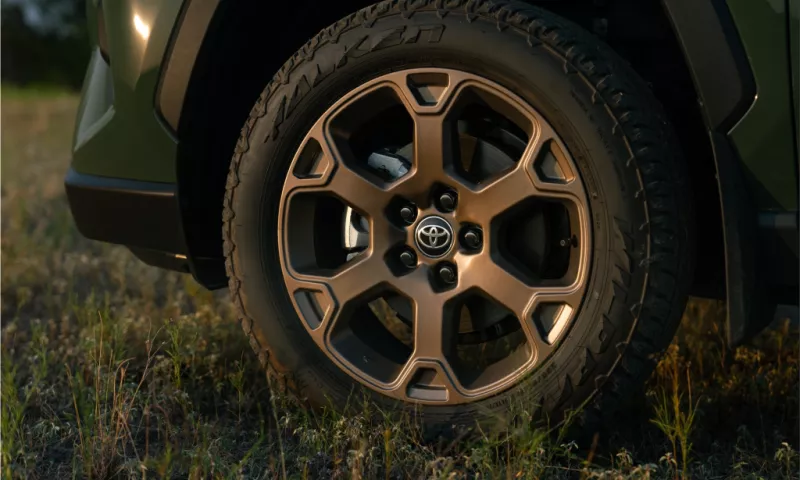
- Gloss-black 18-inch alloy wheels
- Bio-synthetic leather seating surfaces
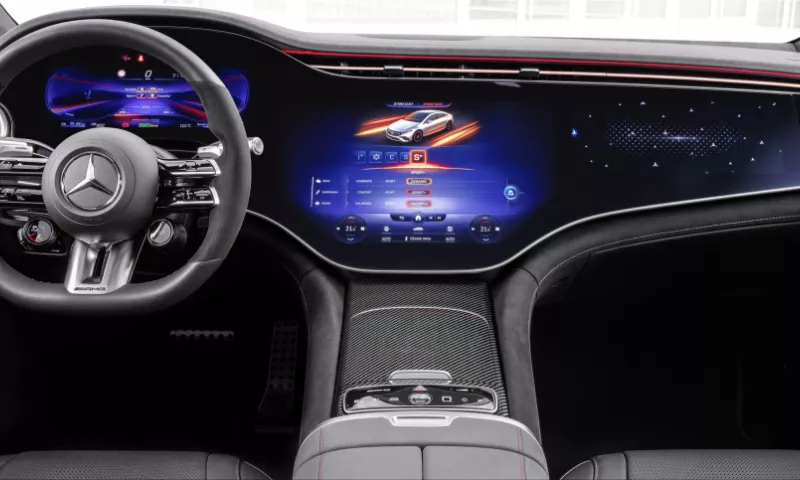
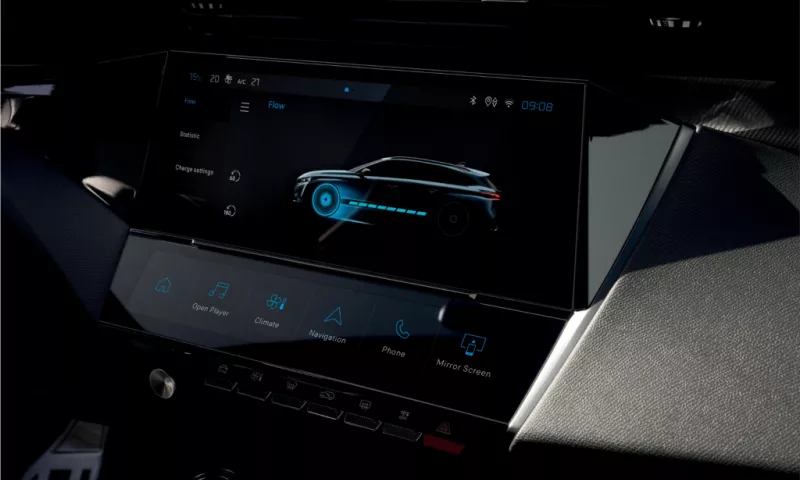
- 10.2-inch driver display and infotainment system
- Wireless Apple CarPlay and Android Auto
- Honda Sensing safety suite and multi-angle rearview camera
Chassis and Handling
The Honda CR‑V e:FCEV chassis is 9–10% stiffer than the hybrid Honda CR‑V. Suspension tuning accounts for the added mass of the battery and fuel-cell system, while maintaining Honda’s trademark ride quality and steering feedback.
Significance of the Pikes Peak Entry
- Demonstrates hydrogen fuel viability under racing conditions
- Reduces range concerns with hybrid hydrogen-electric format
- Validates Honda's progress toward carbon neutrality by 2040
- Brings motorsport exposure to fuel-cell technology
Key Specifications
| Feature | Specification |
|---|---|
| Electric Motor Output | 174 hp @ 4,006–6,750 rpm |
| Torque | 229 lb-ft @ 90–4,006 rpm |
| Battery | 17.7 kWh lithium-ion |
| Fuel Cell Power | 92.2 kW PEMFC |
| Hydrogen Capacity | 4.3 kg |
| Zero-Emission Range | 270 miles (EPA) |
| EV-only Range | 29 miles |
| Refueling Time | 3–5 minutes |
| Curb Weight | ≈4,460 lb |
Race Outlook
The Honda CR‑V e:FCEV competes in the Exhibition class. Though not optimized for outright speed, it showcases hydrogen’s responsiveness, real-world reliability, and strategic value. If Dai Yoshihara secures a top finish, it could redefine expectations for zero-emission racing.
Conclusion
The Honda CR‑V e:FCEV combines daily driving practicality with motorsport-worthy engineering. Its presence at Pikes Peak serves as a public demonstration of hydrogen fuel-cell viability. On June 22, the climb will test more than performance—it will measure public confidence in the next era of zero-emission vehicles.
- Add new comment
- 116 views