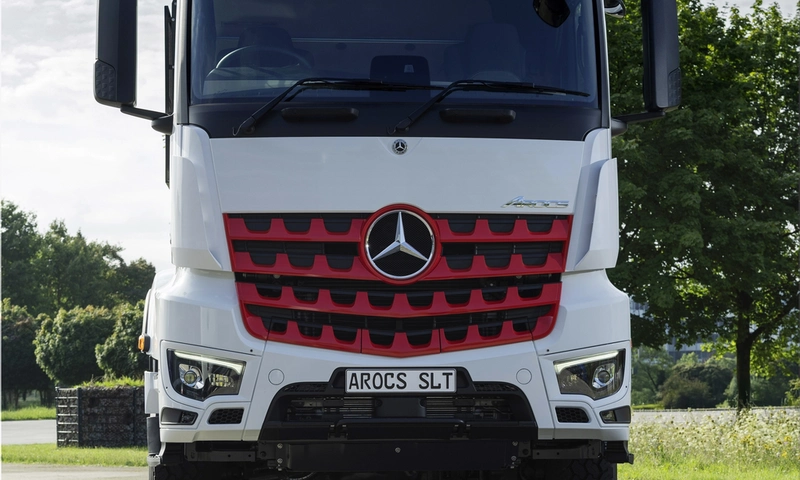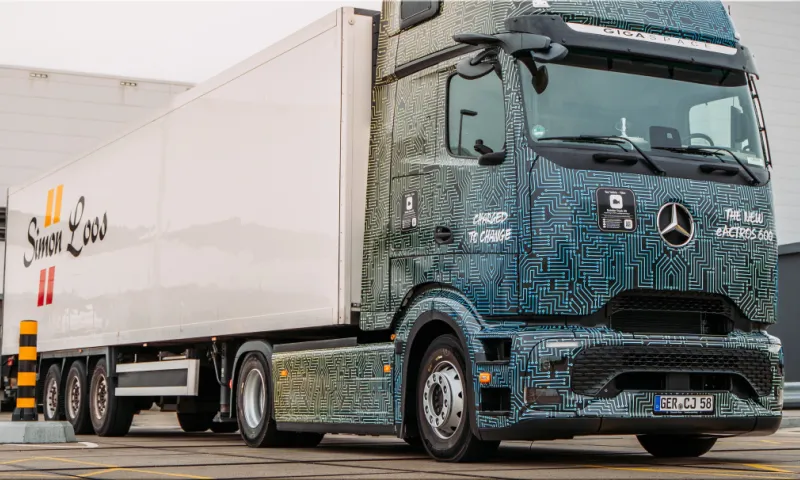
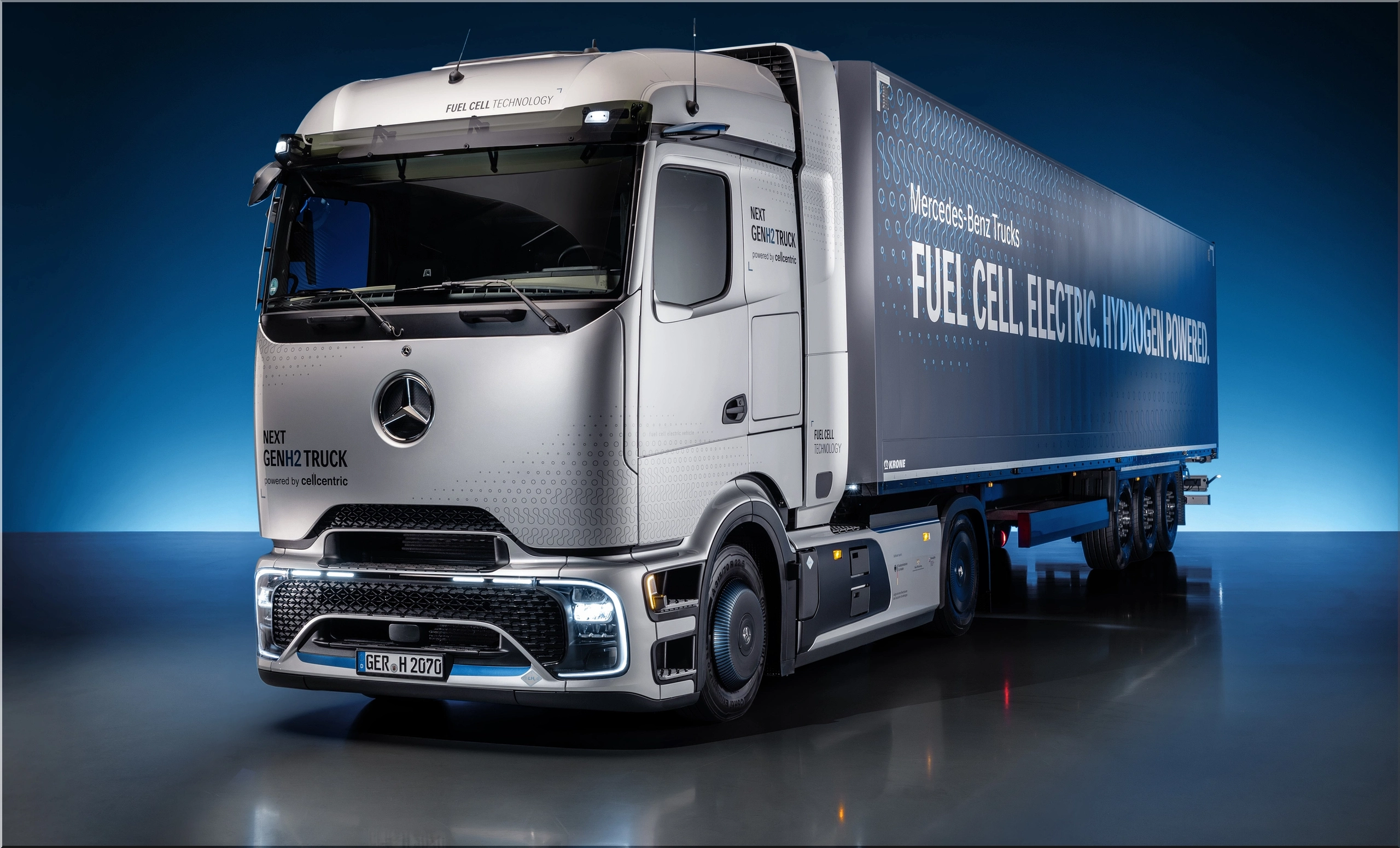
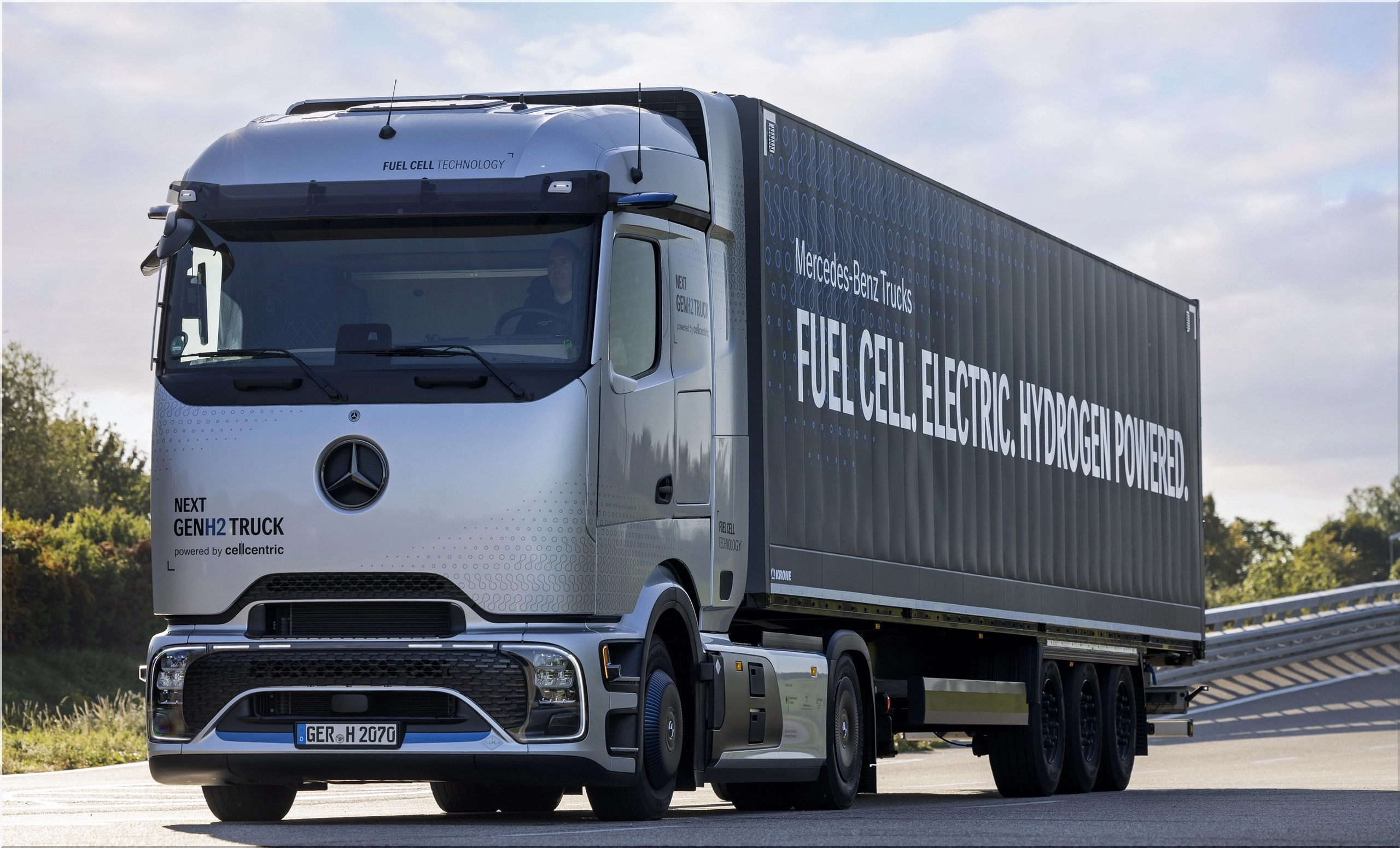
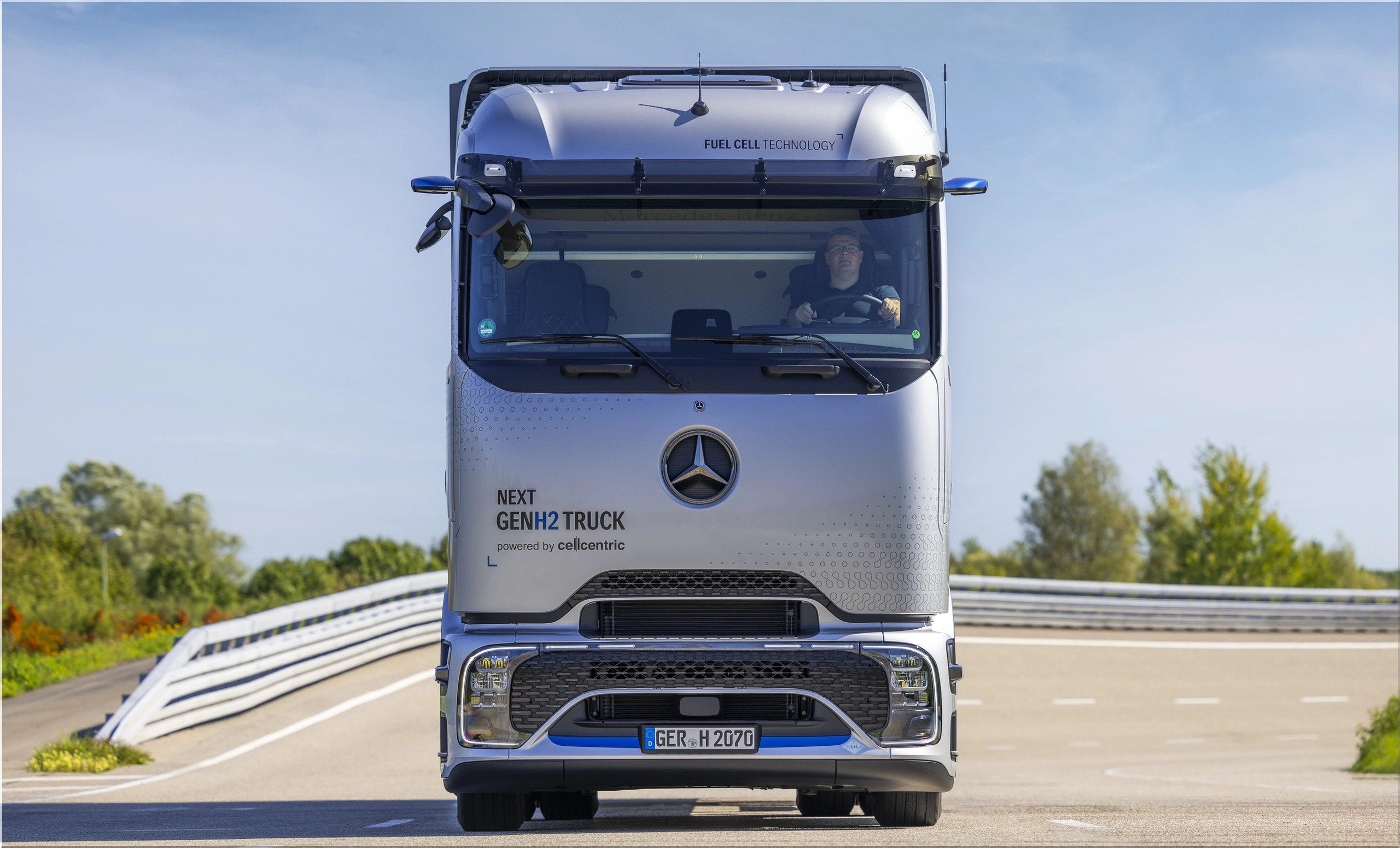
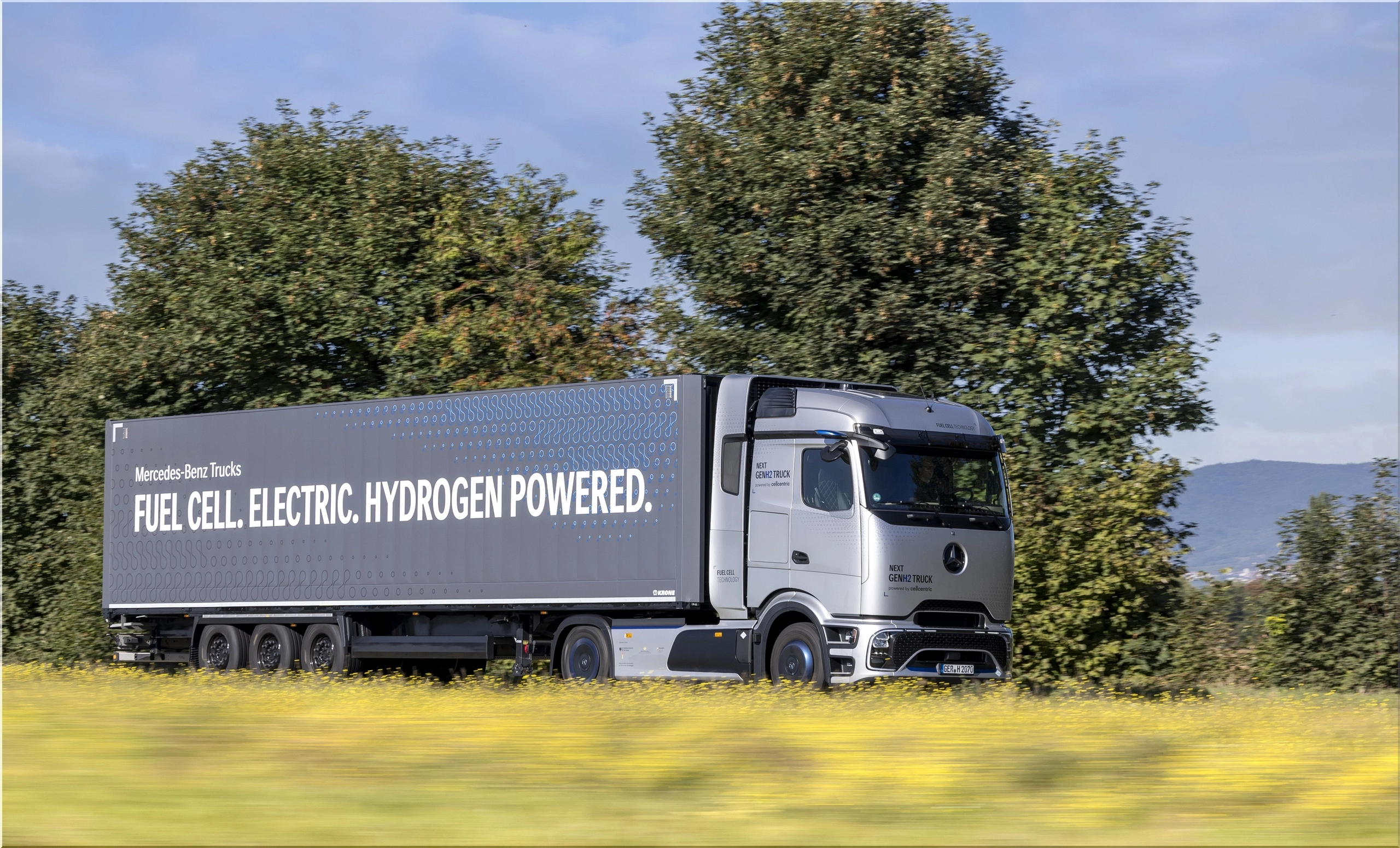
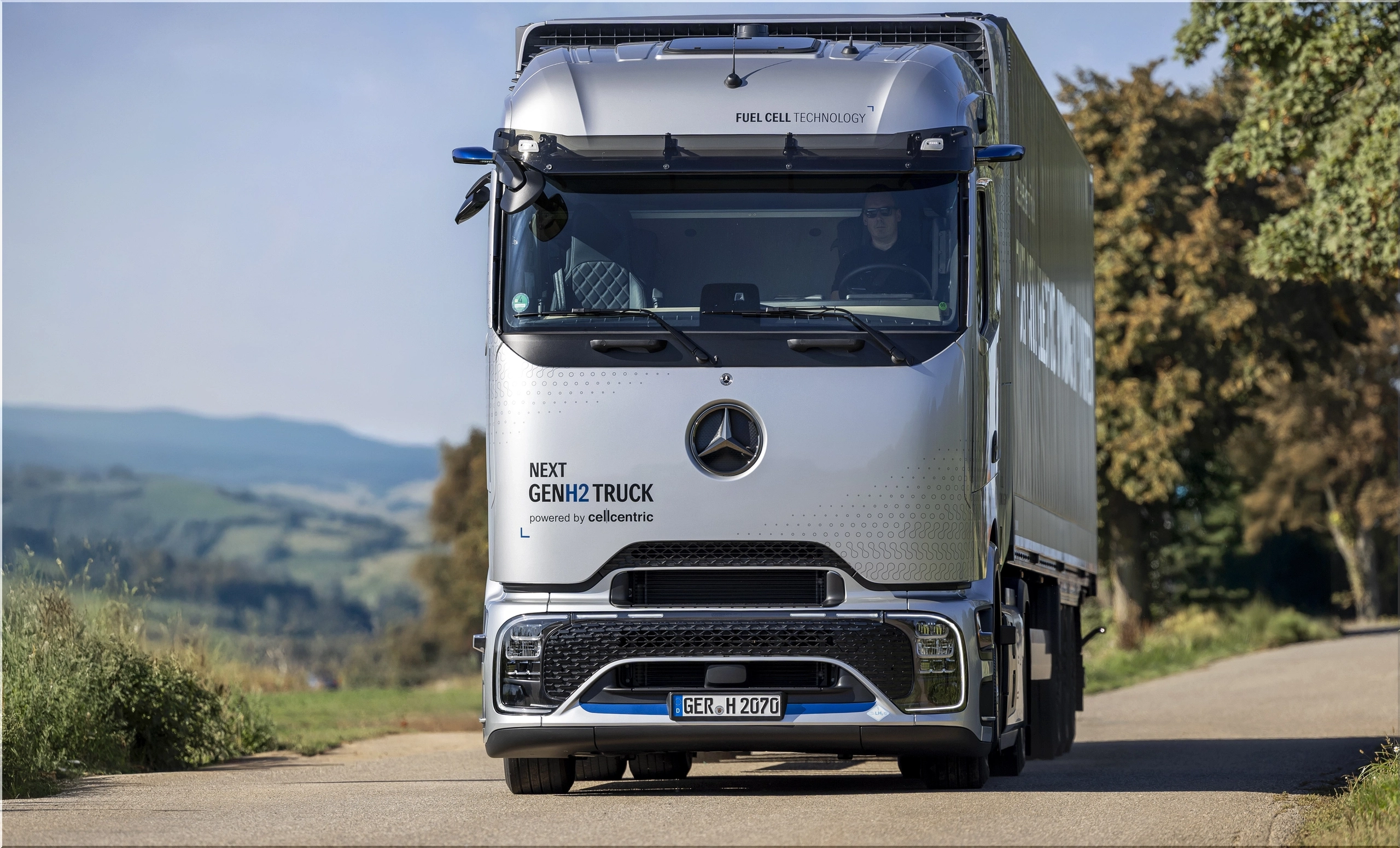
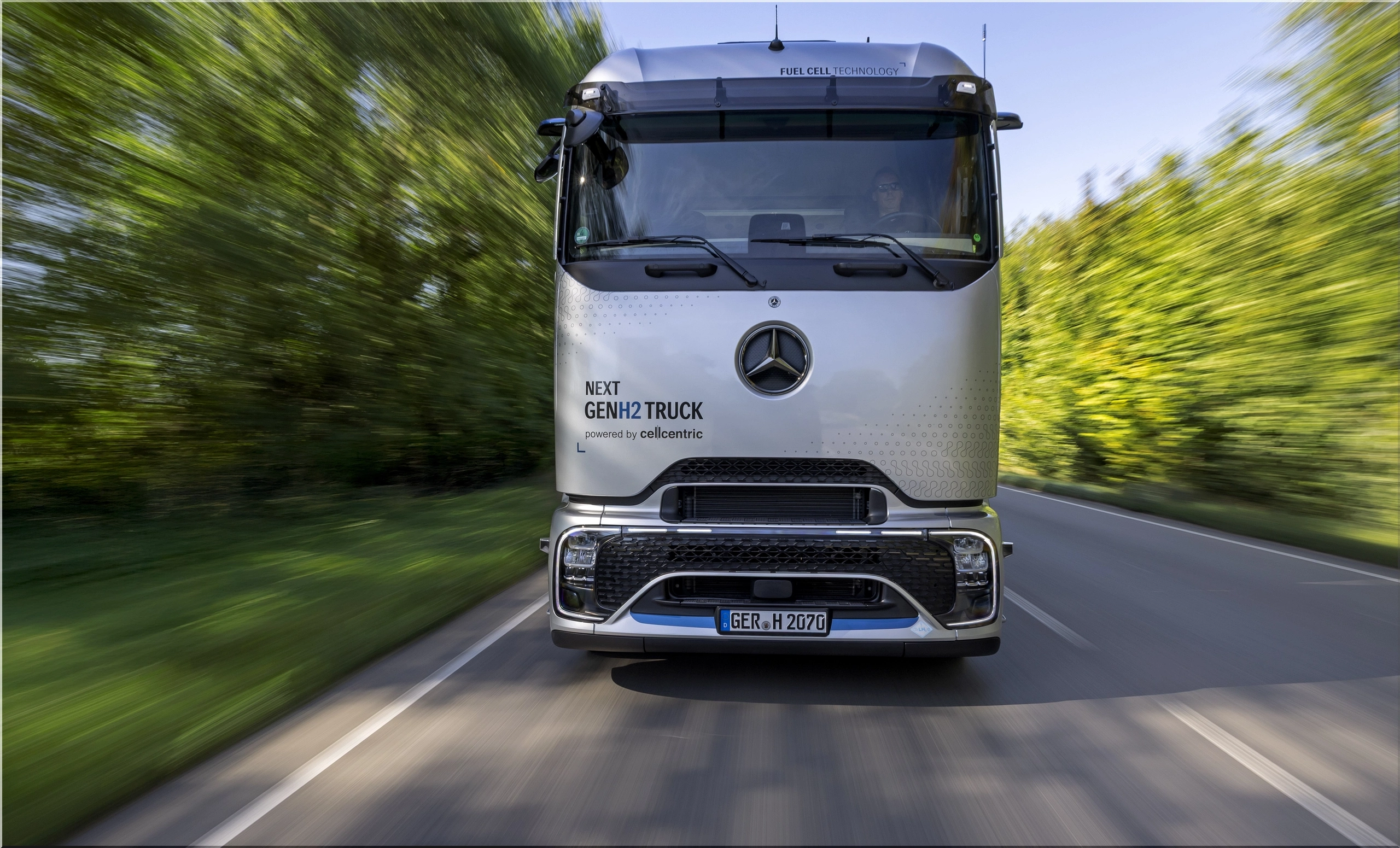
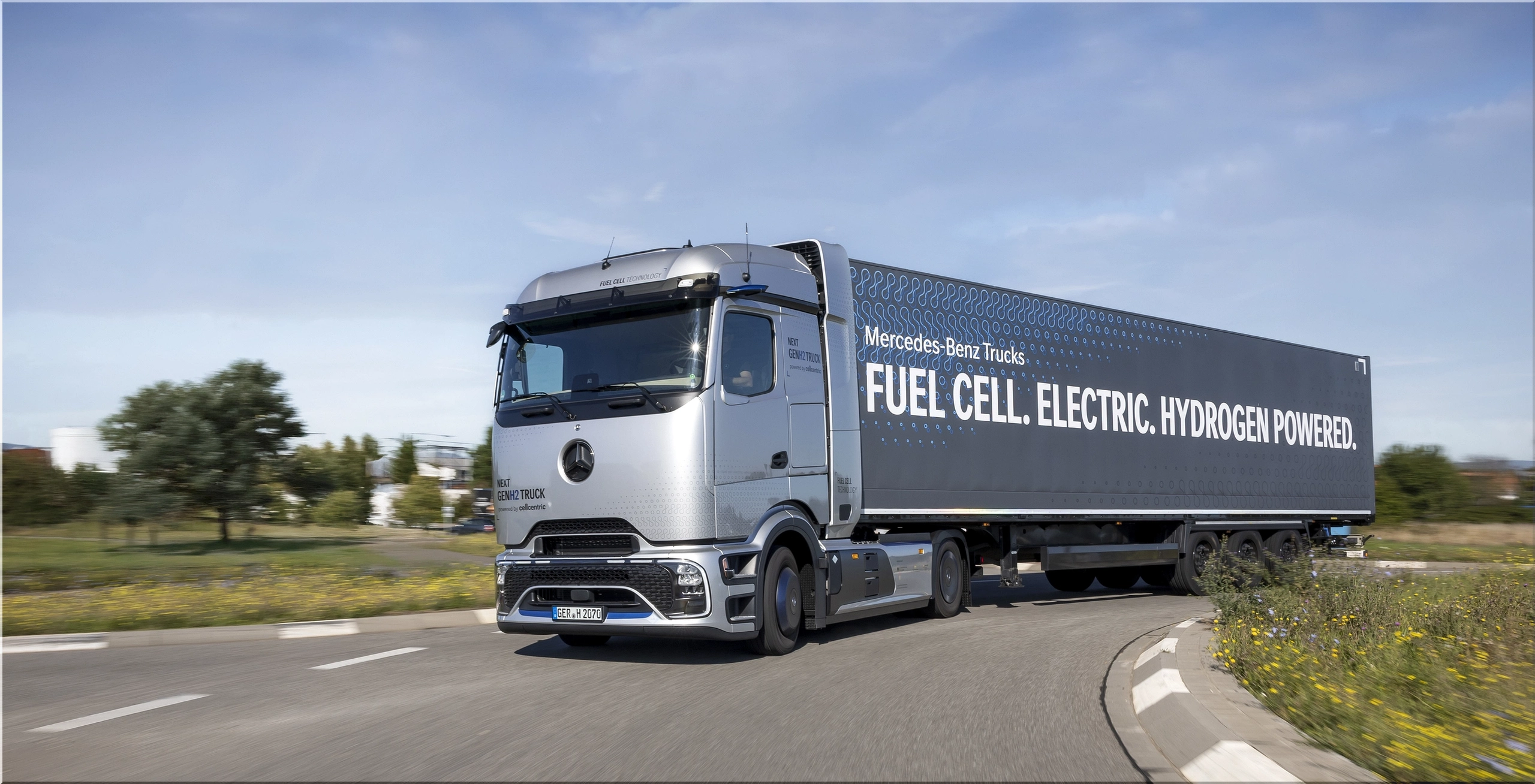
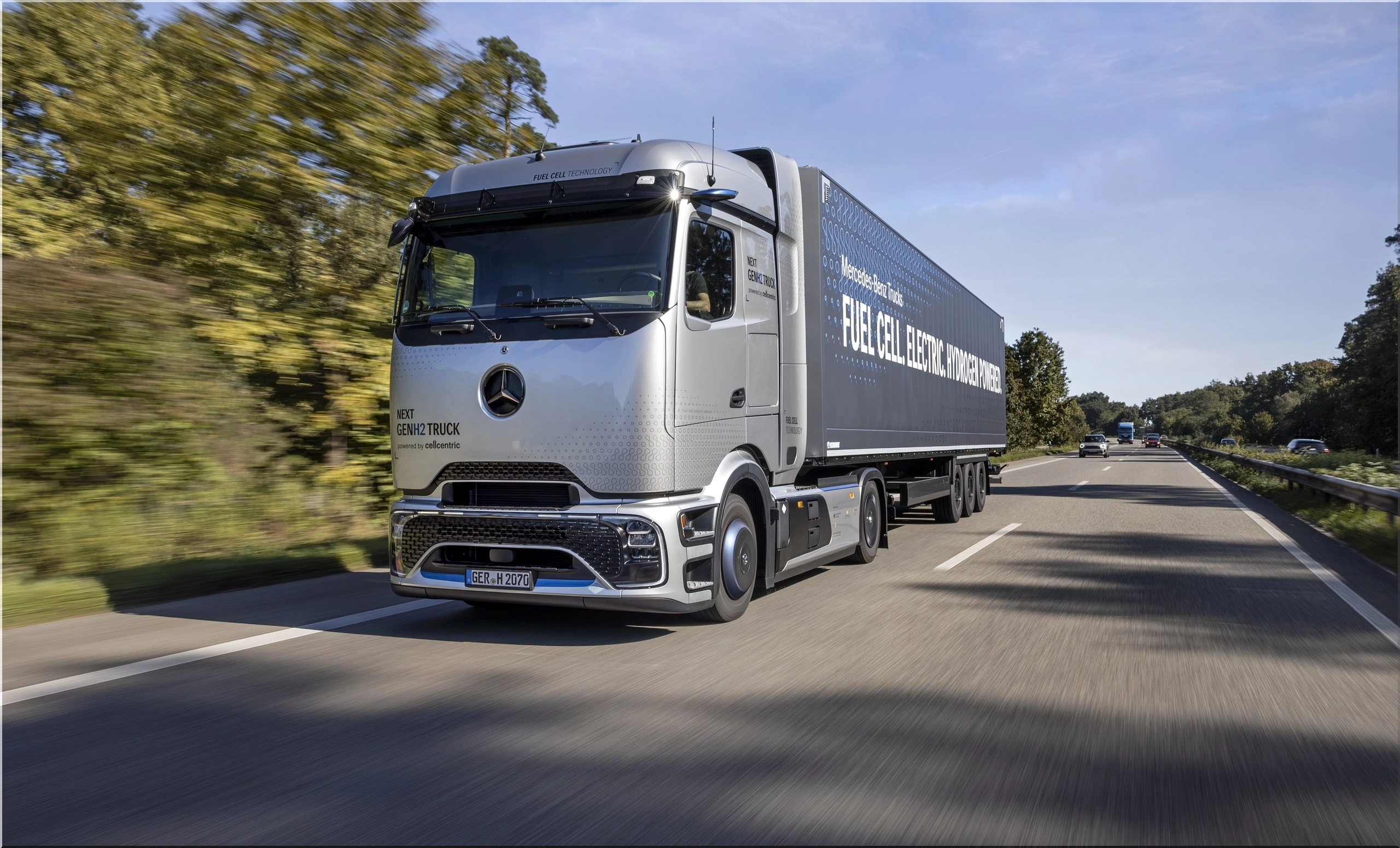
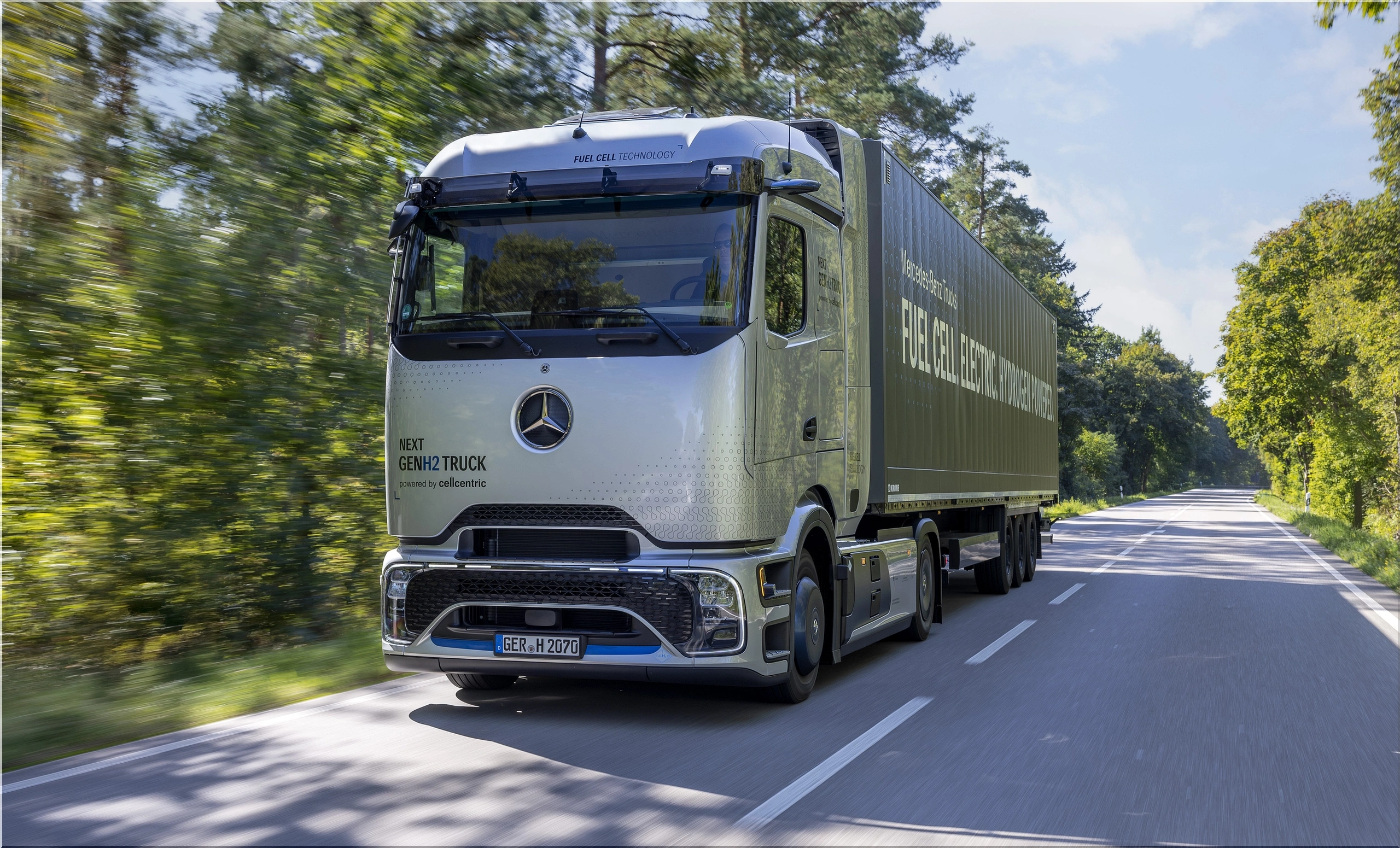
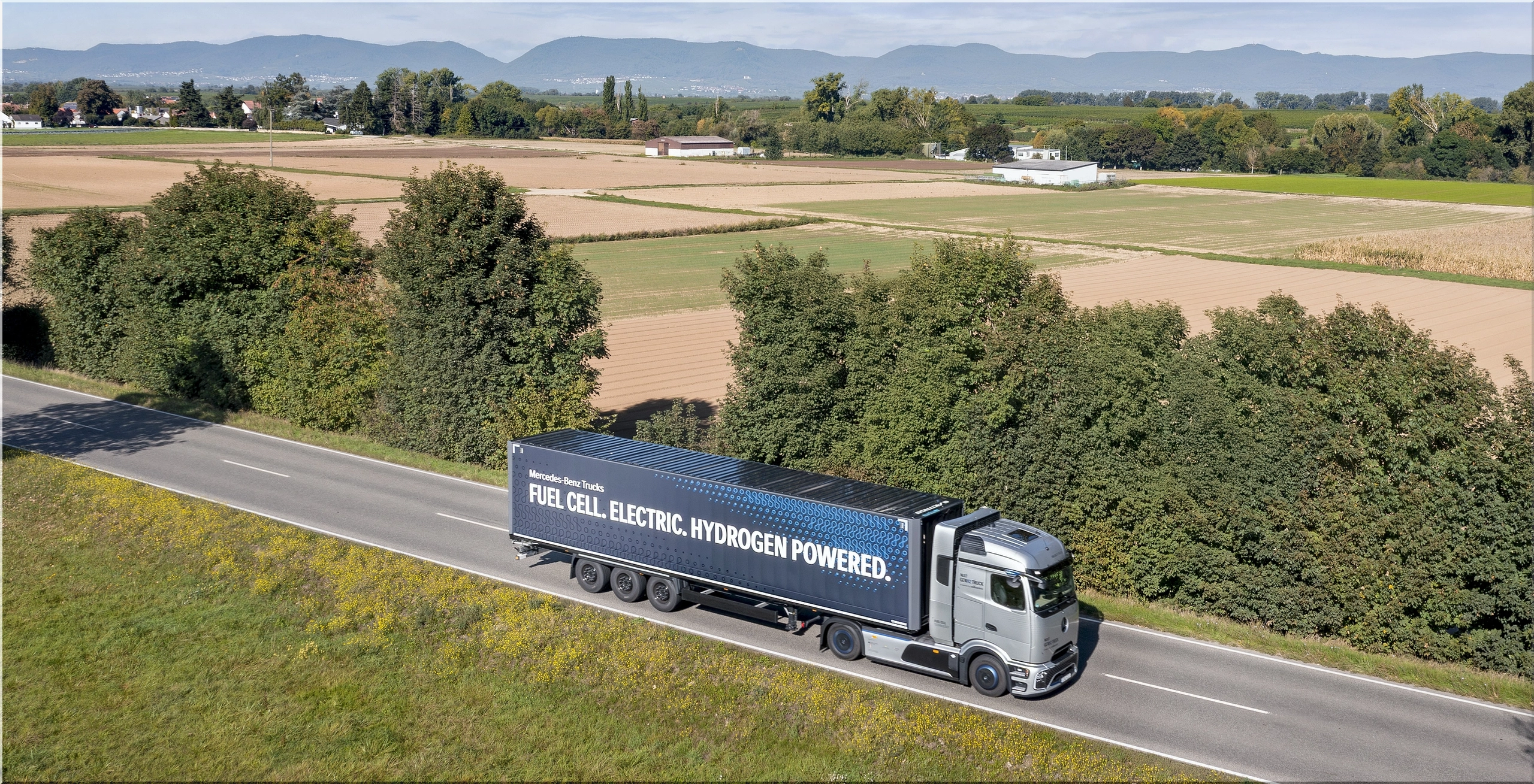
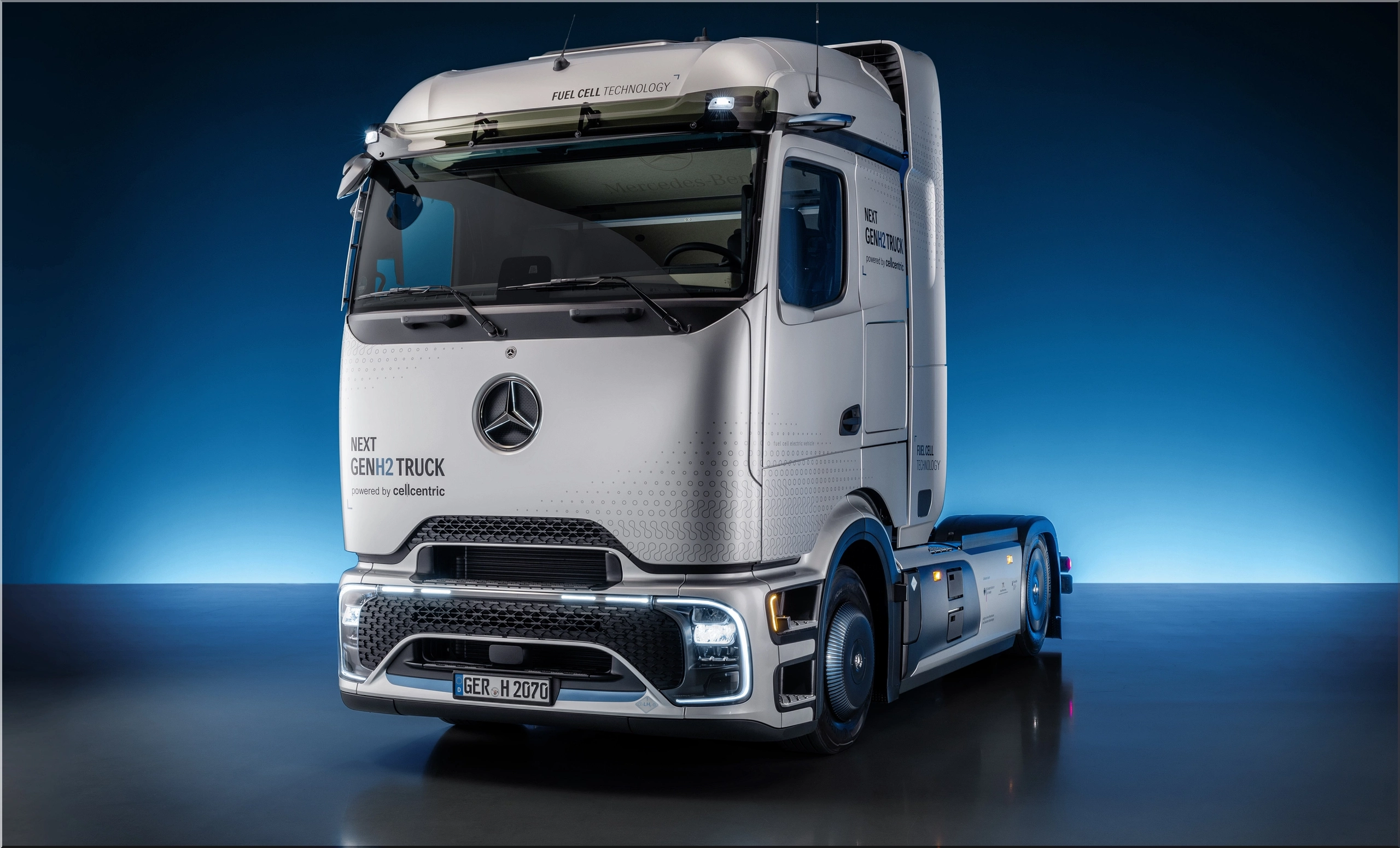
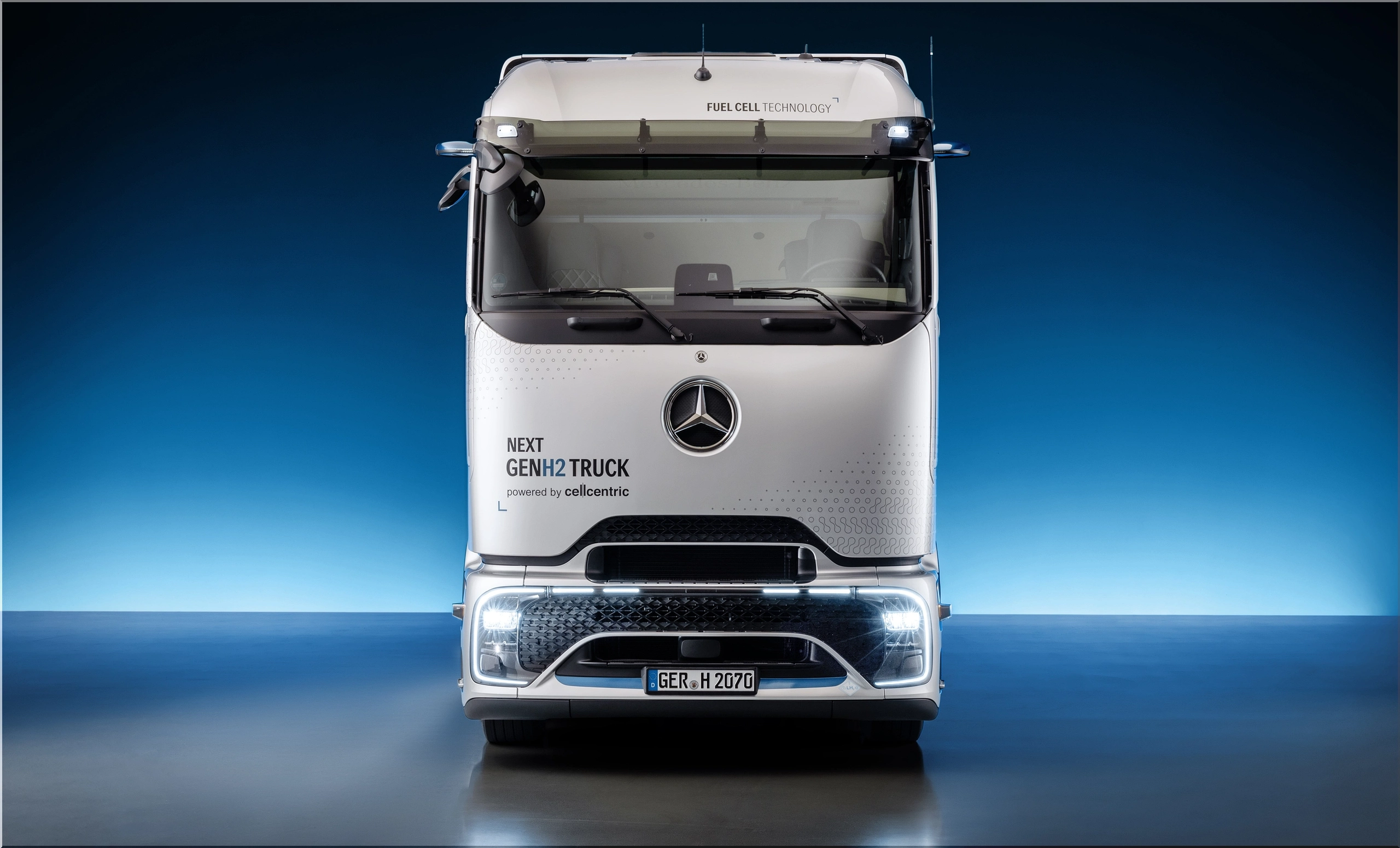
The Mercedes-Benz NextGenH2 Truck moves hydrogen trucking out of controlled prototypes and into operational reality. Daimler Truck plans to deploy 100 units with paying customers from late 2026. This signals a shift from engineering validation to economic validation.
Long-haul freight still resists electrification at scale. Battery-electric trucks perform well under 300 miles per day. Above that, downtime, grid demand, and payload penalties compound fast. Hydrogen targets that exact gap.
Why Hydrogen Still Targets Long-Haul Freight
Daimler Truck treats hydrogen as a range and utilization solution, not a universal replacement.
Battery-electric constraints grow with distance:
- Battery mass cuts payload by thousands of pounds
- Megawatt charging stresses depot infrastructure
- Route deviations increase operational risk
Hydrogen shifts energy storage off the vehicle mass curve. Liquid hydrogen stores more usable energy per kilogram than batteries, which stabilizes payload capacity over long distances.
From a behavioral economics lens, fleets favor systems that preserve familiar workflows. Fast refueling reduces perceived risk and planning friction.
Technical Architecture of the Mercedes-Benz NextGenH2 Truck
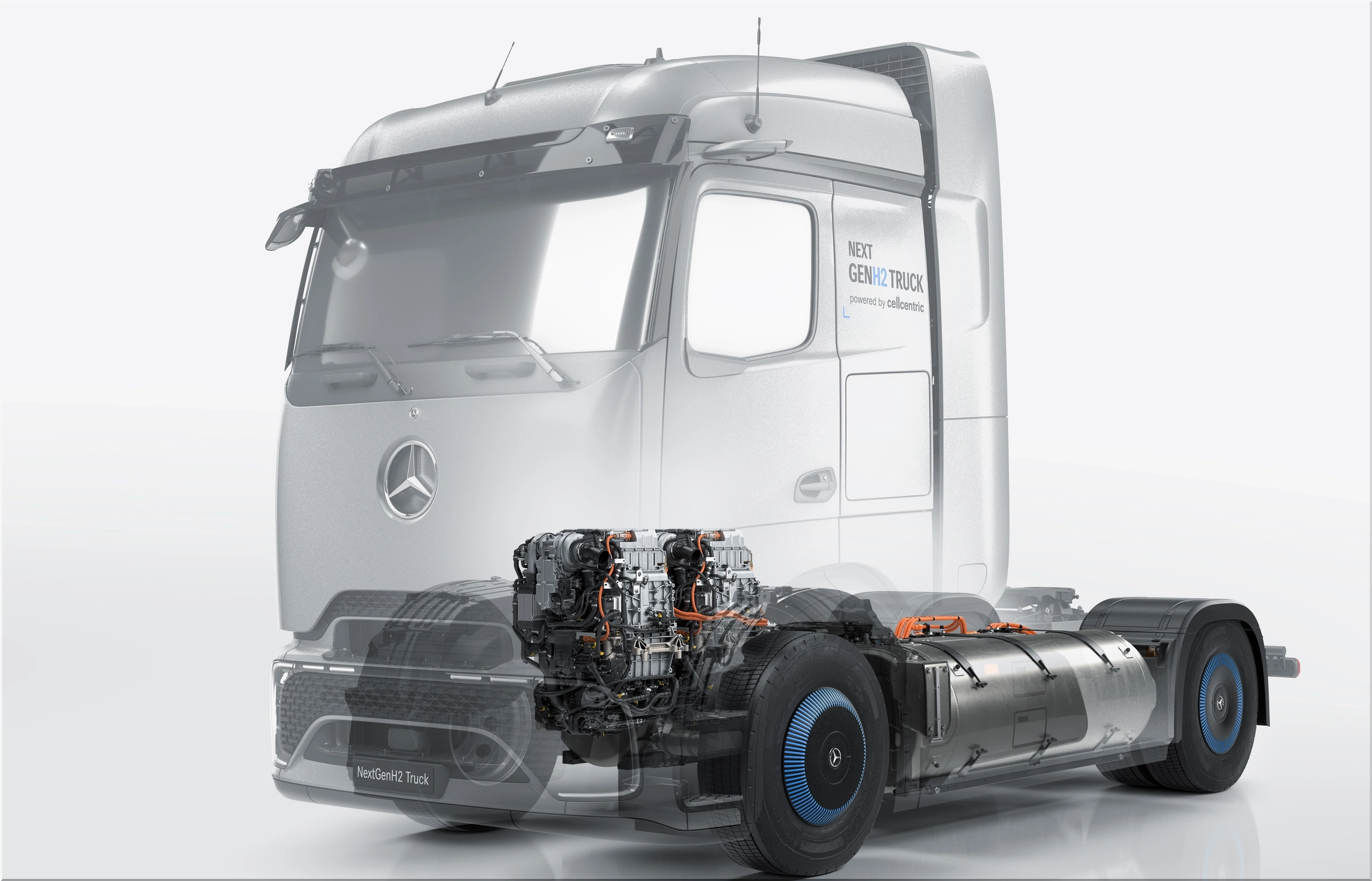
The NextGenH2 Truck uses a fuel cell electric layout optimized for durability and serviceability. Daimler avoided experimental components wherever possible.
Fuel Cell and Electric Drive System
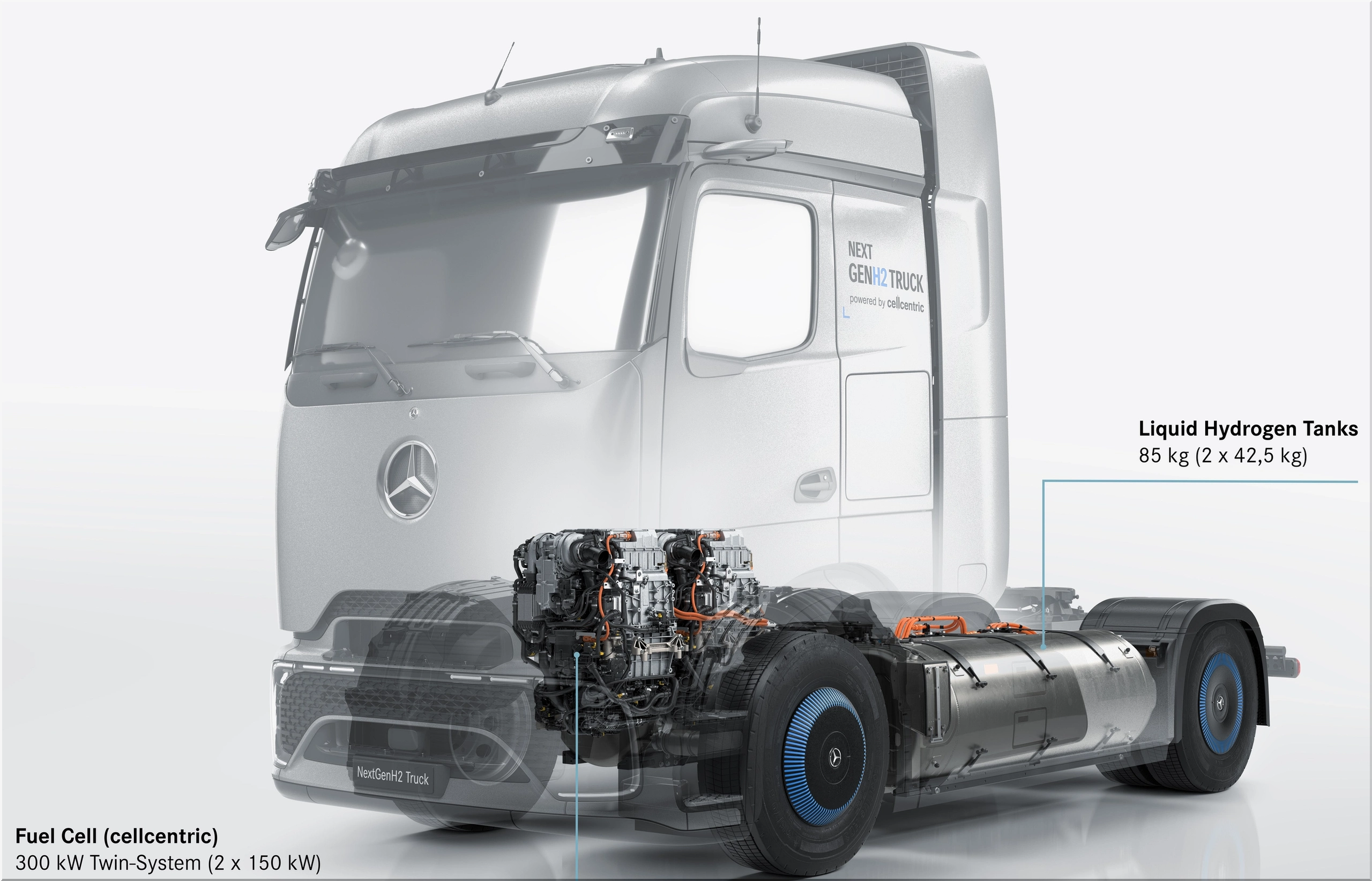
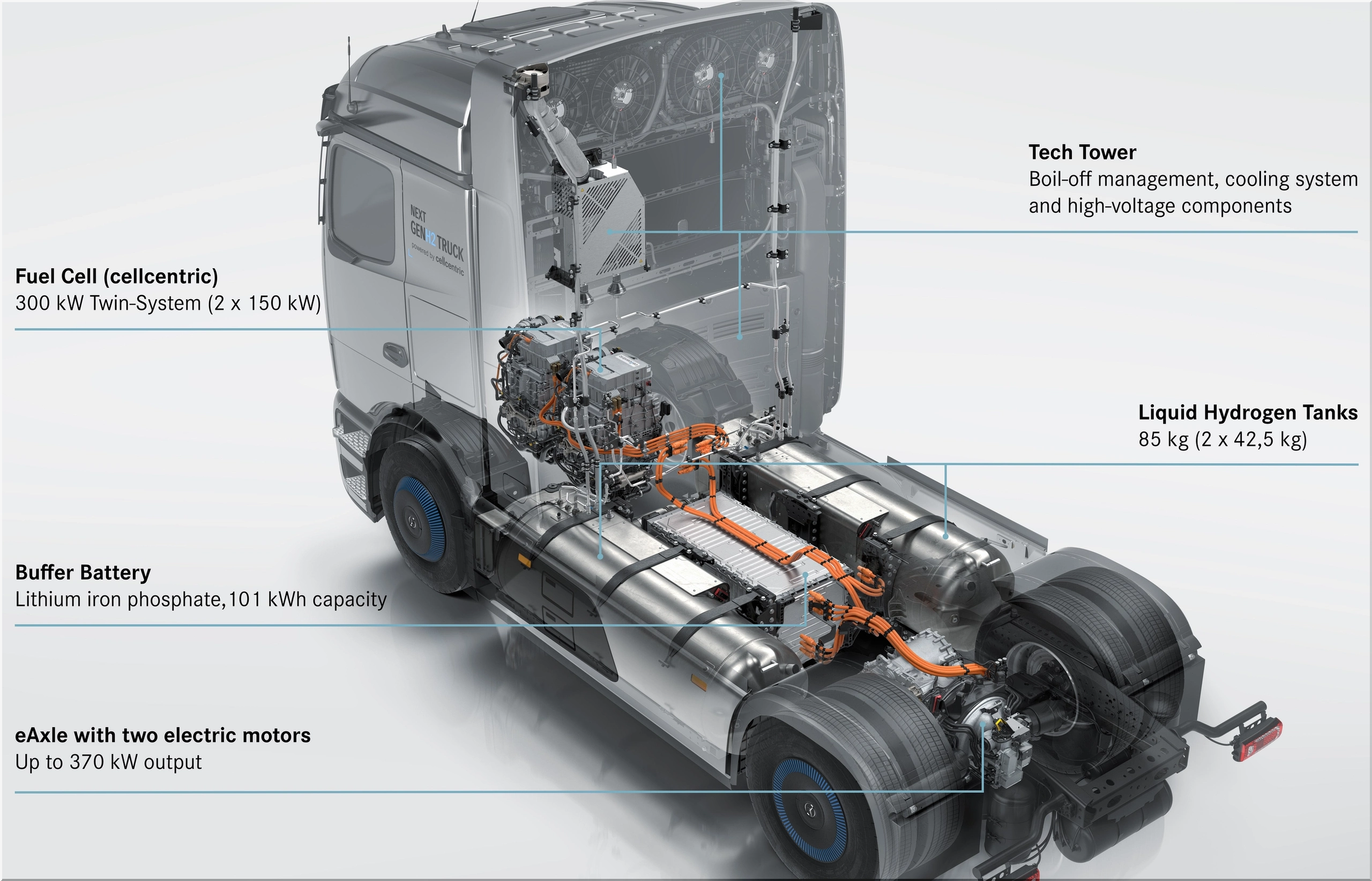
- Two cellcentric fuel cell stacks rated at 150 kW each
- Combined system output of 300 kW continuous
- Electric drive axle derived from the eActros 600
- Four-speed transmission with two reverse gears
Fuel cells generate electricity continuously, while the drivetrain behaves like a battery-electric truck. This decoupling smooths power delivery and reduces drivetrain stress under load.
Buffer Battery Strategy
A 101 kWh lithium-iron-phosphate battery acts as an energy buffer.
Benefits include:
- Capturing regenerative braking energy
- Supplying peak power during acceleration
- Reducing fuel cell cycling, which extends stack life
LFP chemistry trades energy density for durability. That choice aligns with fleet uptime priorities.
Liquid Hydrogen Storage and Refueling Economics
Daimler continues to favor liquid hydrogen over compressed gas.
Storage System Details
- Operating temperature: -253 degrees Celsius
- Total hydrogen capacity: up to 85 kg
- Dual-tank configuration with shared feed
Liquid hydrogen packs more energy into less volume. That allows diesel-like range without oversized tanks or frame extensions.
Refueling Time and Utilization Impact
Refueling takes 10 to 15 minutes, comparable to diesel. That directly protects asset utilization rates.
From a loss aversion standpoint, fleets resist solutions that reduce daily miles per tractor. Hydrogen minimizes that psychological and financial loss.
Verified Range and Consumption Data
Daimler reports ranges exceeding 1,000 kilometers under full load. That figure stems from controlled and real-world trials.
Observed hydrogen consumption:
- 5.6 kg per 100 km at moderate weights
- Up to 8.0 kg per 100 km near 40 tons GCW
At current hydrogen prices, fuel cost remains high. However, range consistency and fast refueling offset scheduling penalties common with long charging cycles.
Aerodynamics and Cab Efficiency Gains
The NextGenH2 Truck adopts the ProCabin design from the Actros L and eActros 600.
Measured Impact
- Around 9 percent drag reduction
- Lower hydrogen consumption at highway speeds
- Improved crosswind stability
Aerodynamic efficiency matters more for hydrogen trucks than city-duty EVs. Long-haul energy use correlates directly with drag.
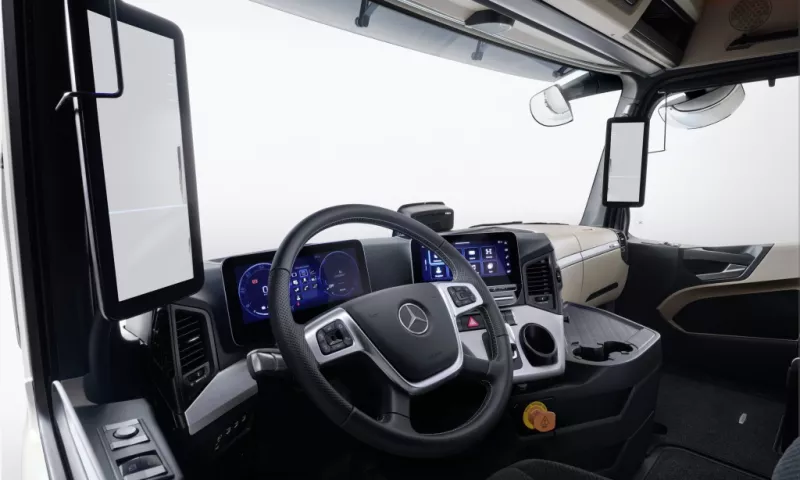
Driver Environment and Interface
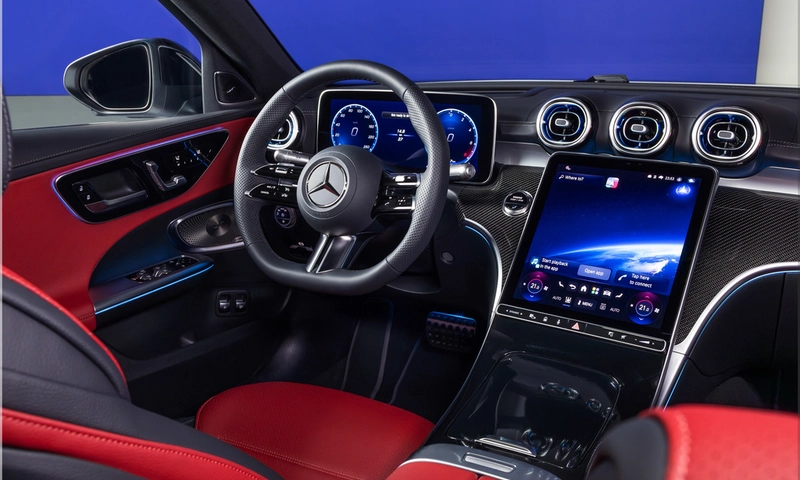
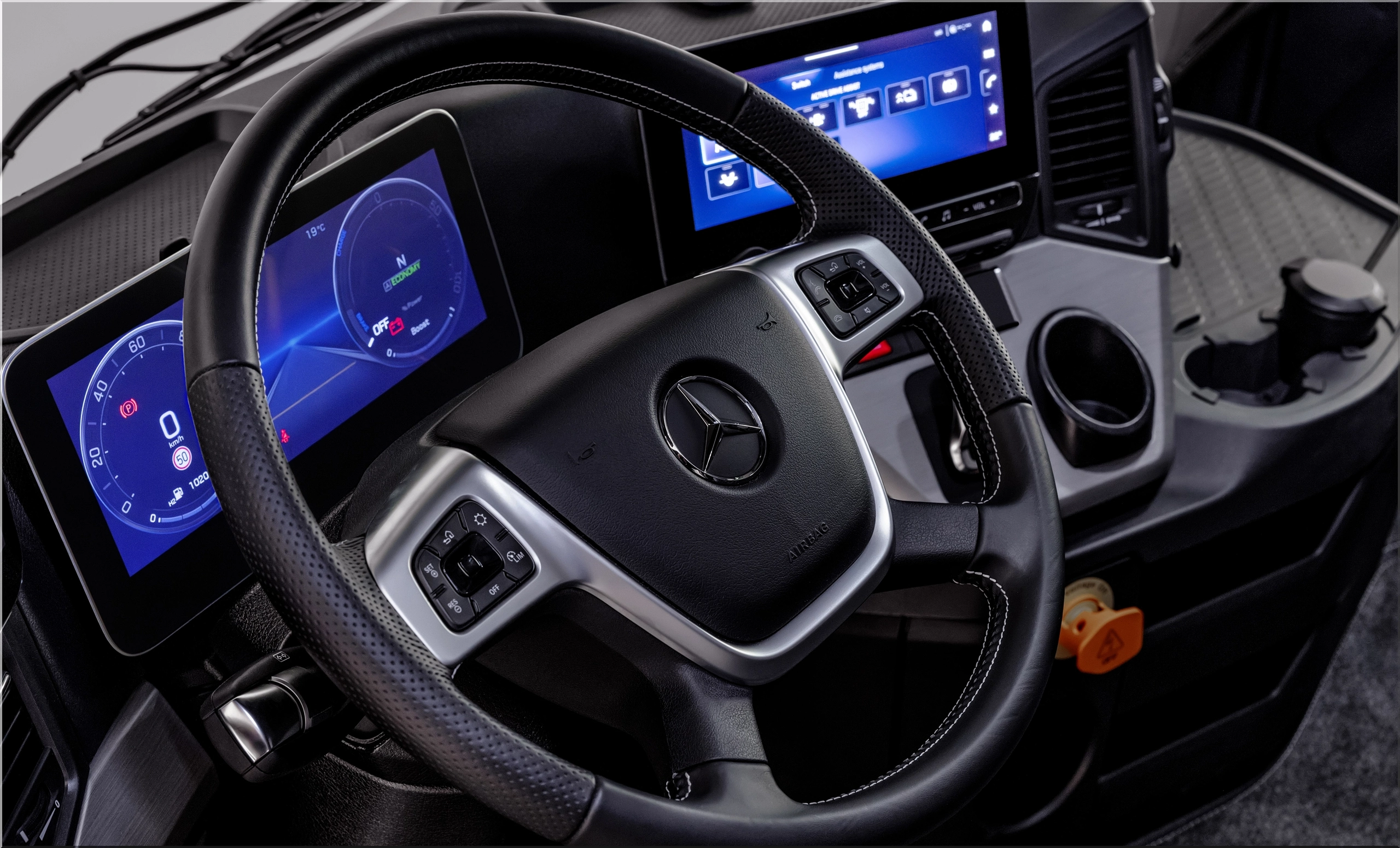
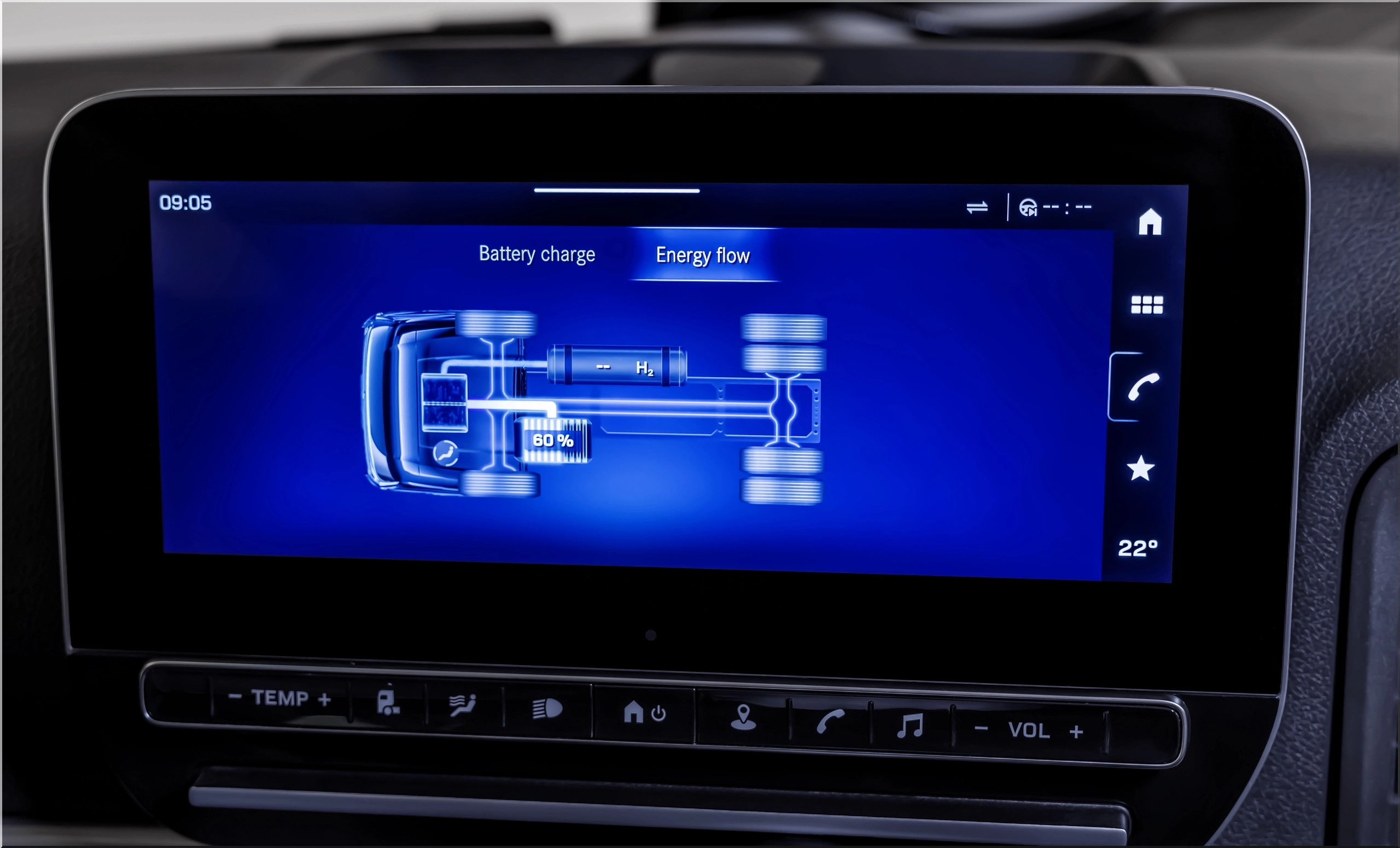
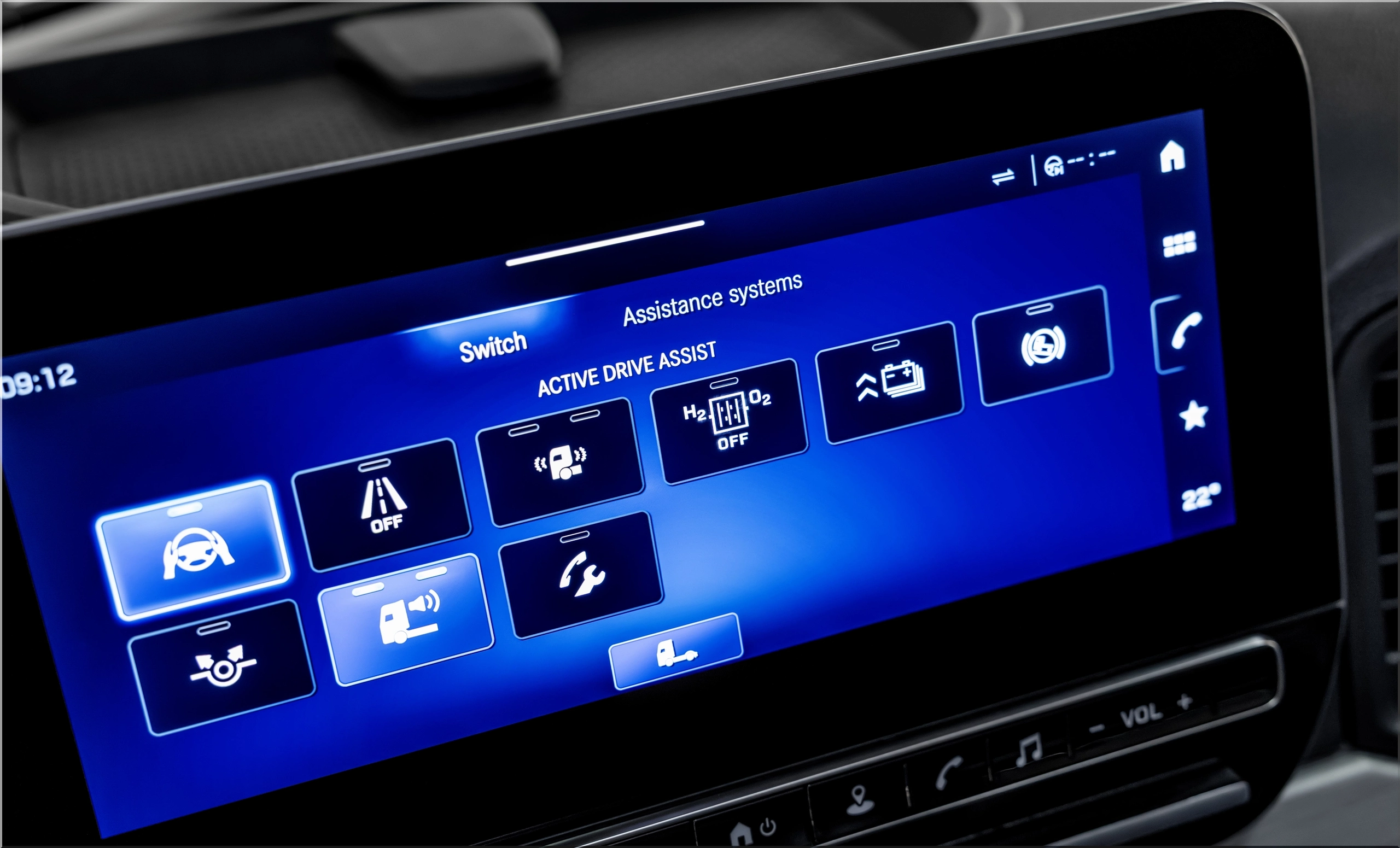
- Multimedia Cockpit Interactive 2
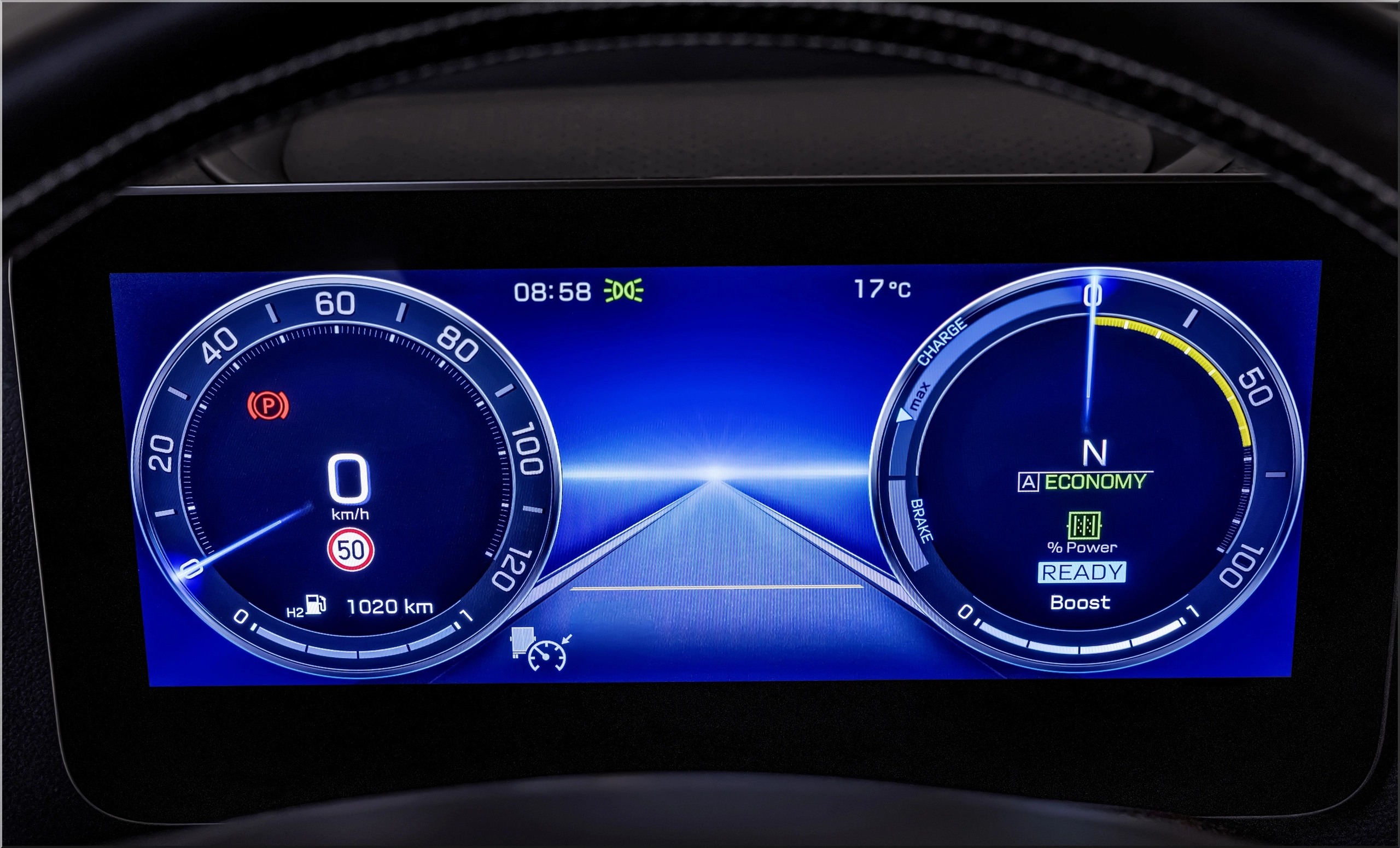
- Digital instrumentation optimized for energy flow visibility
- Familiar layout for existing Mercedes-Benz drivers
Reducing retraining lowers adoption friction. Familiarity speeds acceptance.
Safety Systems and Regulatory Readiness
The truck integrates Daimler's latest electronic architecture.
Key systems include:
- Active Brake Assist 6
- Active Sideguard Assist 2
- Front Guard Assist
Cybersecurity compliance aligns with current EU commercial vehicle standards. Fleets increasingly audit digital risk alongside mechanical risk.
Packaging Changes Improve Fleet Compatibility
Early hydrogen trucks struggled with trailer fitment. Daimler addressed this directly.
Structural Changes
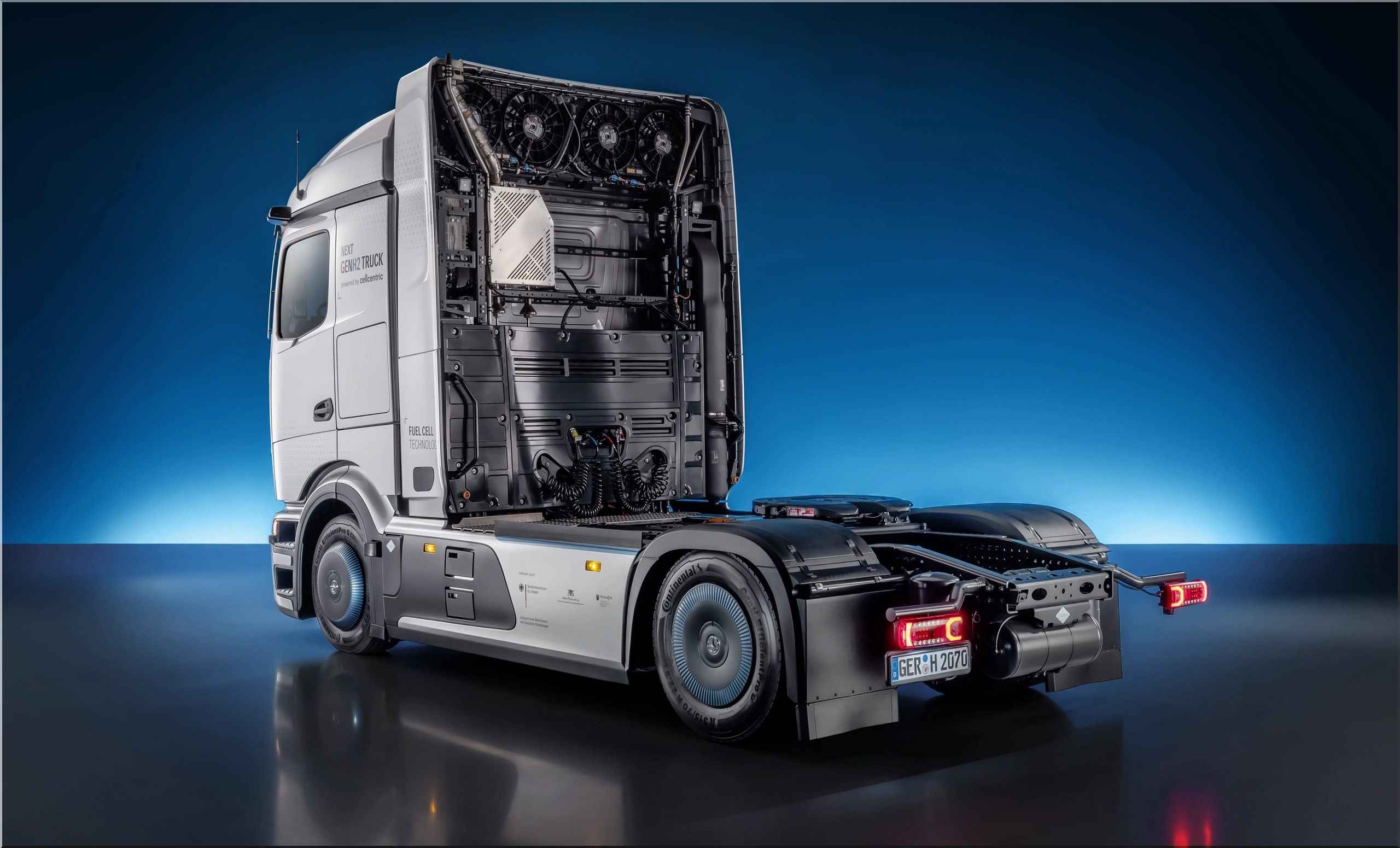
- Compact Tech Tower behind the cab
- Wheelbase shortened to 4,000 mm
- Compatibility with standard EU trailers
This improves tractor interchangeability across mixed fleets. Equipment specialization reduces utilization and resale value.
Thermal and Safety Management
- Advanced boil-off control for enclosed parking
- Active cooling for hot climates and alpine routes
- Hydrogen leak sensors rated for overnight cab occupancy
Allowing drivers to sleep in the cab removes a major operational constraint for multi-day routes.
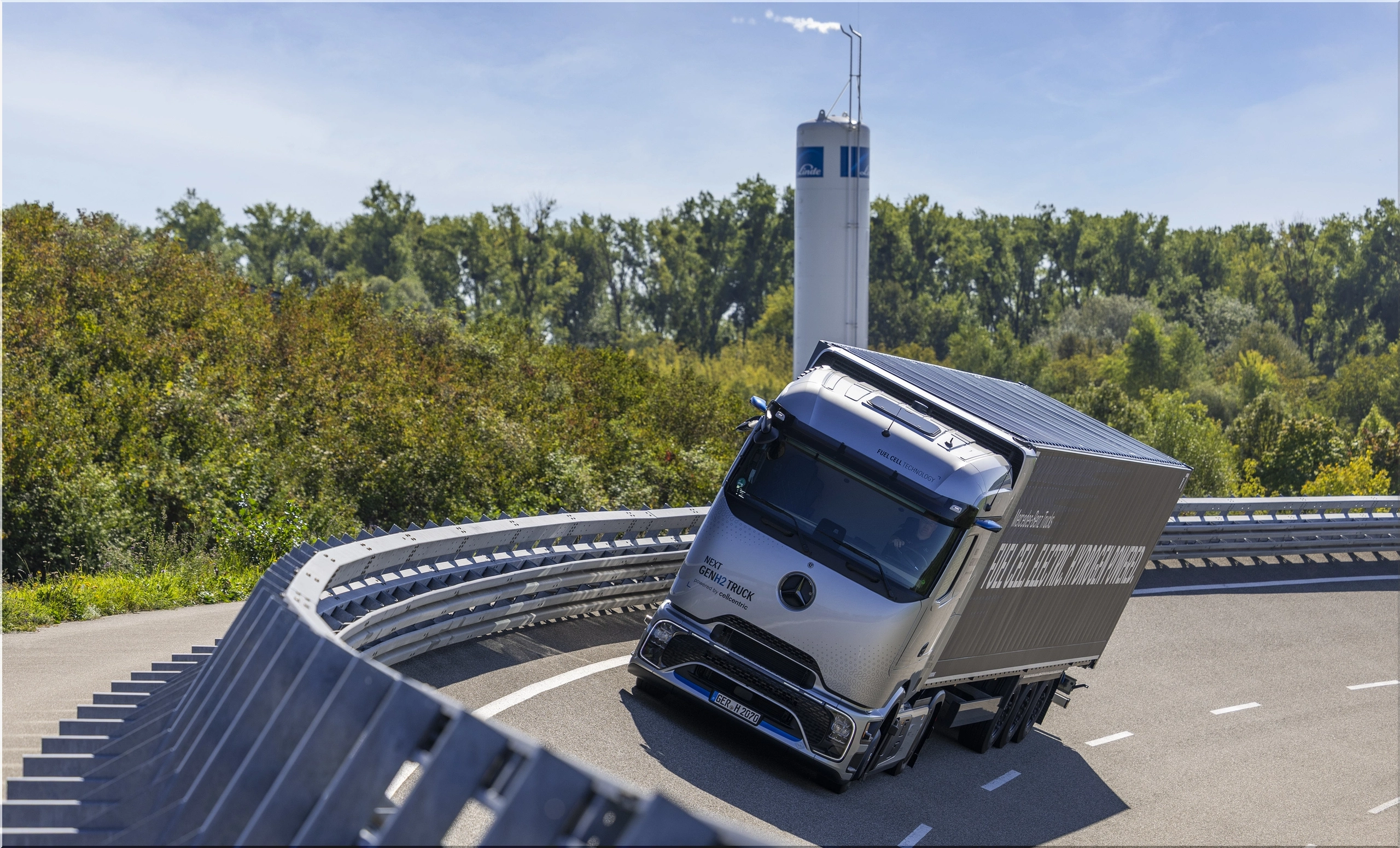
Driving Dynamics Under Load
Fuel cell trucks behave like electric trucks.
On-Road Performance
- Instant torque from standstill
- Smooth acceleration under heavy payload
- Low vibration and noise levels
Output levels reach:
- 340 kW in Economy mode
- 370 kW in Power mode
These figures support sustained hill climbs without derating.
Energy Recuperation
The e-axle recovers energy during braking and downhill travel. The system feeds electricity back into the buffer battery, reducing hydrogen draw during variable terrain.
This stabilizes real-world range across mixed routes.
Cost Signals and Financial Reality
Daimler does not disclose pricing. Industry estimates place fuel cell trucks above $400,000 USD per unit.
Hydrogen fuel pricing remains volatile and region-specific. Without incentives, total cost of ownership exceeds diesel and battery-electric options today.
Government Support
Development and deployment receive roughly $245 million USD in combined public funding. Subsidies offset early-stage risk and accelerate learning curves.
Series production aims for the early 2030s, assuming infrastructure and fuel economics improve.

Competitive Context: Hydrogen vs Electric Long-Haul
Zero-Emission Long-Haul Truck Comparison
| Truck Model | Powertrain | Claimed Range | Refuel or Charge Time | Production Stage |
|---|---|---|---|---|
| Mercedes-Benz NextGenH2 Truck | Hydrogen fuel cell | 1,000+ km | 10–15 minutes | Small series 2026 |
| Hyundai XCIENT Fuel Cell | Hydrogen fuel cell | ~400 km | ~20 minutes | Regional use |
| Tesla Semi | Battery-electric | 800–900 km | 30–60 minutes | Limited fleet |
| Volvo FH Electric | Battery-electric | ~600 km | ~2 hours | Series production |
Hydrogen leads on refueling speed and range. Battery-electric leads on infrastructure availability.
Infrastructure as the Limiting Factor
Hydrogen trucks scale only with fuel access.
Current barriers:
- Sparse liquid hydrogen stations
- High liquefaction energy cost
- Capital-intensive station builds
Daimler supports standards like sLH2 to improve interoperability. Infrastructure rollout pace will dictate adoption speed.
Fleet Profiles That Benefit First
Hydrogen trucks suit controlled use cases.
Best-Fit Operations
- Fixed long-haul corridors
- Centralized refueling hubs
- Fleets with emissions mandates
- Operators with pilot budgets
Early trials prioritize learning over margin optimization.
Behavioral Economics Behind Hydrogen Adoption
Fleet decisions rarely follow pure cost logic. Regulatory risk, brand exposure, and operational continuity matter.
Hydrogen offers:
- Familiar refueling routines
- Minimal route disruption
- Predictable daily utilization
These factors reduce perceived downside, even at higher upfront cost.
Pro-Tips for Fleet Operators
- Start with fixed routes
- Secure long-term hydrogen pricing
- Track downtime versus battery-electric trucks
- Capture driver feedback early
Structured pilots reduce risk.
Bottom Line
The Mercedes-Benz NextGenH2 Truck delivers verified range, fast refueling, and diesel-grade performance. Daimler resolved earlier packaging and usability issues using proven electric hardware.
Hydrogen trucking still depends on subsidies and infrastructure growth. That constraint remains real.
For fleets that value utilization and long-haul flexibility, hydrogen now presents a credible option rather than a theoretical one.
@via electrichunter and daimlertruck.
- Add new comment
- 194 views