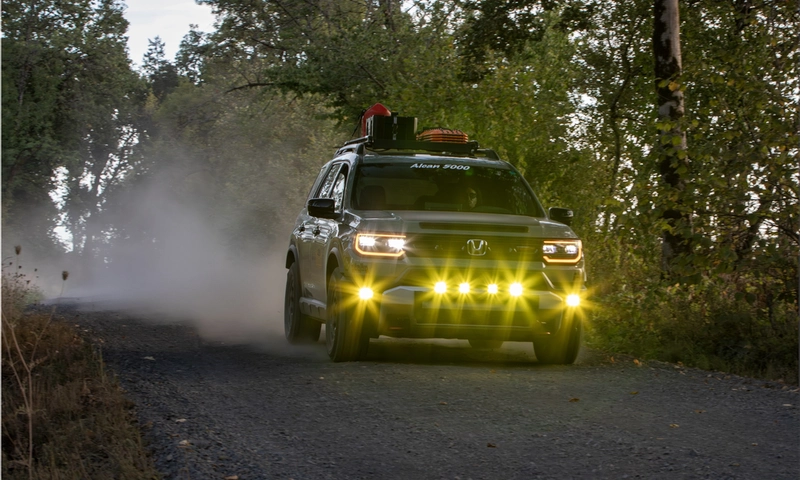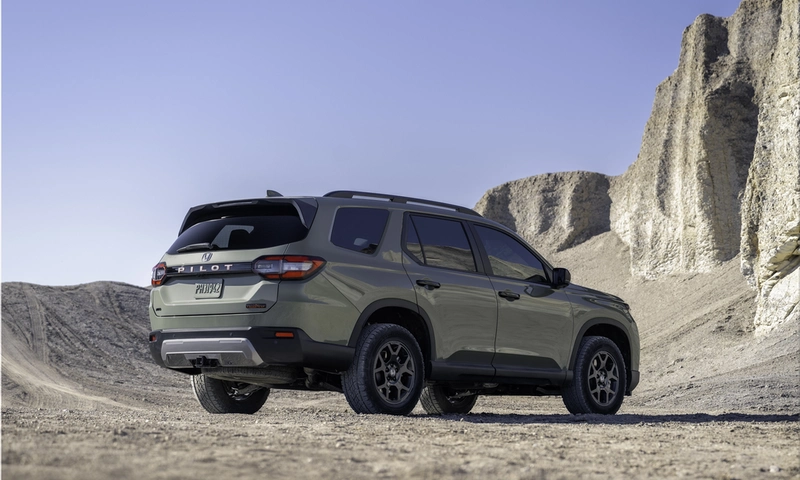
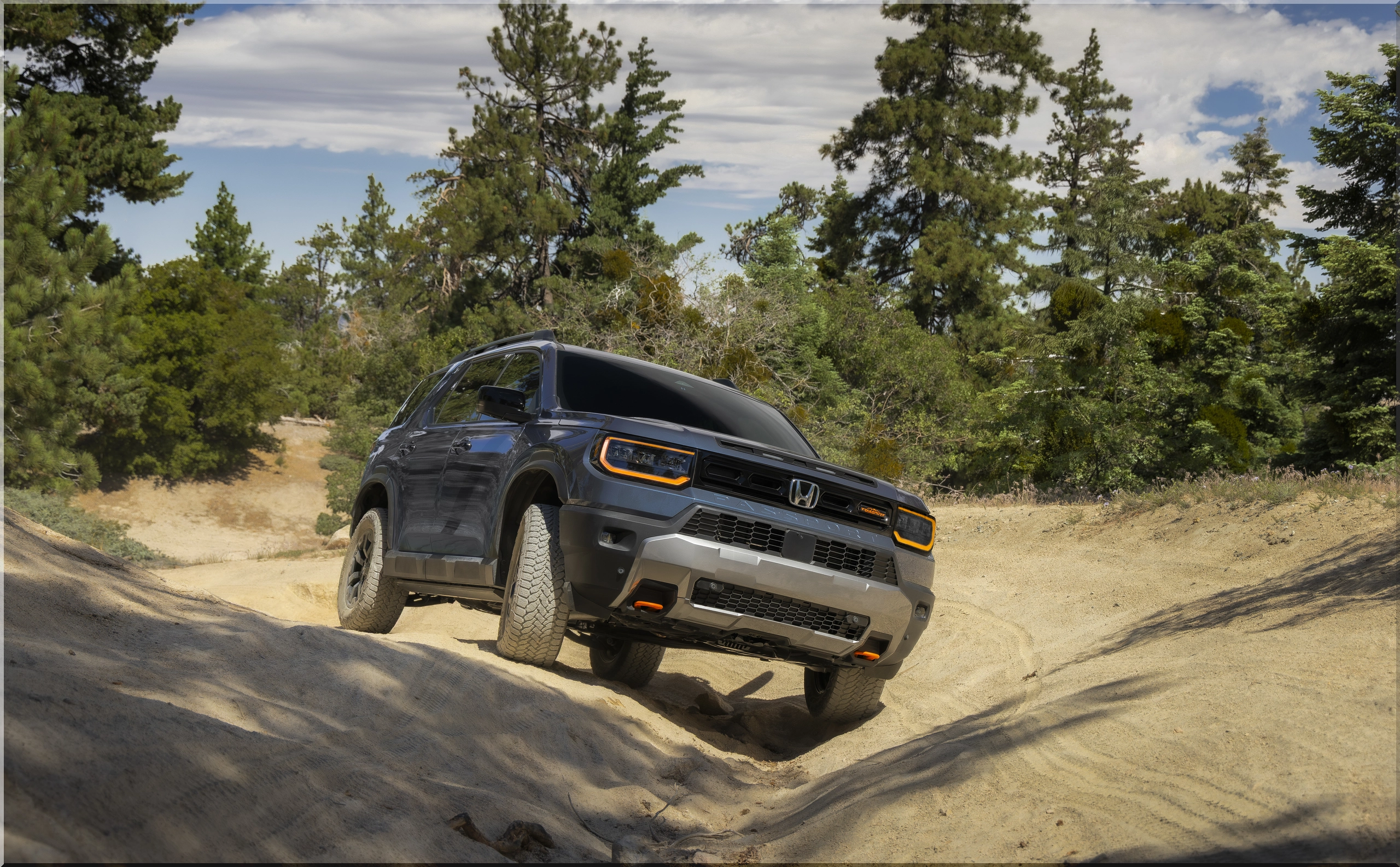
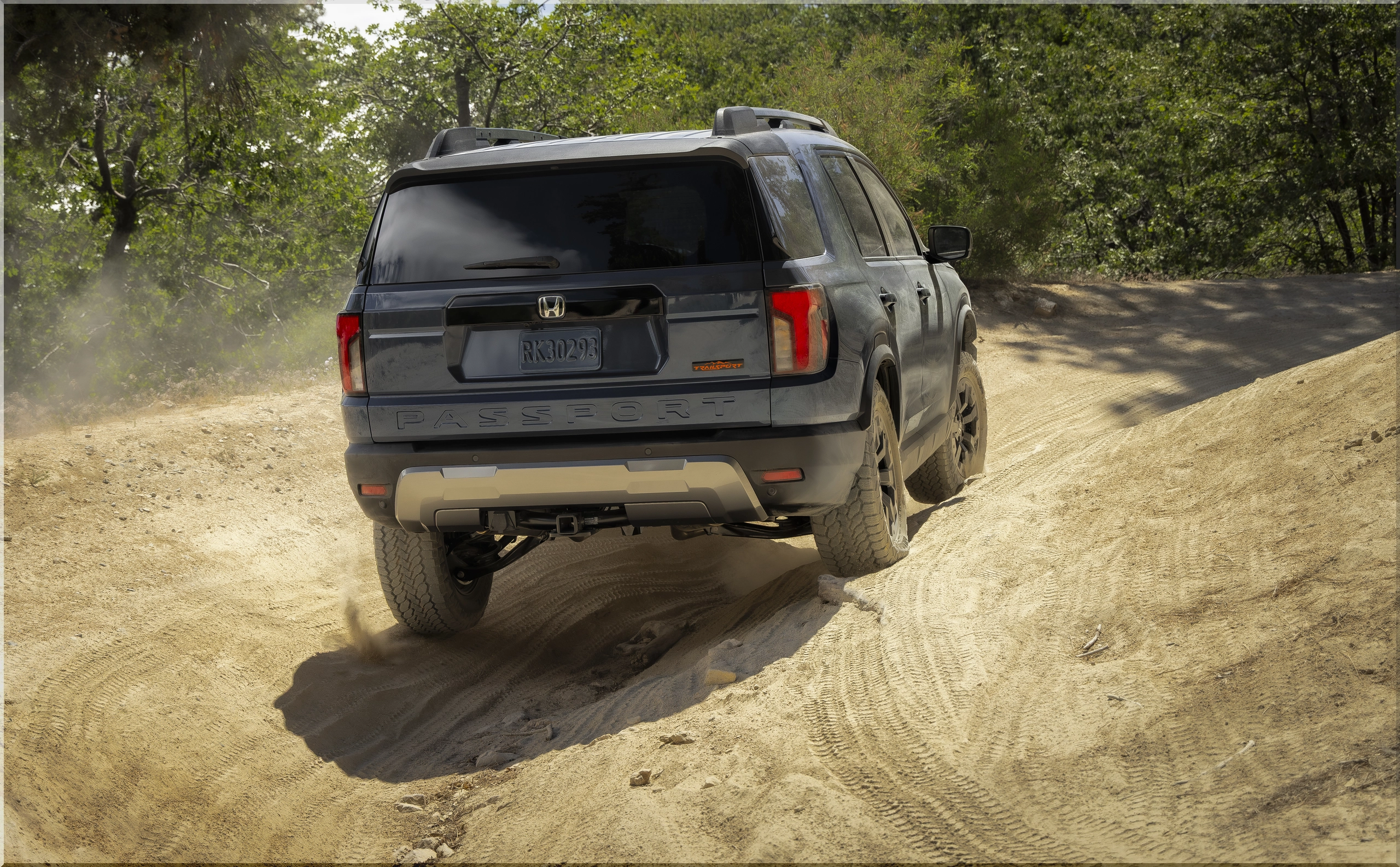
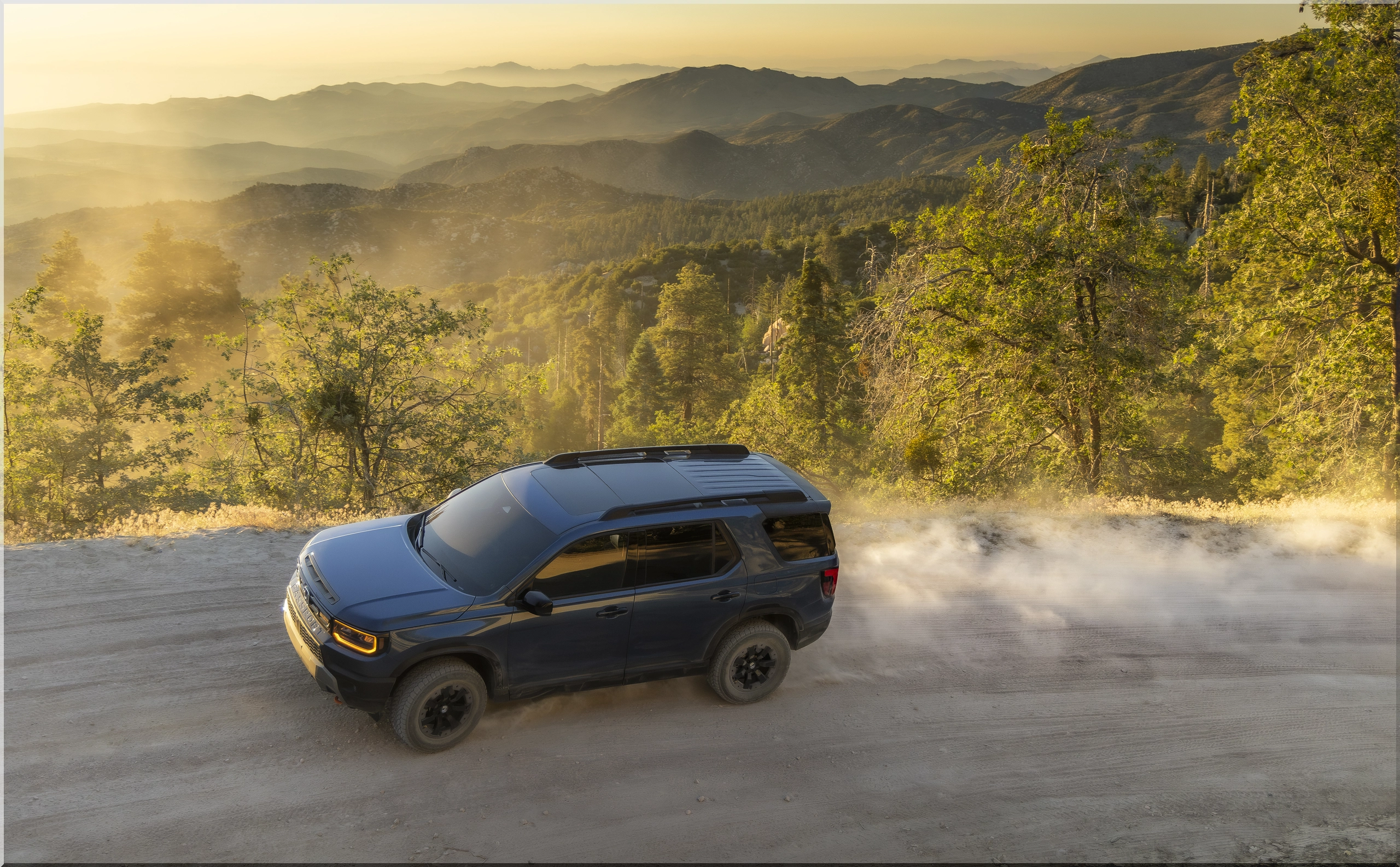
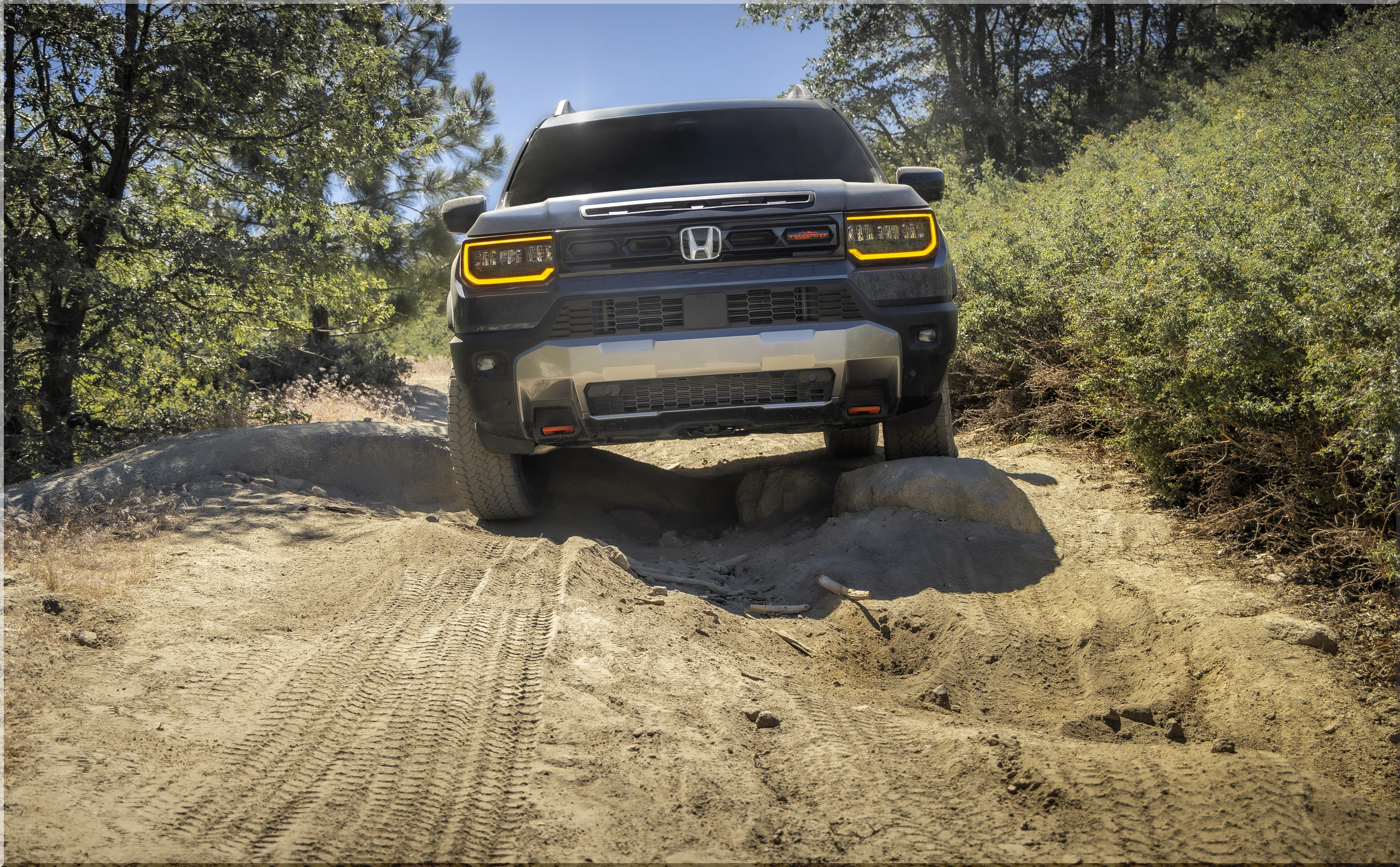
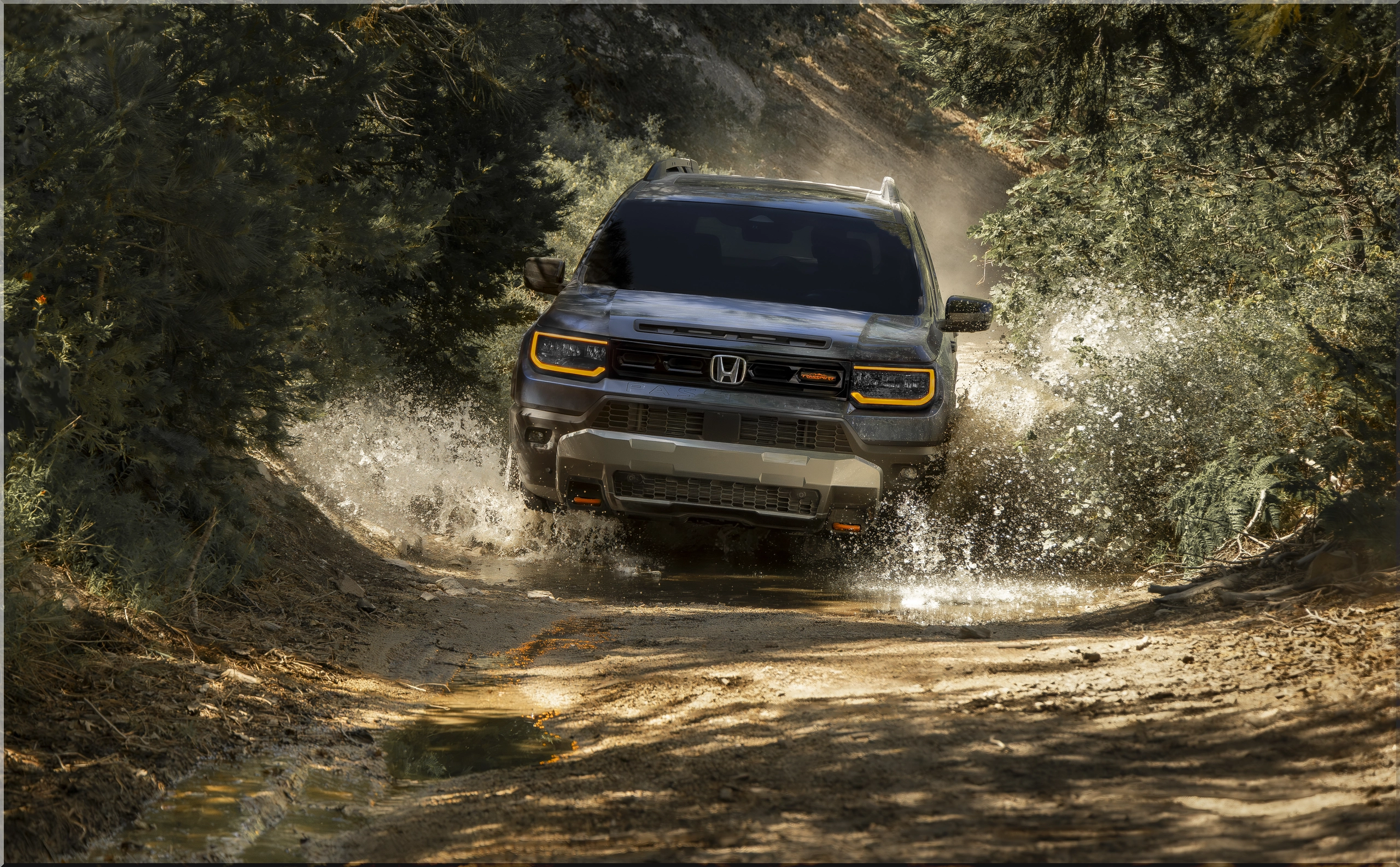
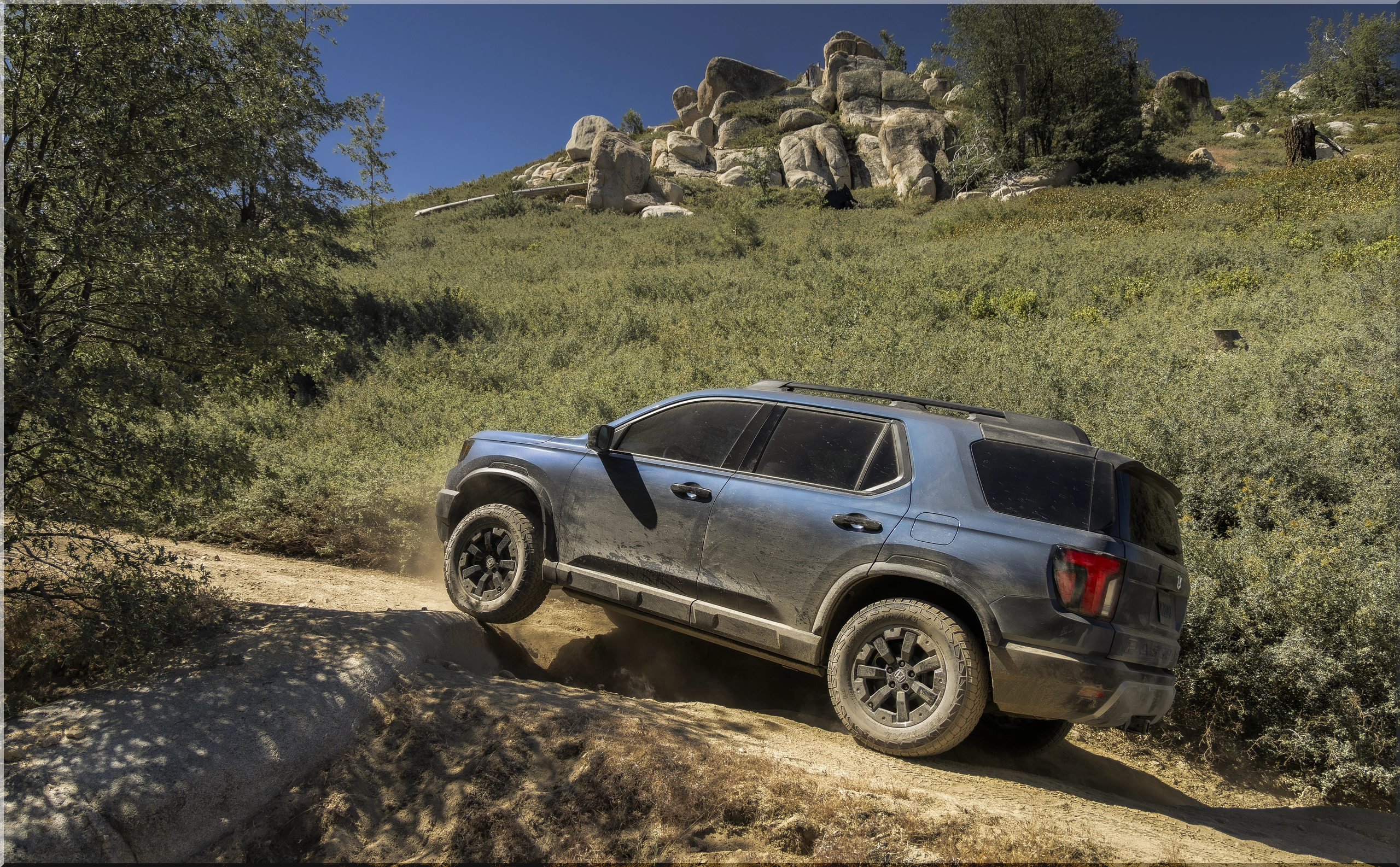
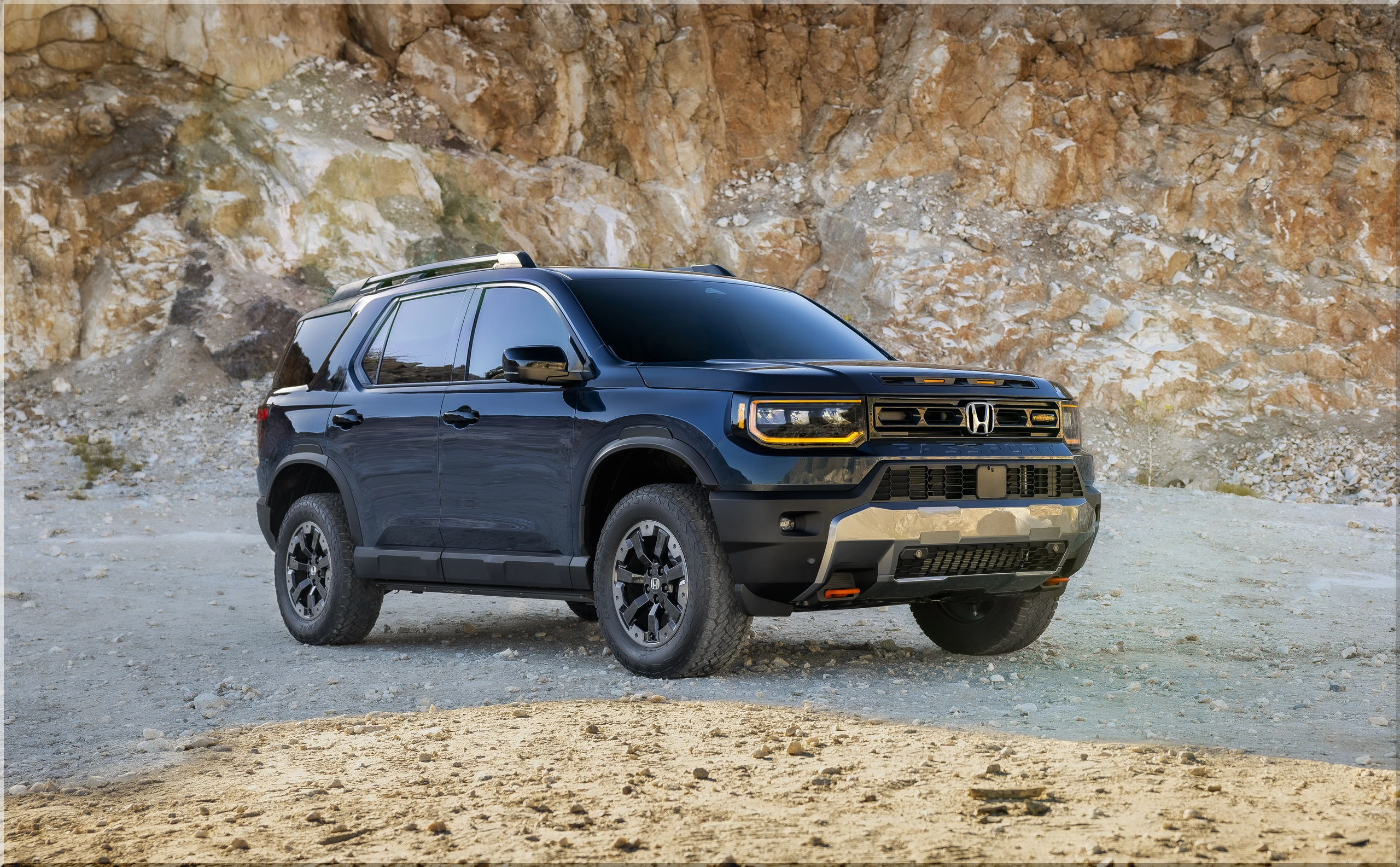
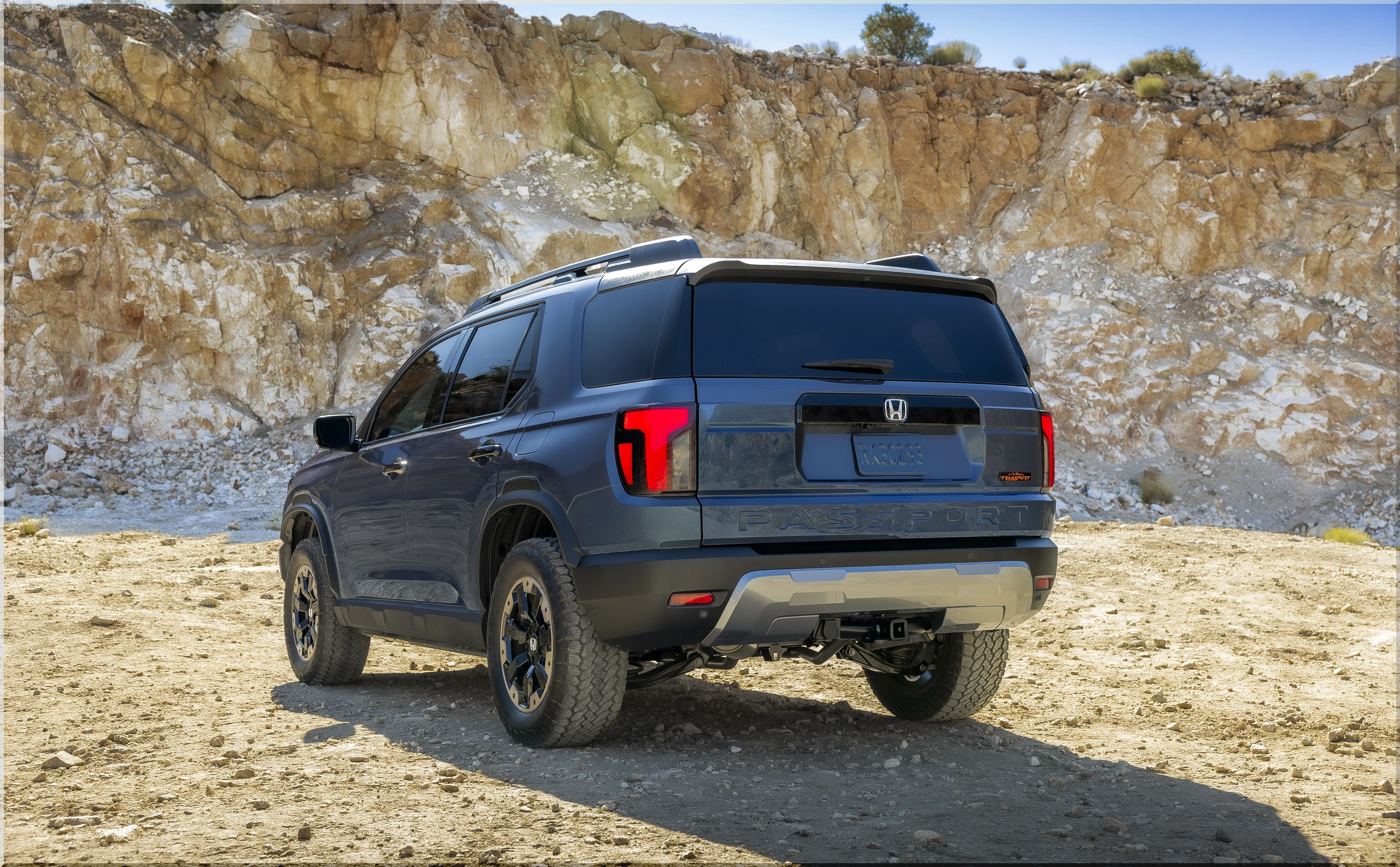
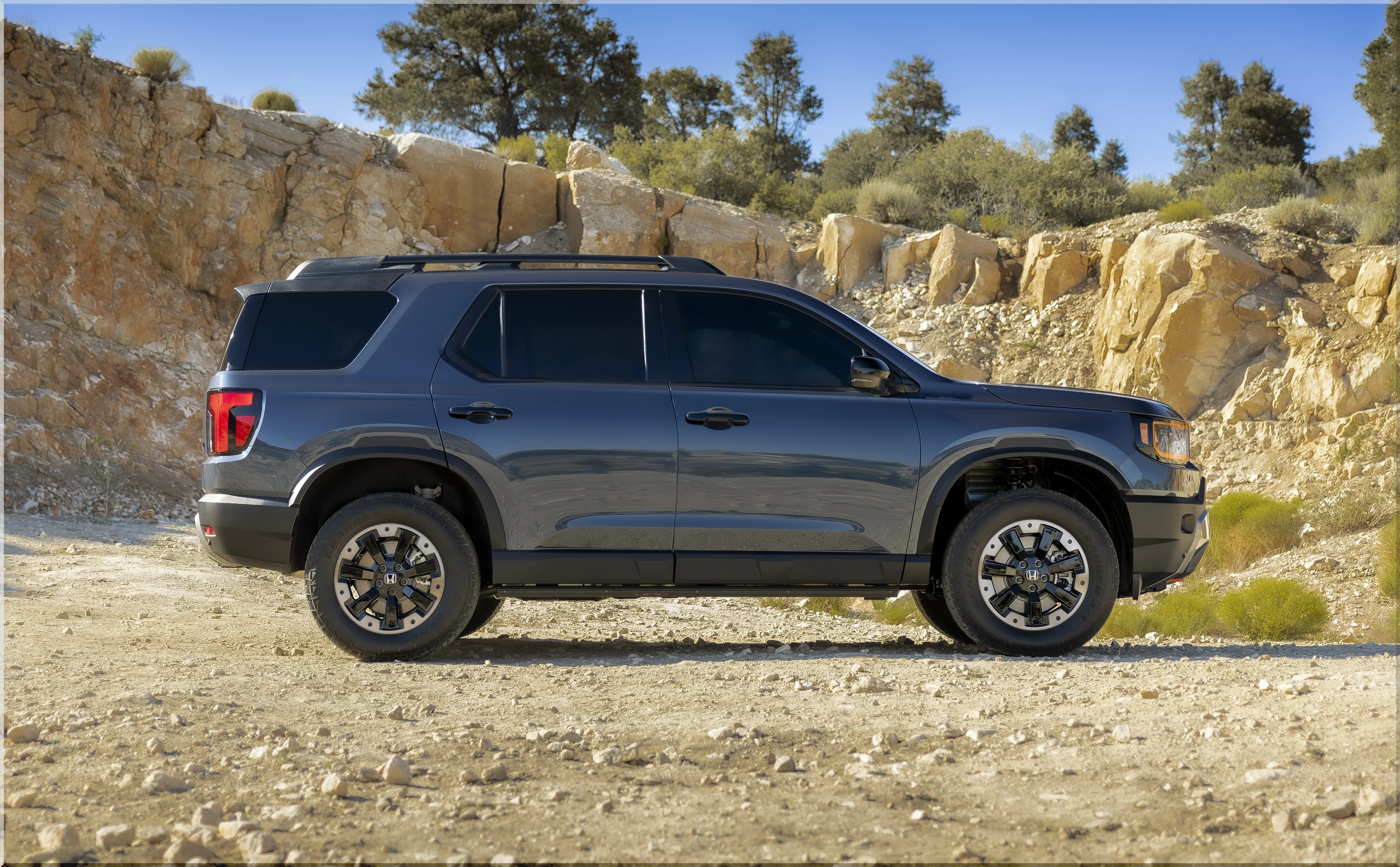
Honda's 2027 Honda Passport TrailSport reaches dealerships with an upgrade buyers can measure underneath the vehicle. Honda announced the start of arrivals on September 29, 2026. The central change: 9.65 inches of ground clearance, up 1.38 inches from the previous TrailSport.
That extra space gives rocks and ruts less opportunity to interrupt a camping weekend. More significantly, Honda revised the suspension around the taller stance and expanded access to useful trail equipment. For buyers choosing between remaining 2026 inventory and a fresh 2027, the decision now involves actual hardware.
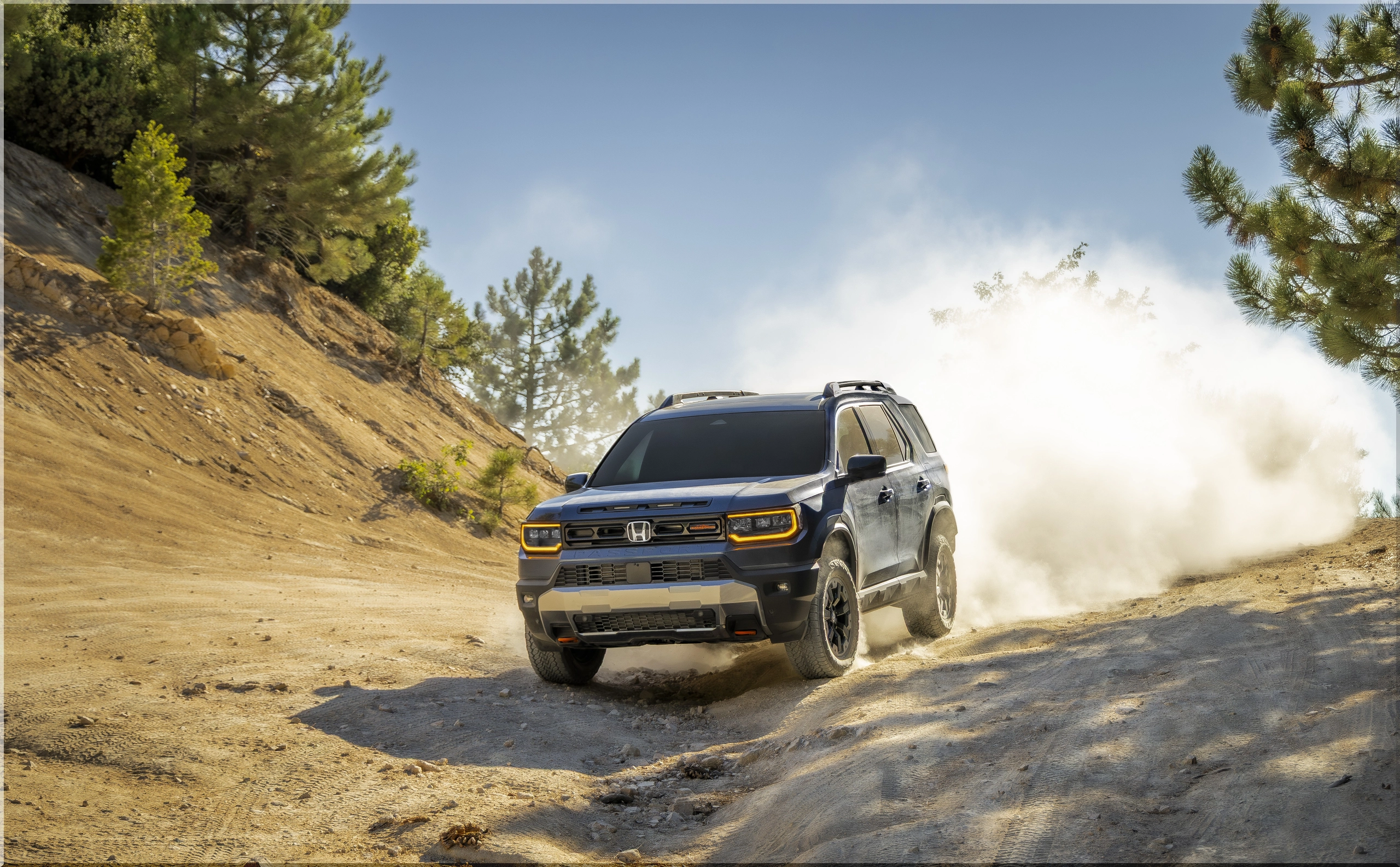
What Changes for the 2027 Passport TrailSport?
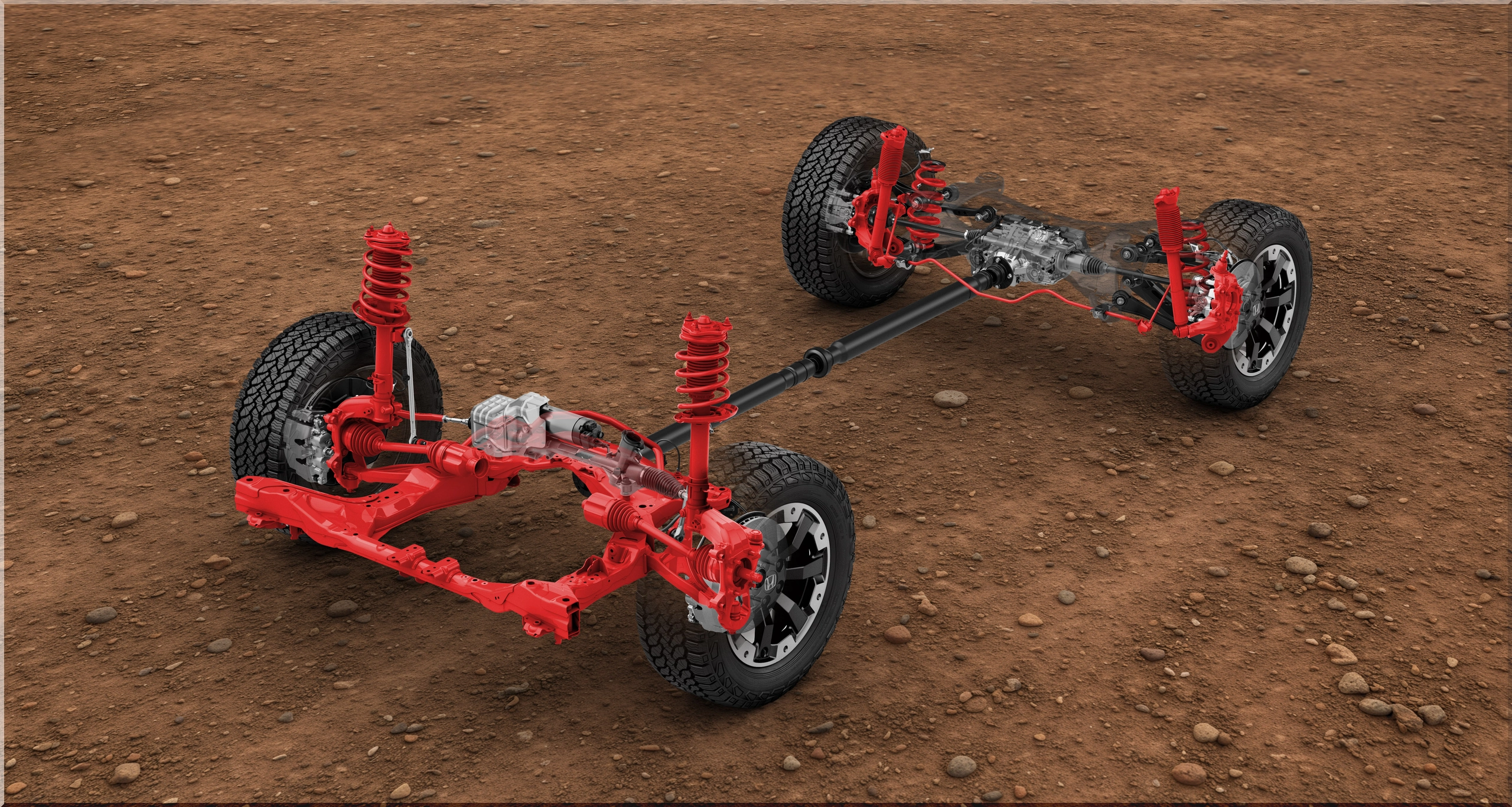
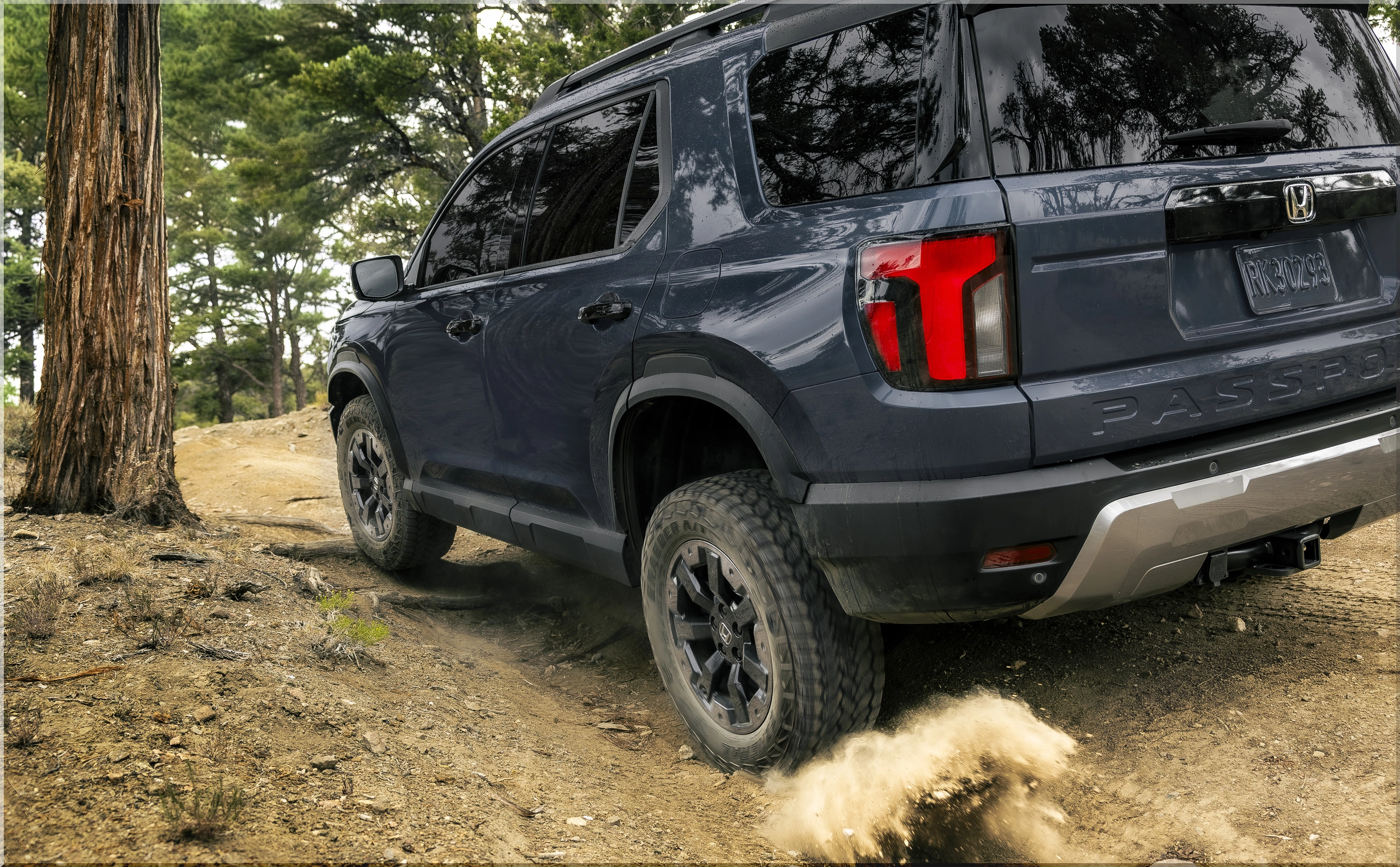
Honda revised nearly 70% of the major suspension components, with 28 new or reworked suspension and related chassis parts. The changes include springs, dampers, control arms, stabilizer bars, knuckles, front driveshafts, and the front subframe.
The table uses Honda's rounded angle figures from its September engineering announcement. Metric clearance figures reflect conversions rounded to the nearest millimeter.
| Off-road measurement | 2026 TrailSport | 2027 TrailSport | Change |
|---|---|---|---|
| Ground clearance | 8.27 in / 210 mm | 9.65 in / 245 mm | +1.38 in / 35 mm |
| Approach angle | 23 degrees | 25 degrees | +2 degrees |
| Departure angle | 23 degrees | 25 degrees | +2 degrees |
| Breakover angle | 20 degrees | 23 degrees | +3 degrees |
Definition: Breakover angle describes the sharpest crest a vehicle can straddle without its underside contacting the surface between the axles. Approach and departure angles describe clearance at the front and rear ends.
Looking at the data, ground clearance increases approximately 16.7%. That figure describes additional physical space; it does not establish a matching percentage improvement in overall off-road ability. Tires, traction, loading, and obstacle shape still determine the result.
Why Honda Changed More Than the Springs
Suspension height affects several systems at once. Raising a vehicle changes the operating positions of its control arms and driveshaft joints, while additional wheel movement places different demands on dampers and surrounding components. A factory development program must address those effects together.
Honda's parts list points to that broader approach. Revised driveshafts and subframe components support the new ride height and wheel travel, while the suspension changes target road manners as well as trail use. Honda claims better steering feel and response; an independent drive must establish how much buyers will notice.
The practical gains follow three paths:
- Deeper ruts: Additional clearance creates more room between the underbody and the raised center of a track.
- Sharper crests: The improved breakover angle reduces the chance of scraping the vehicle's middle section.
- Steeper transitions: Larger approach and departure angles give the bumpers more room at climbs and drop-offs.
Payload still consumes clearance as the suspension compresses. A showroom measurement does not describe the exact space underneath an SUV carrying passengers, camping equipment, and trailer tongue weight.
TrailWatch Becomes a Better Reason to Skip the Elite
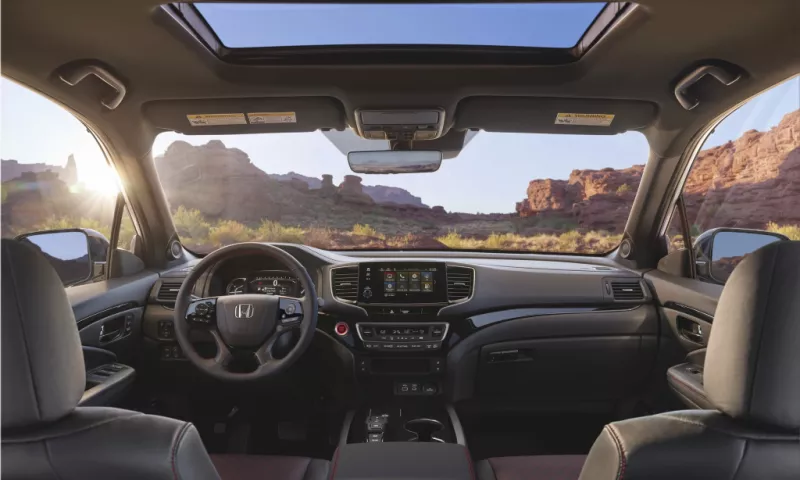
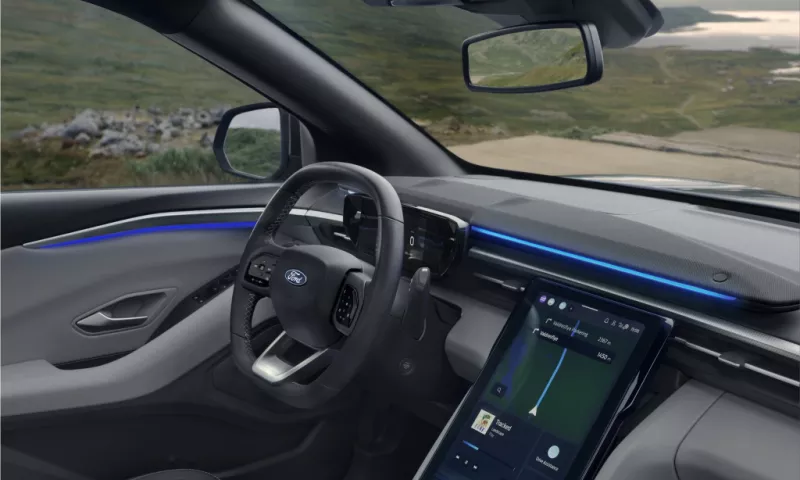
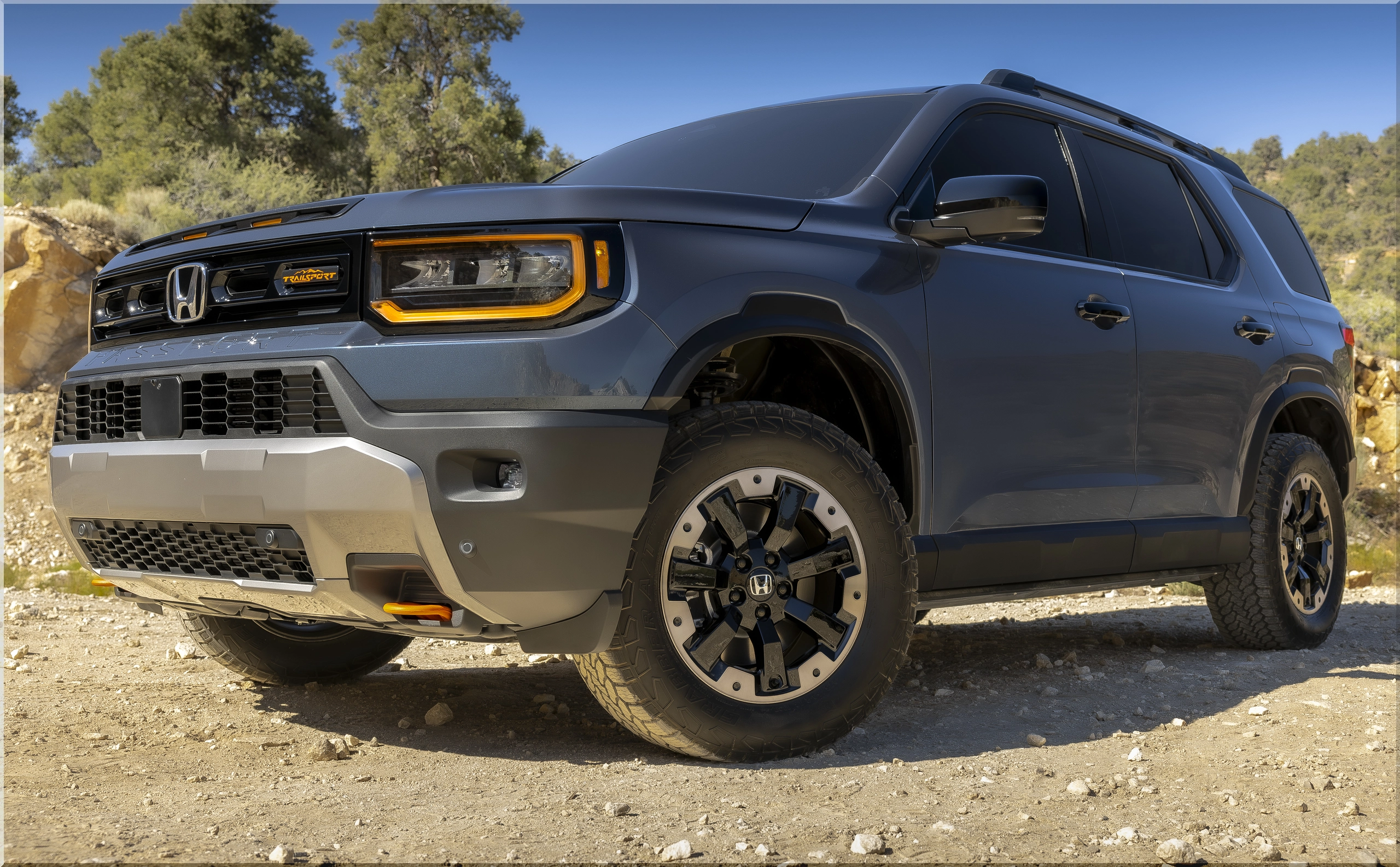
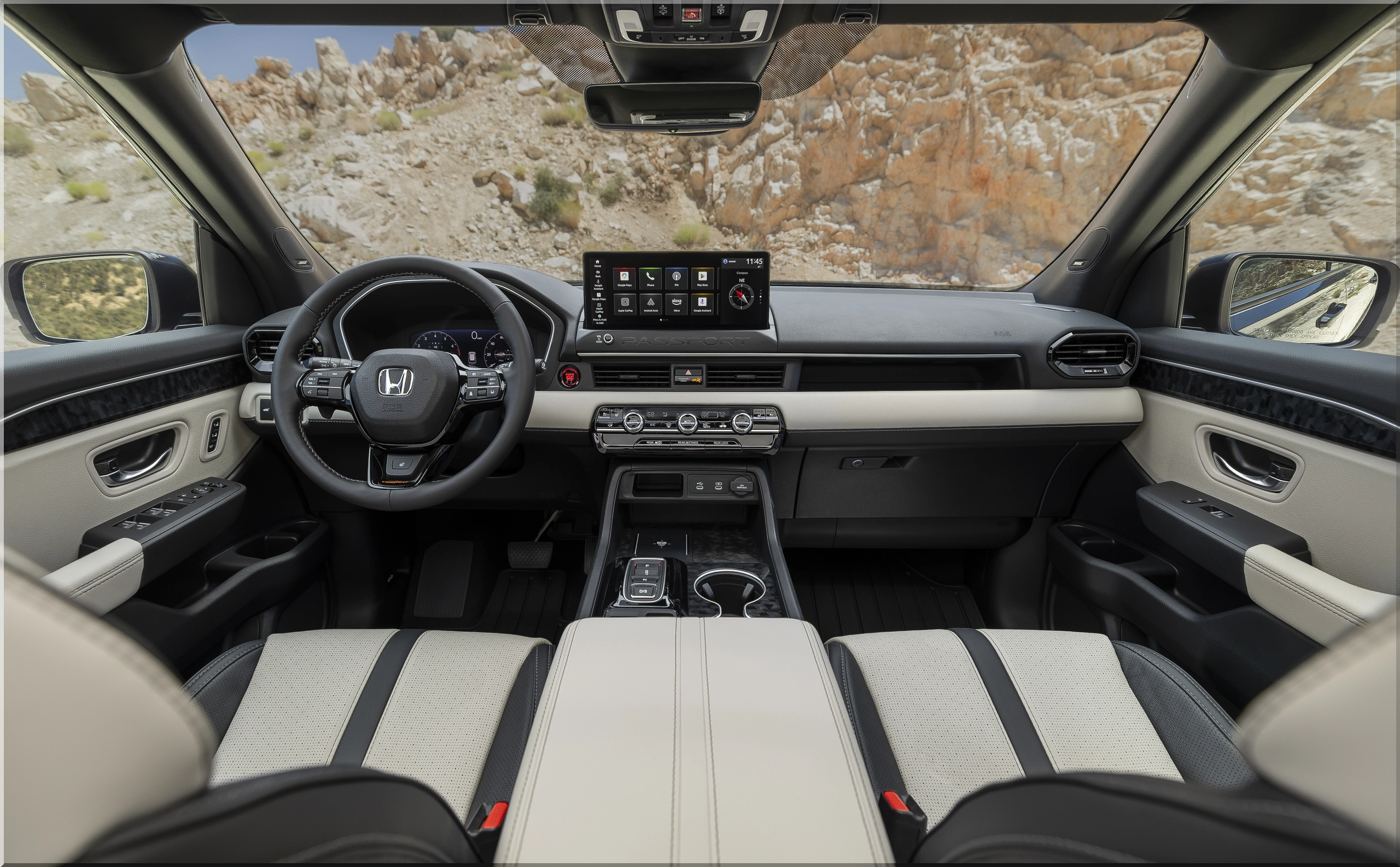
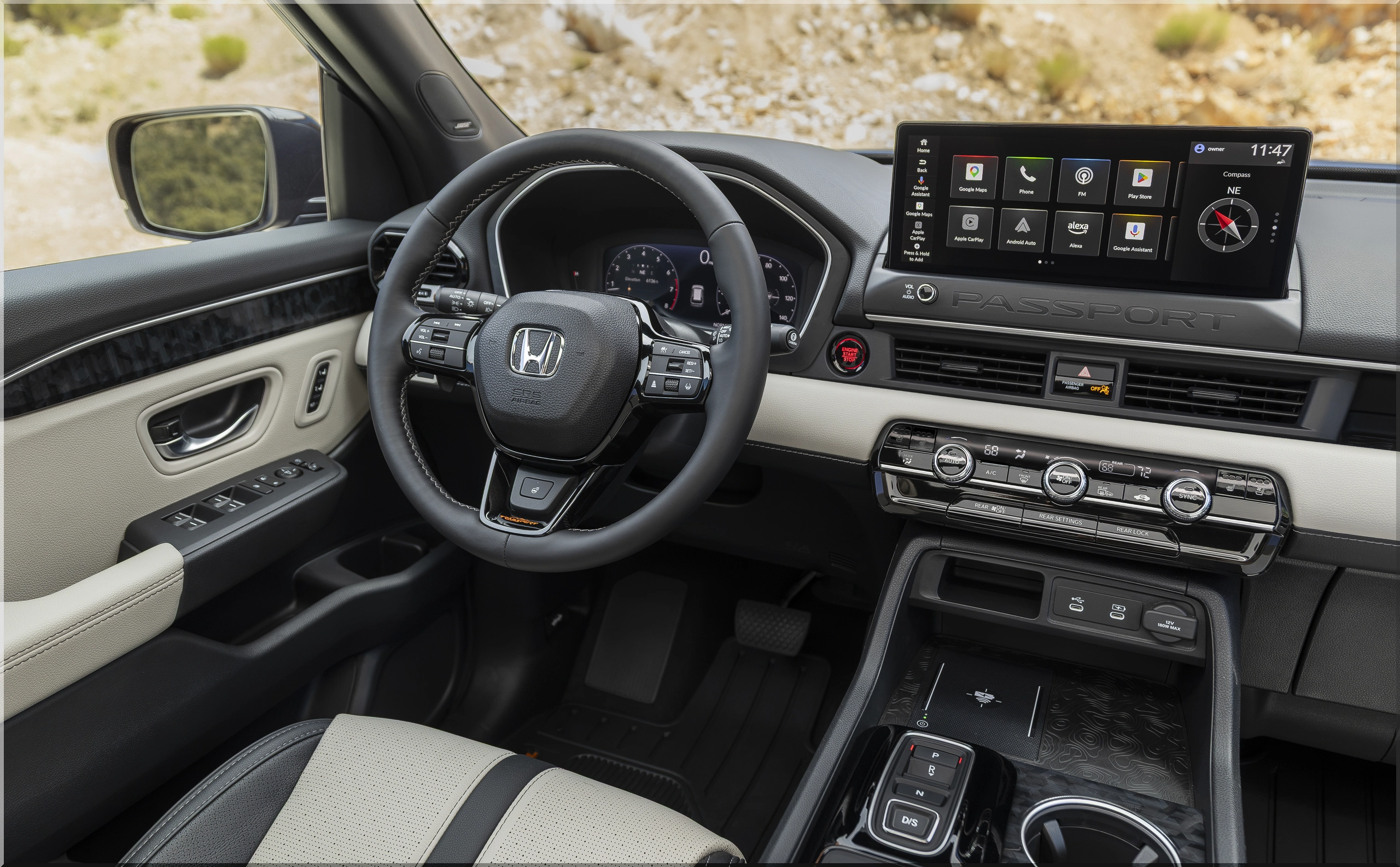
Honda now includes TrailWatch and a heated steering wheel across the TrailSport range. Previously, buyers needed the TrailSport Elite for those features. TrailWatch provides front, rear, side, and overhead views with tire-placement graphics.
The buying implication is straightforward: shoppers who wanted the Elite primarily for its cameras should reassess the regular TrailSport. A camera can help a driver position a tire beside a rut or inspect the ground hidden by the hood. It does not measure soil strength or establish water depth.
Pro-Tip: During a dealership demonstration, stop near a painted parking line and cycle through the camera views. Check how clearly the display shows the front corners and tire paths. Learn the controls while stationary, before attempting a tight trail.
V6 Power: Separate the Refresh From the Spec Sheet
Honda confirms a 3.5-liter V6 for the 2027 Passport. Its accessible 2026 technical sheet supplies useful powertrain context: 3,471 cc, 285 horsepower at 6,100 rpm, 262 lb-ft at 5,000 rpm, and a 10-speed automatic. Those are explicitly 2026 specifications here, rather than independently verified 2027 output figures.
The torque peak explains the driving character buyers should assess. A naturally aspirated engine that reaches maximum torque at 5,000 rpm needs revs when the driver demands strong acceleration. During a test drive, check downshift response on an uphill merge instead of judging the engine solely from gentle suburban driving.
The previous TrailSport also provides a useful reference for fuel economy: 18 mpg city, 23 highway, and 20 combined, with an 18.5-gallon tank. At 20 mpg, 15,000 annual miles require 750 gallons. Using an illustrative gasoline price of $3.50 per gallon produces a $2,625 annual fuel budget; that scenario does not claim measured 2027 consumption.
Before buying, verify these details on the actual vehicle:
- The 2027 EPA window-label ratings, rather than a dealer page carrying older data.
- The exact trim, destination charge, factory options, and dealer additions.
- The payload label and towing instructions for your passenger and trailer combination.
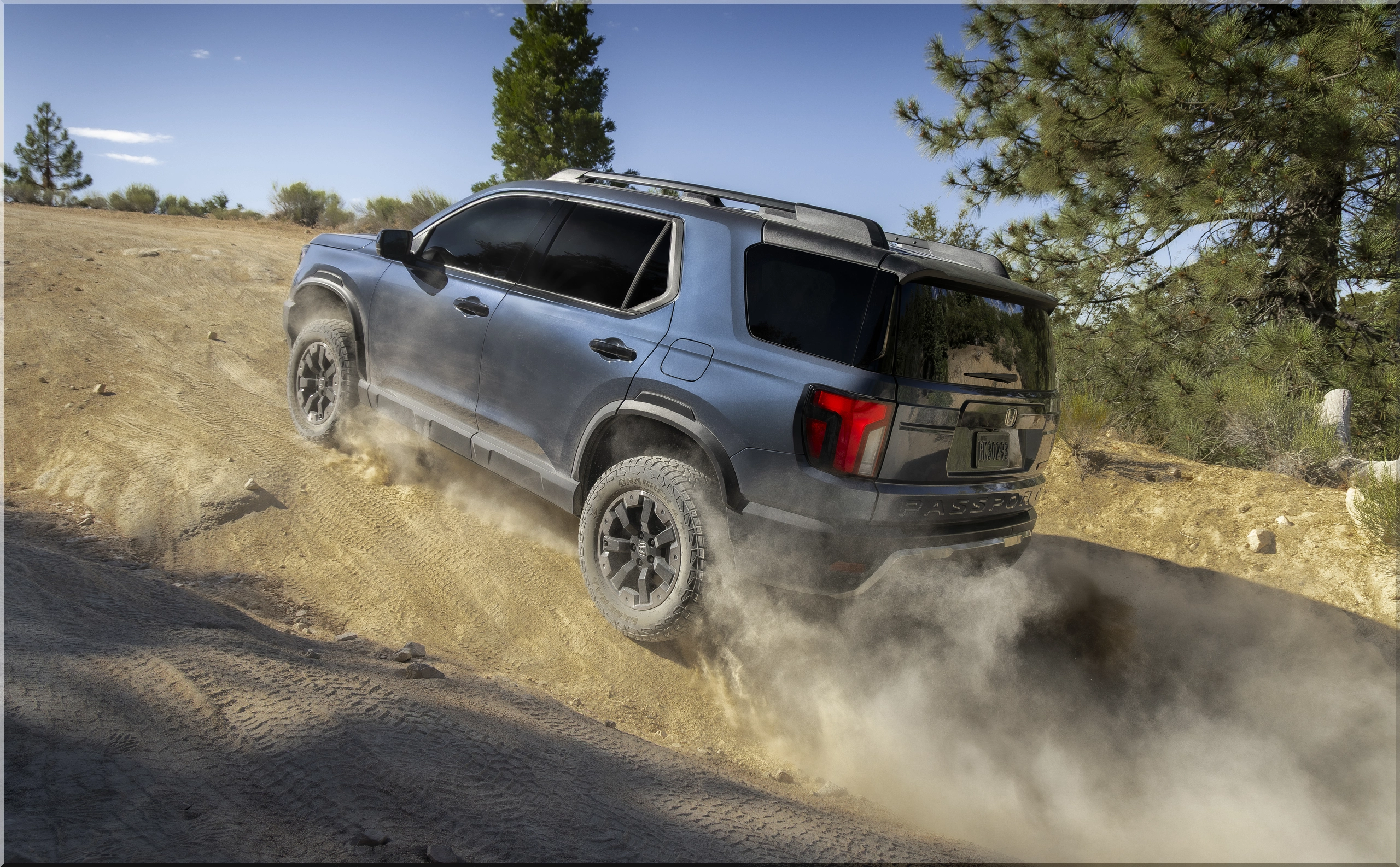
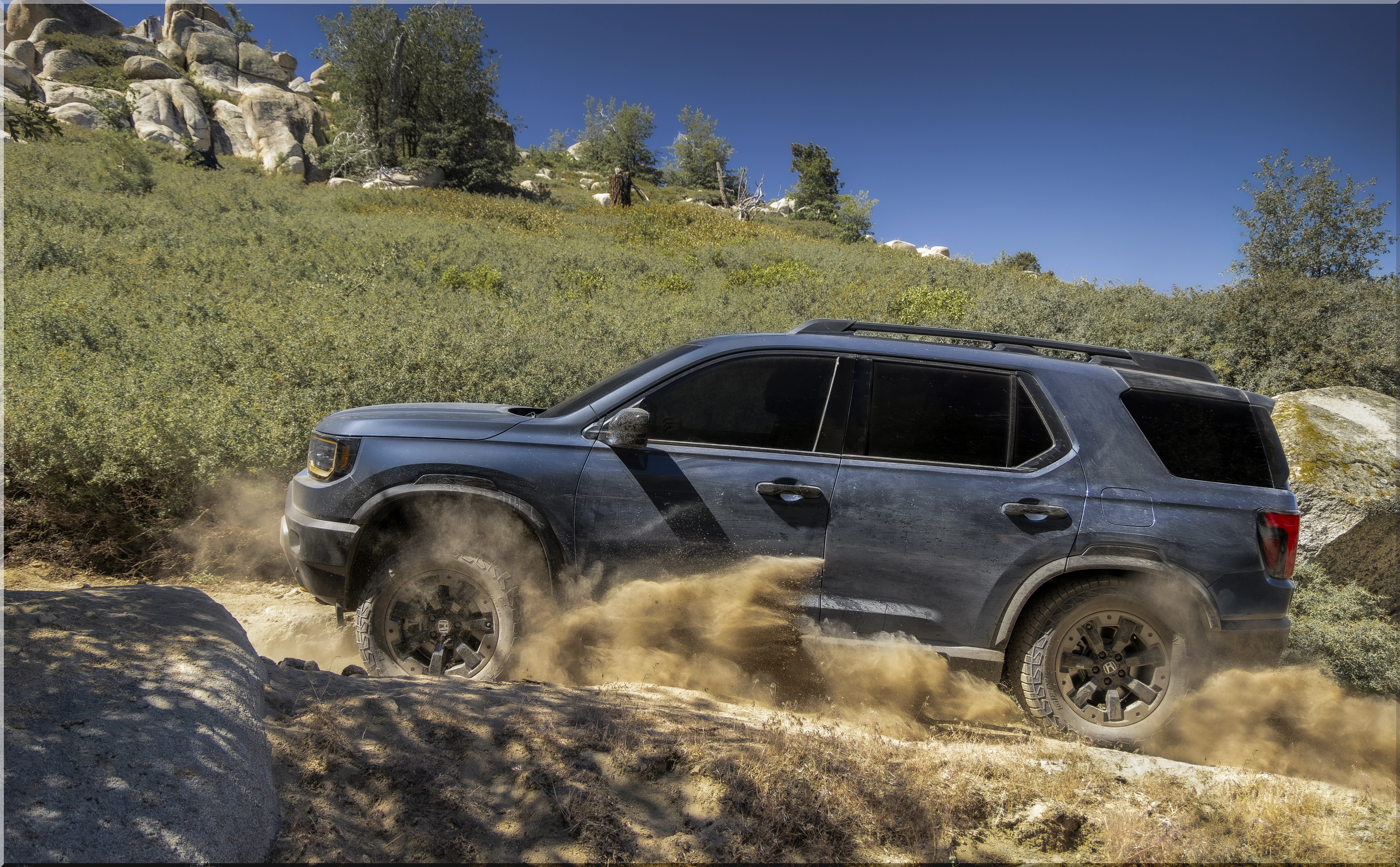
Passport TrailSport vs. Outback Wilderness and 4Runner
The Subaru Outback Wilderness and Toyota 4Runner TRD Off-Road approach outdoor use differently. The following comparison uses identified 2026 competitors and separates their engine figures from Honda's confirmed 2027 clearance update.
| Vehicle | Engine information | Clearance information | Buying implication |
|---|---|---|---|
| 2027 Honda Passport TrailSport | Honda confirms a 3.5-liter V6 | 9.65 in / 245 mm | Stronger clearance than the previous TrailSport; check final output and economy specifications |
| 2026 Subaru Outback Wilderness | 2.4-liter turbo flat-four; 260 hp | 9.5 in / 241 mm | Nearly matches Honda's clearance; Subaru specifies 3,500 lb towing capacity |
| 2026 Toyota 4Runner TRD Off-Road, nonhybrid | 2.4-liter turbo four-cylinder; 278 hp and 317 lb-ft | Clearance varies across the 4Runner range; use the exact trim's specification | Compare its low-speed drivetrain hardware and cabin usability alongside engine output |
By comparison, the Honda's clearance advantage over the Subaru measures only 0.15 inch, approximately 4 mm. That is too small a difference to choose the entire vehicle around. Passenger access, tire behavior, usable cargo space, and the trails you actually drive deserve more weight.
Why This Matters to You: Should You Choose a 2027 or a 2026?
Choose the 2027 first if your routes regularly include ruts, uneven crests, or tight obstacles that make camera visibility useful. Its factory suspension revision addresses a specific limitation, and standard TrailWatch strengthens the regular TrailSport's appeal.
A discounted 2026 deserves consideration if pavement accounts for nearly all your driving. Ask for written, out-the-door quotes on comparable trims, then compare the price difference against equipment you will actually use. Avoid paying twice for accessories that duplicate factory capability.
Pro-Tip: Bring your usual cargo to the test drive: stroller, cooler, dog crate, or camping bins. Then have every regular passenger climb in and out. Extra clearance helps underneath the SUV, but your family still has to live above it.
The 2027 Passport TrailSport gives frequent trail users a concrete reason to buy the newer model. For everyone else, the strongest argument will come from the equipment list and the final dealer quote.
- Add new comment
- 6 views