
A Microcar Built for a Macro Problem
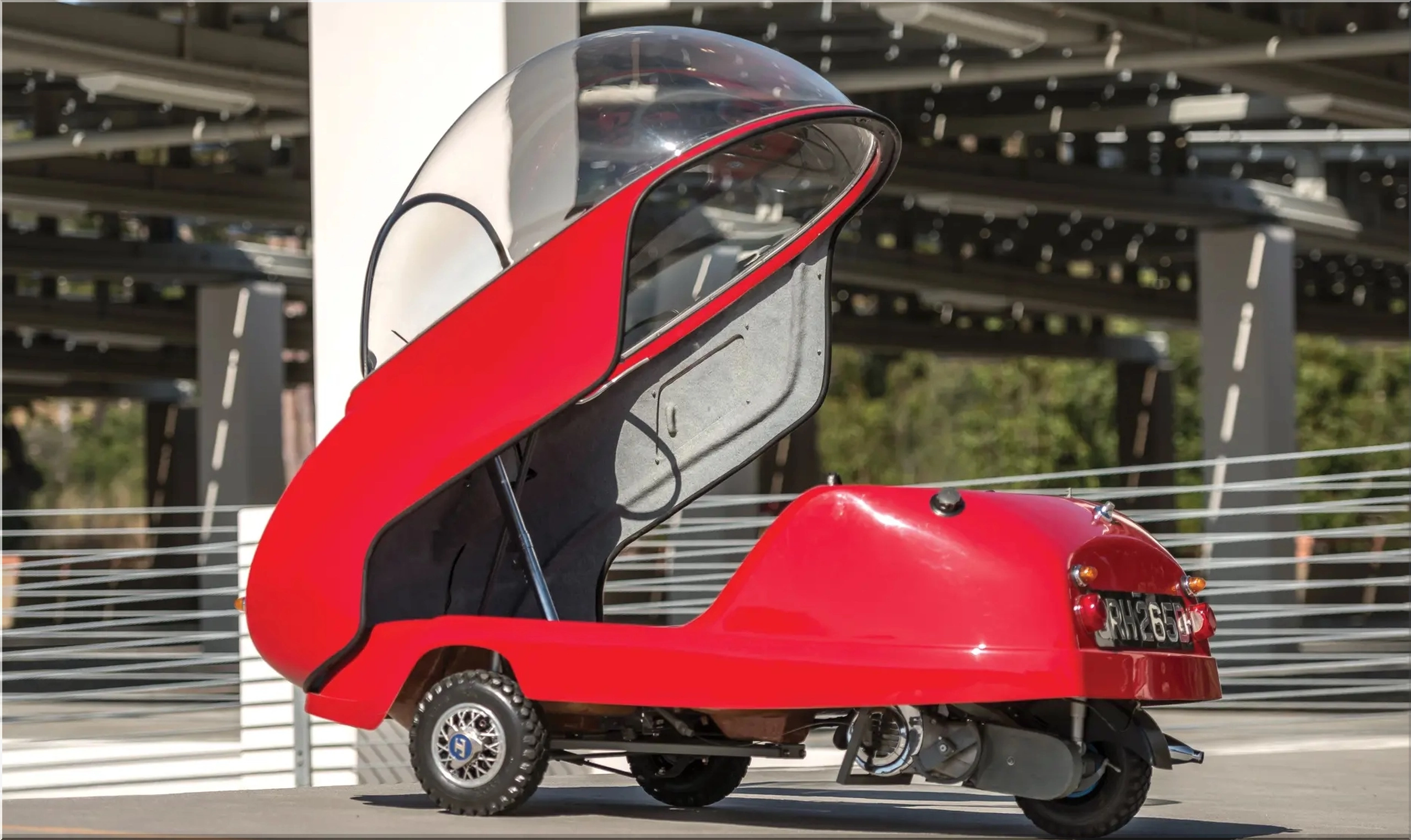
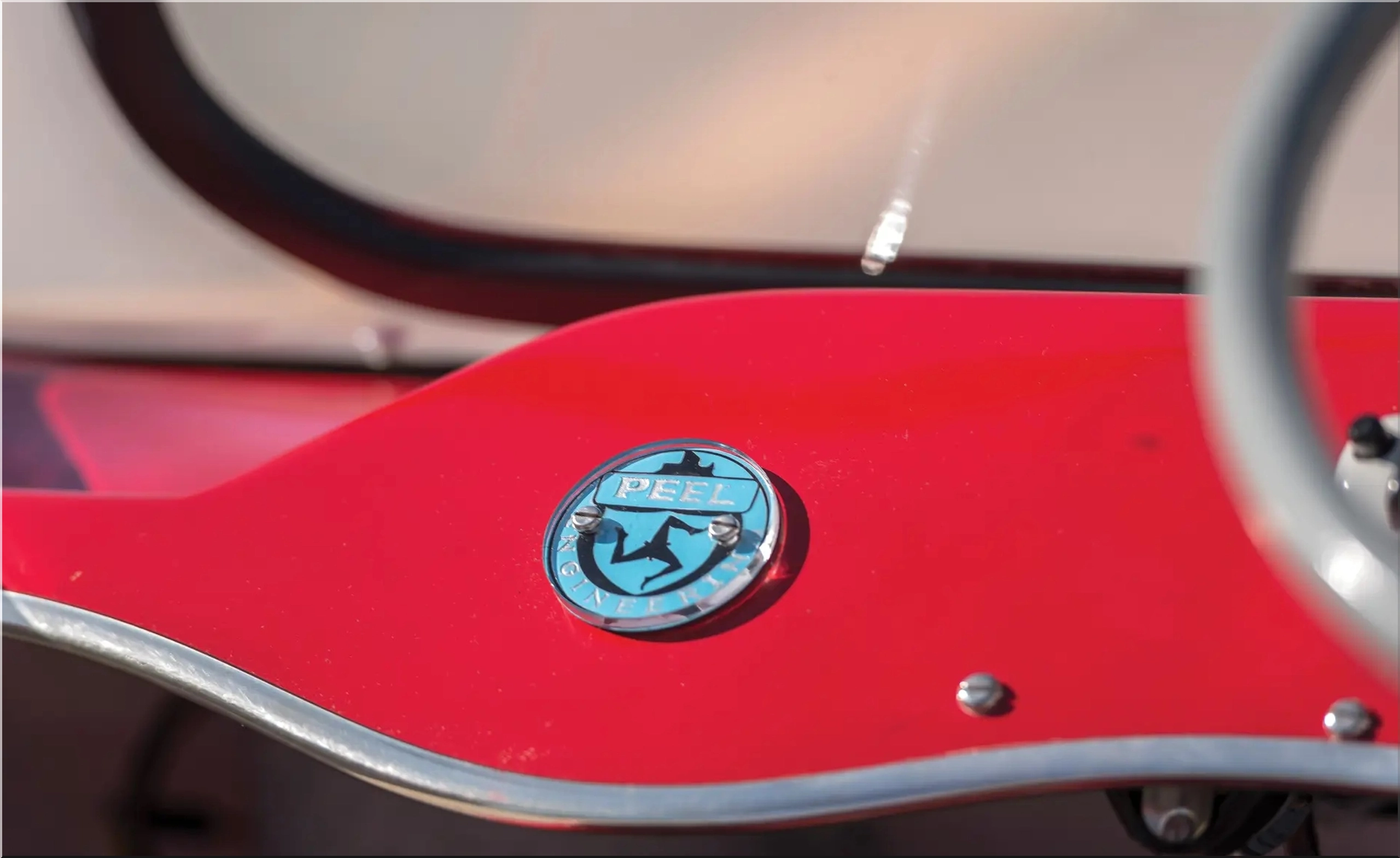
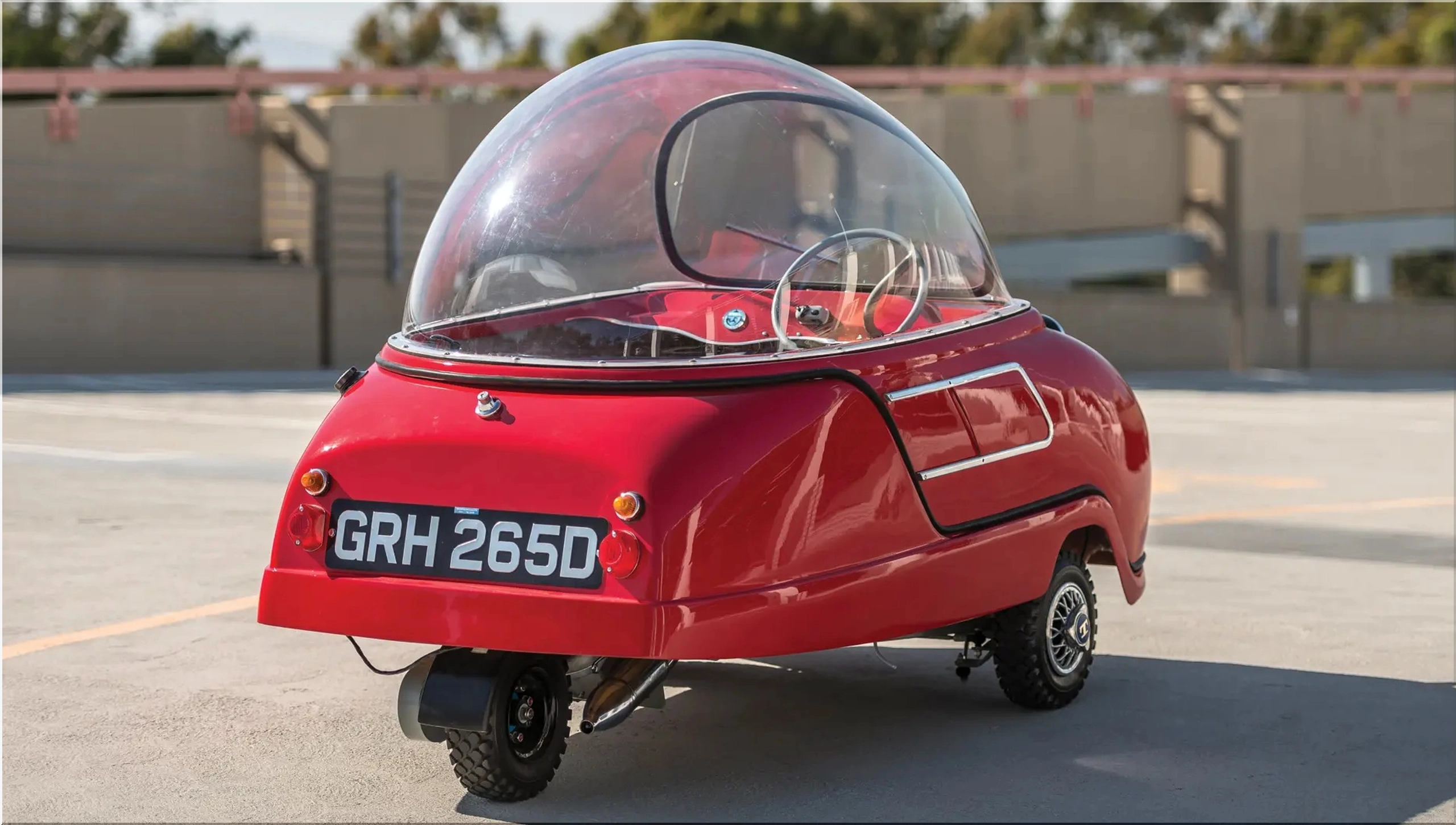
The 1965 Peel Trident was Peel Engineering's answer to one of the 1960s' biggest urban mobility challenges—how to move individuals through dense cities without wasting fuel, money, or space. Built on the Isle of Man, the Trident followed the infamous Peel P50 but went a step further: it offered seating for two and carried the audacity of a space-age bubble canopy.
While only about 45 units were ever produced, the Trident remains a landmark in compact car design. It wasn't a stylistic oddity—it was a focused response to real-world mobility issues.
Key Specifications
| Specification | Detail |
|---|---|
| Length | 72 in (183 cm) |
| Width | 39 in (99 cm) |
| Height | 54 in (137 cm) |
| Curb Weight | ~330 lb (150 kg) |
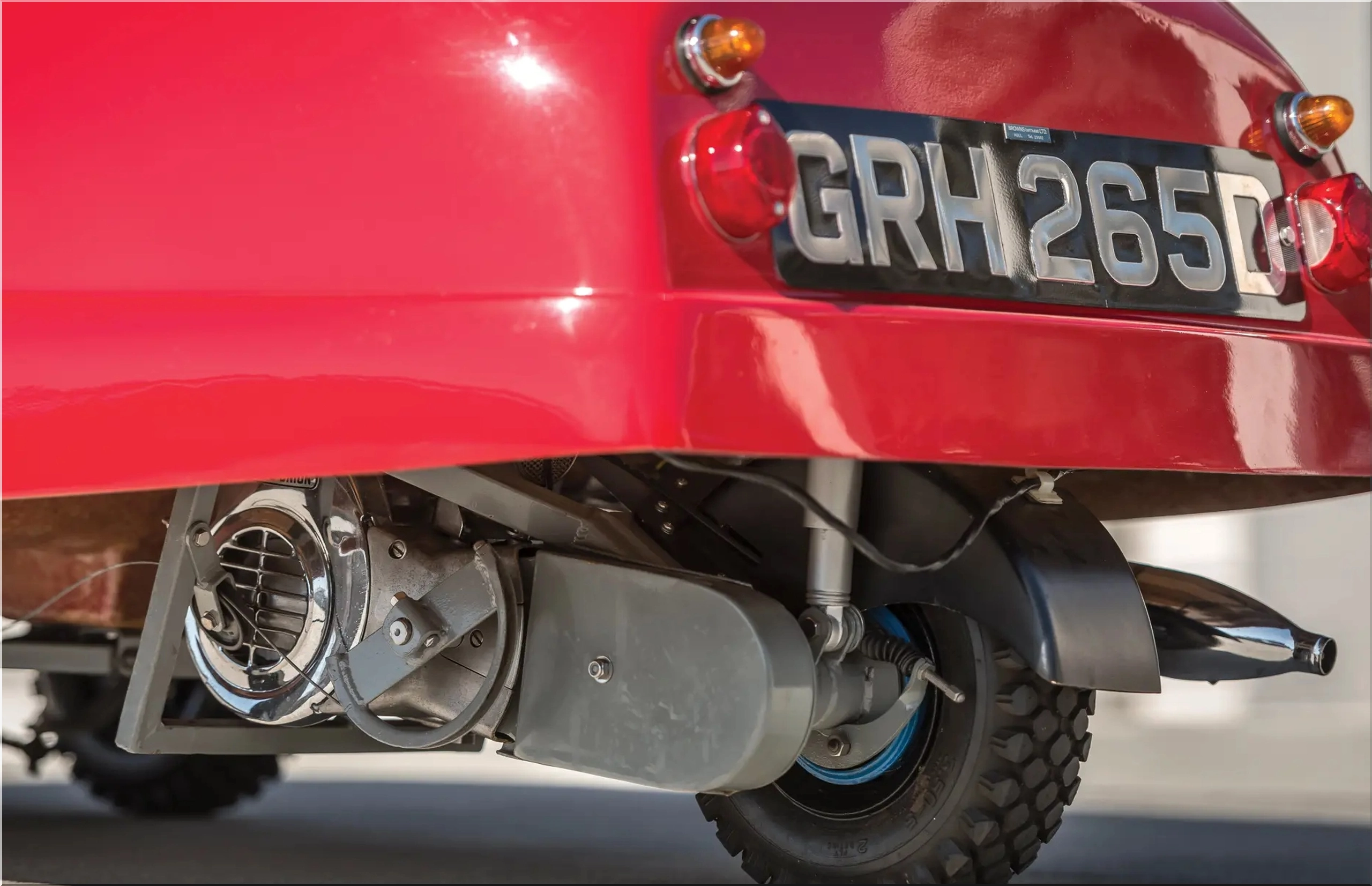
| Engine | 49cc DKW single-cylinder, two-stroke |
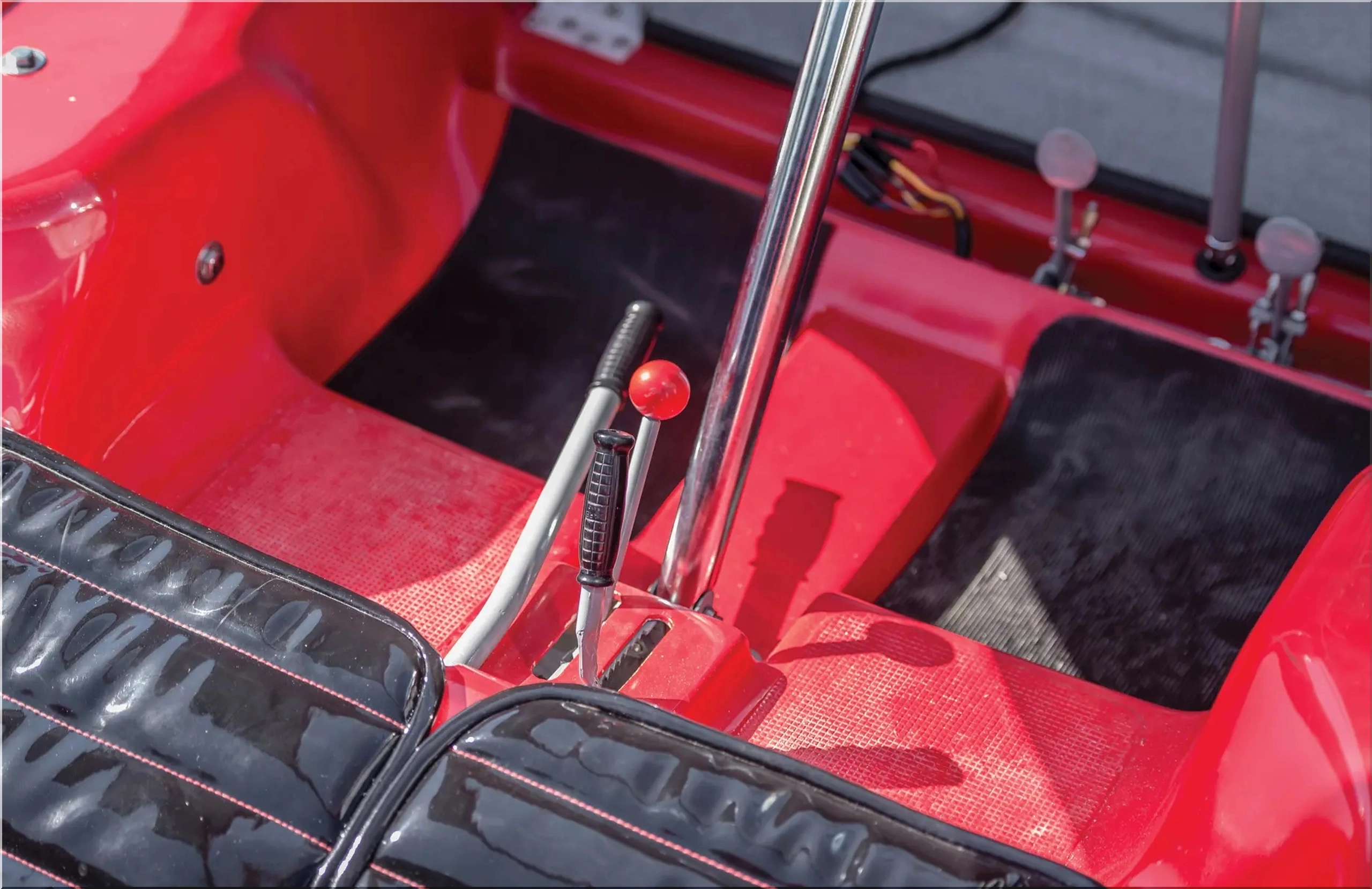
| Transmission | 3-speed manual |
| Top Speed | ~28 mph (45 km/h) |
| Estimated Price (2023) | $80,000 – $120,000 (auction values) |
| Original Price (1965) | Approx. $350 USD (inflation-adjusted: ~$3,500 USD) |
What Made It Different
The Trident didn’t just shrink the concept of a city car—it redefined it. With a footprint of less than 20 square feet, it could legally be driven in the UK without a license, insurance, or helmet due to its classification as a moped. Peel's goal was efficiency in both manufacturing and operation.
Engineering Focus
- Weight minimization: At 330 pounds, even the lightest electric scooters today outweigh it.
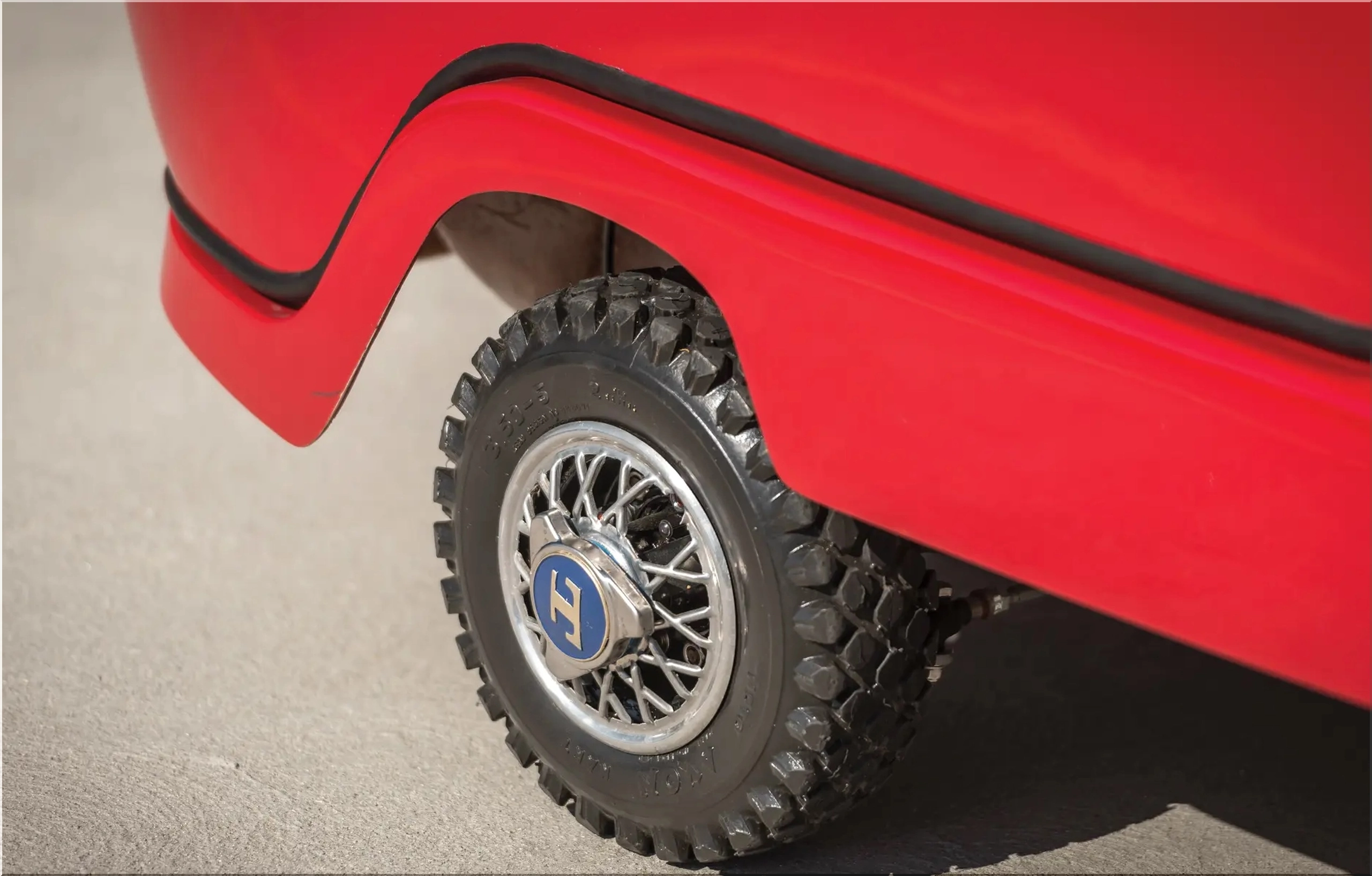
- Cost control: Fiberglass was used for bodywork, reducing production cost and vehicle weight.
- Simple powertrain: The 49cc engine wasn’t fast, but it was reliable and easy to maintain.
These features weren’t gimmicks. They were results-oriented decisions designed for real-world practicality.
Performance by the Numbers
Although the top speed maxed at 28 mph, the Trident wasn’t built to compete on freeways. Its role was different:
- Fuel Efficiency: ~100 mpg
- Turning Circle: Under 20 feet
- Maintenance: Basic tools and two hands could service most components
Acceleration
Expect 0–20 mph in under 10 seconds. It sounds slow, but in traffic-clogged downtown areas, this was more than adequate.
Urban Problem-Solving at Its Core
Peel Engineering understood early that car congestion would define urban mobility. With growing cities and no clear solution for parking or fuel costs, the Peel Trident became a stopgap alternative. It could:
- Fit two in one motorcycle spot
- Park sideways against the curb
- Navigate alleyways too narrow for normal cars
Practical Use Cases
- Delivery Runs: The Trident was ideal for lightweight courier duties.
- Short Commutes: Perfect for 2–3 mile downtown trips.
- Low-Speed Environments: University campuses, resort towns, or industrial parks.
Design for the Jet Age
The Peel Trident had a clear bubble canopy, looking more like a lunar rover than a car. While it attracted attention, that design wasn't purely aesthetic.
Functional Aesthetics
- Visibility: Near-panoramic driver sightlines.
- Weight Reduction: Plastic canopy saved weight over metal.
- Weather Protection: Partial sealing from wind and rain.
It was often advertised as “the terrestrial flying saucer.” That wasn't a joke—it was Peel’s way of suggesting modernity in a transportation tool meant to solve today’s problems, not tomorrow’s fantasies.
Limited Production, Lasting Impact
Only around 45 Peel Tridents were made. But scarcity has enhanced the car’s visibility among collectors. At auction, models have sold for over $100,000 USD, far from the few hundred dollars of their original price tag.



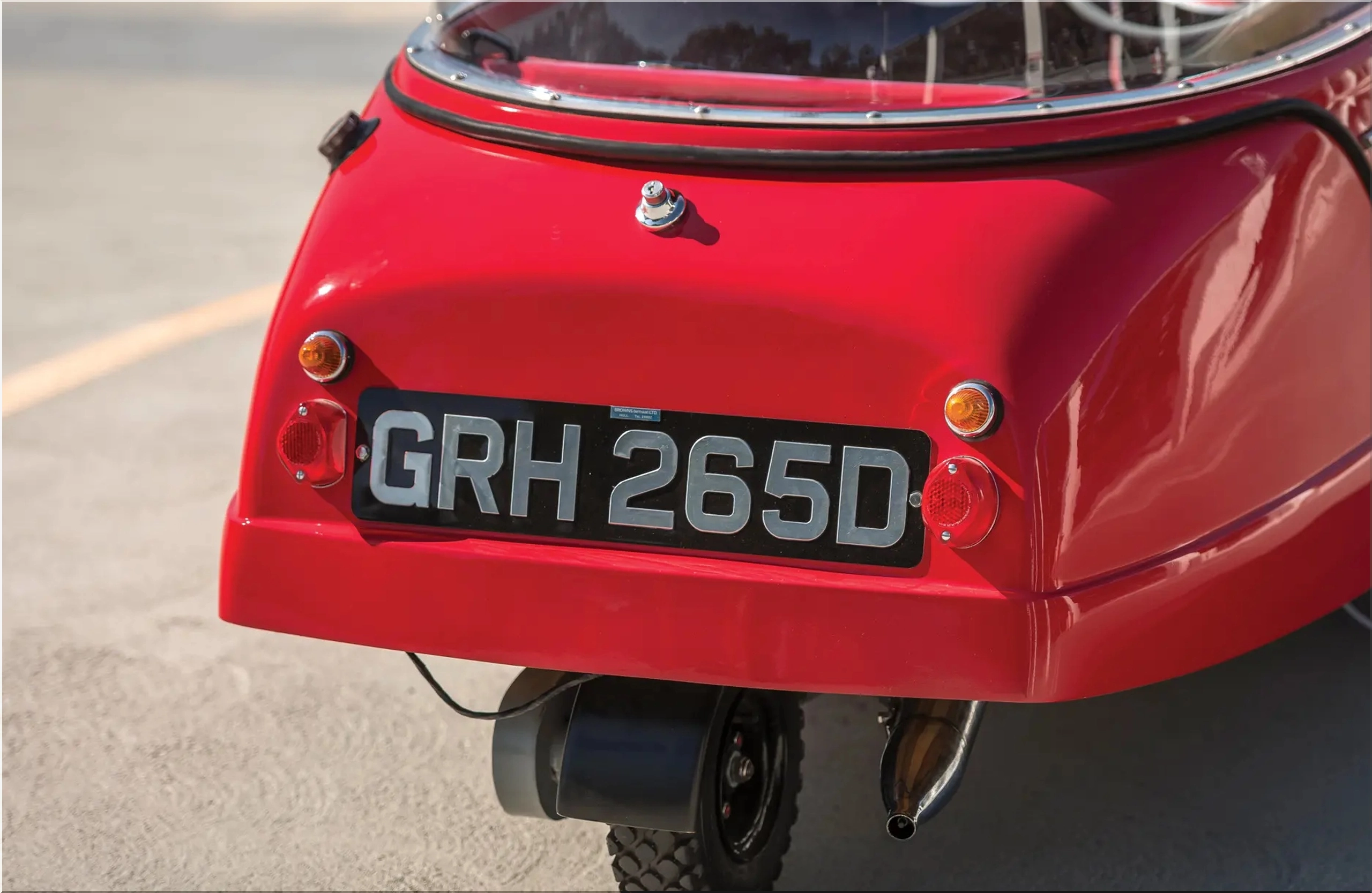

Collectibility Drivers
- Historical value: As the smallest production microcar with a roof.
- Design uniqueness: No other production vehicle had its exact proportions or structure.
- Cult following: The Trident has featured in TV shows, museums, and exhibitions as a design icon.
Ownership and Driving Today
Owning a Peel Trident in 2025 means accepting several trade-offs. You’re not getting performance or practicality. You’re buying a conversation piece—one that’s legally street-drivable in the UK and some U.S. states with limited use permits.
Driving Experience
- Noise: The two-stroke engine buzzes loudly.
- Space: Two adults will feel cramped.
- Safety: There is no crumple zone, no ABS, no airbags.
Still, owners say the car’s rarity and mechanical simplicity make it worth the trouble. Parts are scarce but not impossible to fabricate. Many are maintained by hobbyists with 3D printers and access to fiberglass.
Market Outlook
Recent sales at RM Sotheby’s and other auctions suggest continued value growth. Between 2017 and 2025, prices have increased by over 50%.



Future Resale Trends
| Year | Avg. Sale Price (USD) |
|---|---|
| 2015 | $50,000 |
| 2017 | $65,000 |
| 2020 | $85,000 |
| 2023 | $110,000 |
| 2025 (est.) | $130,000 |
If micro-mobility history becomes a larger talking point in the EV era, Tridents could gain further collector interest.
Why the Trident Still Matters
The Peel Trident is a case study in compact design solving specific urban problems. It didn’t try to be everything. It tried to be enough—for one or two people, for short trips, with minimal cost and maintenance.
In today’s context of e-scooters, compact EVs, and urban transit shifts, the Trident is more than relevant—it’s foundational. @ rmsothebys.
- Add new comment
- 217 views