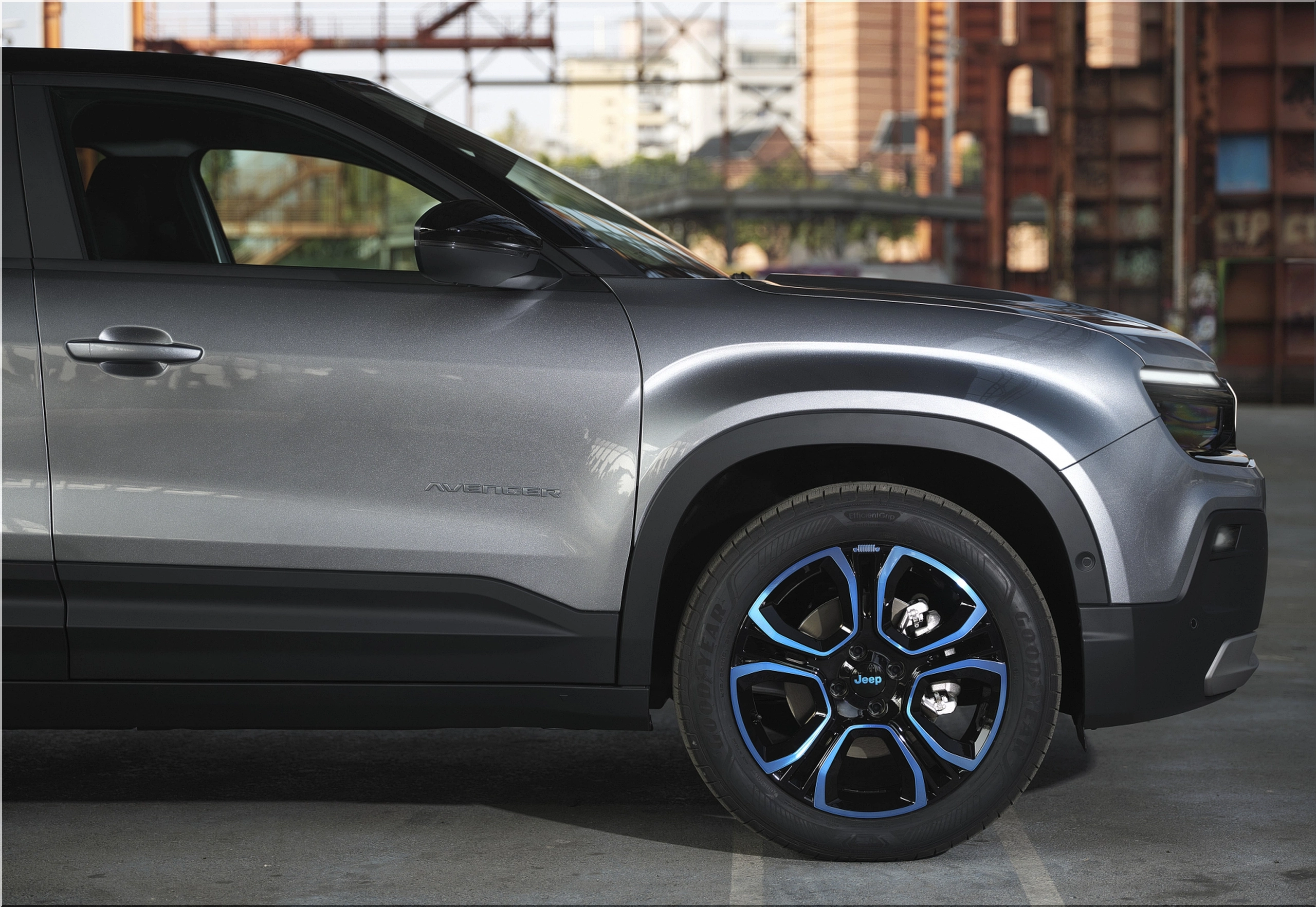
Jeep, the iconic American brand known for its off-road prowess and adventurous spirit, has recently expanded its range of vehicles with a new hybrid option: the Avenger e-Hybrid. This compact SUV, already available in Europe as a fully electric model, now offers a mild-hybrid powertrain that combines a 1.2-liter turbocharged petrol engine with an electric motor and a 48-volt battery. The result is a vehicle that promises to deliver lower emissions, better fuel efficiency, and more torque at low speeds while still retaining Jeep’s trademark style, capability, and technology.
What is the Avenger e-Hybrid?
The Jeep Avenger e-Hybrid is based on the same platform as the Jeep Avenger EV, which was launched in 2020 and won the prestigious European Car of the Year award in 2023. The Avenger EV is Jeep’s first fully electric model, and it features a 51-kWh battery and a 154-hp electric motor that provide a range of up to 249 miles (WLTP) and a 0-62 mph acceleration time of 9.6 seconds.
The Avenger e-Hybrid, on the other hand, is a mild-hybrid vehicle, which means that it cannot run solely on electric power, but rather uses the electric motor to assist the petrol engine in certain driving situations, such as starting, accelerating, and braking. The electric motor, which is integrated into the six-speed dual-clutch automatic transmission, produces 28 hp and 40.6 lb-ft of torque, while the petrol engine, which is a three-cylinder unit with a turbocharger, delivers 99 hp and 151 lb-ft of torque. The 48-volt battery, which is located under the rear seat, can be recharged by regenerative braking or by the petrol engine.
According to Jeep, the Avenger e-Hybrid can drive more than 50% of the time in urban conditions in 100% electric mode, as long as the speed is below 19 mph and the battery has enough charge. The hybrid system also allows the vehicle to switch off the petrol engine when coasting or when parking, and to restart it smoothly and quietly when needed. The hybrid technology also improves the performance and responsiveness of the vehicle, especially at low speeds, where the electric motor provides additional torque. Jeep claims that the Avenger e-Hybrid can achieve a fuel consumption of 46.12 mpg (WLTP) and a CO2 emission level of 111-114 g/km (WLTP), which represents a 15% reduction compared to the non-electrified equivalent.
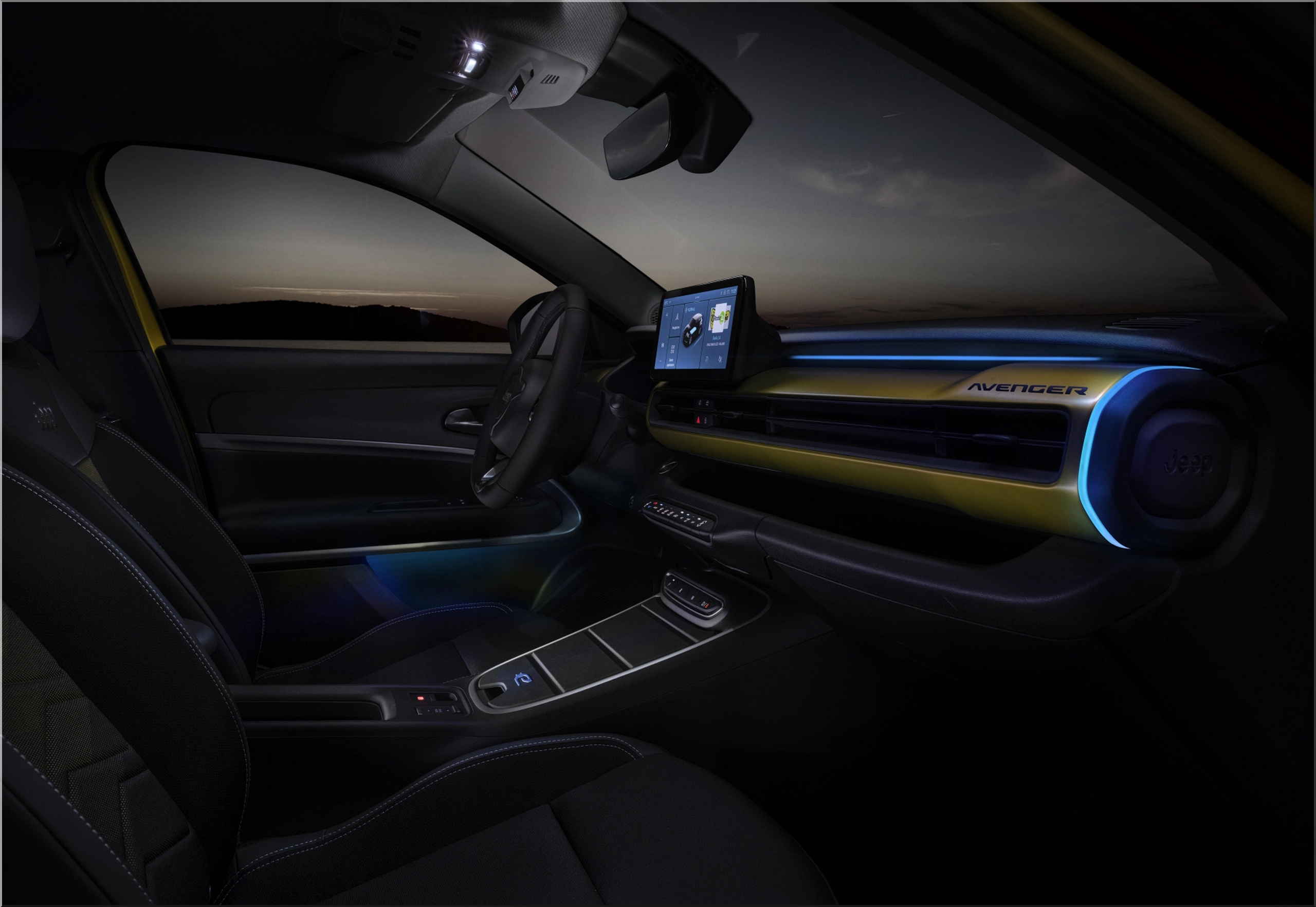
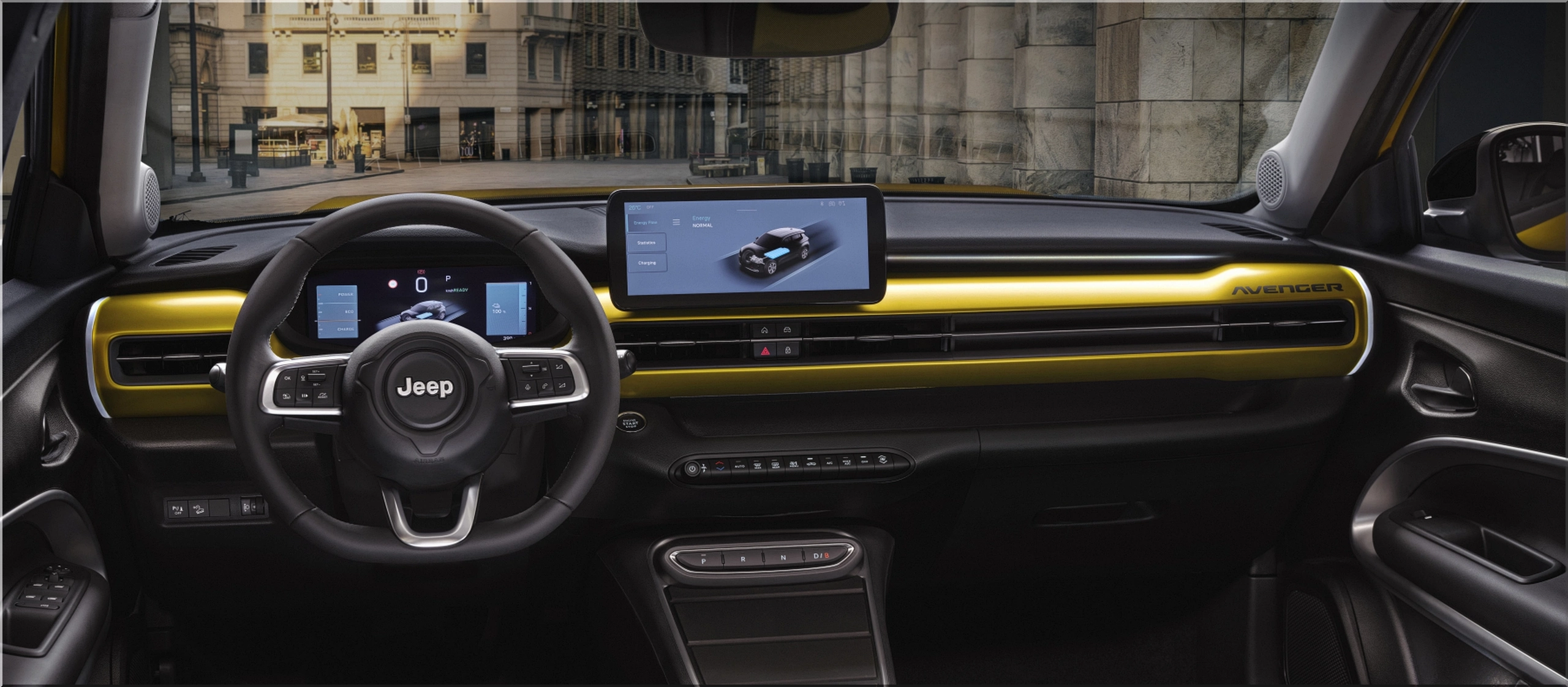
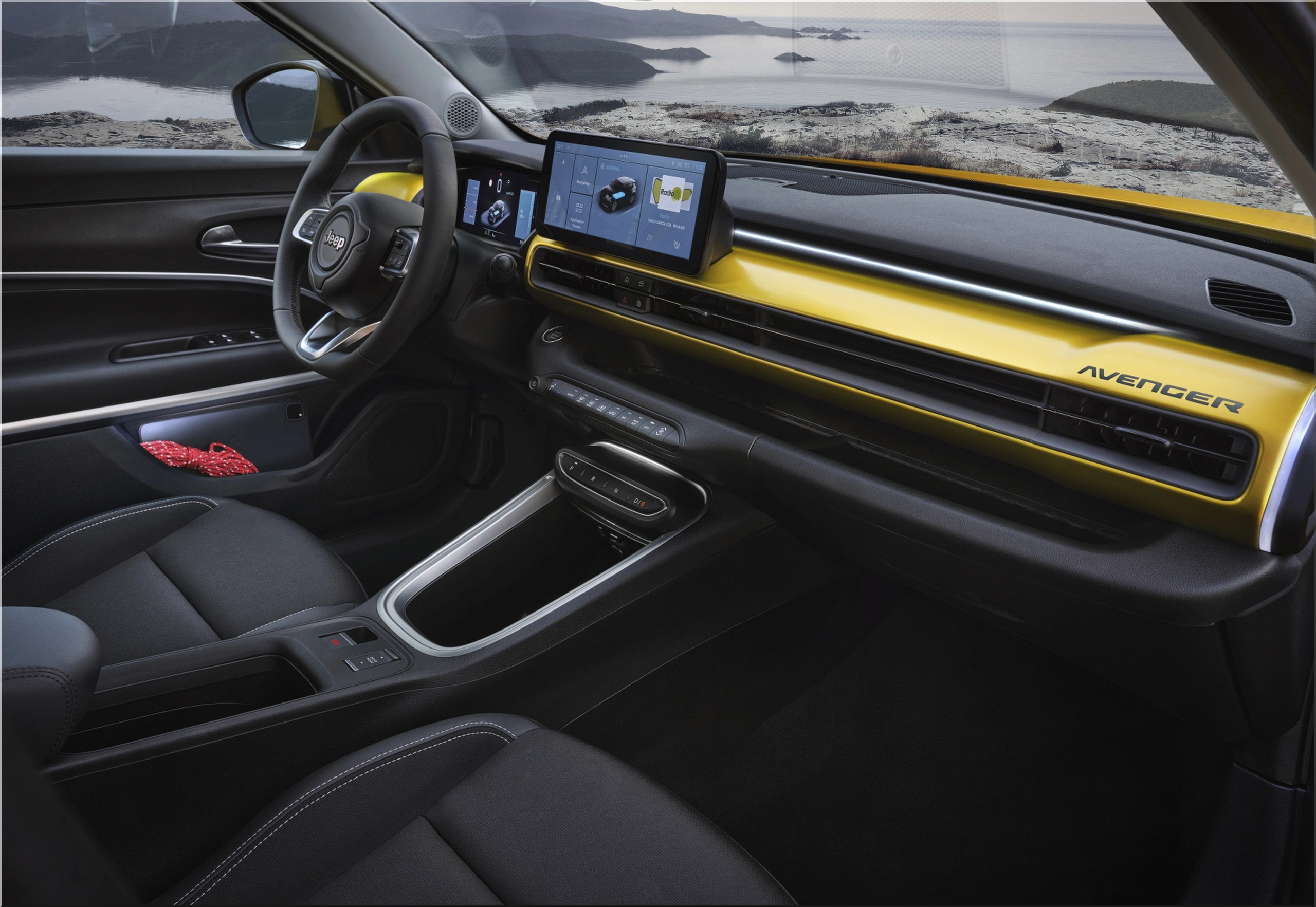
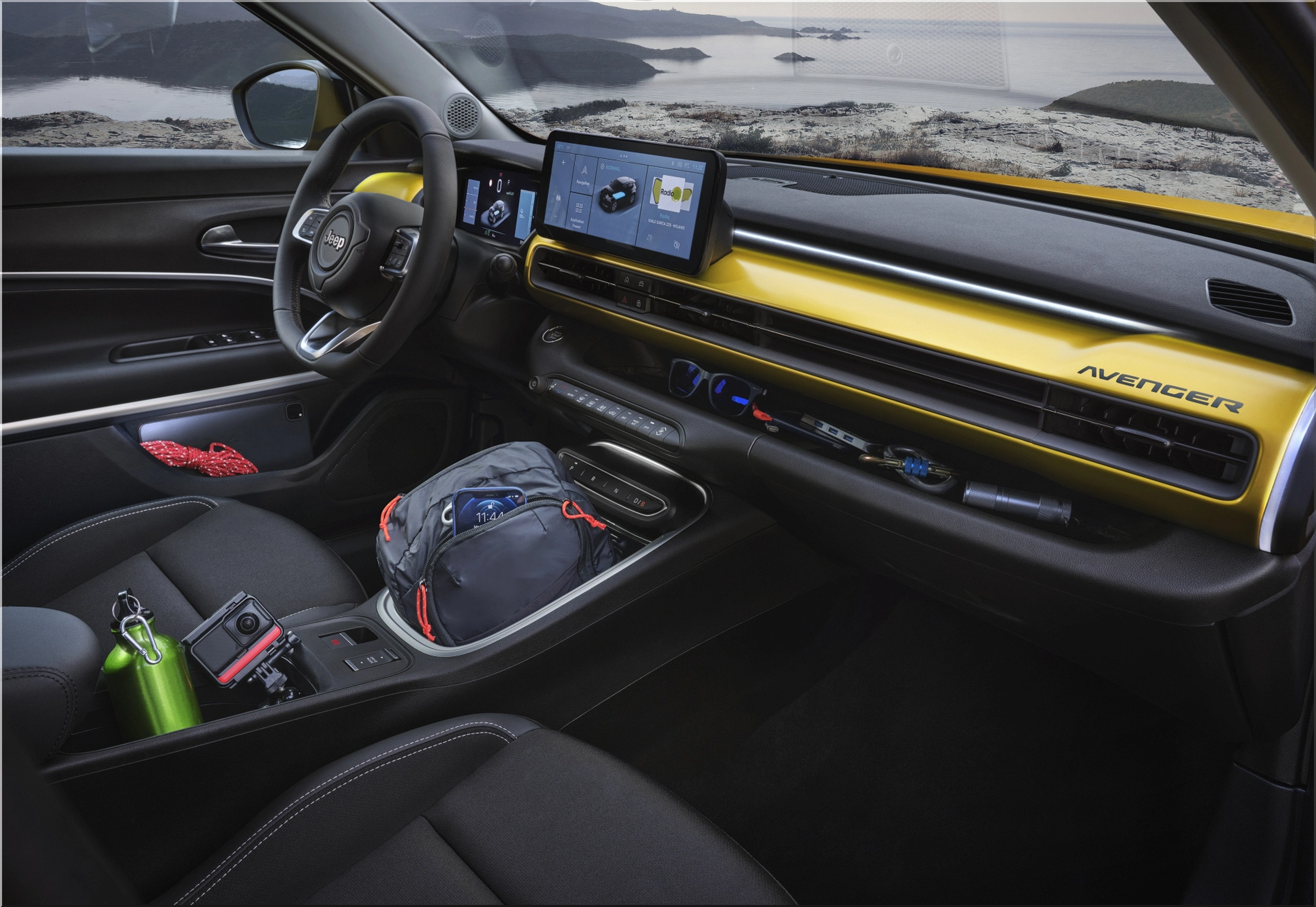
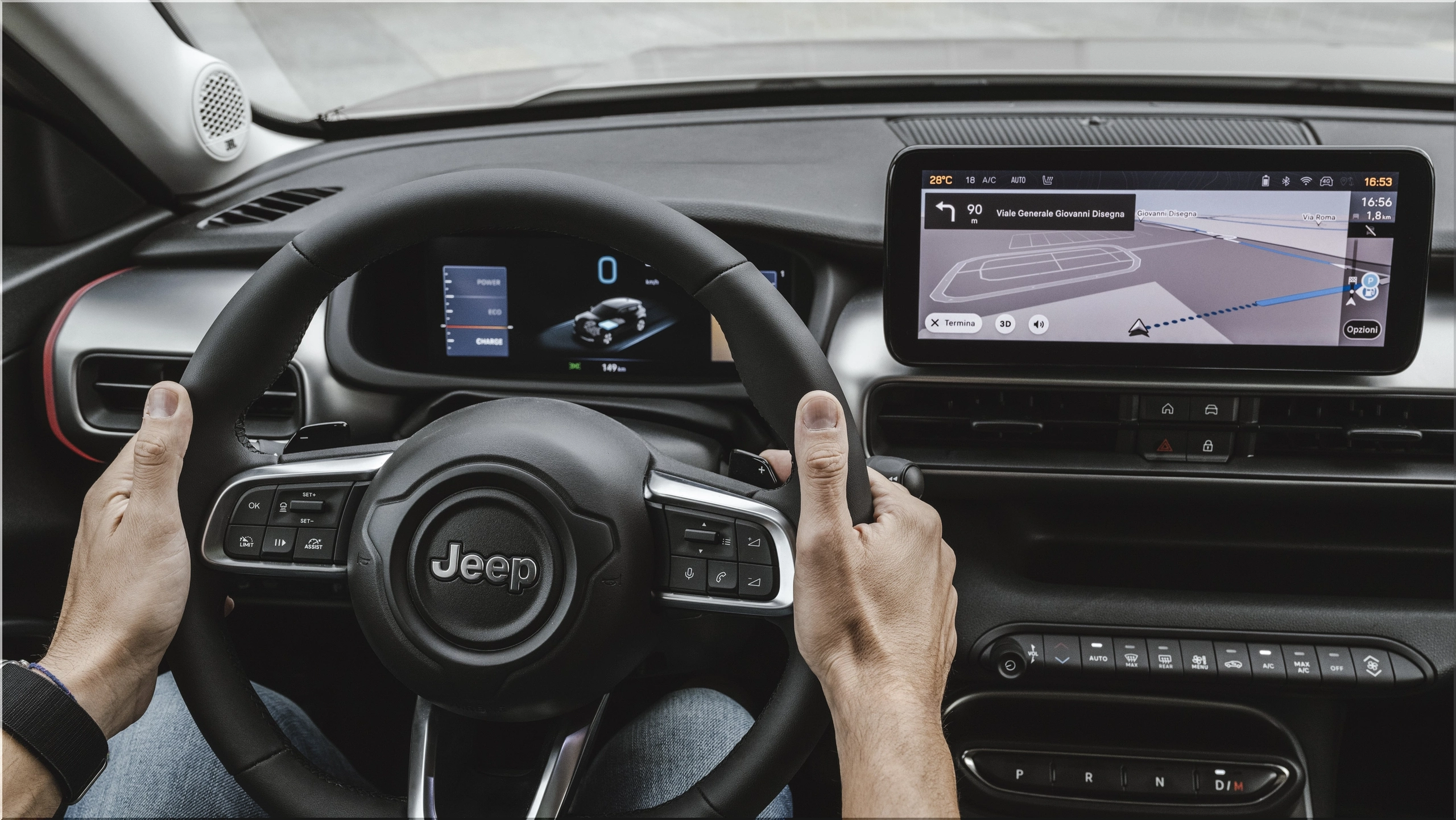
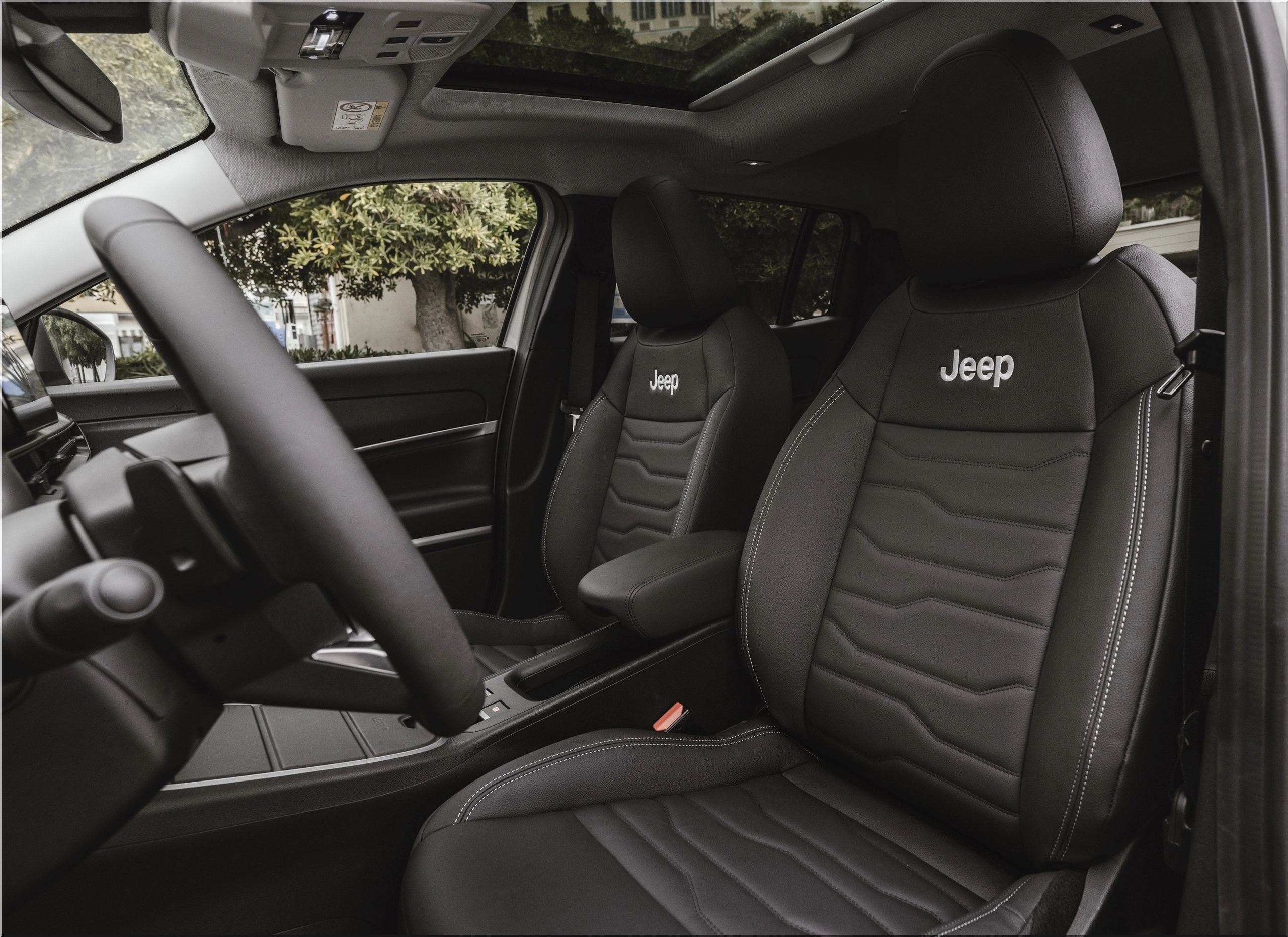
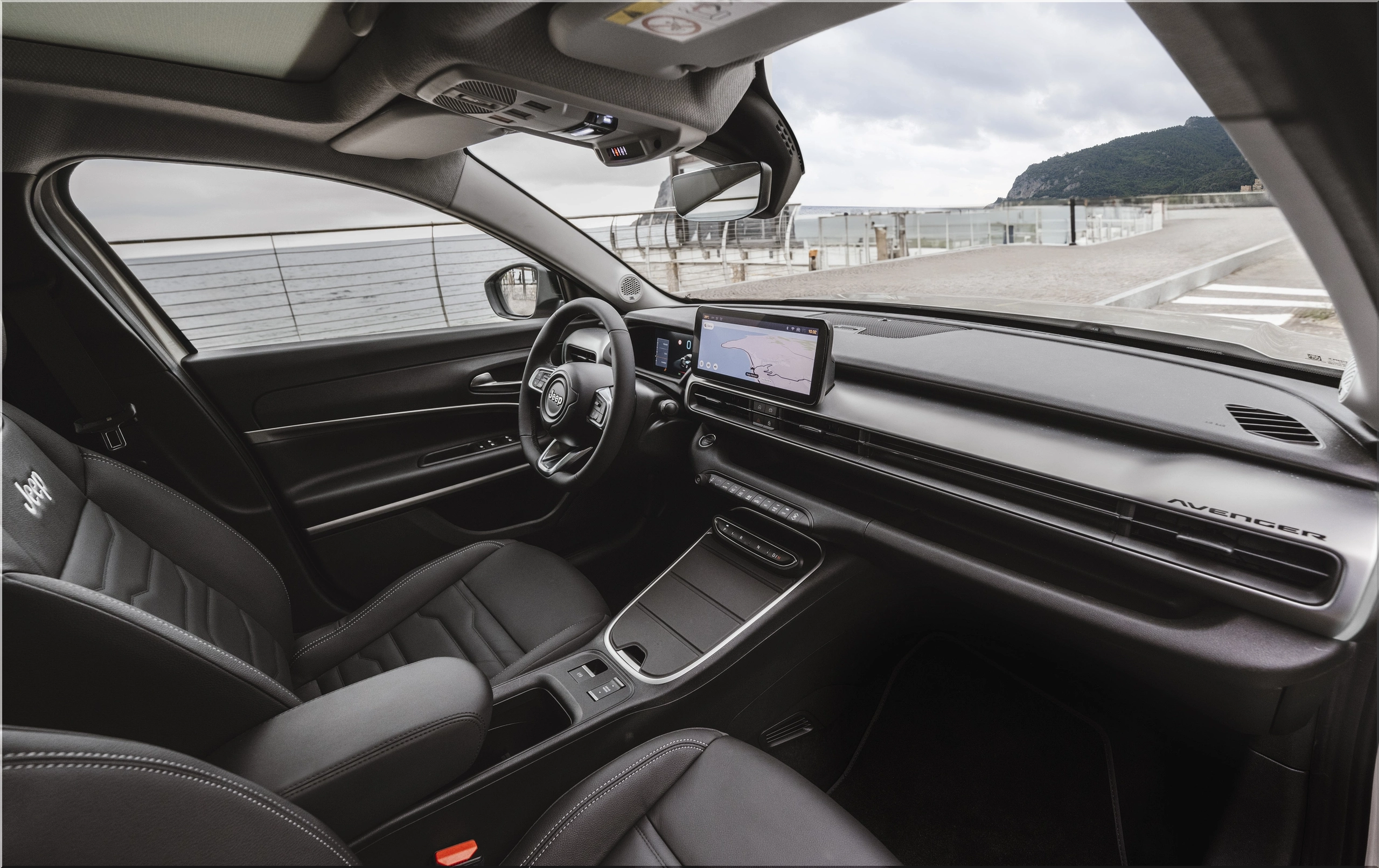
The Avenger e-Hybrid is available in three trim levels: Longitude, Altitude, and Summit. The Longitude trim offers 16-inch alloy wheels, LED daytime running lights, a 7-inch touchscreen with Apple CarPlay and Android Auto compatibility, a 7-inch digital instrument cluster, a leather-wrapped steering wheel, and a host of safety and driver assistance features, such as adaptive cruise control, lane keep assist, traffic sign recognition, and blind spot monitoring. The Altitude trim adds 17-inch alloy wheels, full LED headlights and taillights, tinted rear windows, roof rails, an 8.4-inch touchscreen with navigation, a wireless charging pad, and a rearview camera. The Summit trim, which is the top-of-the-range option, comes with 18-inch alloy wheels, a full-width LED light bar at the rear, a panoramic sunroof, leather seats, a 10.25-inch digital instrument cluster, a 360-degree camera, head-up display, and a level 2 autonomous driving system that can steer, accelerate, and brake the vehicle in certain conditions.
What makes the Avenger e-Hybrid a Jeep?
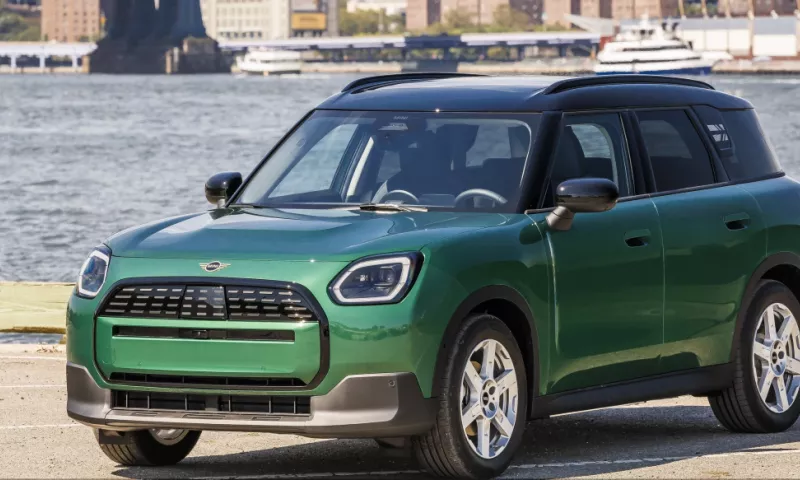
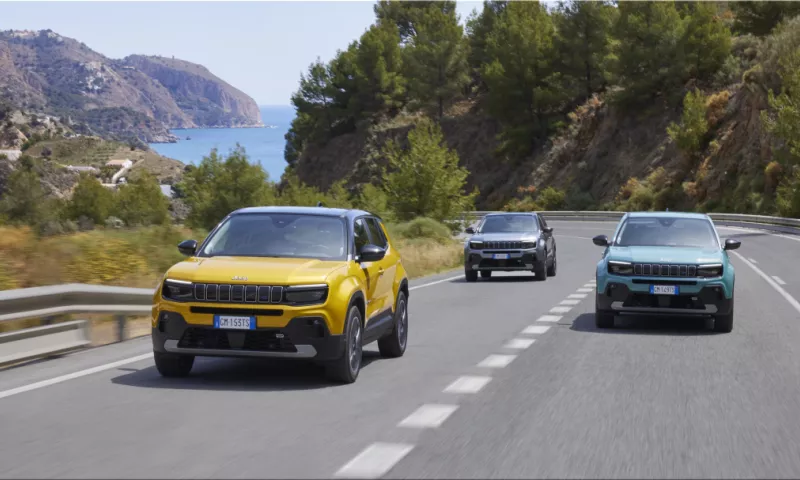
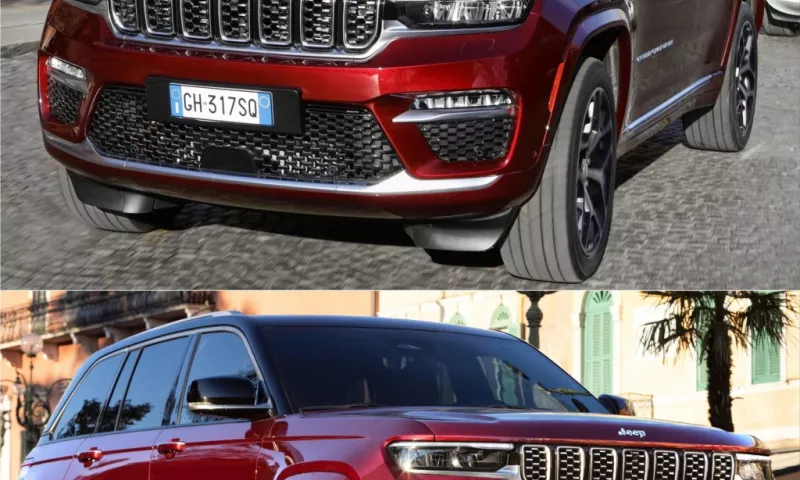
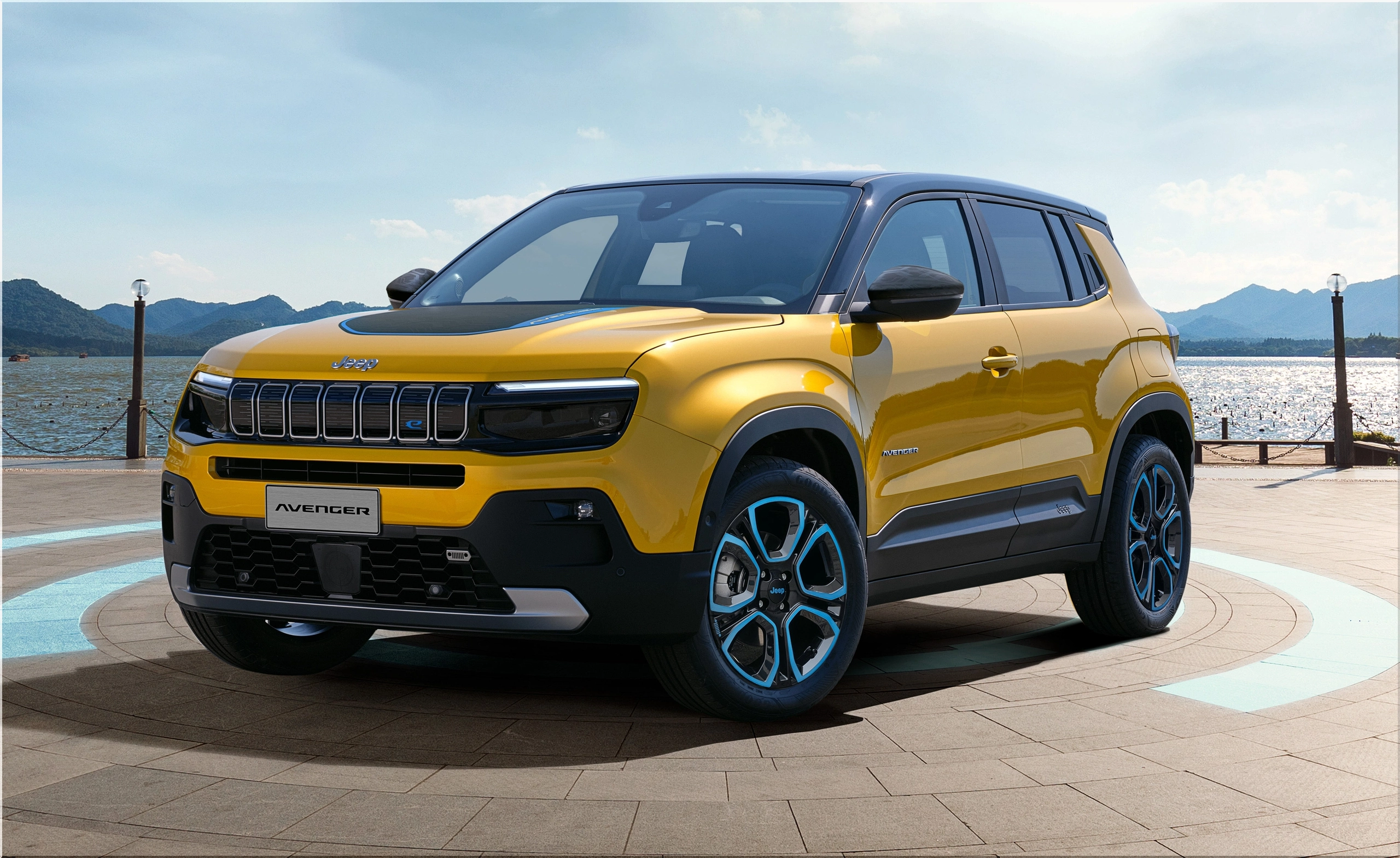
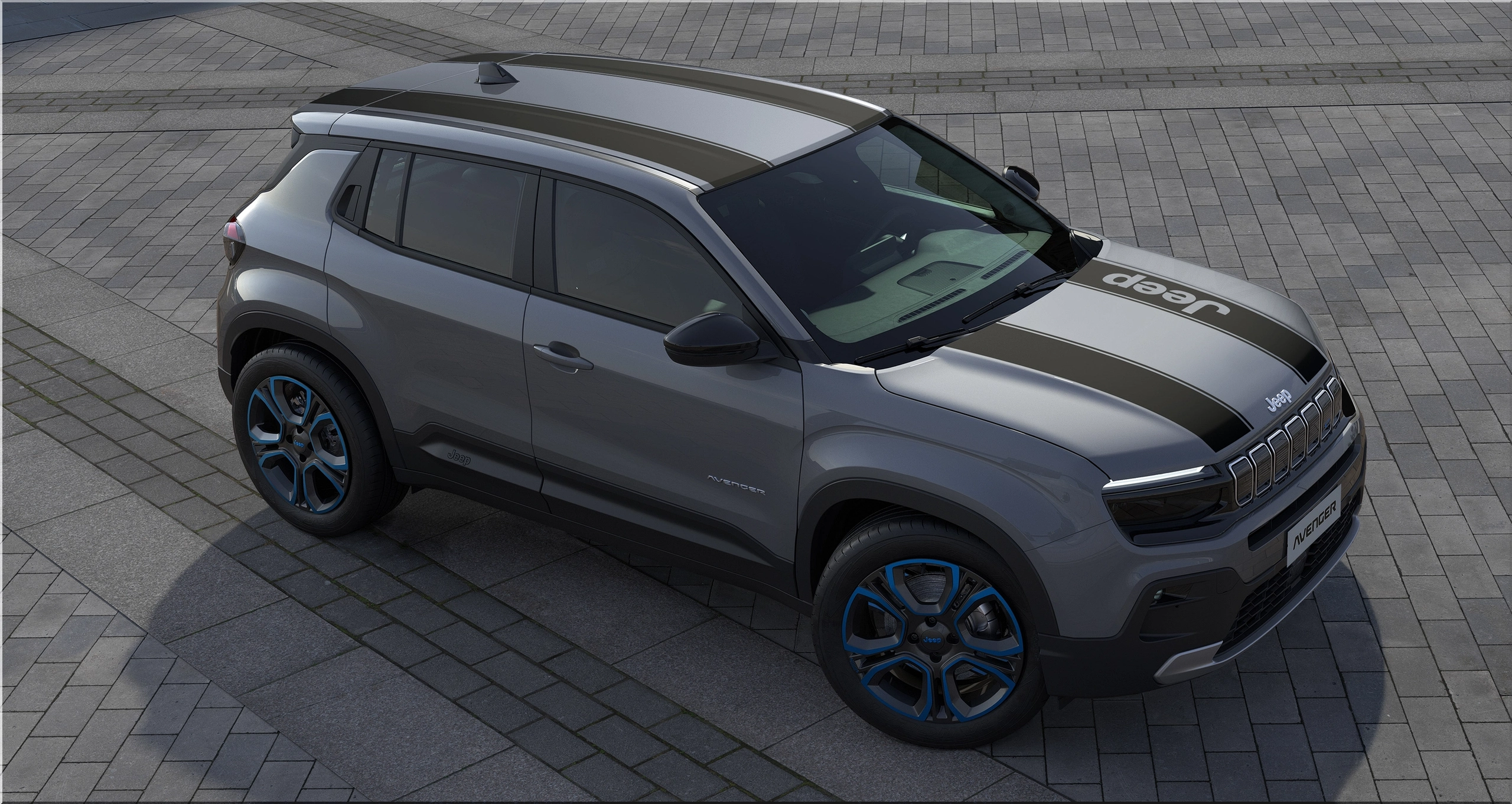
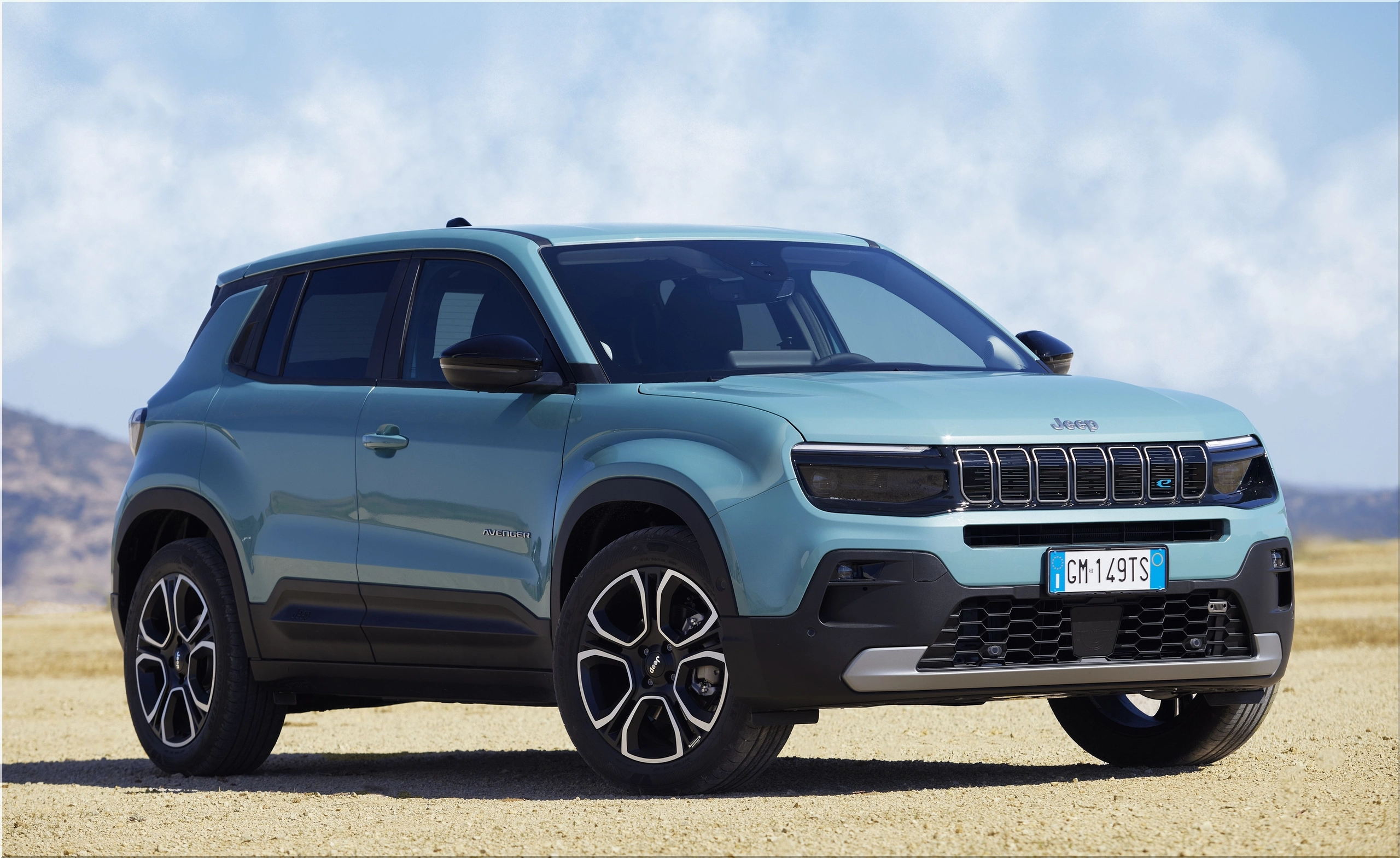
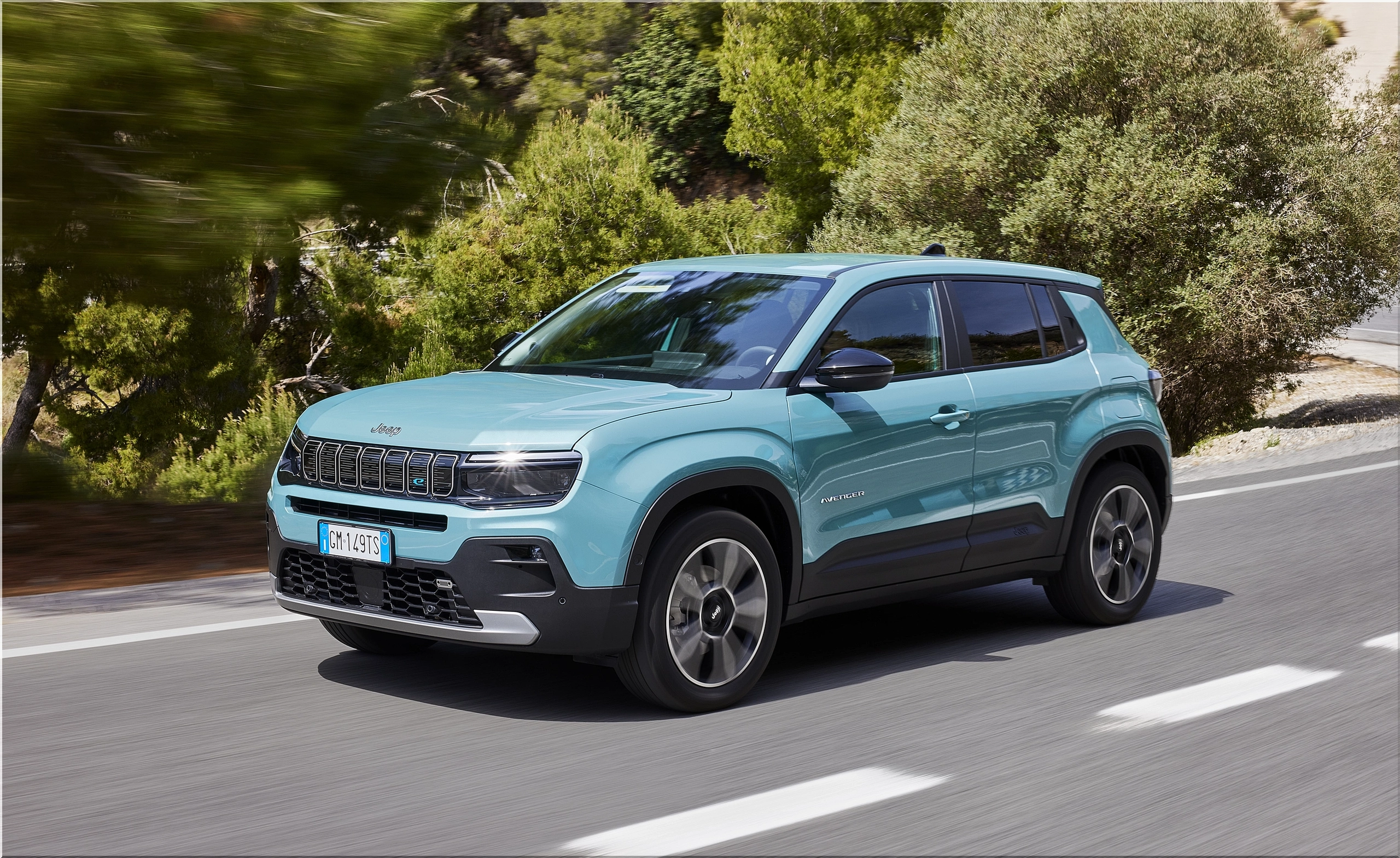
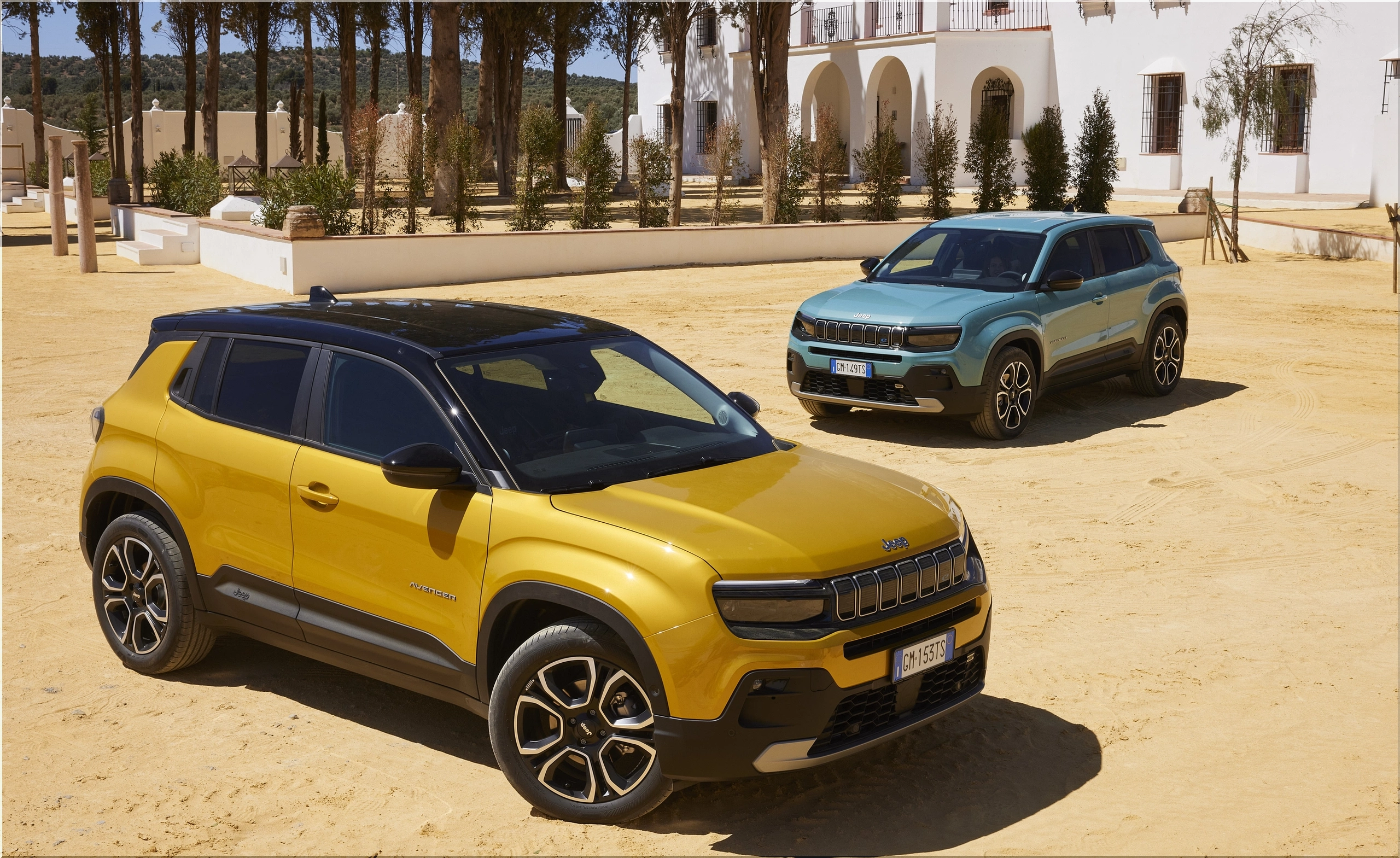
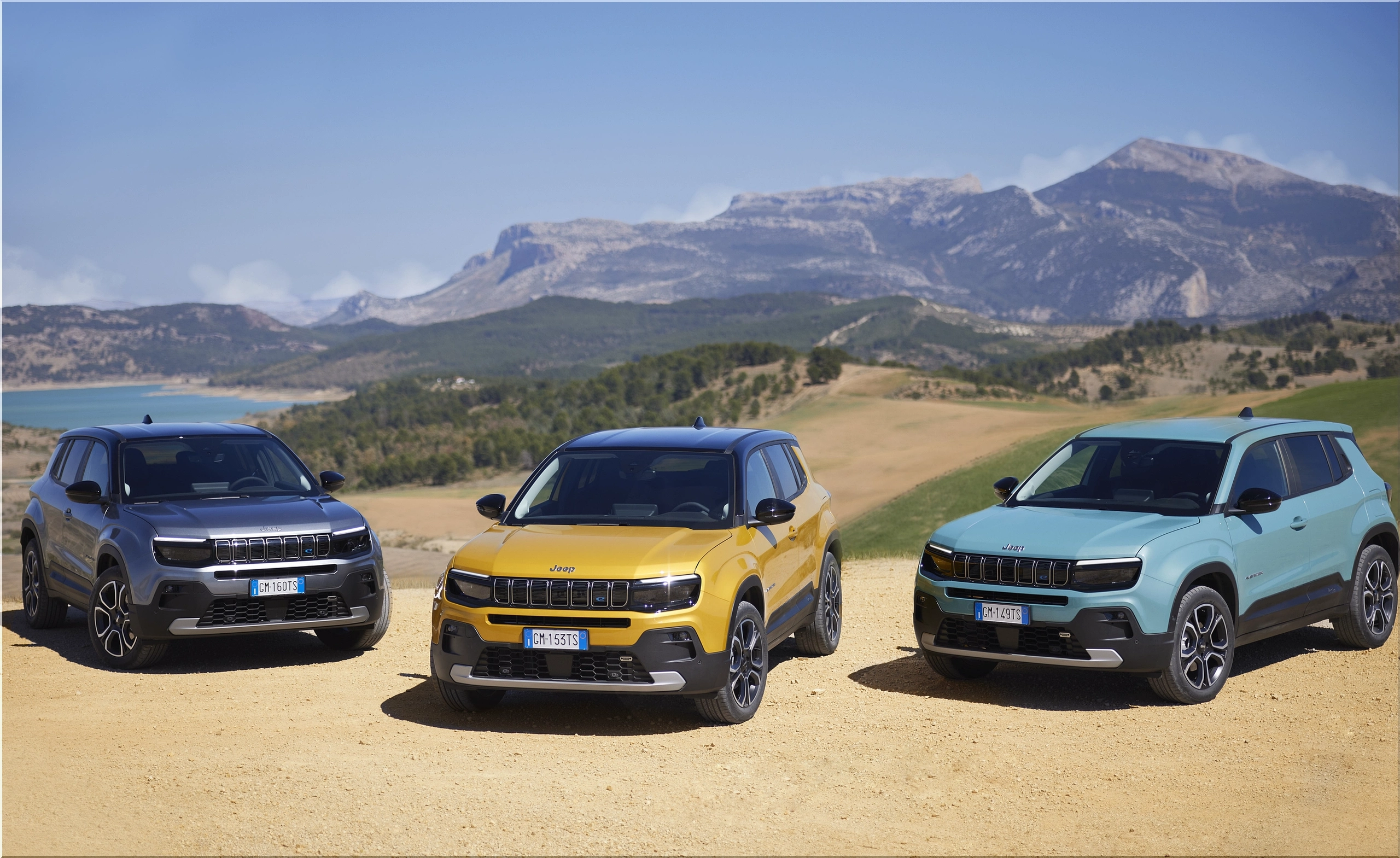
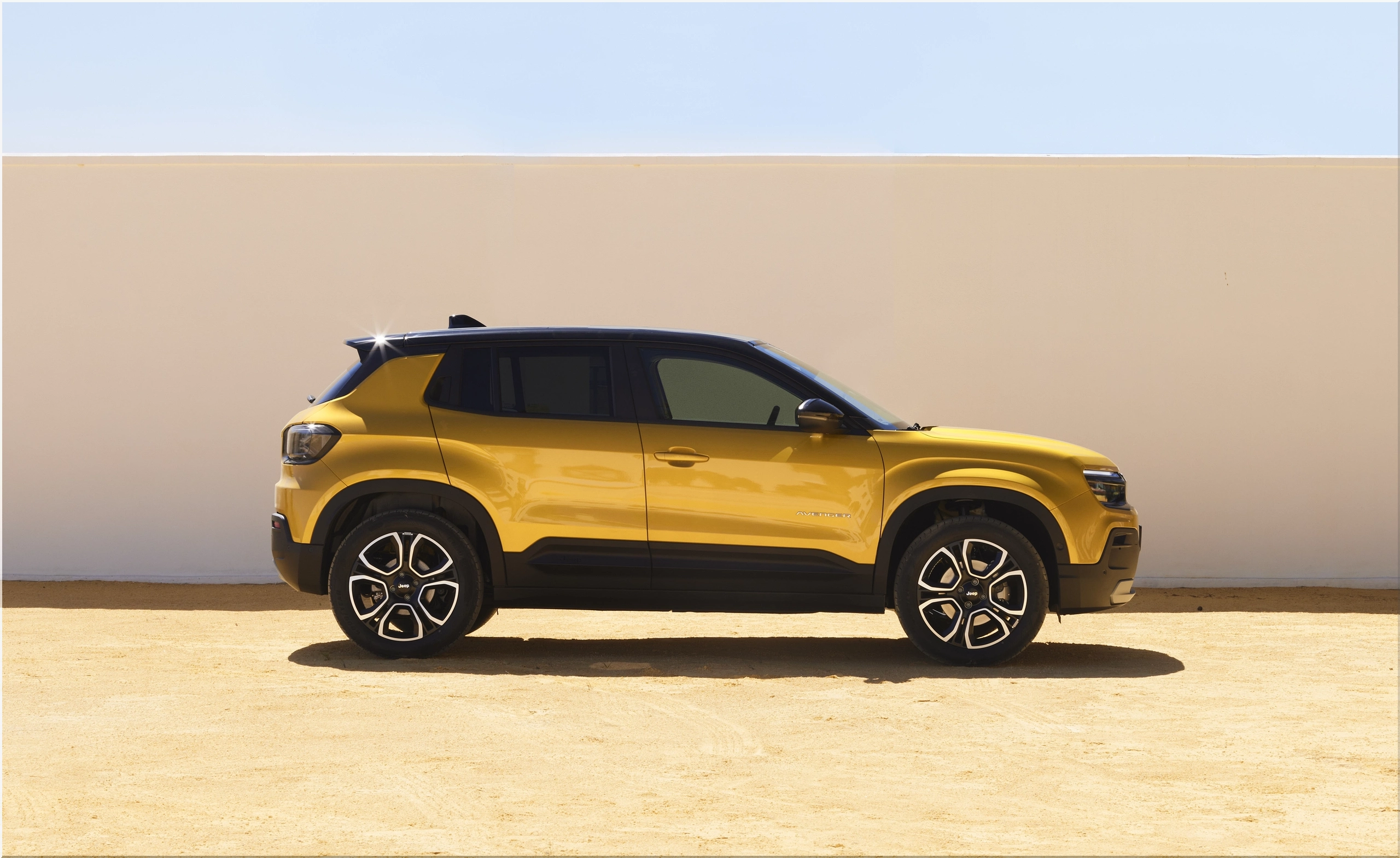
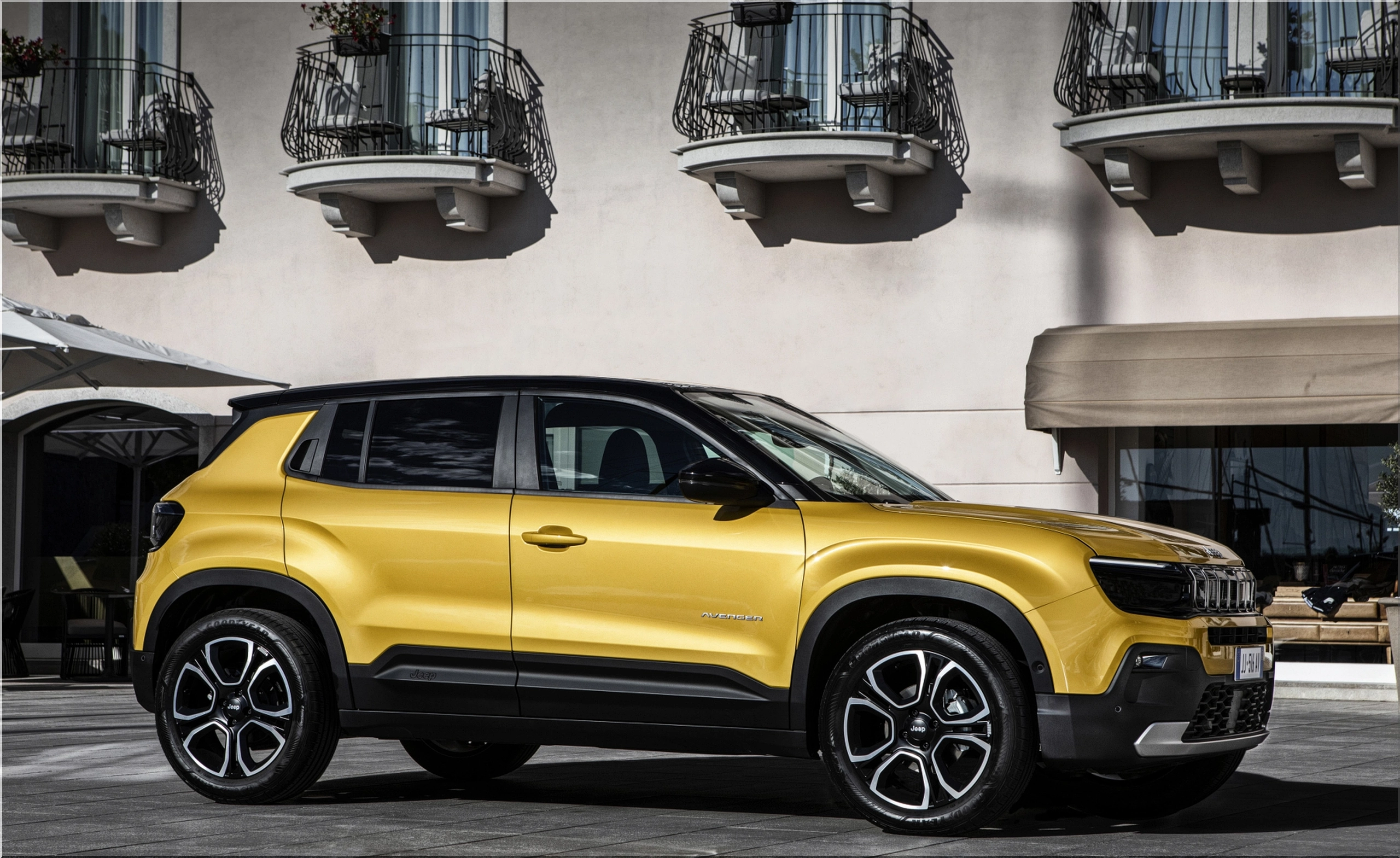
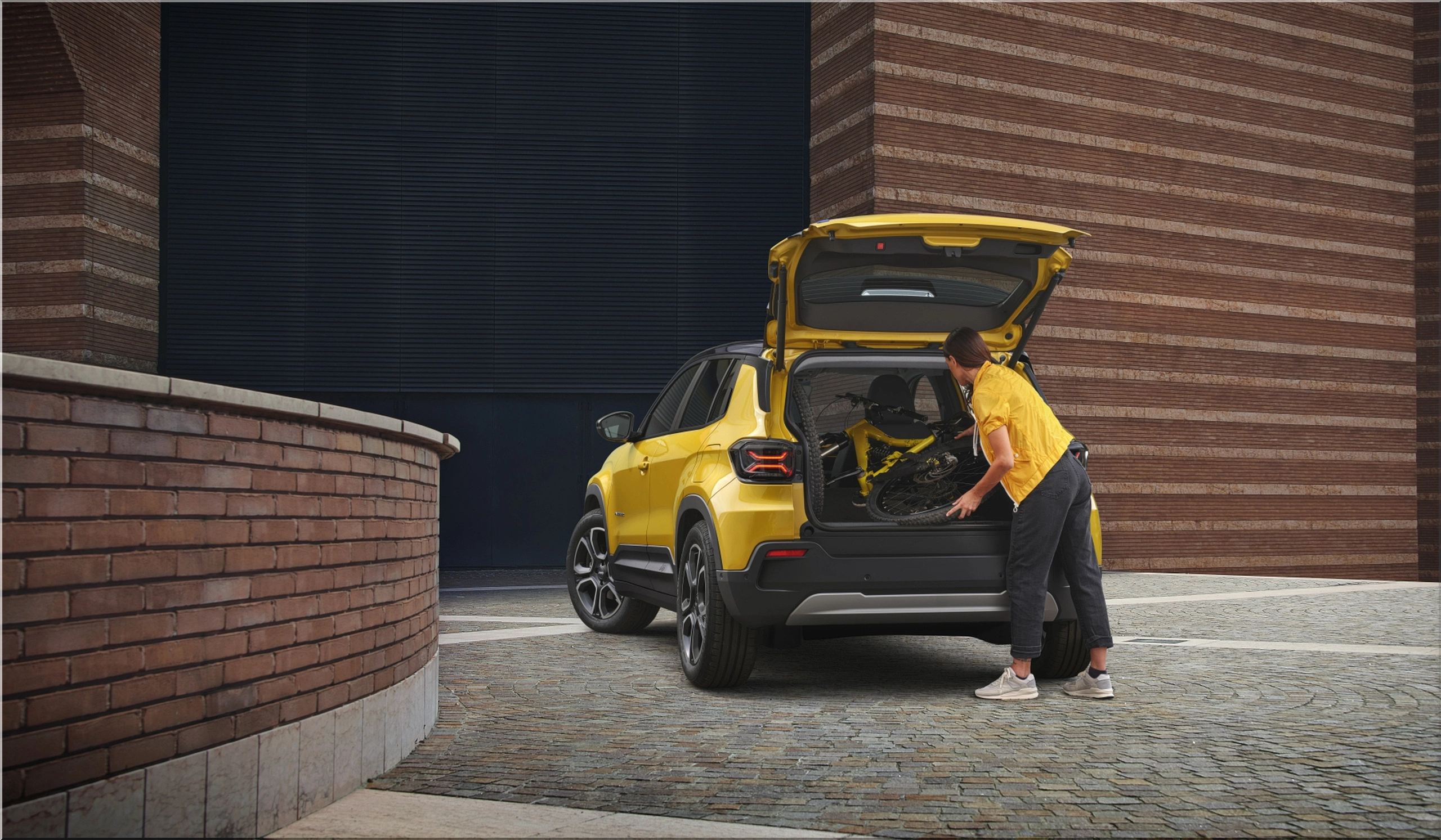
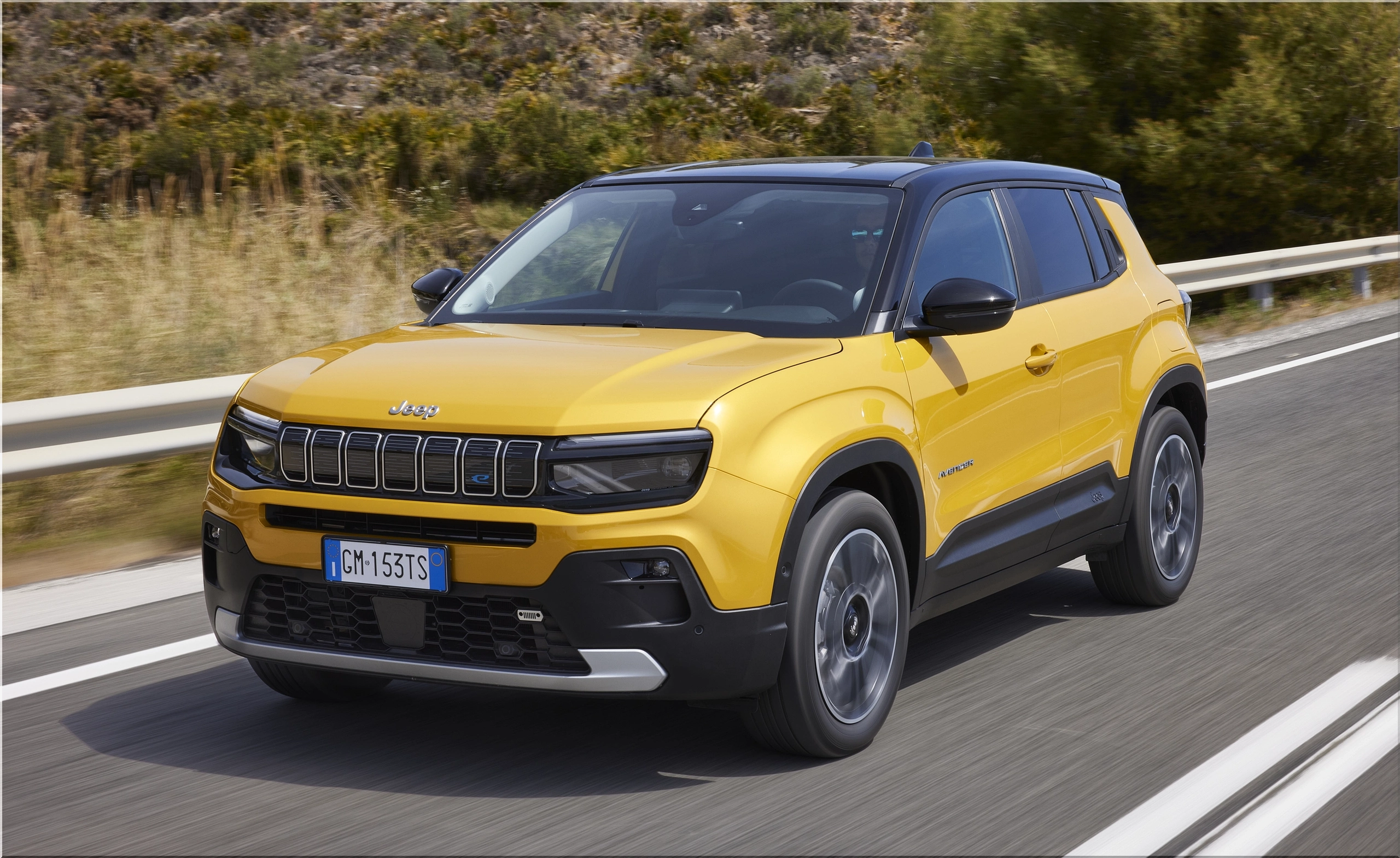
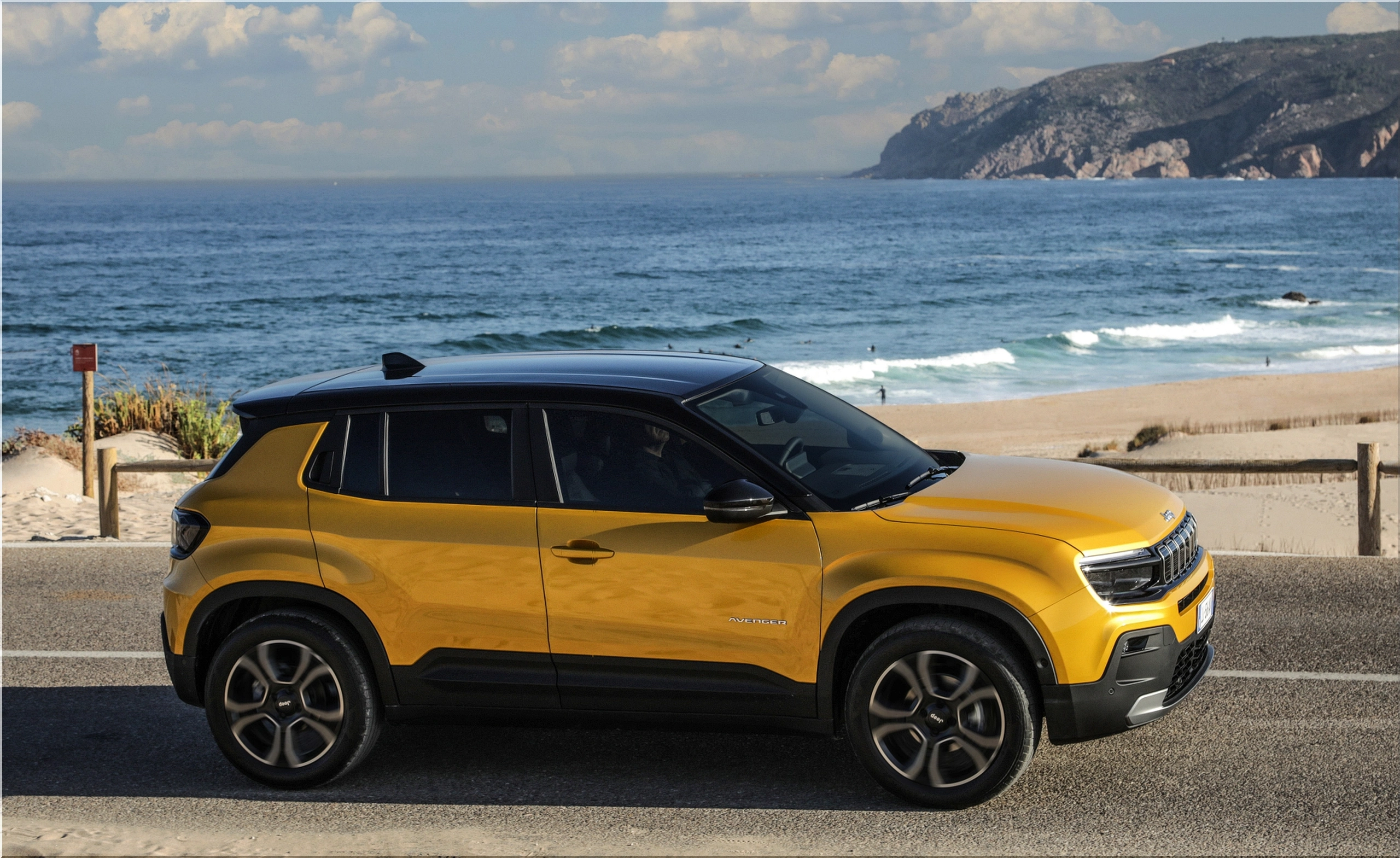
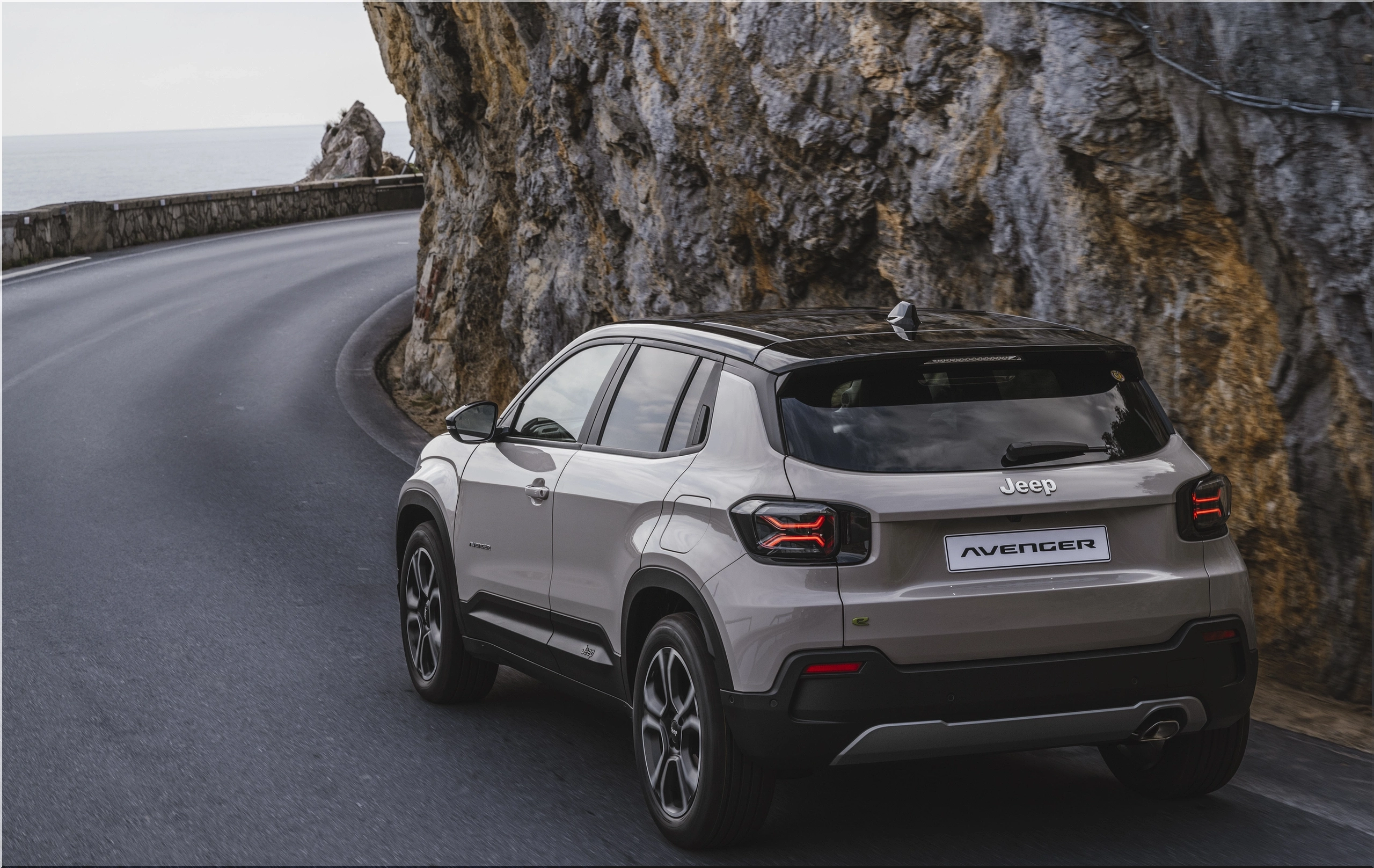
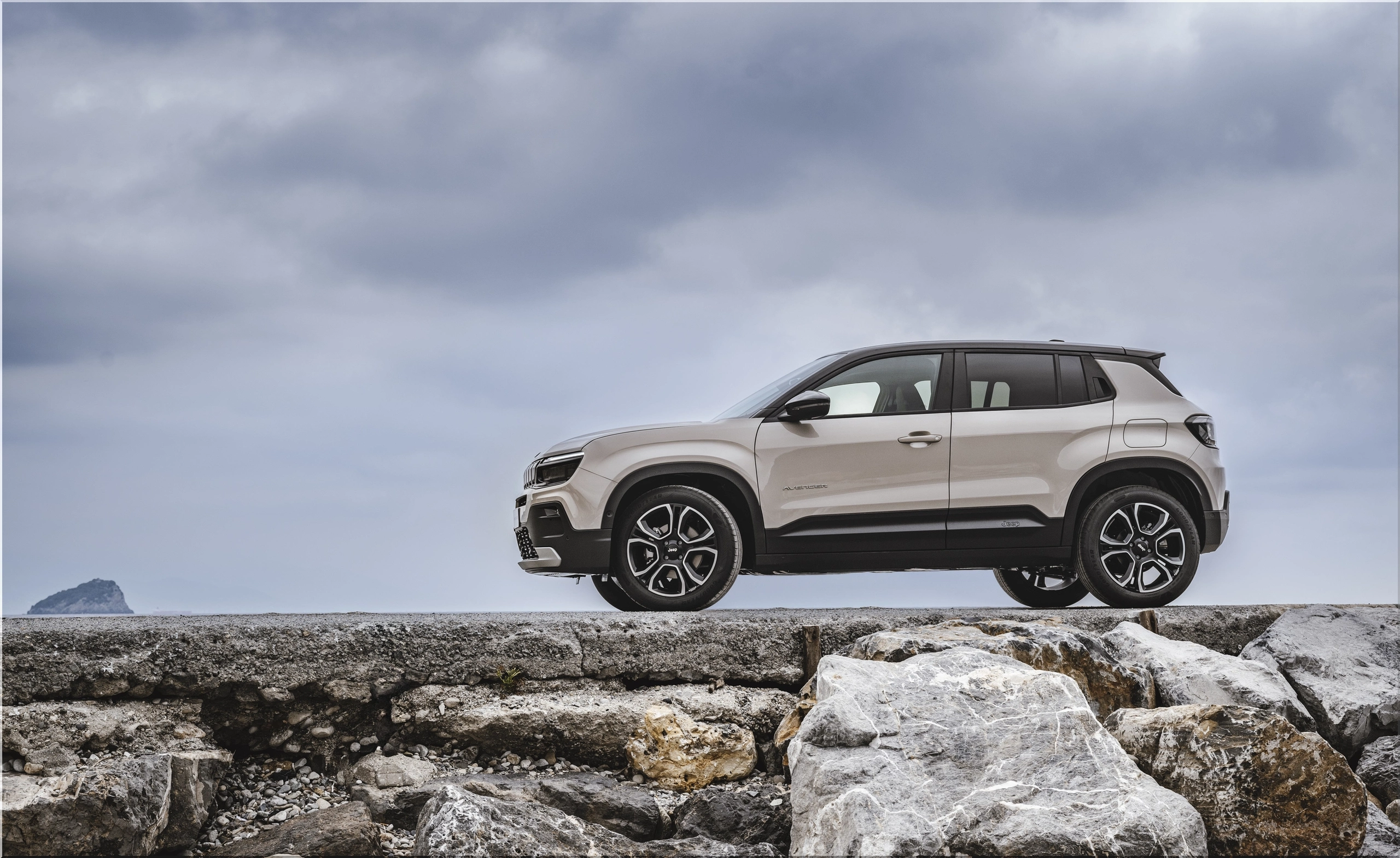
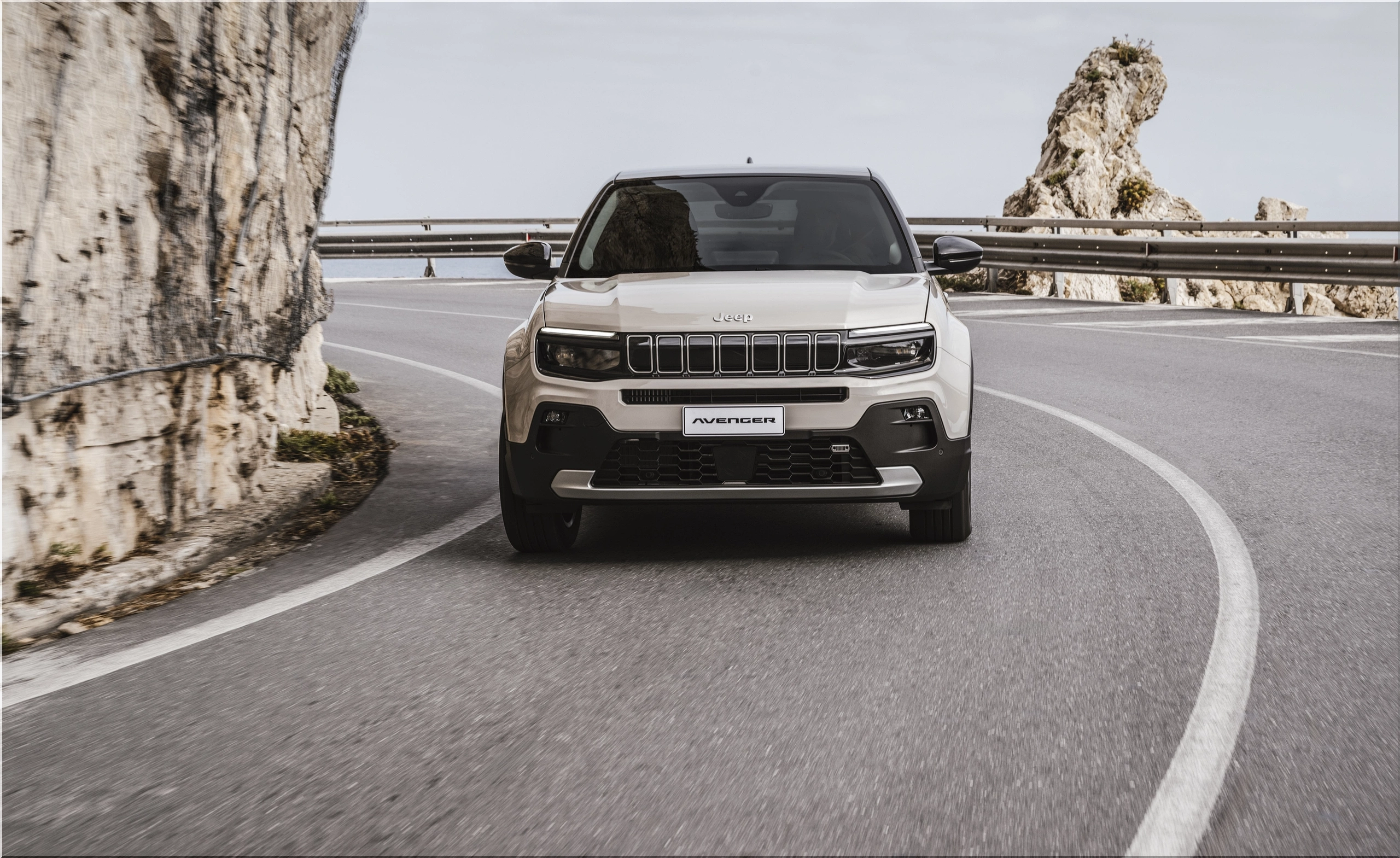
Despite being a hybrid and a compact SUV, the Jeep Avenger e-Hybrid still carries the Jeep DNA and heritage, which are evident in its design, features, and capabilities. The Avenger e-Hybrid has a distinctive and rugged look, with a boxy shape, a seven-slot grille, round headlights, trapezoidal wheel arches, and a tailgate-mounted spare wheel. The body also features plastic cladding and skid plates that protect the vehicle from scratches and bumps, both on and off the road. The Avenger e-Hybrid also has a high ground clearance of 200 mm (230 mm under the battery), and short overhangs that give it a 20-degree approach angle and a 32-degree departure angle, which are useful for tackling obstacles and uneven terrain. The Avenger e-Hybrid also has a water fording depth of 230 mm, which is enough to cross shallow streams and puddles.
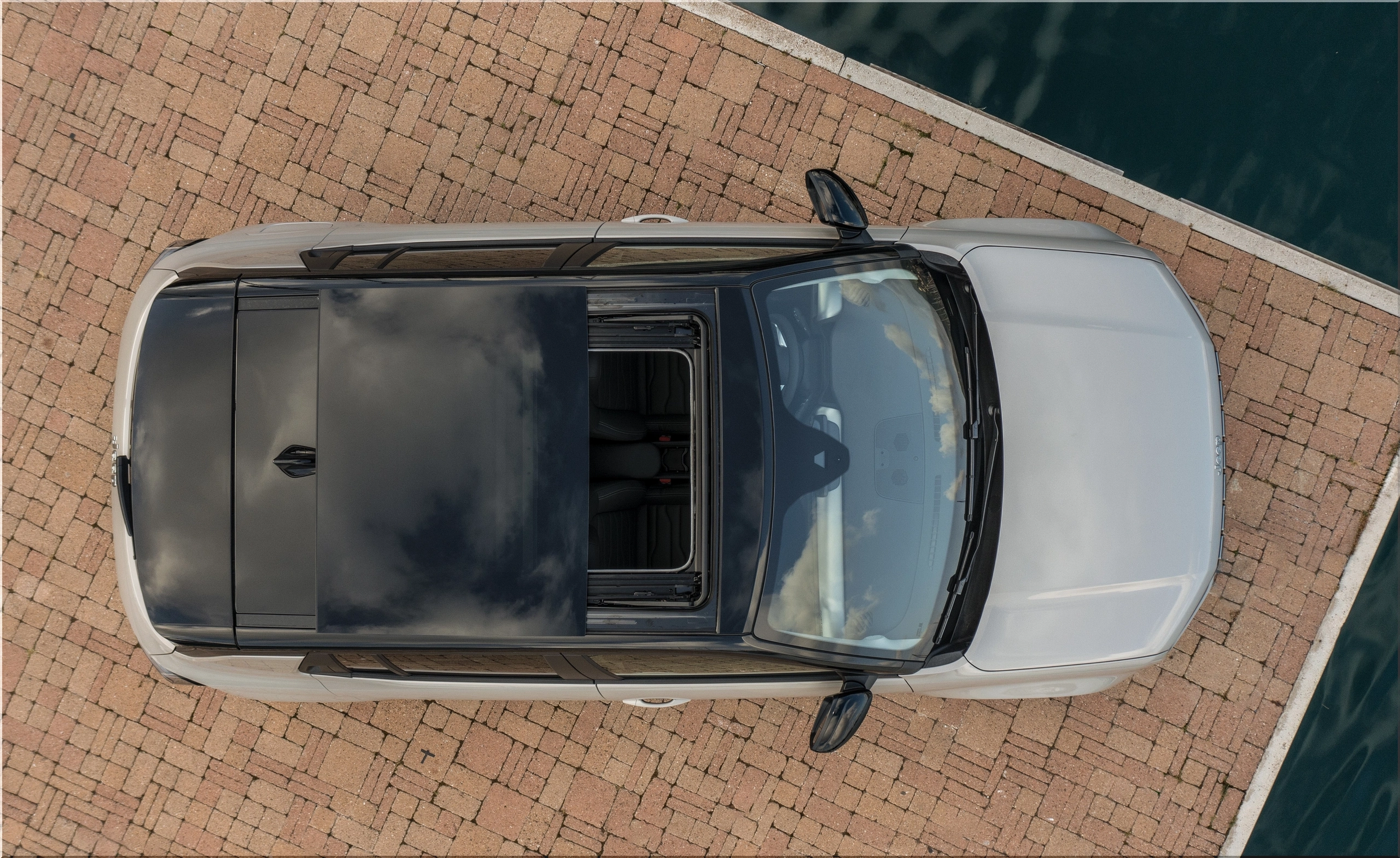
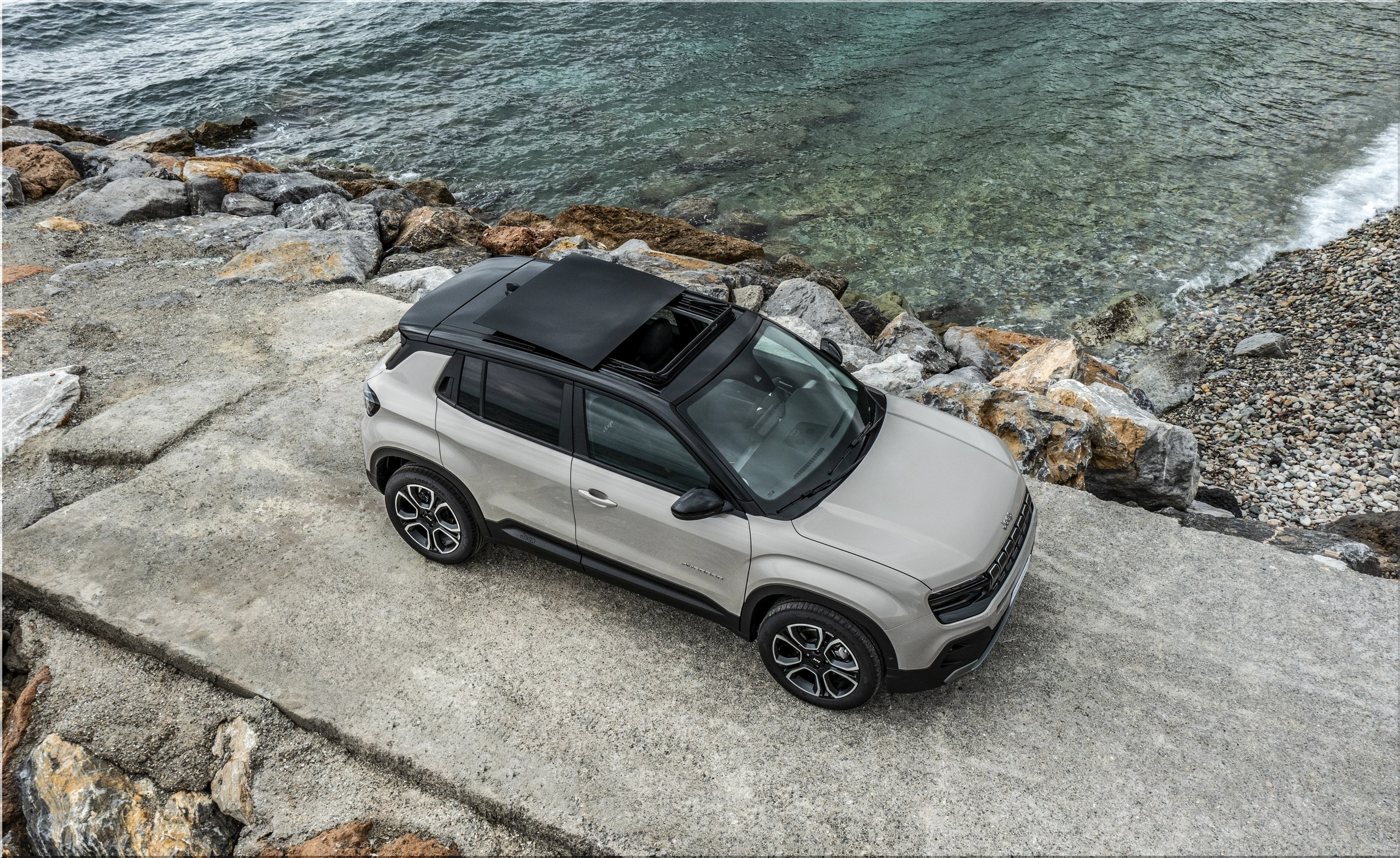
The Avenger e-Hybrid also offers a range of features and technologies that enhance its versatility and functionality, such as the Open-Air Sky Roof, which is an optional panoramic sunroof that can be opened and closed electronically, giving the occupants a feeling of freedom and connection with nature. The Avenger e-Hybrid also has a power-operated driver’s seat with a massage function, which can provide comfort and relaxation during long journeys. The Avenger e-Hybrid also has a smart keyless entry system, which can detect the presence of the key fob and unlock the doors automatically, as well as a remote start function, which can turn on the vehicle and activate the climate control system before the driver gets in.
The Jeep Avenger e-Hybrid also boasts a sophisticated traction control system called Selec-Terrain, which can adapt the vehicle’s behavior to different road and weather conditions. The system has six driving modes: Eco, Normal, Sport, Snow, Mud, and Sand. Each mode adjusts the throttle response, the transmission shift points, the steering weight, and the traction control settings to optimize the performance and efficiency of the vehicle. The system also has a hill descent control feature, which can automatically control the speed and braking of the vehicle when going downhill without the need for the driver to use the pedals.

How does the Avenger e-Hybrid compare to its rivals?
The Avenger e-Hybrid is not the only hybrid option in the compact SUV segment, as there are other models that offer similar or better features, performance, and efficiency. Some of the main competitors of the Avenger e-Hybrid are:
- The Toyota Yaris Cross Hybrid is a new model that combines a 1.5-liter petrol engine with an electric motor and a nickel-metal hydride battery, producing a total of 114 hp and 120 lb-ft of torque. The Yaris Cross Hybrid has a fuel consumption of 56.5 mpg (WLTP) and a CO2 emission level of 90 g/km (WLTP). It also has an all-wheel drive option, which can send up to 40% of the power to the rear wheels when needed. The Yaris Cross Hybrid has a starting price of $26,800.
- The Nissan Juke e-Power is a series hybrid that uses a 1.2-liter petrol engine as a generator to charge a 1.5-kWh battery, which in turn powers a 107-hp electric motor that drives the front wheels. The Juke e-Power has a fuel consumption of 53.3 mpg (WLTP) and a CO2 emission level of 98 g/km (WLTP). It is also sporty and futuristic, with LED lights, a floating roof, and a large touchscreen. The Juke e-Power has a starting price of $28,500.
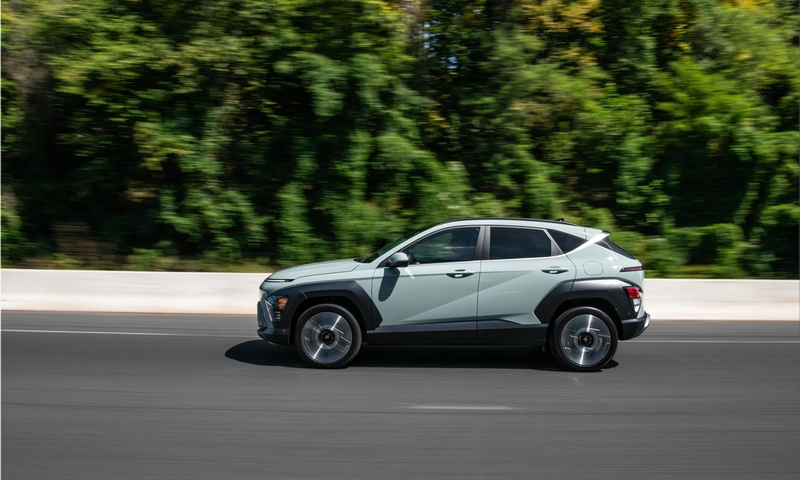
- The Hyundai Kona Hybrid is a parallel hybrid that combines a 1.6-liter petrol engine with a 43-hp electric motor and a 1.56-kWh battery, producing a total of 139 hp and 195 lb-ft of torque. The Kona Hybrid has a fuel consumption of 52.3 mpg (WLTP) and a CO2 emission level of 99 g/km (WLTP). It also has a spacious and practical interior, with a 10.25-inch touchscreen, a wireless charging pad, and a head-up display. The Kona Hybrid has a starting price of $25,500.

Is the Avenger e-Hybrid worth buying?
The Avenger e-Hybrid is a compelling option for buyers who are looking for a hybrid compact SUV that offers style, capability, and technology while also being eco-friendly and efficient. The Avenger e-Hybrid has a distinctive and rugged design, a decent range and performance, a smart and comfortable interior, and a range of features and technologies that enhance its versatility and functionality. The Avenger e-Hybrid also has a competitive price, starting from $30,500 for the Longitude trim, $32,500 for the Altitude trim, and $35,500 for the Summit trim.
However, the Avenger e-Hybrid is not without its flaws and limitations. The hybrid system is not very refined or responsive, and the electric motor does not provide enough power or range to make a significant difference. The interior also has some cheap and scratchy plastics, and the rear seat access and space are not very generous. The touchscreen is not intuitive or user-friendly, and the level 2 autonomous driving system is unreliable or smooth.
The Avenger e-Hybrid also faces tough competition from other hybrid models offering similar or better features, performance, and efficiency, such as the Toyota Yaris Cross Hybrid, the Nissan Juke e-Power, and the Hyundai Kona Hybrid. These models may have a more appealing design, a more refined and responsive hybrid system, a more spacious and practical interior, and a more advanced and user-friendly touchscreen and driver assistance system.
Therefore, the Avenger e-Hybrid is a good choice for buyers who value Jeep’s brand identity and heritage, and who are looking for a hybrid compact SUV that offers style, capability, and technology, while also being eco-friendly and efficient. However, before making a final decision, buyers should also consider the alternatives and compare them with the Avenger e-Hybrid, to see which one suits their needs and preferences better. To help you with that, here is a table that summarizes the main features, performance, and prices of the Avenger e-Hybrid and its three main rivals: the Toyota Yaris Cross Hybrid, the Nissan Juke e-Power, and the Hyundai Kona Hybrid.
| Model | Engine | Power | Torque | Fuel Consumption | CO2 Emission | Price |
|---|---|---|---|---|---|---|
| Jeep Avenger e-Hybrid | 1.2-liter turbo petrol + electric motor | 127 hp | 192 lb-ft | 46.12 mpg | 111-114 g/km | $30,500 - $35,500 |
| Toyota Yaris Cross Hybrid | 1.5-liter petrol + electric motor | 114 hp | 120 lb-ft | 56.5 mpg | 90 g/km | $26,800 |
| Nissan Juke e-Power | 1.2-liter petrol + electric motor | 107 hp | 187 lb-ft | 53.3 mpg | 98 g/km | $28,500 |
| Hyundai Kona Hybrid | 1.6-liter petrol + electric motor | 139 hp | 195 lb-ft | 52.3 mpg | 99 g/km | $25,500 |
As you can see, the Avenger e-Hybrid has the highest power and torque among the four models but also the highest fuel consumption and CO2 emission. The Yaris Cross Hybrid has the lowest fuel consumption and CO2 emission but also the lowest power and torque. The Juke e-Power and the Kona Hybrid have similar power and torque, but the Juke e-Power has a slightly higher fuel consumption and CO2 emission. The Avenger e-Hybrid also has the highest price range, while the Kona Hybrid has the lowest.
Of course, these are not the only factors you should consider when choosing a hybrid compact SUV. You should also consider the design, the interior, the features, the technology, the safety, the reliability, and the warranty of each model. You should also test drive each model and see how they feel and perform on the road. Ultimately, the best hybrid compact SUV for you is the one that meets your expectations and satisfies your desires. We hope this article has helped you better understand the Avenger e-Hybrid and its competitors and make a more informed and confident decision. Thank you for reading, and happy driving!
- Add new comment
- 322 views