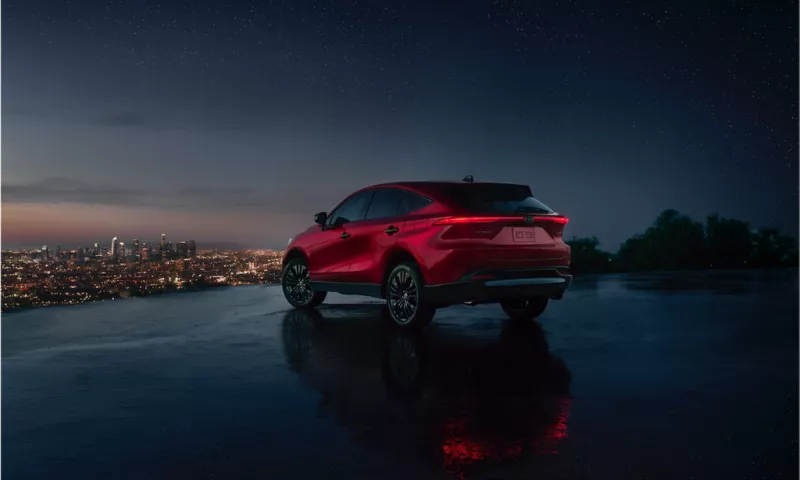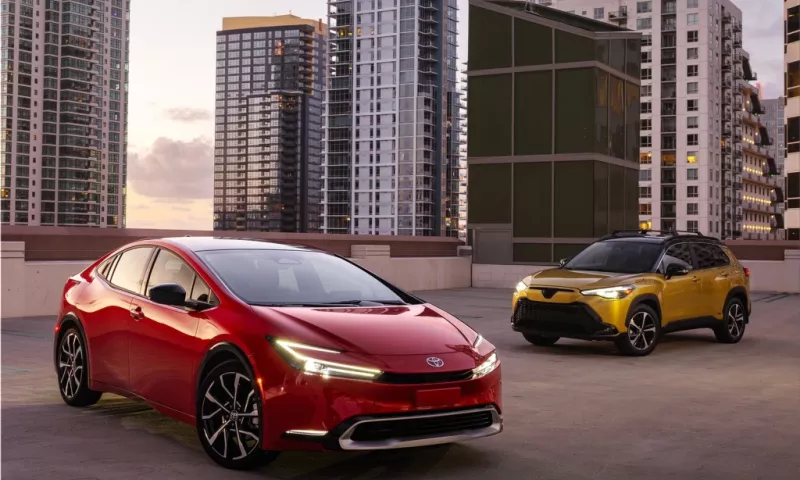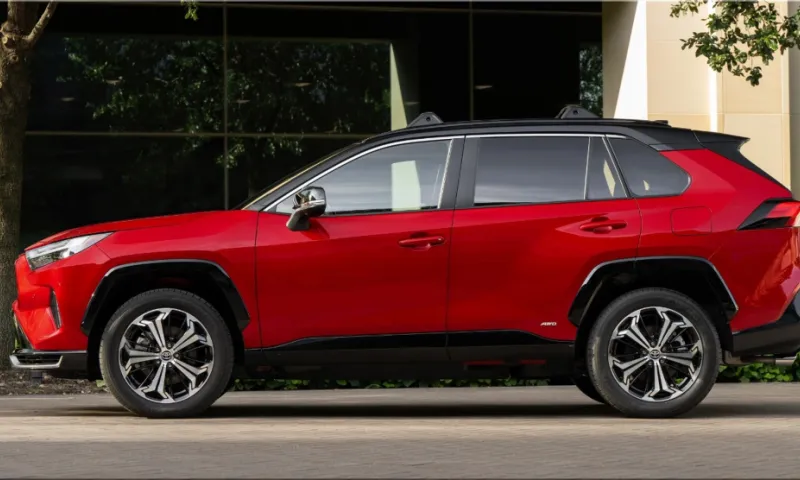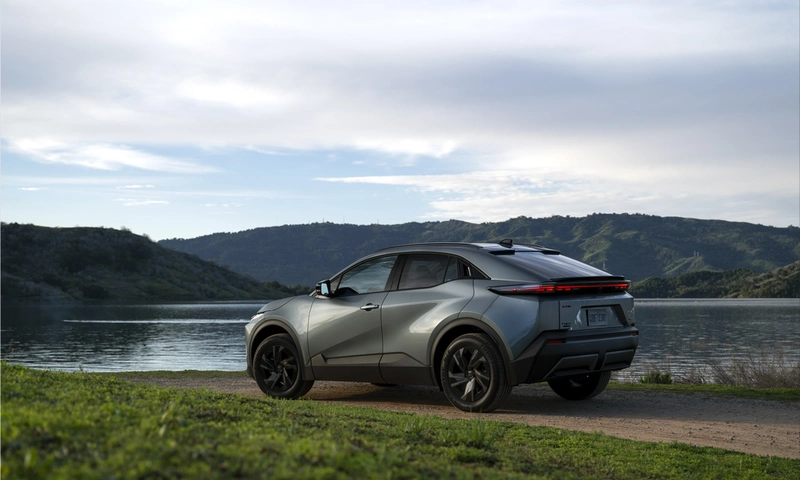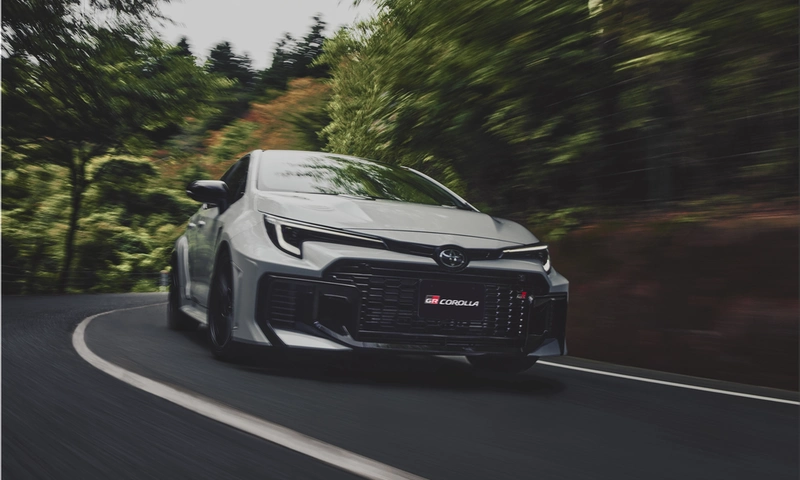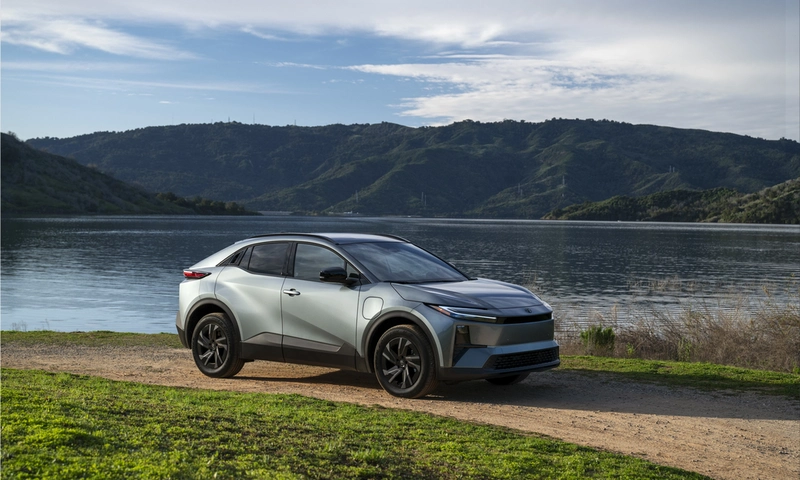
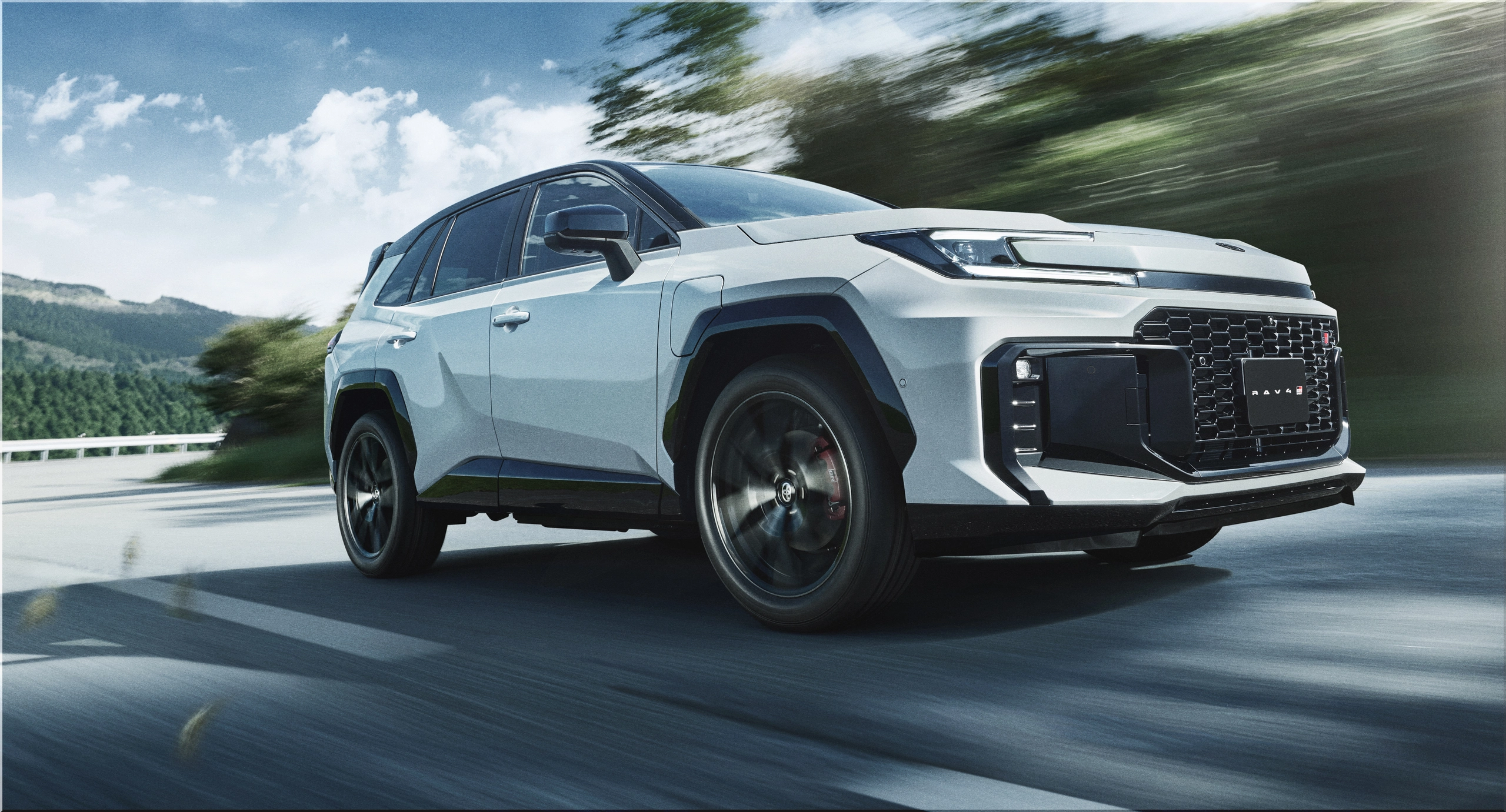
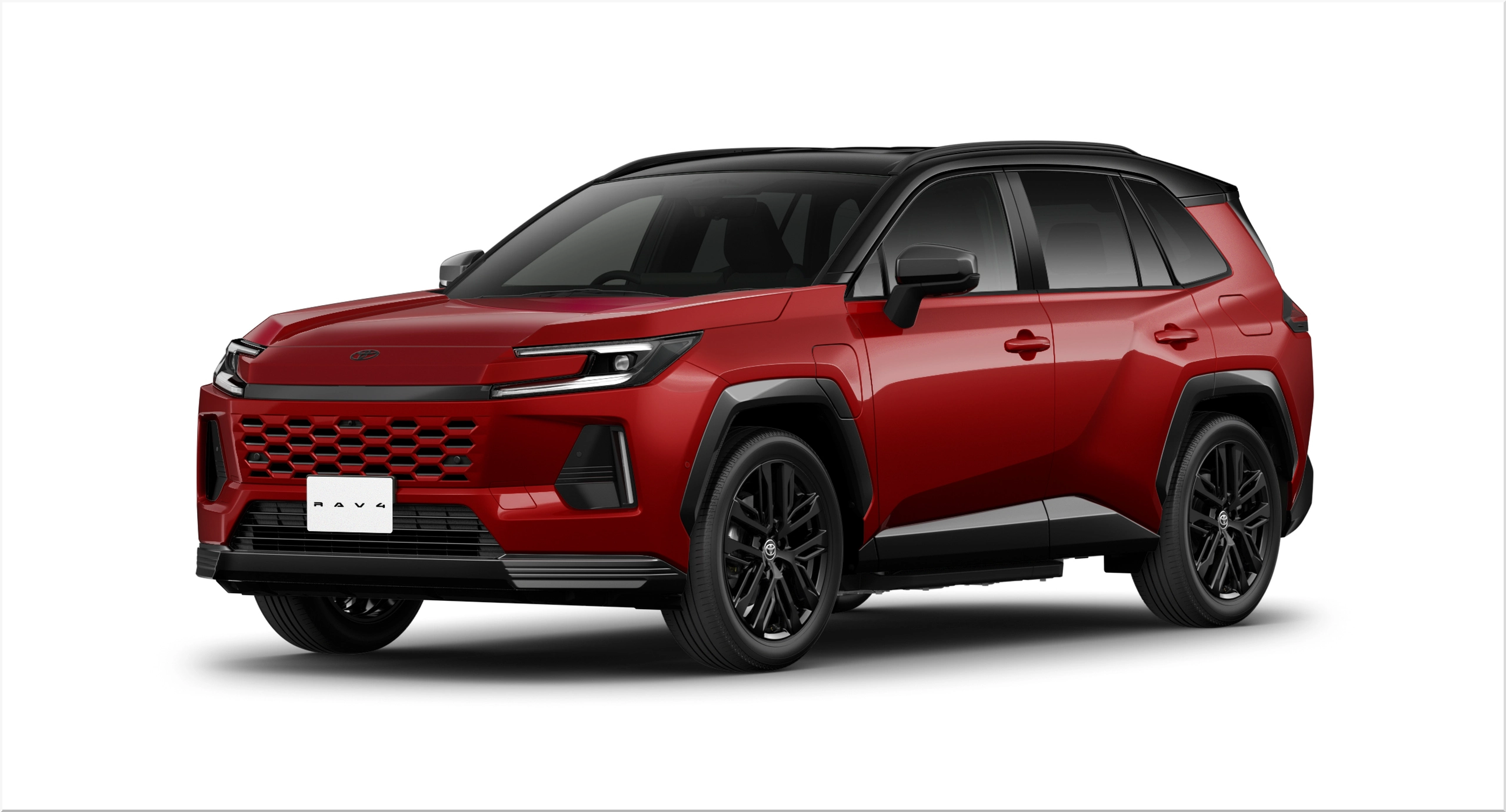
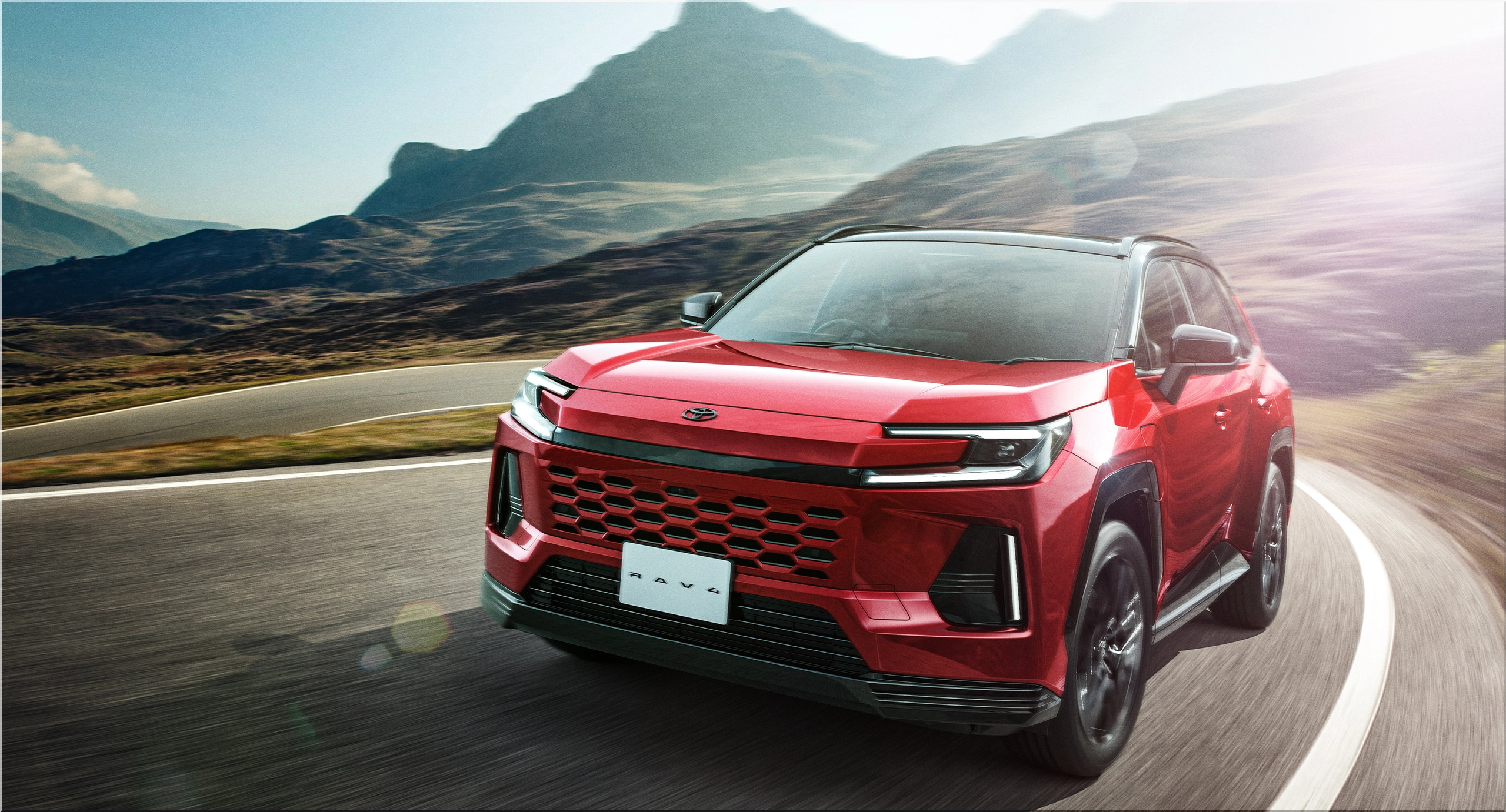
Toyota will start sales of the new Toyota RAV4 PHEV in Japan on March 9, 2026, and it does not arrive as a mild tweak. It arrives as a technical reset aimed at one outcome: make daily driving run on electricity more often, then back it up with hybrid efficiency and real all-weather traction when the commute turns into a long haul.
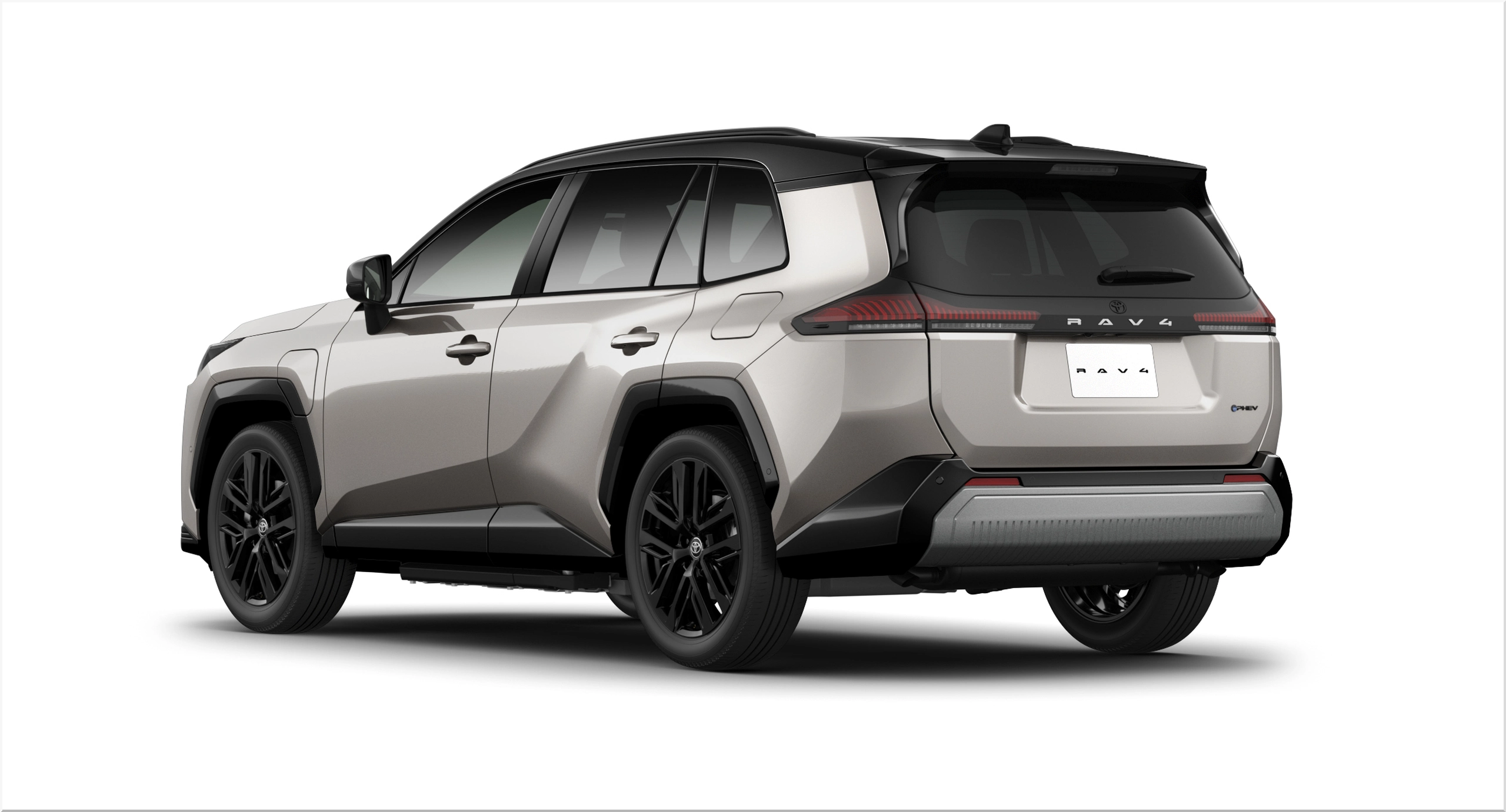
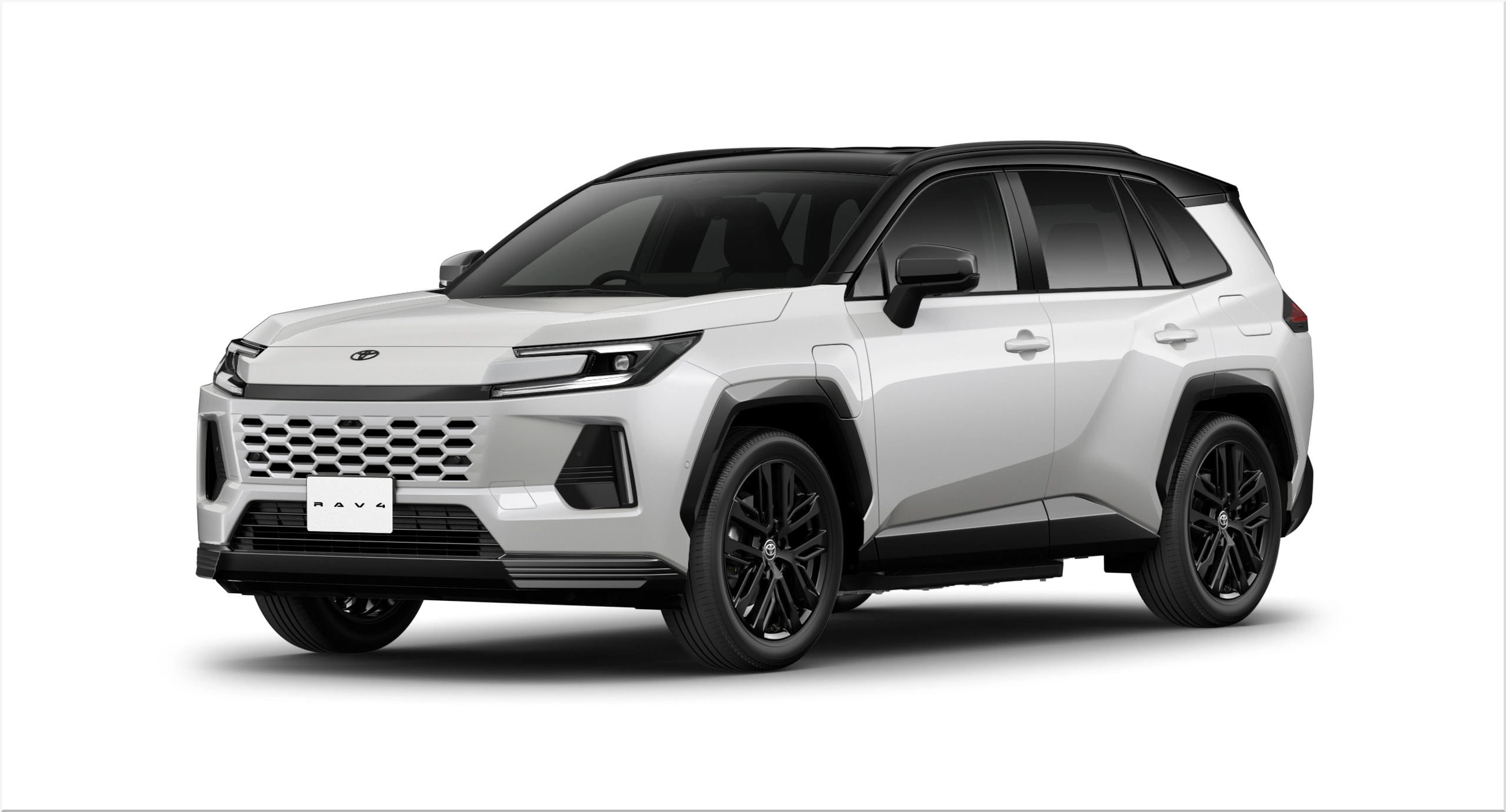
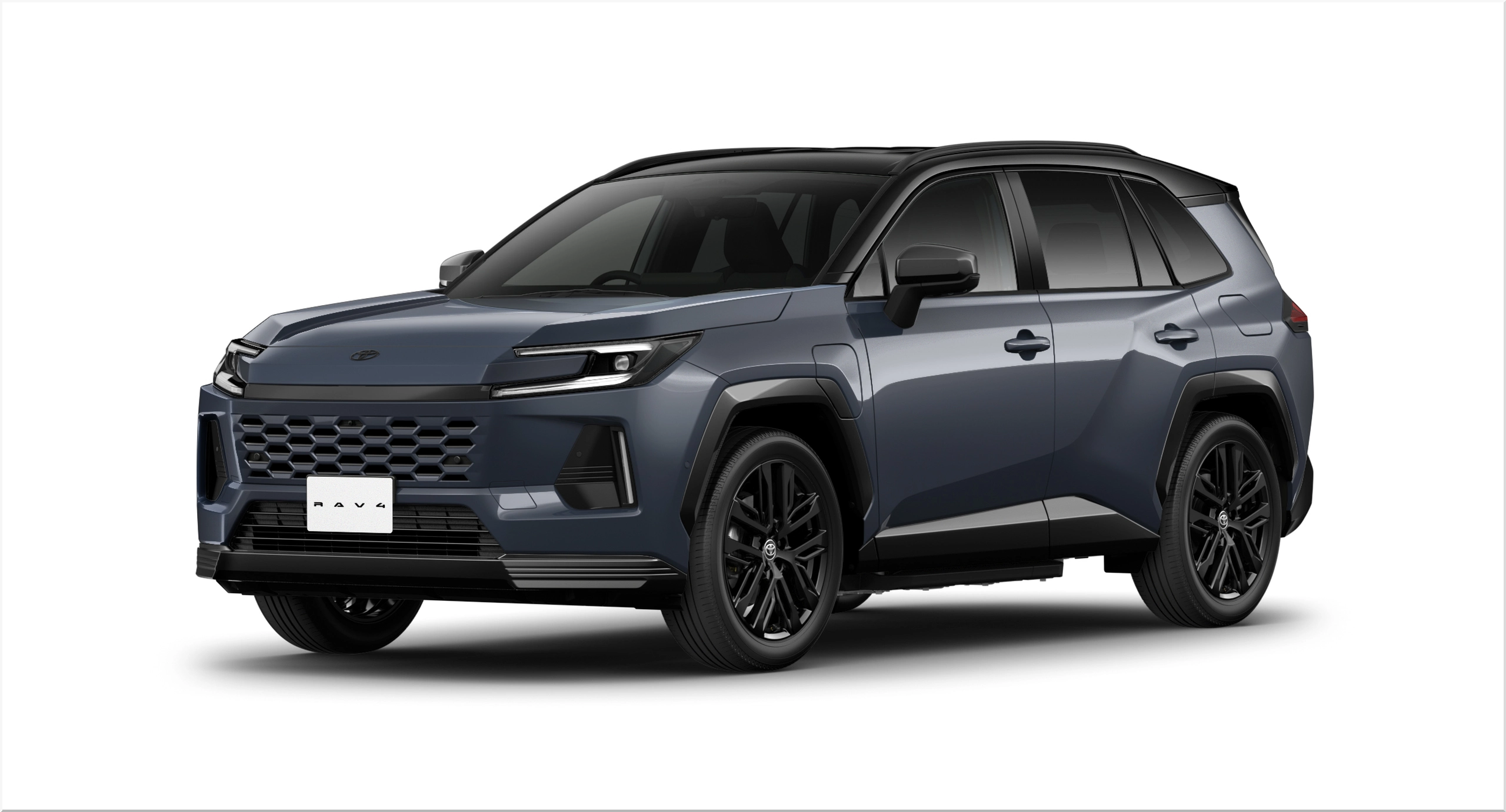
Toyota keeps the Japan lineup tight. Buyers choose Z or GR SPORT, and both run the same core architecture: a 2.5-liter series-parallel plug-in hybrid system paired with E-Four electric AWD and an electric continuously variable transmission. Toyota prices them at $38,687 for Z and $40,621 for GR SPORT.

From an expert perspective, Toyota aimed straight at the two pain points that shape plug-in ownership: electric range and charging friction. Toyota pushes the plug-in range to 151 km (93.8 miles) in Z and 145 km (90.1 miles) in GR SPORT, then adds DC fast charging to 80 percent in about 28 minutes. That single line changes how a PHEV behaves on the road.
Key specs that define the Japan-market RAV4 PHEV
- System output: 242 kW (324.5 hp) and 329 PS
- Plug-in range (WLTC): 151 km (93.8 miles) in Z, 145 km (90.1 miles) in GR SPORT
- Hybrid fuel economy (WLTC combined): 21.9 km/L (51.5 mpg US) in Z, 21.0 km/L (49.4 mpg US) in GR SPORT
- Electric consumption (WLTC): 150 Wh/km (241 Wh/mi) in Z, 153 Wh/km (246 Wh/mi) in GR SPORT
- Energy per full charge (WLTC): 22.10 kWh/charge
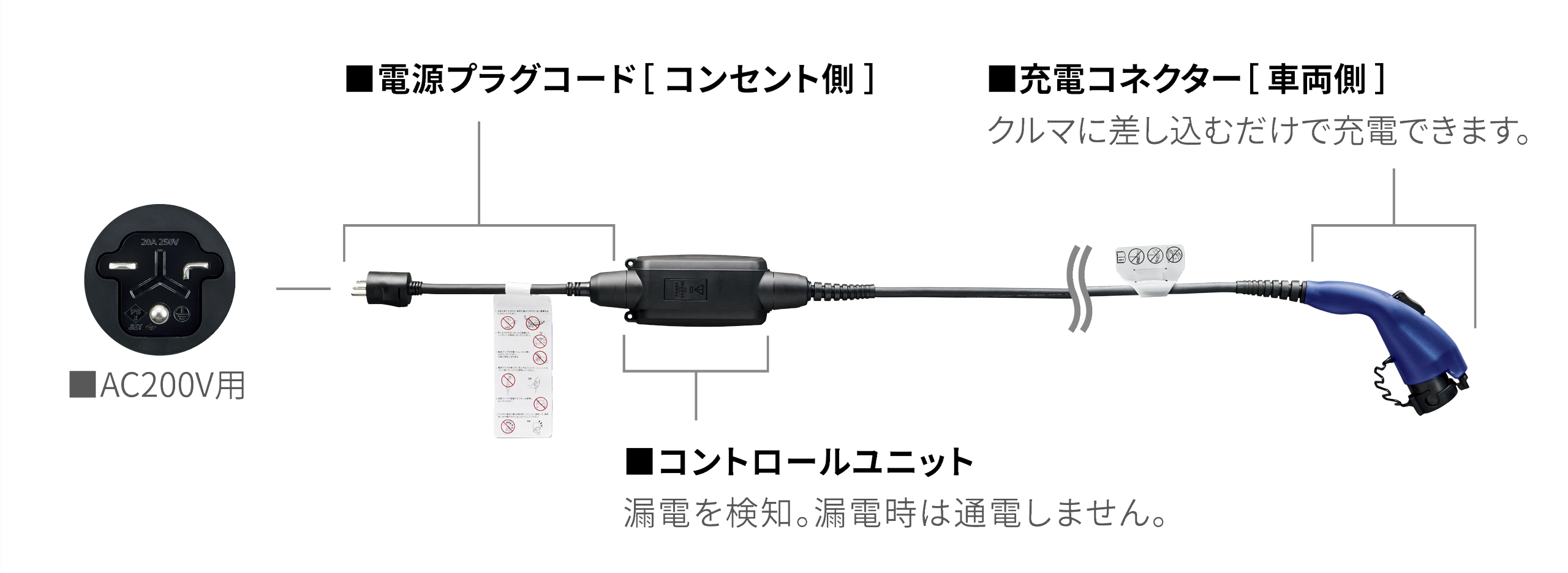
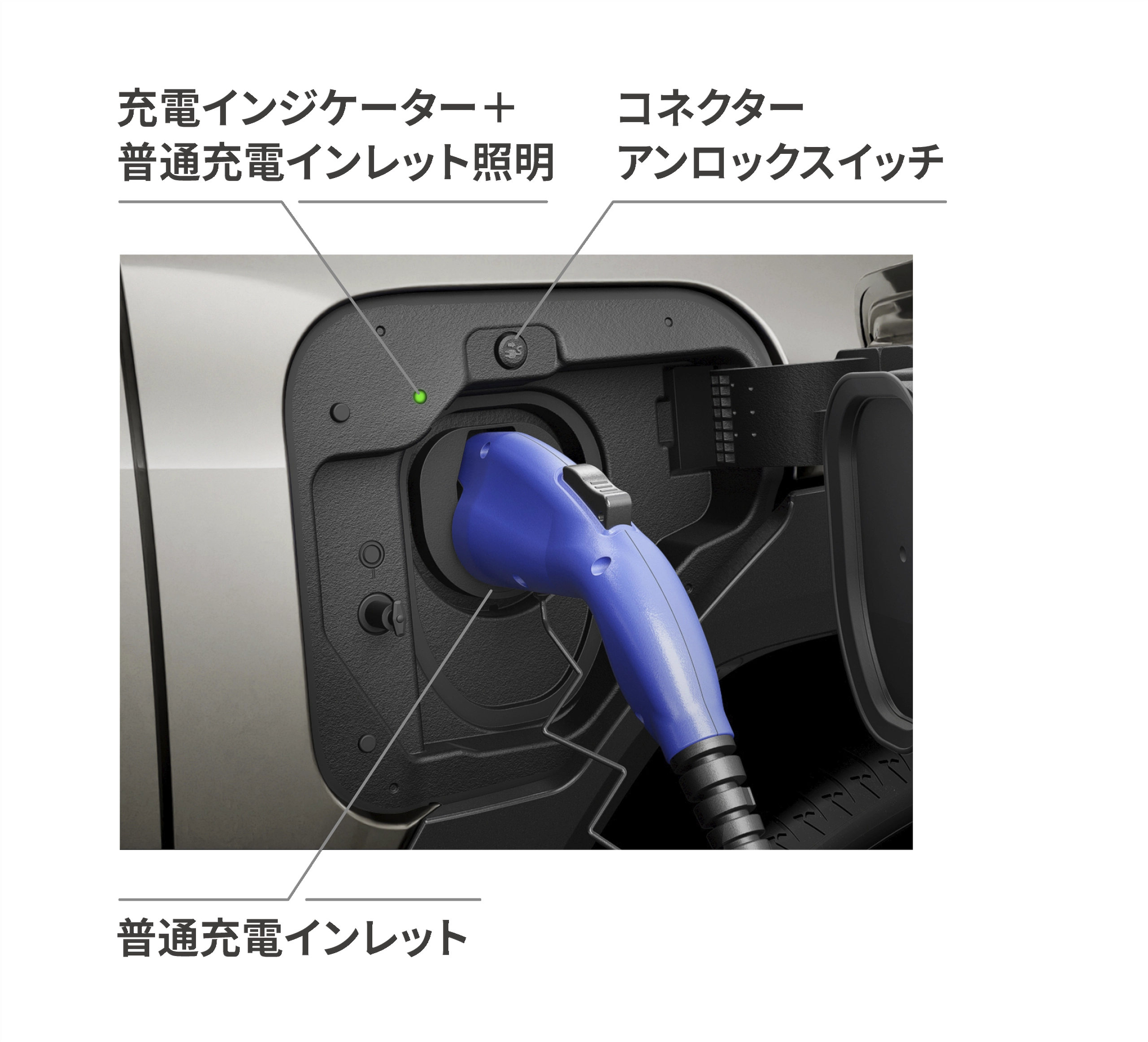
- Charging: AC 6 kW (30A) ~4h 30m, AC 3 kW (16A) ~7h 30m, DC fast ~28m to 80 percent
- Driveline: E-Four electric AWD
- Front motor: 151 kW, 272 N·m (200.6 lb-ft)
- Rear motor: 41 kW, 123 N·m (90.7 lb-ft)
- Engine: A25A-FXS 2.487L, 137 kW (186 PS), 229 N·m (168.9 lb-ft)
The new plug-in hybrid system: what Toyota changed and why it works
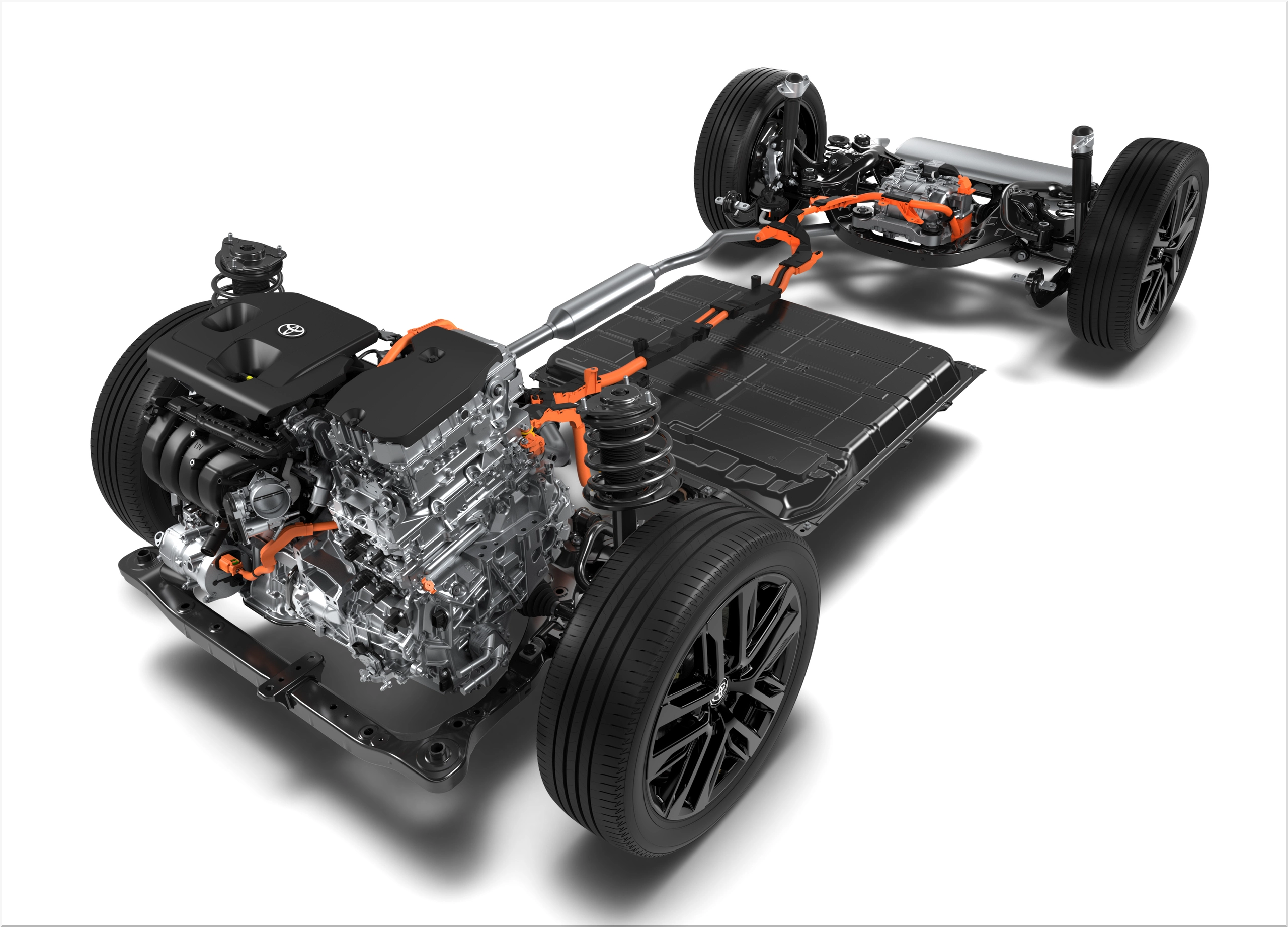
Toyota builds this RAV4 PHEV around a familiar Toyota strength: a hybrid layout that can route power as electricity, as engine drive, or as both at once. Specifically, Toyota uses a series-parallel strategy, which lets the control system pick the most efficient path for the moment instead of forcing the engine to behave like a generator all the time.
That matters because plug-in SUVs live in mixed reality. They crawl through city traffic, surge onto expressways, climb grades, then sit in parking structures. A series-parallel layout lets the system:
- Use the motors as the primary drive at low speeds and during light loads
- Bring the engine online under higher load to keep battery current and temperatures in check
- Blend engine and motor torque at highway speeds without forcing the engine to run at inefficient points
Looking at the data, Toyota did not chase range with a tiny motor and a big engine. Toyota went the other direction. Toyota gives the RAV4 PHEV a 151 kW front motor and a 41 kW rear motor, then pairs them with a battery large enough to sustain meaningful electric driving without constant engine intervention.
Why silicon carbide in the PCU changes the range math
Toyota credits a major part of the range gain to silicon carbide (SiC) semiconductors in the power control unit (PCU). SiC devices reduce switching losses and heat in high-voltage power electronics, which improves efficiency under the exact conditions that PHEVs see all day: repeated acceleration events, regen capture, and inverter work at varying loads.
Consequently, Toyota can pull more usable kilometers from each kWh without relying on fragile driving patterns. That is how Toyota moves from the prior model’s 95 km (59.0 miles) electric range to 151 km (93.8 miles) in the new Z grade, a 56 km (35-mile) jump.
Torque delivery: how this PHEV actually feels
Electric motors do not wait for rpm. They deliver peak torque at low shaft speeds, then taper as speed rises. That creates a torque curve that feels flat and immediate, which suits a mid-size SUV that has to pull away cleanly even when loaded.
- The front motor’s 272 N·m arrives early and carries the launch.
- The rear motor’s 123 N·m fills traction gaps and stabilizes acceleration on low-grip surfaces.
- The gasoline engine adds sustained output when vehicle speed and load demand it.
By comparison, many PHEV SUVs lean on the engine to mask smaller motors. Toyota pushes motor capability high enough that EV-mode driving does not feel like a compromised setting.
Charging: Toyota removes the biggest PHEV limitation
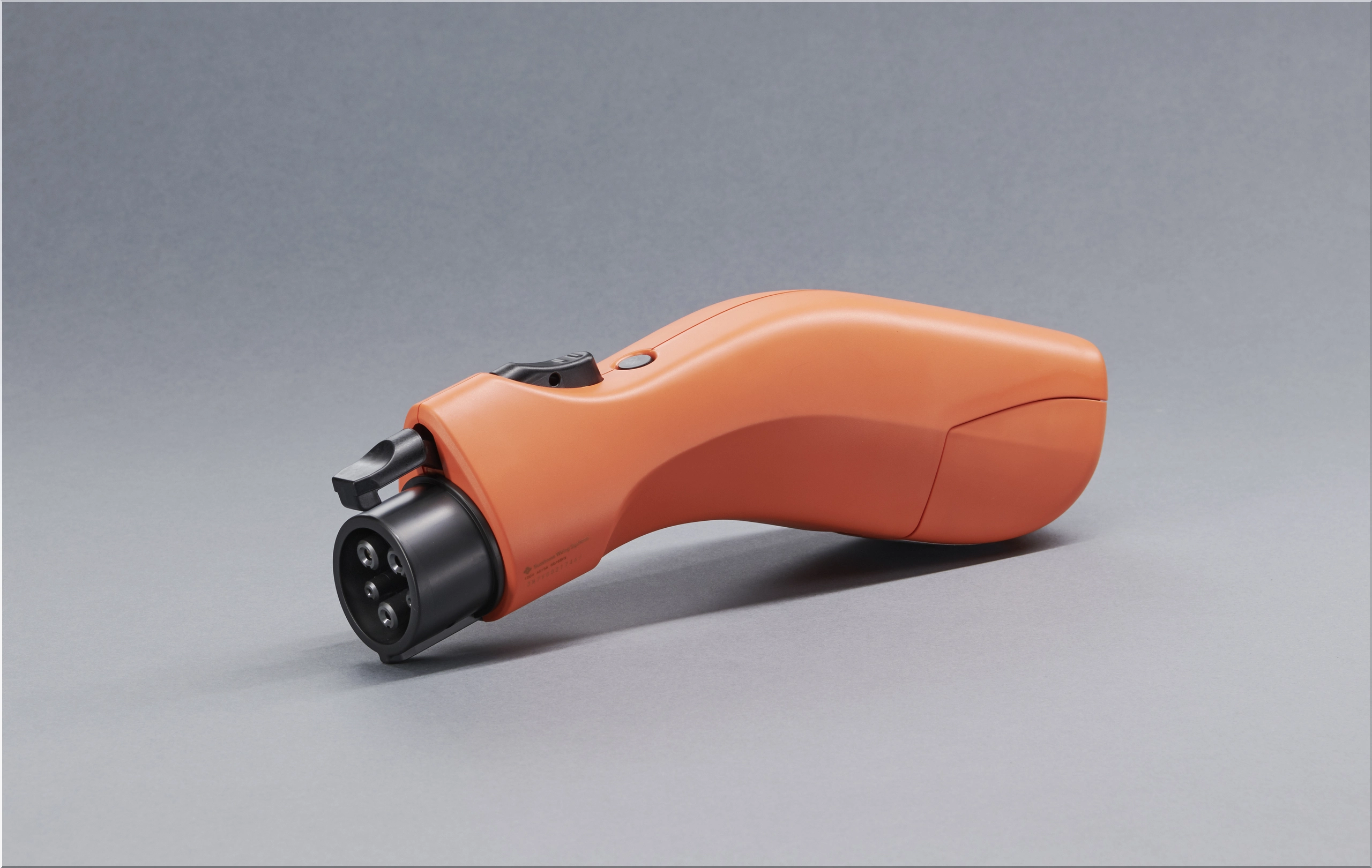
Most PHEVs behave like this: charge overnight at home, then accept that the battery becomes a short-range tool. Toyota attacks that limitation directly by adding DC fast charging, then backing it with AC charging options that fit real household circuits.
Charging times and power paths
Toyota publishes three practical use cases for Japan:
- AC 200V / 6 kW (30A): about 4 hours 30 minutes from empty to full
- AC 200V / 3 kW (16A): about 7 hours 30 minutes from empty to full
- DC fast charge: about 28 minutes to reach 80 percent
That last number changes route planning. Specifically, it lets a driver restore most of the EV range during a short stop instead of waiting until home. In Japan, Toyota also points owners toward a charging service ecosystem that offers widespread coverage.
Public charging access and real cost signals
Toyota’s materials reference a charging service that connects to roughly 25,100 chargers nationwide in Japan. Toyota also publishes per-minute rates by charger output tier.
Using the same exchange rate as above, the per-minute pricing converts roughly to:
- 80 JPY/min: about $0.52/min
- 60 JPY/min: about $0.39/min
- 40 JPY/min: about $0.26/min
- 4 JPY/min (standard tier on a separate network): about $0.03/min
Now connect that to the RAV4’s charging claim: ~28 minutes to 80 percent. At $0.52/min, that stop lands around $14.45 in time-based billing. If 80 percent roughly restores about 121 km (75 miles) of electric driving in the Z grade, that math lands near $0.19 per mile on that specific pricing tier.
Home charging often flips that equation the other direction. The RAV4’s 150 Wh/km consumption equals 15 kWh per 100 km. If a household rate lands at $0.20/kWh, 100 km of EV driving lands near $3.00 in electricity. That number will move with tariffs, but the structure stays simple: high efficiency keeps the bill down.
Dimensions, weight, and the packaging reality of a 150 km-class PHEV
Toyota does not hide the packaging trade-offs. Batteries add mass, and plug-in systems demand cooling and power electronics space. Toyota still lands the PHEV at dimensions that remain squarely mid-size, and Toyota keeps the wheelbase stable to protect ride and cabin layout.
Exterior dimensions and maneuverability
- RAV4 PHEV Z (Japan)
- Length: 4,600 mm (181.1 in)
- Width: 1,855 mm (73.0 in)
- Height: 1,685 mm (66.3 in)
- Wheelbase: 2,690 mm (105.9 in)
- Ground clearance: 195 mm (7.68 in)
- Turning radius: 5.7 m (18.7 ft)
- RAV4 PHEV GR SPORT (Japan)
- Length: 4,645 mm (182.9 in)
- Width: 1,880 mm (74.0 in)
- Height: 1,680 mm (66.1 in)
- Wheelbase: 2,690 mm (105.9 in)
- Ground clearance: 190 mm (7.48 in)
- Turning radius: 5.7 m (18.7 ft)
The GR SPORT grows slightly in footprint, then drops ground clearance by 5 mm. That signals Toyota’s intent: GR SPORT prioritizes on-road response over the last bit of breakover margin.
Weight and what it implies
- Z curb weight: 1,980 kg (4,365 lb)
- GR SPORT curb weight: 1,990 kg (4,387 lb)
That weight lands in line with other mid-size PHEV SUVs. Consequently, Toyota has to manage body control and brake blending carefully to keep the vehicle feeling consistent across regen and hydraulic braking.
Table: RAV4 PHEV Z vs GR SPORT (Japan-market specs)
| Spec (Japan) | RAV4 PHEV Z | RAV4 PHEV GR SPORT |
|---|---|---|
| MSRP (JPY, incl tax) | 6,000,000 JPY ($38,687) | 6,300,000 JPY ($40,621) |
| Plug-in range (WLTC) | 151 km (93.8 mi) | 145 km (90.1 mi) |
| System output | 242 kW (324.5 hp) | 242 kW (324.5 hp) |
| Hybrid fuel economy (WLTC combined) | 21.9 km/L (51.5 mpg US) | 21.0 km/L (49.4 mpg US) |
| Electric consumption (WLTC) | 150 Wh/km (241 Wh/mi) | 153 Wh/km (246 Wh/mi) |
| Energy per full charge (WLTC) | 22.10 kWh/charge | 22.10 kWh/charge |
| Front motor output / torque | 151 kW / 272 N·m | 151 kW / 272 N·m |
| Rear motor output / torque | 41 kW / 123 N·m | 41 kW / 123 N·m |
| Length x width x height | 4600 x 1855 x 1685 mm | 4645 x 1880 x 1680 mm |
| Wheelbase | 2690 mm | 2690 mm |
| Ground clearance | 195 mm | 190 mm |
| Curb weight | 1,980 kg | 1,990 kg |
Utility and cabin tech: the PHEV still has to work as an SUV
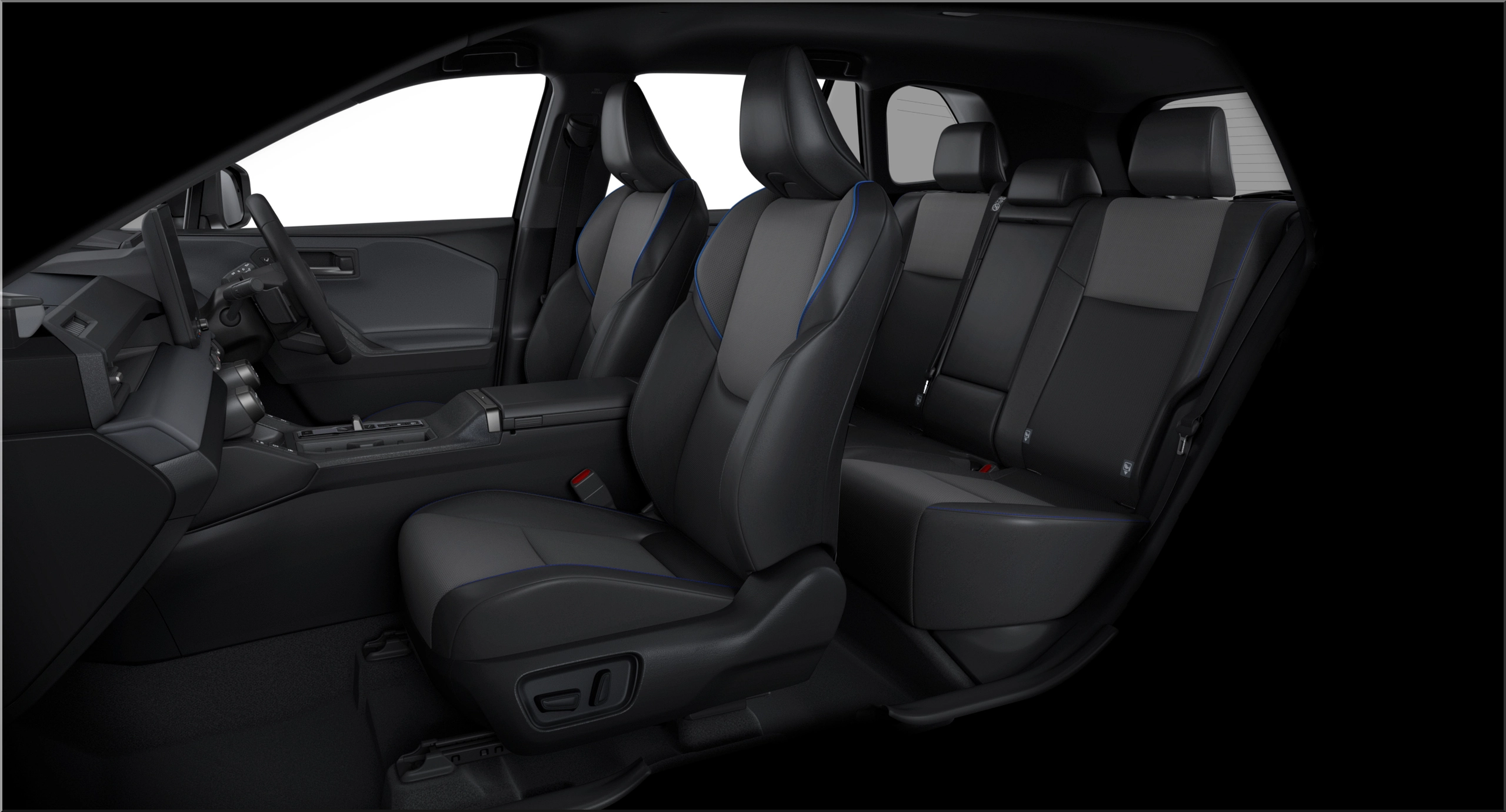
Toyota adds range and charging without turning the RAV4 into a fragile science project. The cabin and cargo numbers show that Toyota kept the vehicle usable as daily transport.
Cargo capacity and load practicality
Toyota quotes 672 L of cargo capacity for the plug-in hybrid configuration. That converts to about 23.7 cu ft, measured by an internal VDA-style method. That number sits below hybrid versions that can reach 705 to 749 L depending on deck board position, but it stays practical for real gear.
Toyota also designs the cargo bay for bulky items, including a published fit claim tied to golf-bag sizing. The takeaway stays simple: the PHEV loses some volume, but it does not lose the job.
Screens and driver information
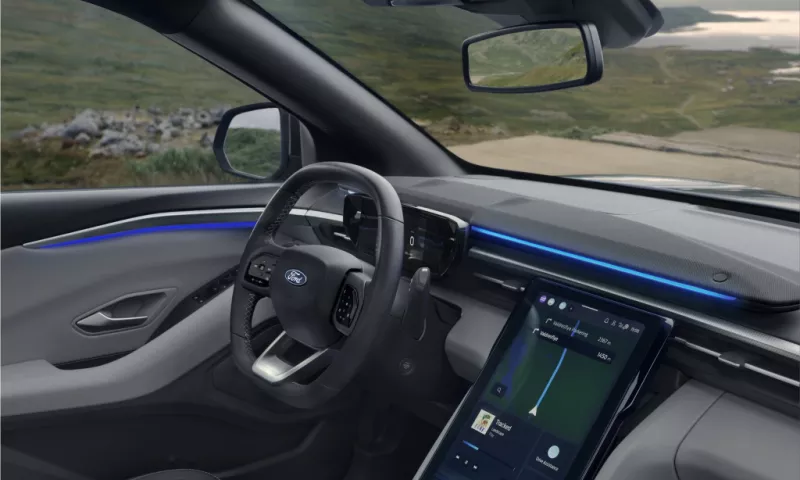
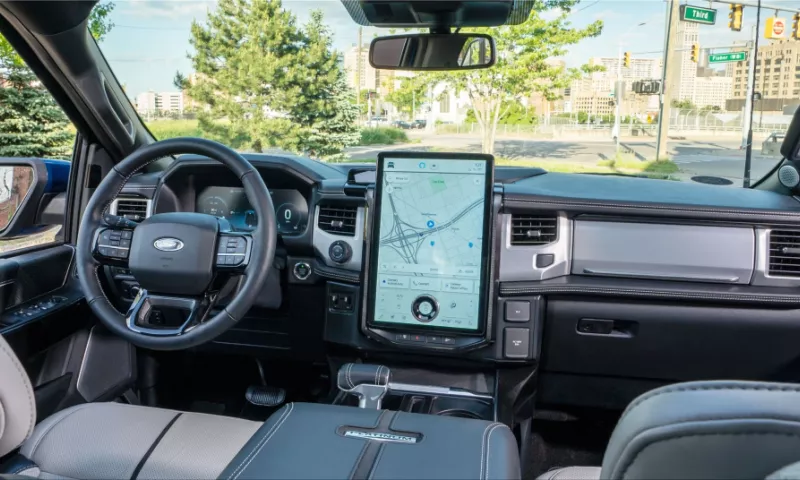
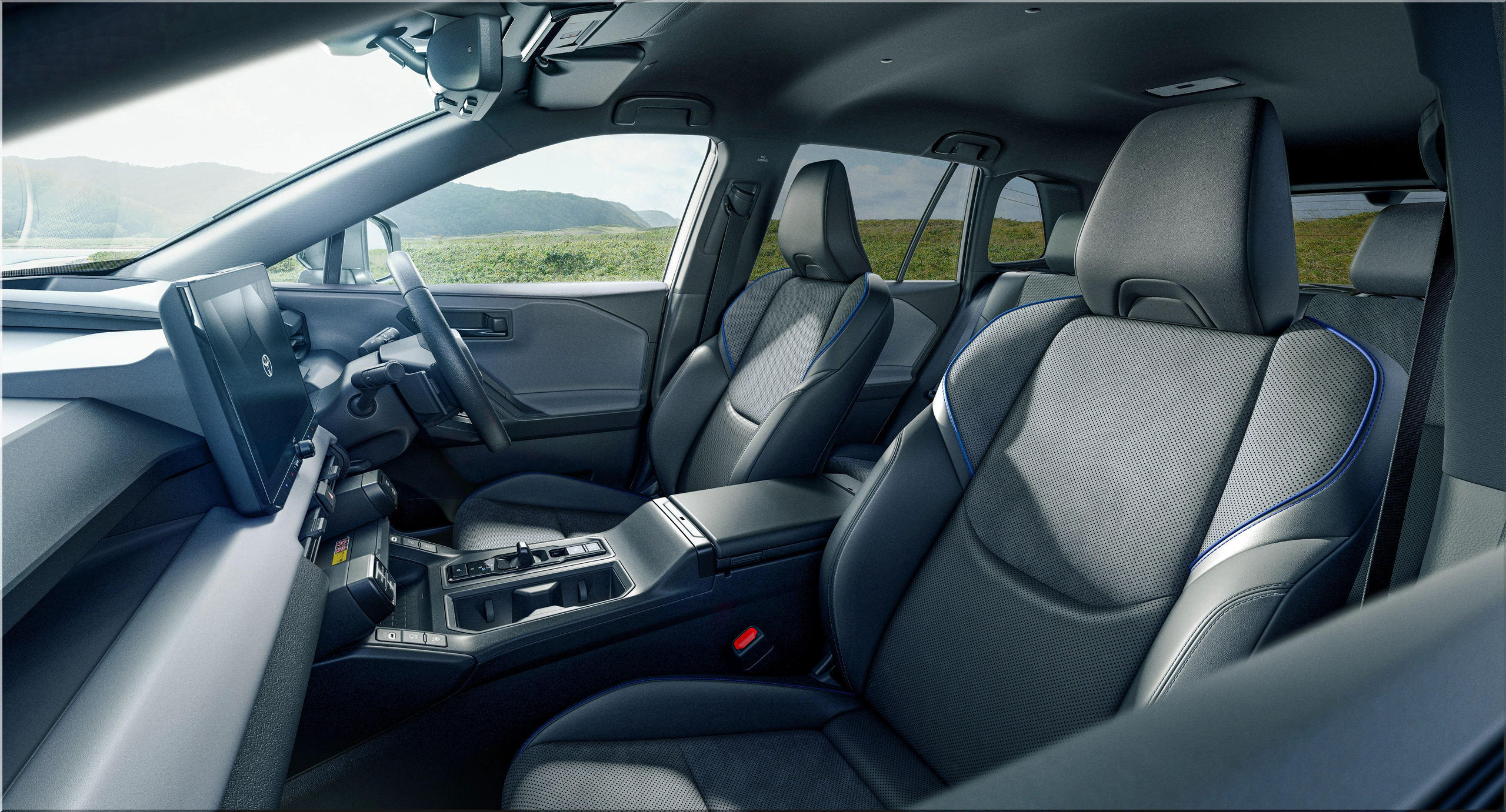
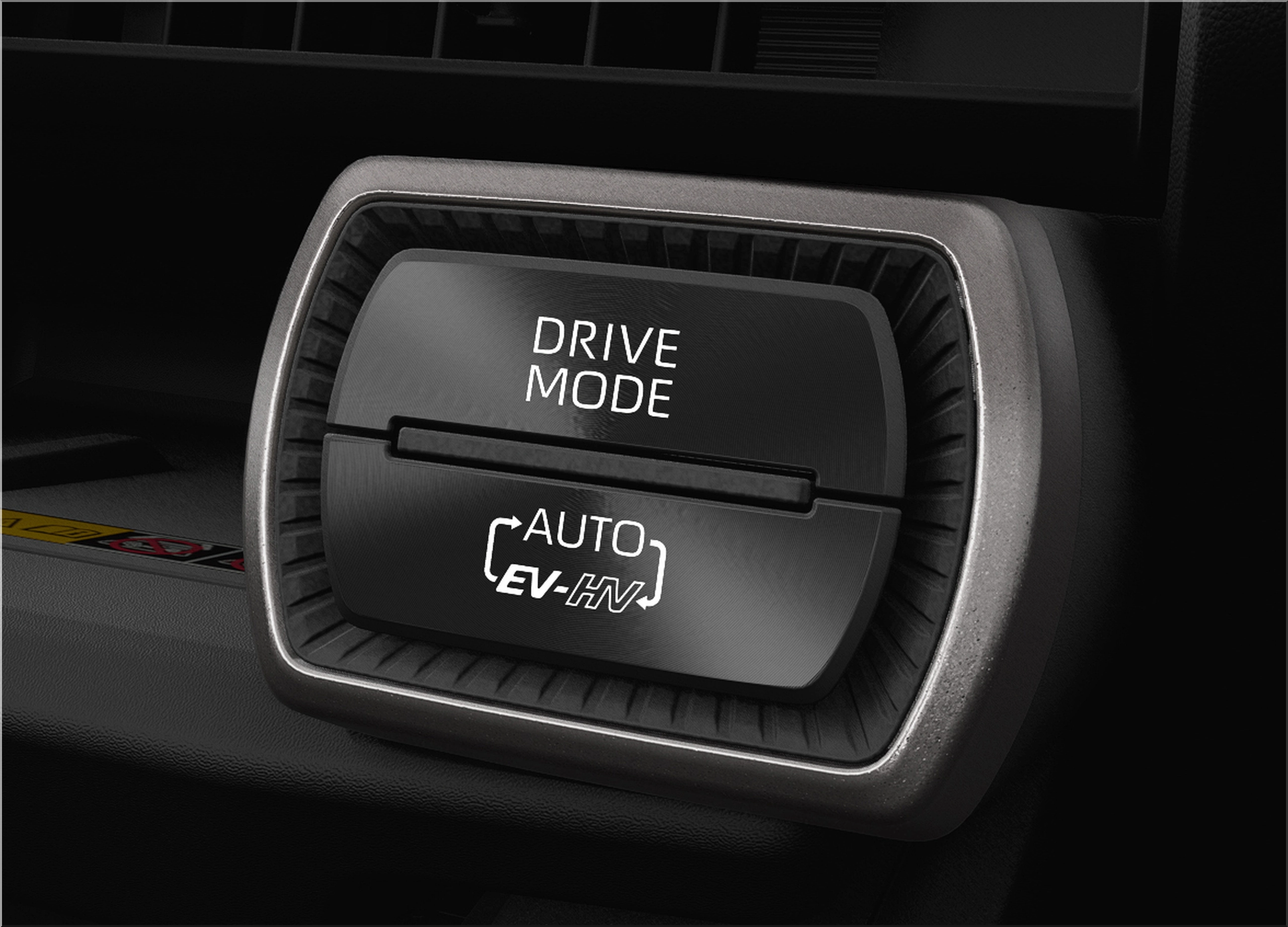
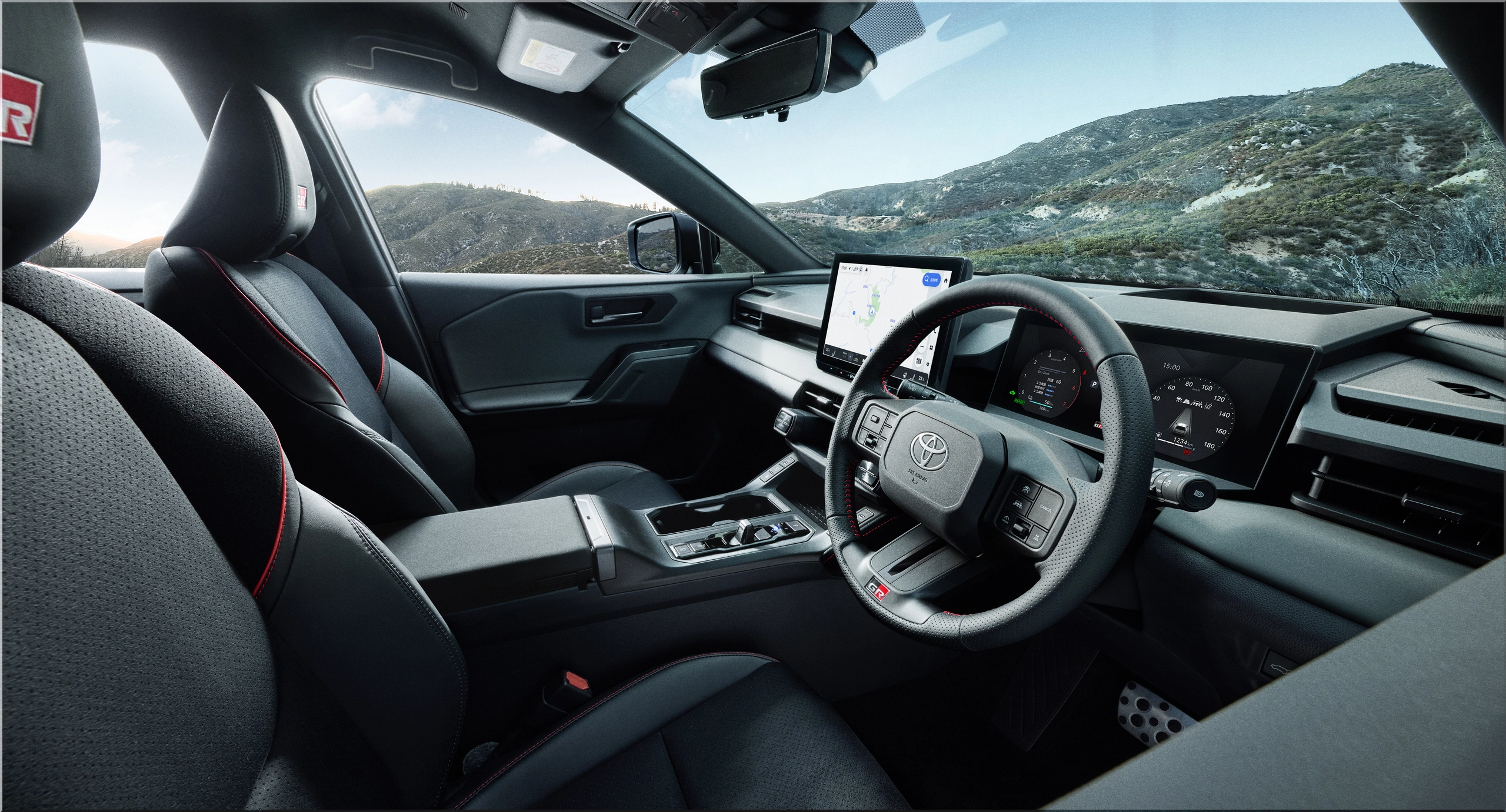
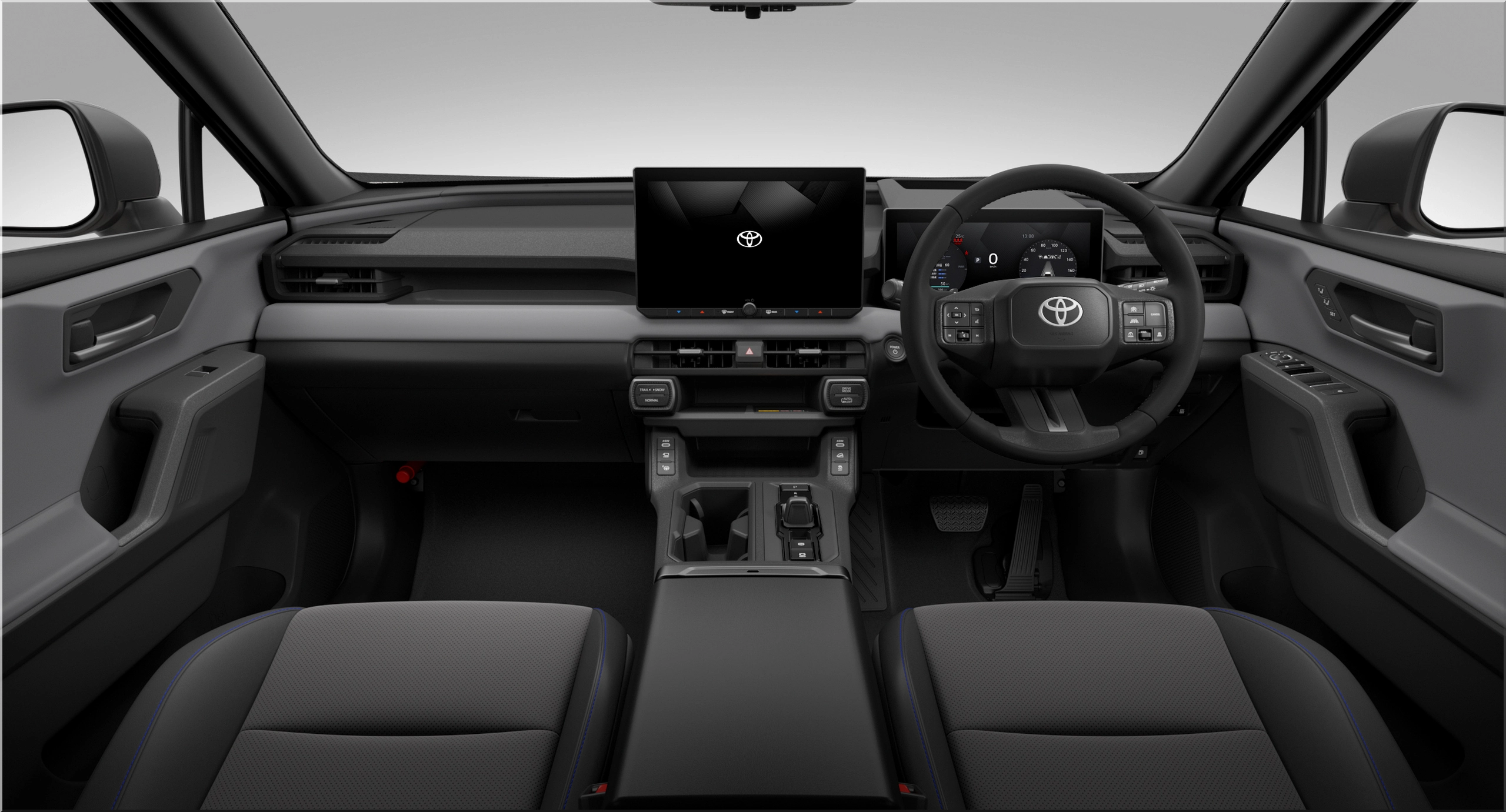
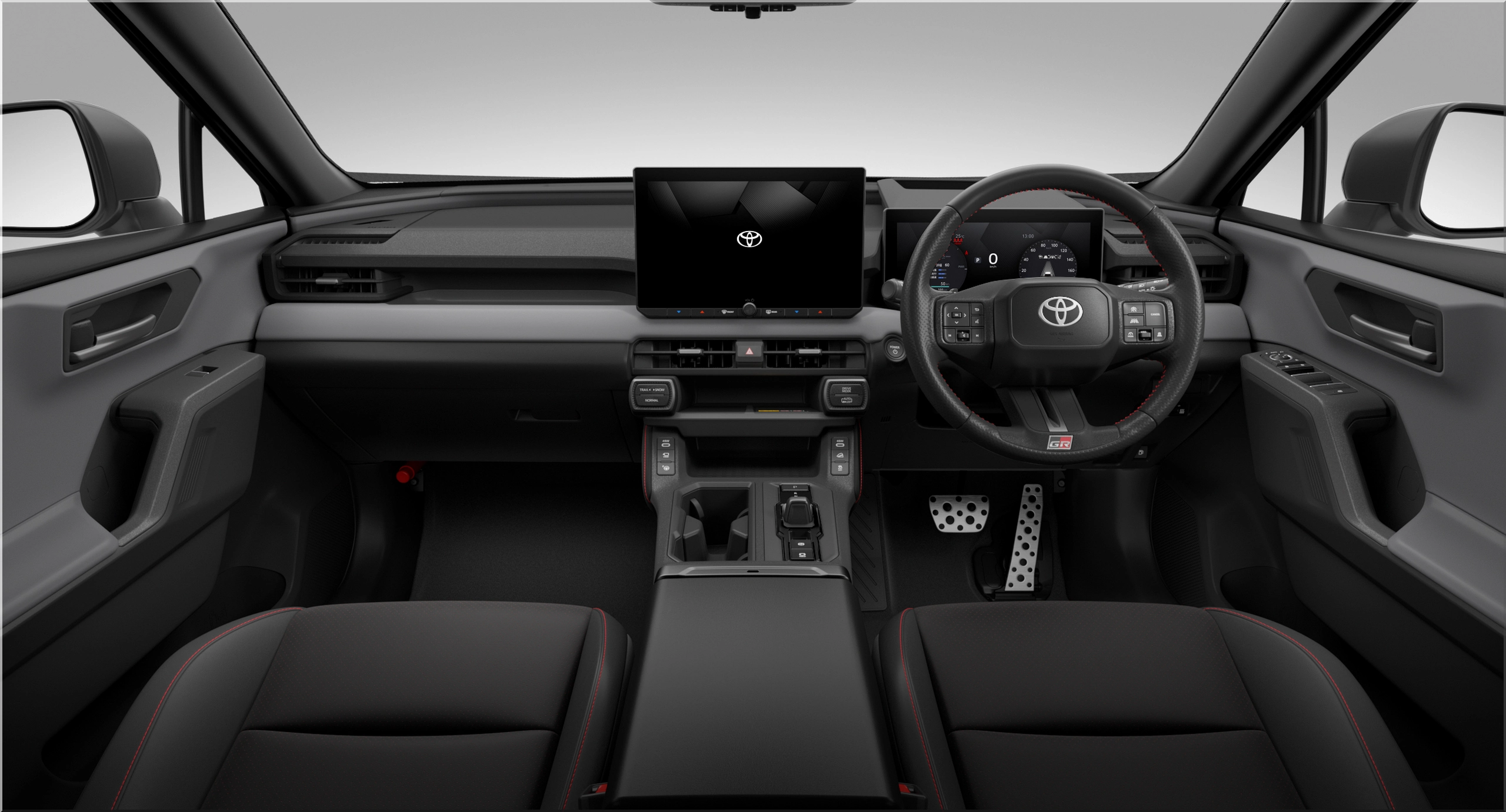
Toyota fits the cabin with a 12.9-inch display audio interface and a 12.3-inch TFT color meter with multi-information capability. That pairing matters because plug-ins require constant driver feedback: state of charge, drive mode, regen behavior, and route energy planning.
In addition, Toyota pushes connected services and a new multimedia stack that supports voice-driven interaction and navigation features intended to reduce driver workload.
Power supply features: the RAV4 PHEV doubles as a mobile energy source
Toyota adds a power supply system designed for outdoor use and emergency scenarios. It starts with the basics:
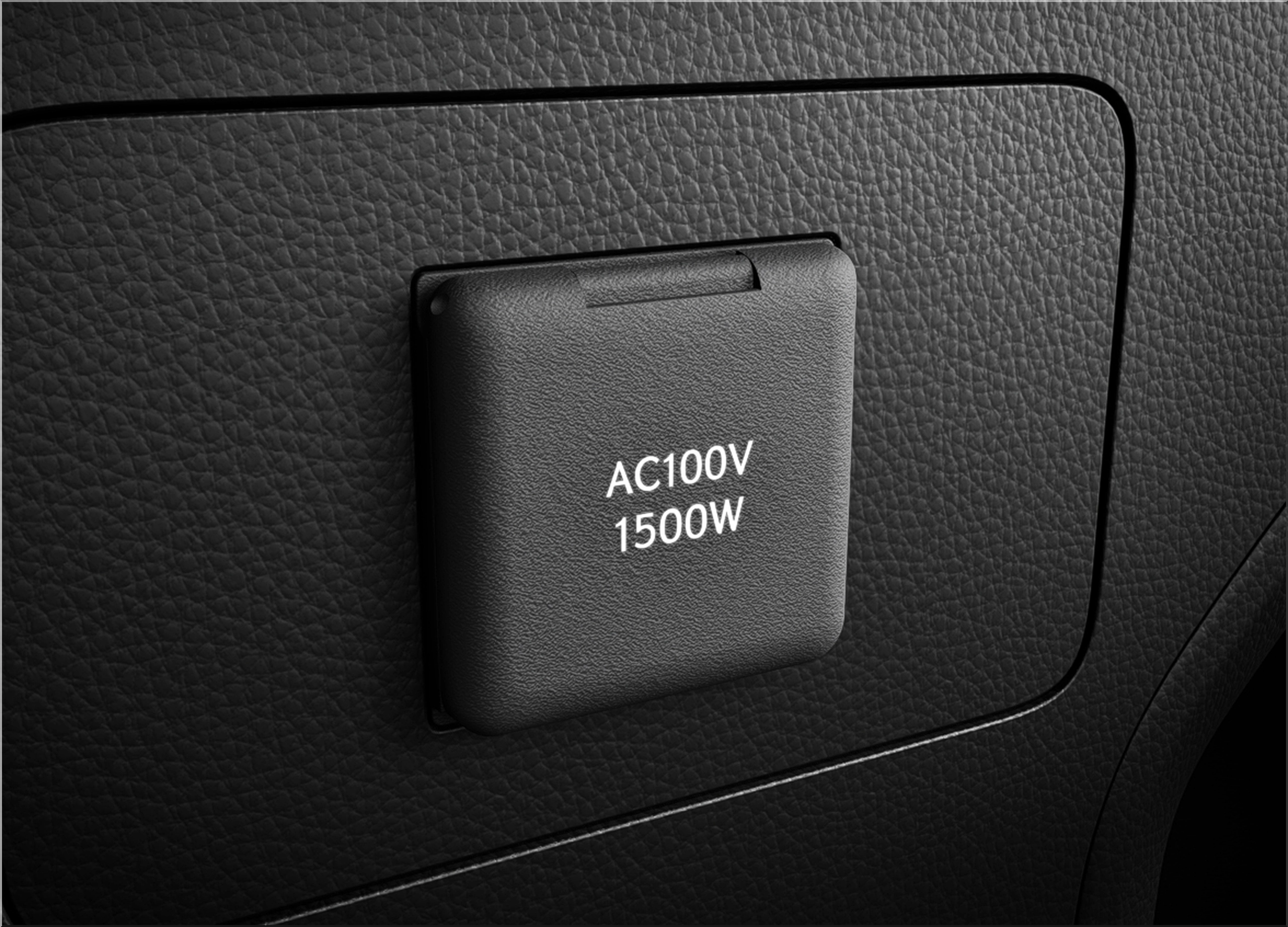
- AC 100V external power up to 1,500 W using an outlet in the luggage area and a connector that plugs into the charge inlet
Then Toyota adds a more strategic layer. Toyota says the vehicle can supply power for about 6.5 days at a 400 W load when the battery and fuel tank start full. A time-priority setting extends that to about 7 days.
From an expert perspective, Toyota built this feature for Japan’s real constraints: household voltage standards and outage resilience planning. The output will not run a house full of heavy loads, but it will run essentials.
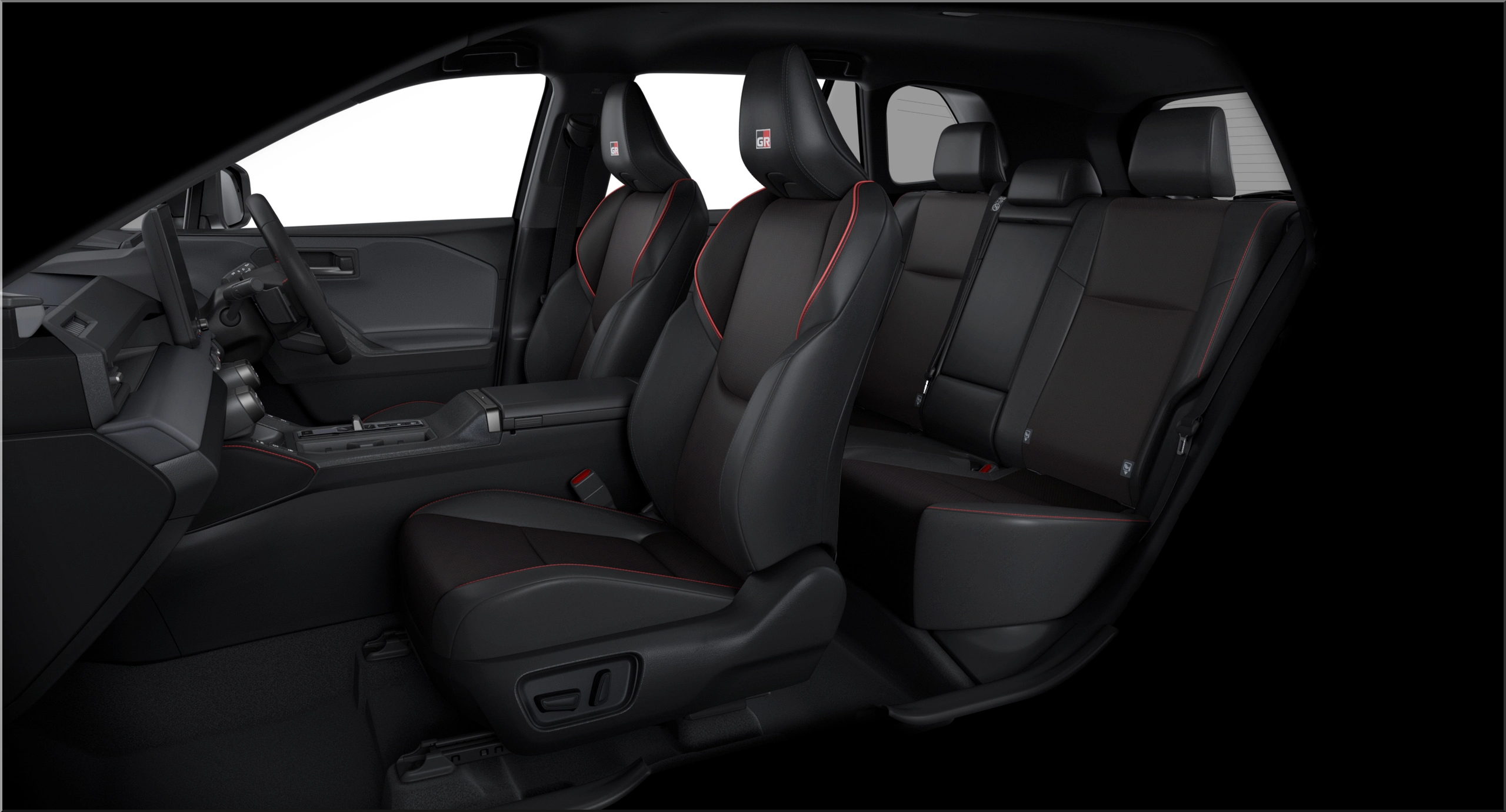
GR SPORT: Toyota adds real hardware, not decals
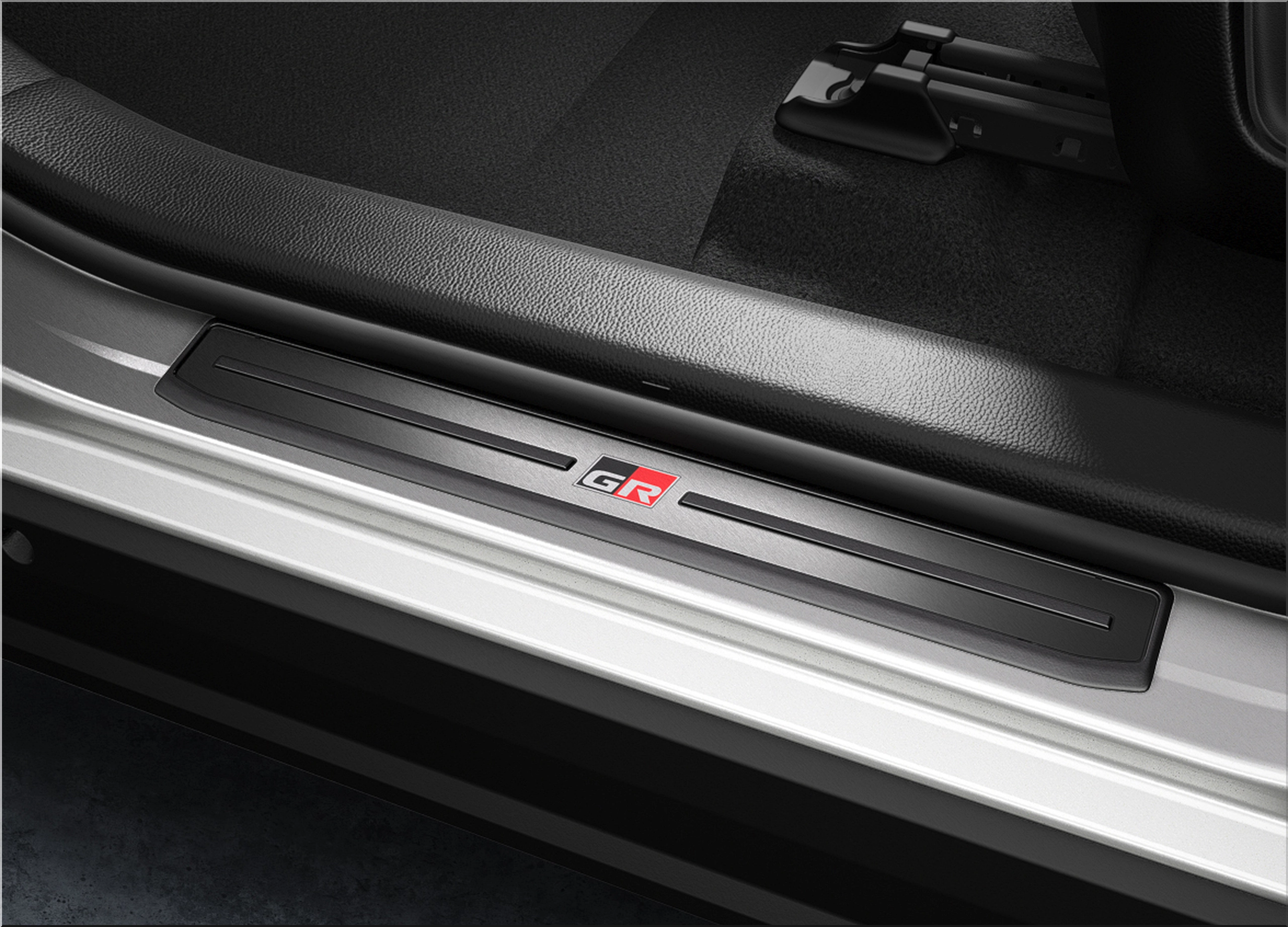
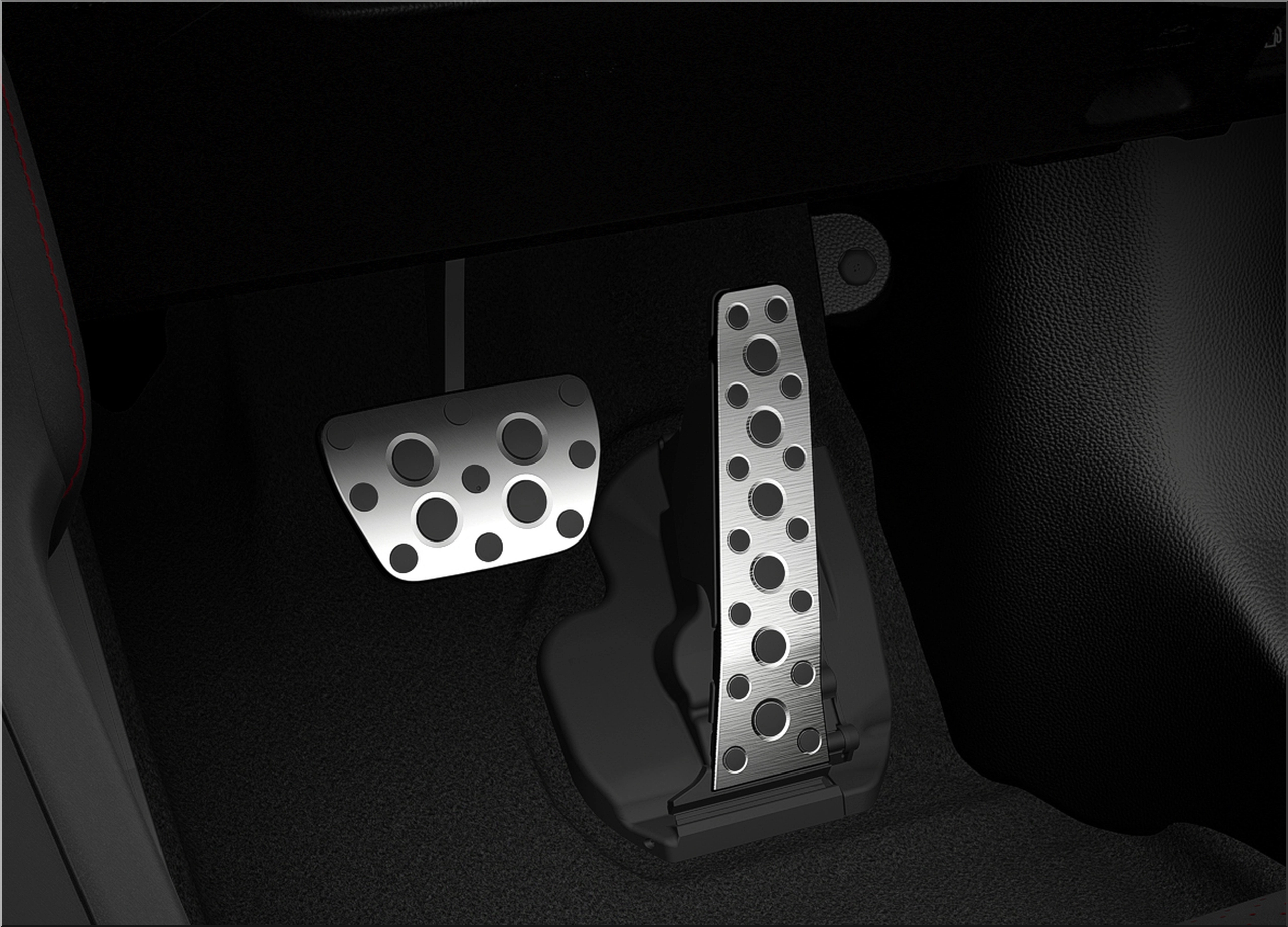
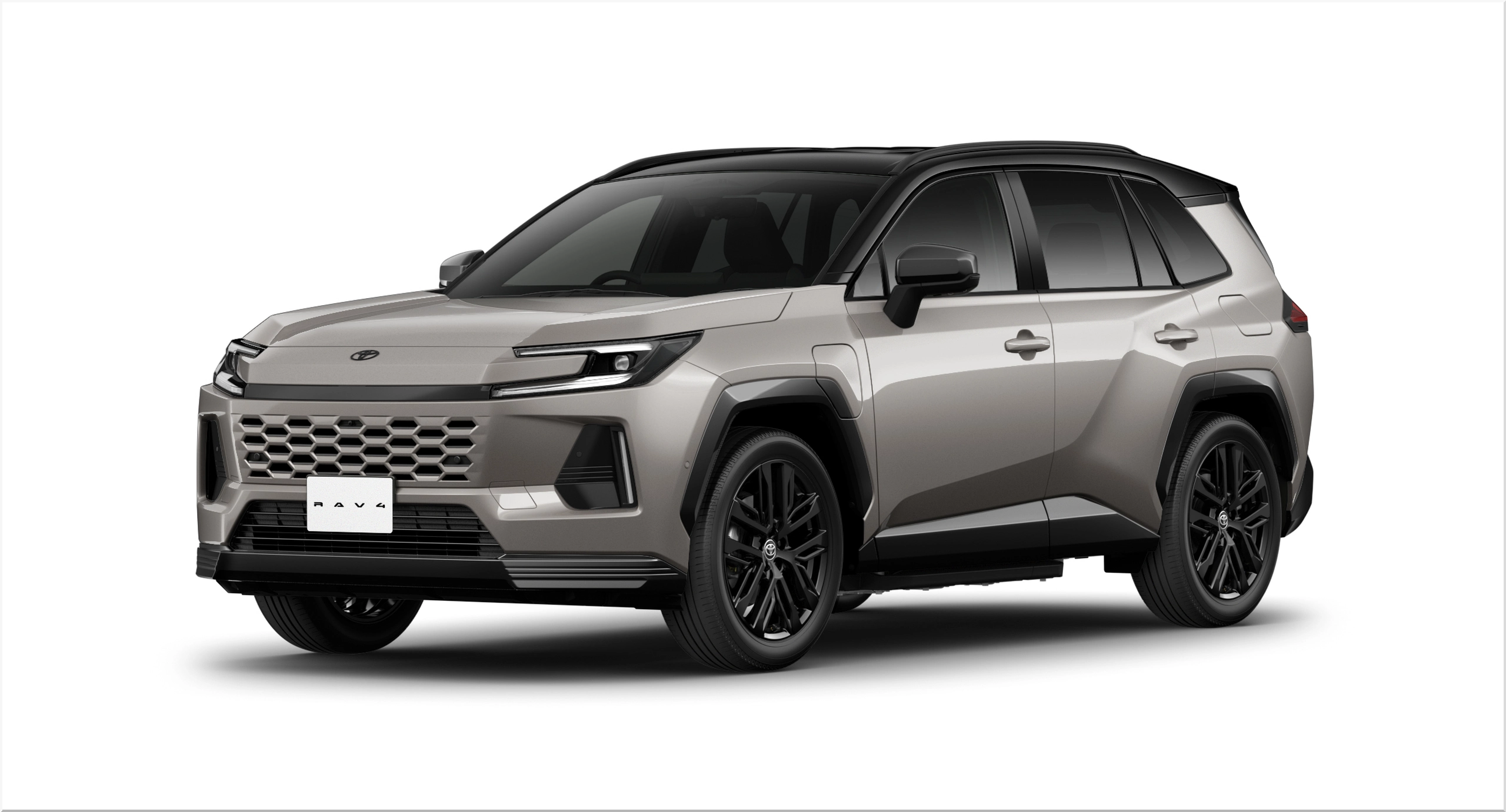
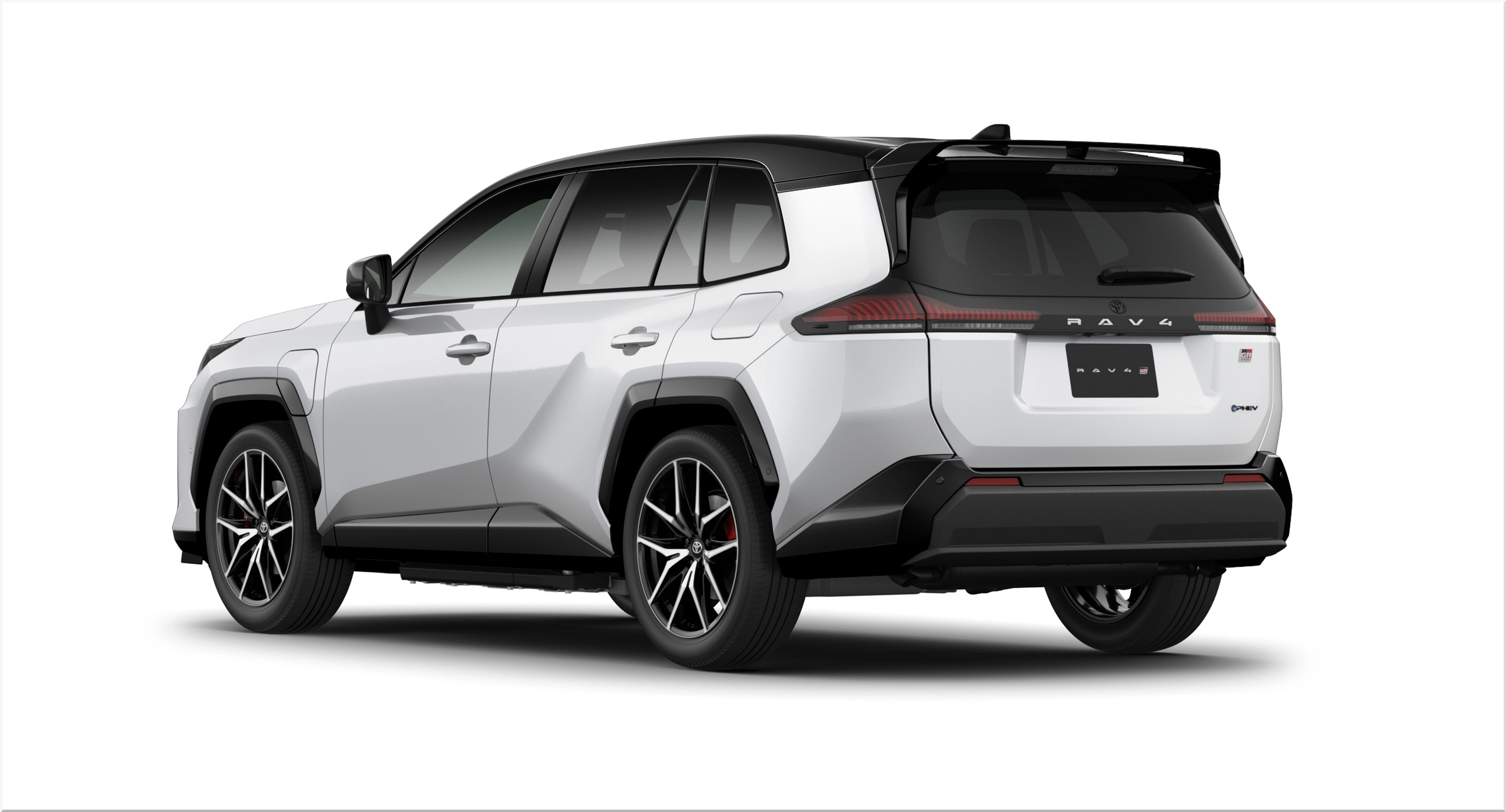
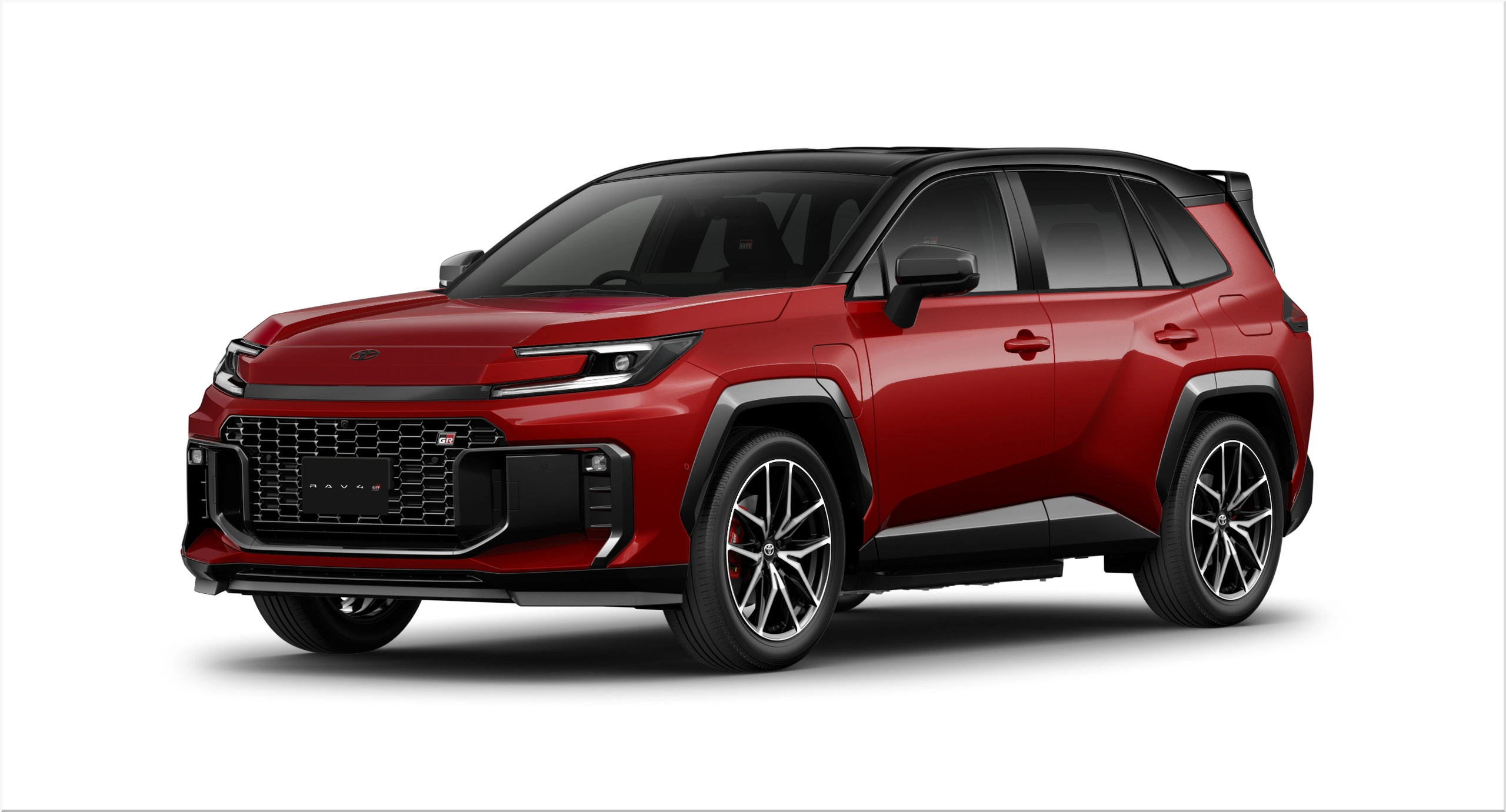
Toyota adds GR SPORT to the RAV4 lineup in Japan as a performance-flavored flagship for the PHEV. Toyota describes the mission clearly: sharpen response, increase body rigidity, and improve stability.
What Toyota changes in GR SPORT
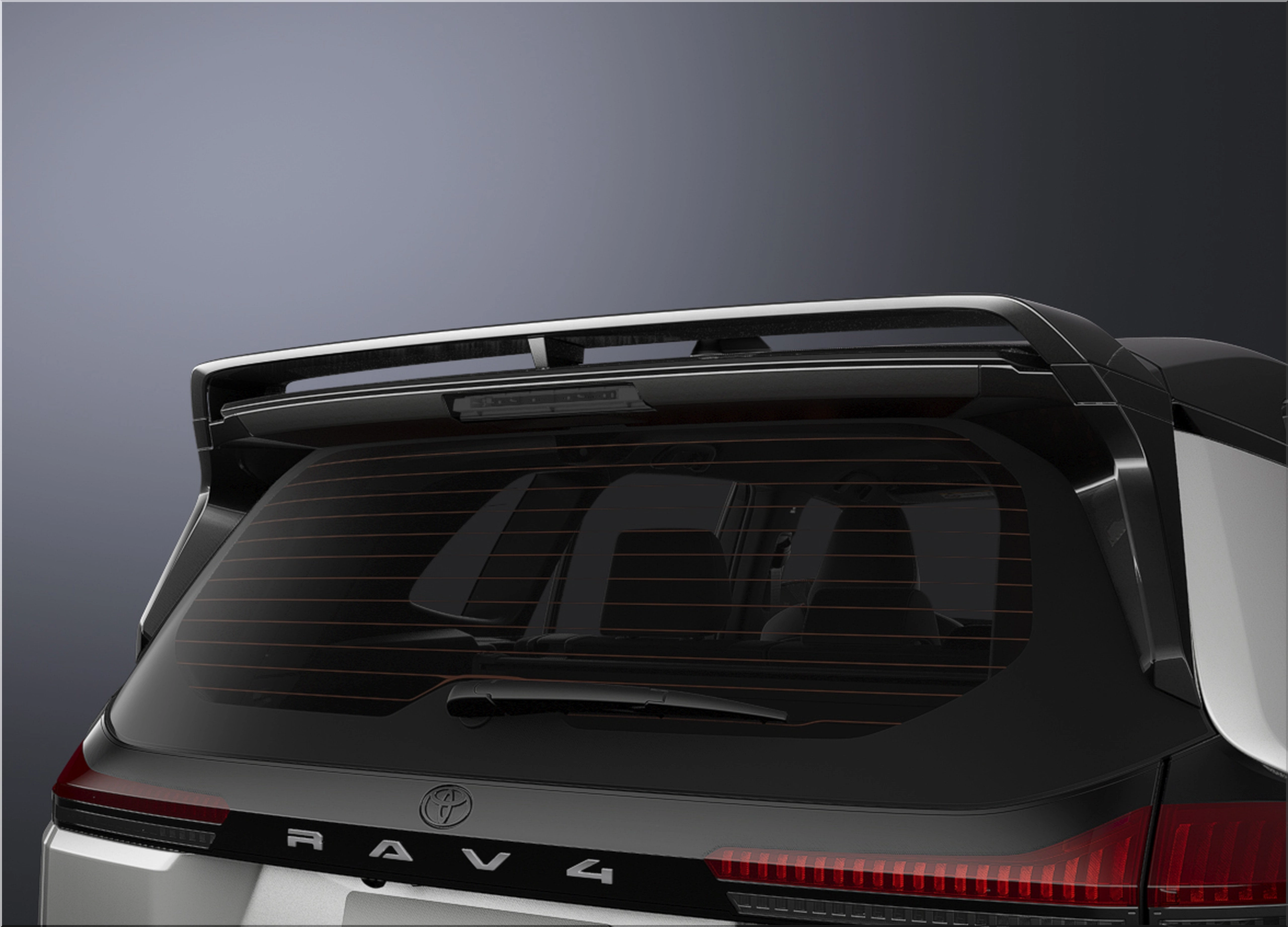
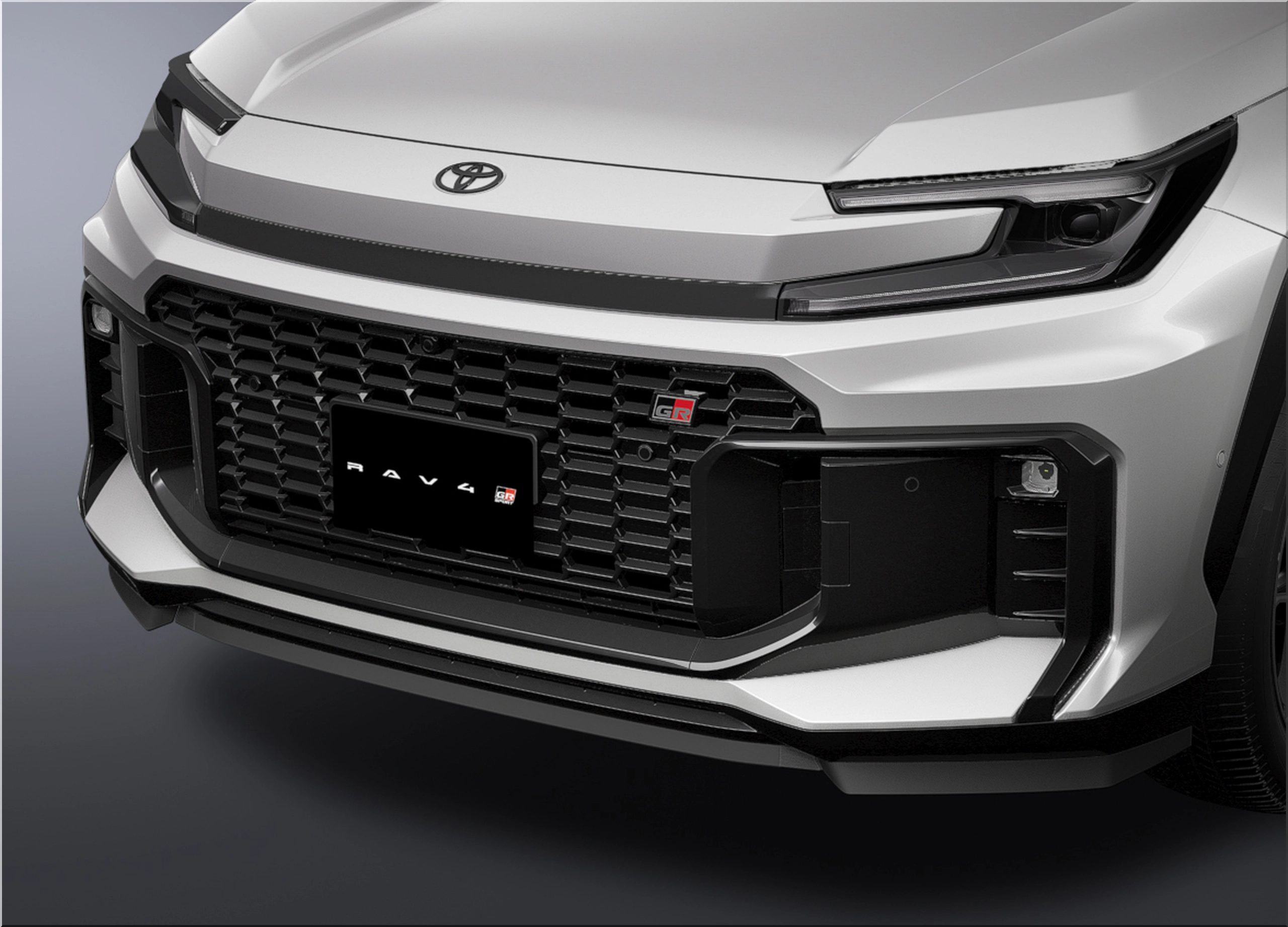
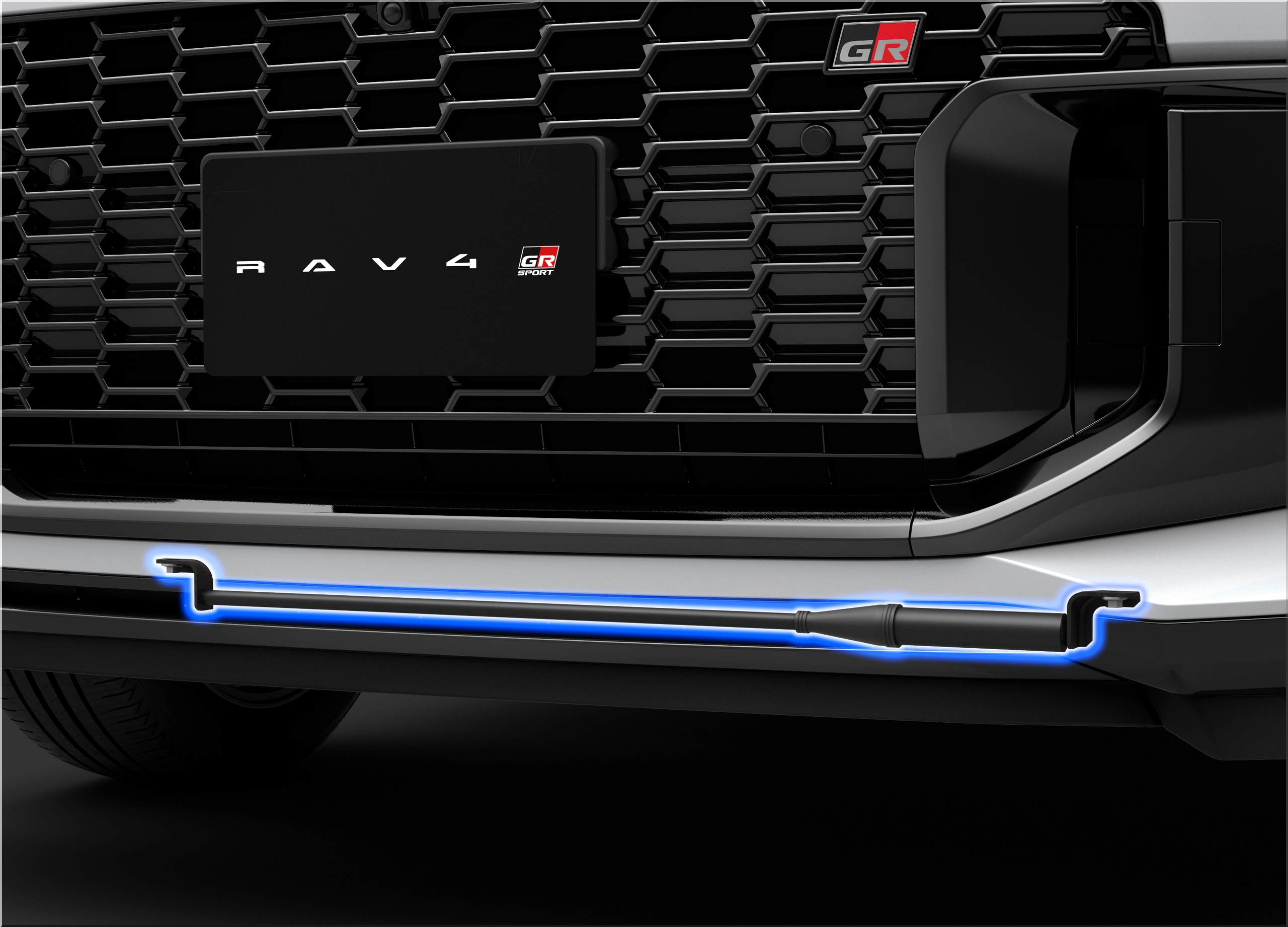
- Aero parts developed with CFD analysis and wind tunnel testing
- Front lip spoiler
- Wing-type rear spoiler and rear side spoiler
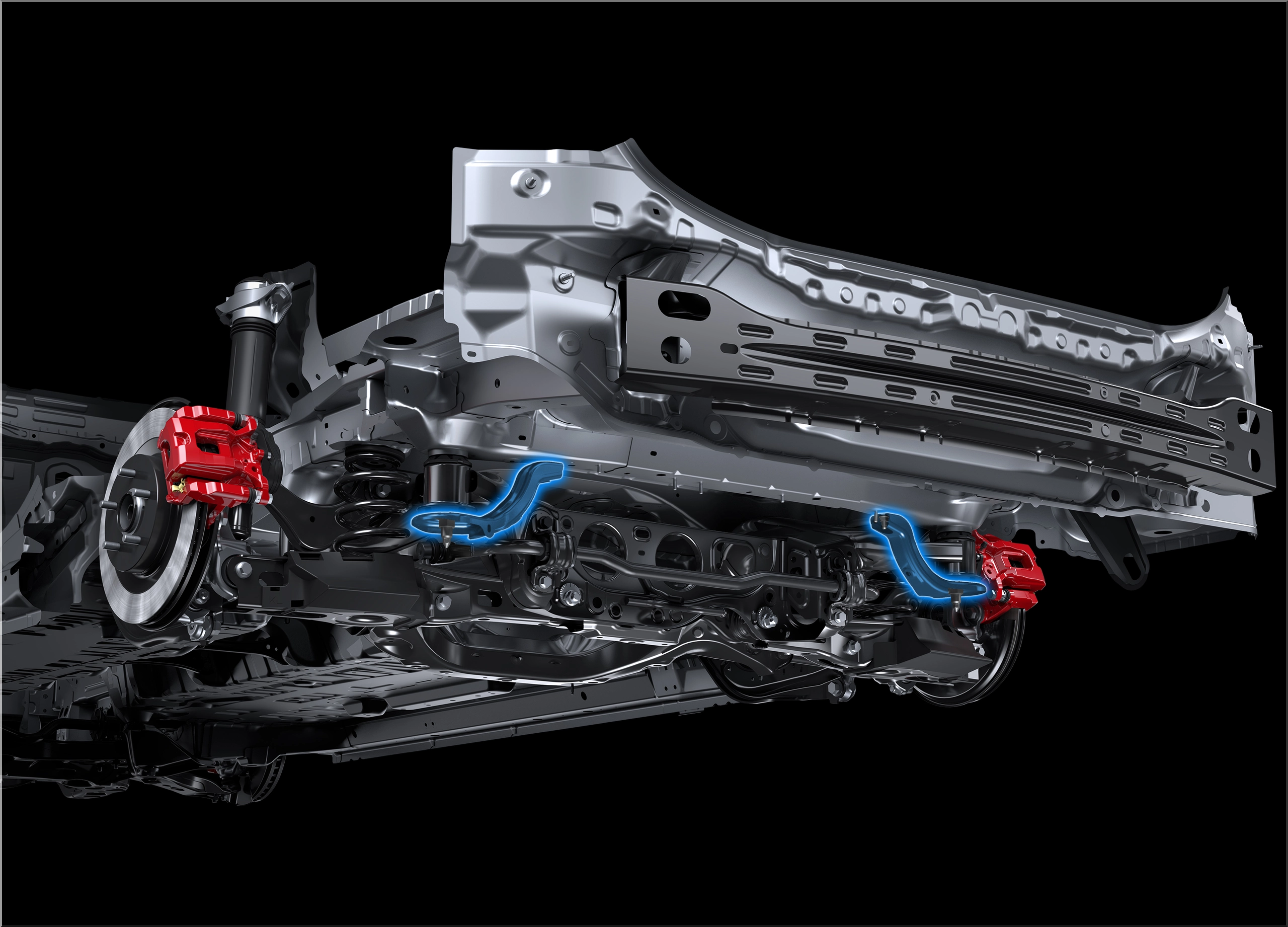
- Rigidity parts
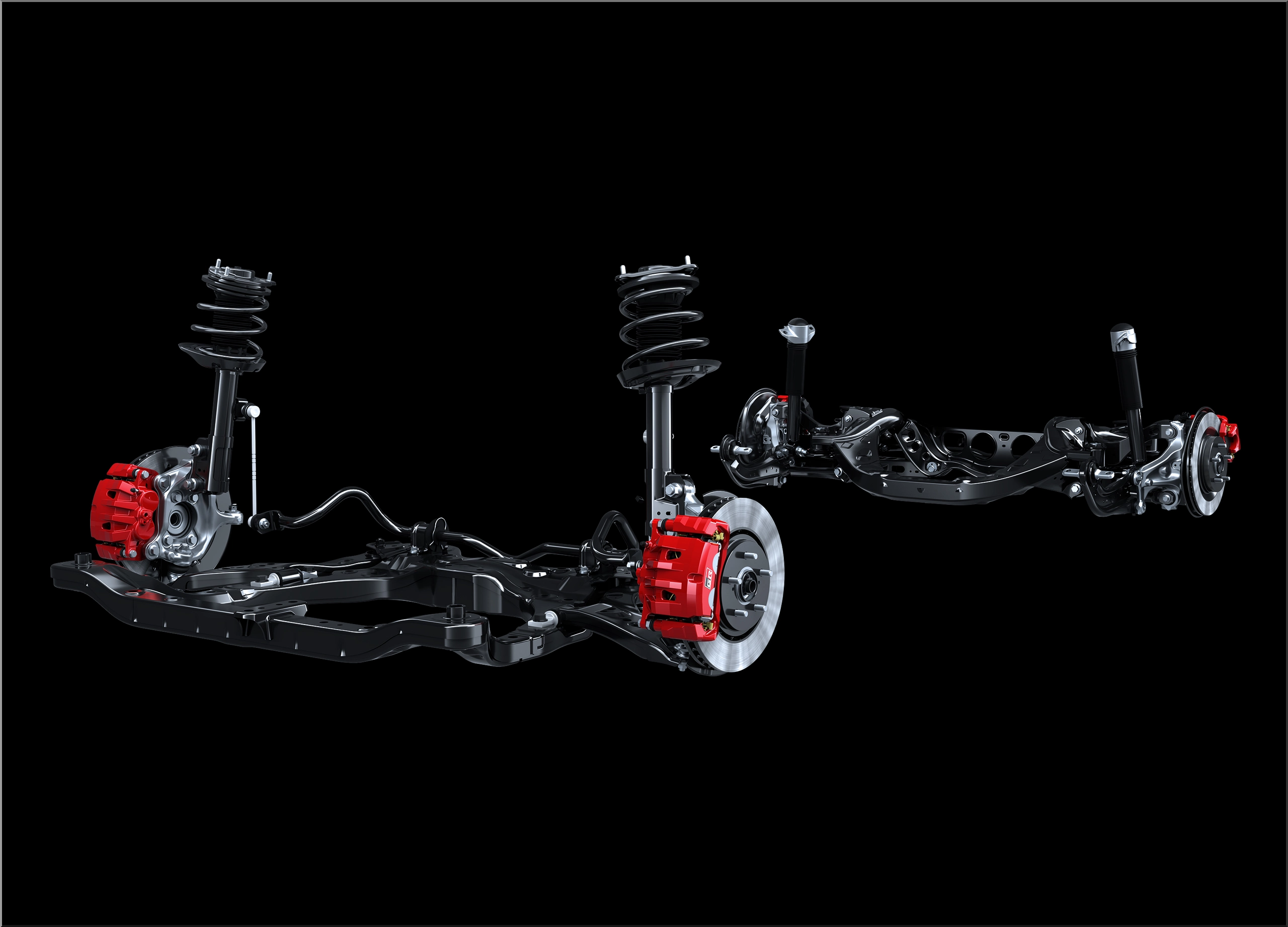
- GR Braces for rear suspension member reinforcement
- Battery pack used as a reinforcing structural member to increase rigidity and lower the center of gravity
- Chassis tuning
- GR Performance Dampers
- Specially tuned suspension friction control at very low speeds
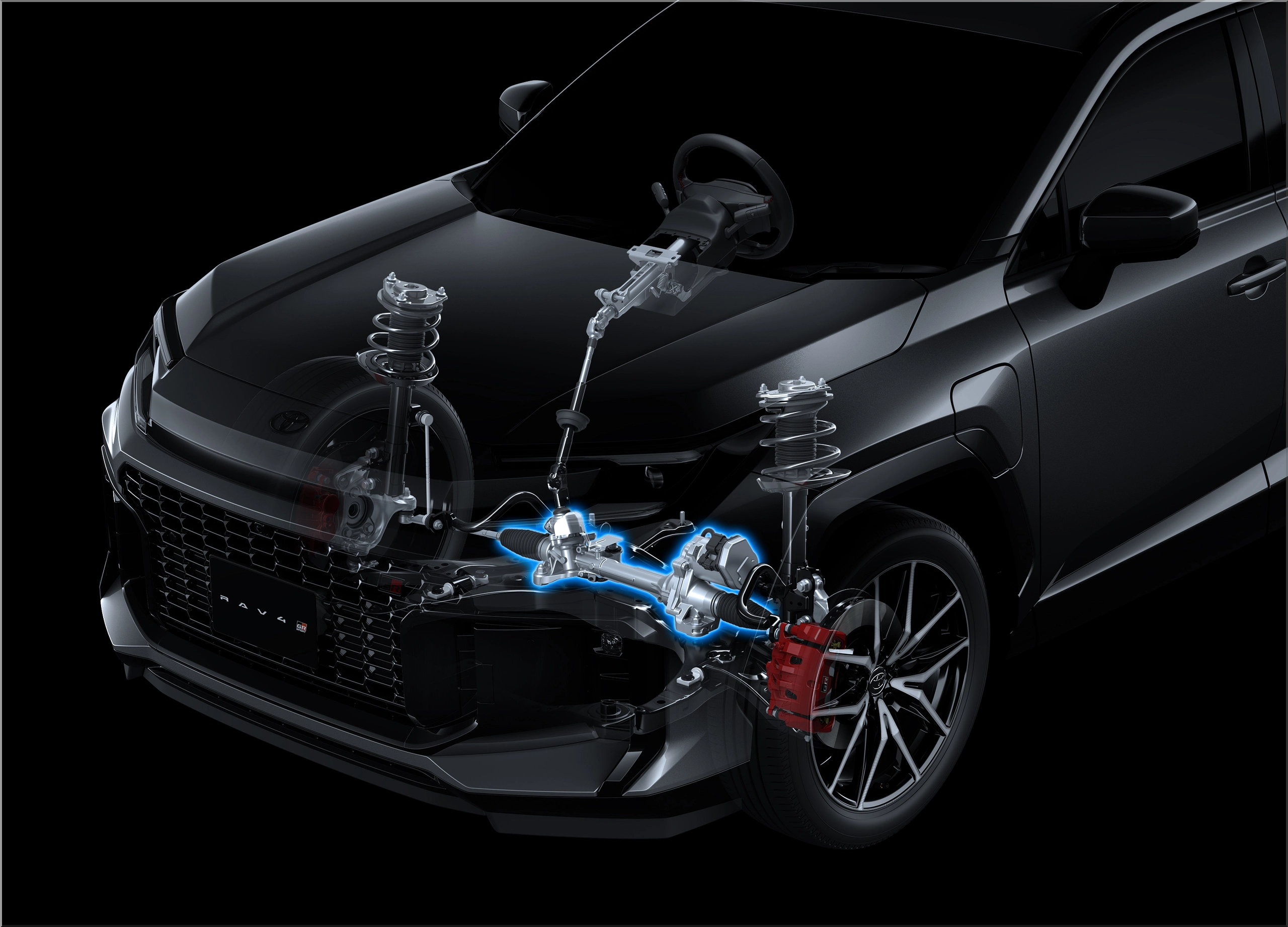
- Steering
- Special EPS tuning with distinct feel in Normal and Sport modes
By comparison, many trim-level performance packages change tires and badgework, then stop. Toyota goes deeper by using braces and dampers aimed at body motion and steering fidelity.
Why body-mounted performance dampers work on a heavy electrified SUV
A performance damper acts like a tuned vibration absorber. It targets small body oscillations that show up as shake, secondary ride motion, and steering nibble. On a ~2,000 kg PHEV SUV, that control helps the vehicle feel consistent when regen loads and torque delivery shift rapidly.
Consequently, GR SPORT can push the driver closer to the tire’s grip limit without the sloppy after-motions that sap confidence.
New vs old: how the 2026 Japan RAV4 PHEV moves the needle
Toyota launched a prior Japan-market RAV4 plug-in hybrid in 2020 with a very different mission. Toyota focused on performance and a then-strong EV range, which Toyota published at 95 km. The new model does three key things better: more EV range, faster charging flexibility, and higher output.
Table: 2026 Japan RAV4 PHEV vs 2020 Japan RAV4 PHEV
| Spec | 2026 RAV4 PHEV (Japan) | 2020 RAV4 PHEV (Japan) |
|---|---|---|
| EV range | 151 km (93.8 mi) in Z | 95 km (59.0 mi) |
| System output | 242 kW (324.5 hp) | 225 kW (301.7 hp) |
| DC fast charging | Yes (80% in ~28 min) | Not positioned as a core feature |
| AC power supply | Up to 1,500 W + multi-day modes | Up to 1,500 W |
| Core architecture | 2.5L series-parallel PHEV + E-Four | PHEV + AWD strategy |
| Strategic goal | More EV miles + charging flexibility | High output + early EV use case |
Looking at the data, Toyota’s biggest move sits in the EV range number. A jump from 95 km to 151 km shifts a plug-in from “short electric bonus” to “daily electric primary,” assuming a typical Japanese driving pattern.
Competitive check: how the new RAV4 PHEV compares in Japan’s PHEV SUV set
Japan does not offer endless PHEV SUV choices. Still, buyers cross-shop three clear alternatives: Mitsubishi Outlander PHEV, Mazda CX-60 PHEV, and premium imports like Volvo XC60 Recharge.
Win and loss metrics that buyers actually feel
- EV range: Toyota leads decisively with 151 km (Z). That changes how often the engine starts.
- Charging flexibility: Toyota adds fast-charging behavior that most PHEVs still avoid.
- Cabin and cargo: RAV4 stays efficient in packaging, but battery volume costs cargo versus non-PHEV variants.
- Price: Toyota lands near Outlander pricing while offering longer EV range, though trim content and seating layouts differ.
Table: RAV4 PHEV vs key PHEV SUV alternatives (Japan-focused)
| Model (Japan context) | MSRP in USD | Plug-in range (WLTC) | Hybrid fuel economy (WLTC) | DC fast charge | Length x width x height | Curb weight |
|---|---|---|---|---|---|---|
| Toyota RAV4 PHEV Z | $38,687 | 151 km (93.8 mi) | 21.9 km/L | Yes | 4600 x 1855 x 1685 mm | 1,980 kg |
| Mitsubishi Outlander PHEV (base) | $34,132 | 102 to 106 km (63 to 66 mi) | 17.2 to 17.6 km/L | Yes | 4720 x 1860 x 1745 mm | ~2,070 kg |
| Mazda CX-60 PHEV | ~$36,754 | 71 to 78 km (44 to 48 mi) | 14.3 km/L | Not positioned as a lead feature | 4740 x 1890 x 1685 mm | 2,080 kg |
| Volvo XC60 Recharge (Japan spec example) | ~$64,450 | ~70 to 90 km (43 to 56 mi) | ~14.3 km/L | Varies by market | 4710 x 1915 x 1660 mm | ~2,180 kg |
By comparison, Toyota’s range number lands closer to what many people associate with smaller battery EVs than what they expect from a PHEV. That difference drives real ownership behavior: more electric miles, fewer engine cycles, and less gasoline bought per month.


The engineering logic behind Toyota’s big choices
Why Toyota keeps series-parallel instead of a fixed series approach
A fixed series hybrid forces the engine to generate electricity, then forces motors to do all propulsion. That architecture can work, but it can also waste energy at highway speeds because every kW flows through conversion stages.
Toyota’s series-parallel approach reduces conversion overhead when the vehicle cruises. Specifically, it lets the system route power mechanically when that path saves energy, then return to electric drive when conditions favor it.
Why Toyota integrates the battery deeper into the body structure on GR SPORT
A battery pack sits low in the chassis, which lowers the center of gravity. Toyota goes further by using that mass as a structural element, which increases torsional rigidity. Higher rigidity improves suspension response because the body flexes less under load. The steering feels cleaner because the body does not twist as much before the tire reacts.
Consequently, Toyota can tune damping and steering for precision instead of using soft settings to hide body shake.
Why Toyota adds multi-day power supply modes
Toyota already had the hardware to export power. Toyota’s new move sits in the control logic and messaging. Toyota formalizes a mode that balances battery SOC and fuel use to sustain a steady 400 W output for days.
That creates a plug-in SUV that can:
- Power devices at camp sites
- Run essentials during outages
- Use the same energy storage that already sits in the driveway
2027 Toyota RAV4 PHEV context: what the Japan launch signals
Toyota positions the sixth-generation RAV4 as an entry point for Arene, its software development platform, and Toyota states that Arene supports core UI software and advanced safety systems. That matters for 2027 planning because software-defined capability changes how Toyota can update, refine, and add functions without waiting for a full model redesign.
Here is the clean signal: Toyota does not build this Japan-market PHEV system as a one-off. Toyota builds it as a platform piece.
If Toyota carries this architecture forward into a 2027 Toyota RAV4 PHEV strategy for other markets, expect three practical outcomes:
- More EV-first behavior in daily use due to the larger battery and stronger inverter efficiency
- More charging options that reduce dependency on home-only charging
- Faster software iteration for multimedia, driver assistance behavior, and energy management logic
Keep in mind: market regulations and charging standards can shape which features travel outside Japan. Toyota can ship the core hardware, then tune the charging interface and power export strategy per region.
Pro-Tips: how to pick the right RAV4 PHEV grade in Japan
- Pick Z if you want the longest EV range in the lineup and the most neutral exterior footprint for tight parking and narrow streets.
- Pick GR SPORT if you care about steering response, body control, and aero stability, and you accept a small EV-range penalty.
- Add a 6 kW home charging setup if your household electrical setup supports it. It turns the PHEV into a nightly routine instead of a weekly chore.
- Use DC fast charging as a travel tool, not as your daily plan. Fast charging saves time, but home AC charging usually wins on cost per km.
- Run your own monthly fuel math with two numbers: your daily distance and how often you can start with a full battery. The RAV4’s 151 km range covers a lot of real schedules.
Definitions
- WLTC: A Japanese test cycle that blends city, suburban, and highway operation into a combined efficiency and range figure.
- E-Four: Toyota’s electric AWD strategy that uses an electrically driven rear axle to add traction without a mechanical driveshaft.
- PCU (Power Control Unit): The inverter and power electronics package that controls motor drive and power flow between battery and motors.
- SiC (Silicon Carbide): A semiconductor material used in power devices to reduce losses and heat compared with traditional silicon, improving efficiency under load.
- Plug-in range vs EV equivalent range: Plug-in range describes distance driven using electricity from charging. EV equivalent range expresses an equivalent EV distance under test conditions.







What now: action steps for shoppers and for anyone tracking the 2027 RAV4 PHEV story
- Map your daily distance and compare it to 151 km (Z) or 145 km (GR SPORT). If you drive under that threshold most days, you will buy far less gasoline.
- Plan charging first, then choose the grade. Home charging drives the biggest ownership payoff.
- Use DC fast charging as a route tool for long drives. It changes the usability of a PHEV in a way older plug-ins could not match.
- Choose Z vs GR SPORT based on response goals, not looks. GR SPORT adds hardware that changes the vehicle’s behavior.
- If you track the 2027 RAV4 PHEV trajectory, watch Toyota’s next moves around Arene-based feature updates and charging ecosystem integration. Those two areas will dictate how quickly Toyota can scale this experience beyond Japan.
- If you buy for resilience, factor in the 100V/1,500W output and the multi-day supply modes. That feature can cover essentials when the grid does not.
- Add new comment
- 194 views