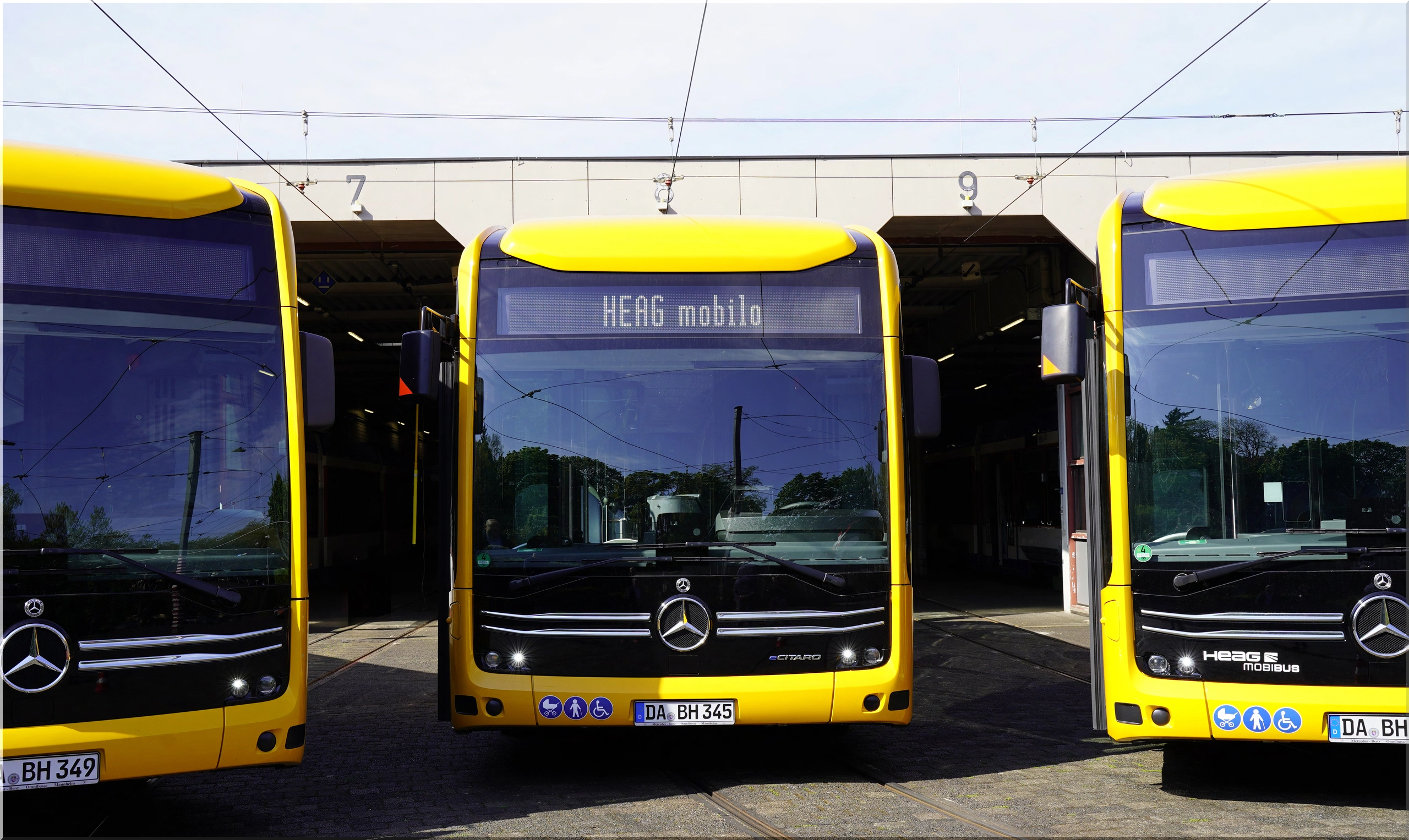
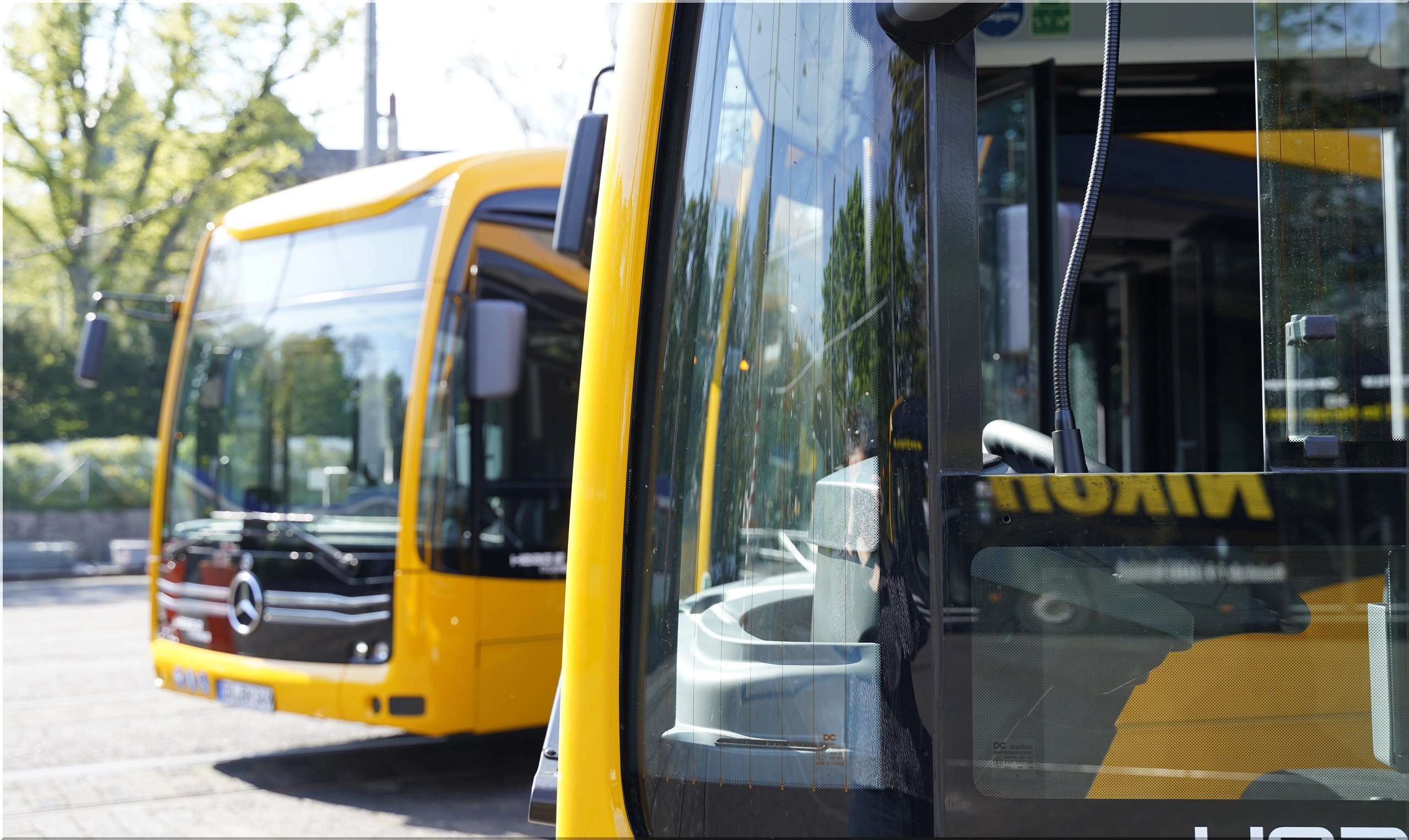
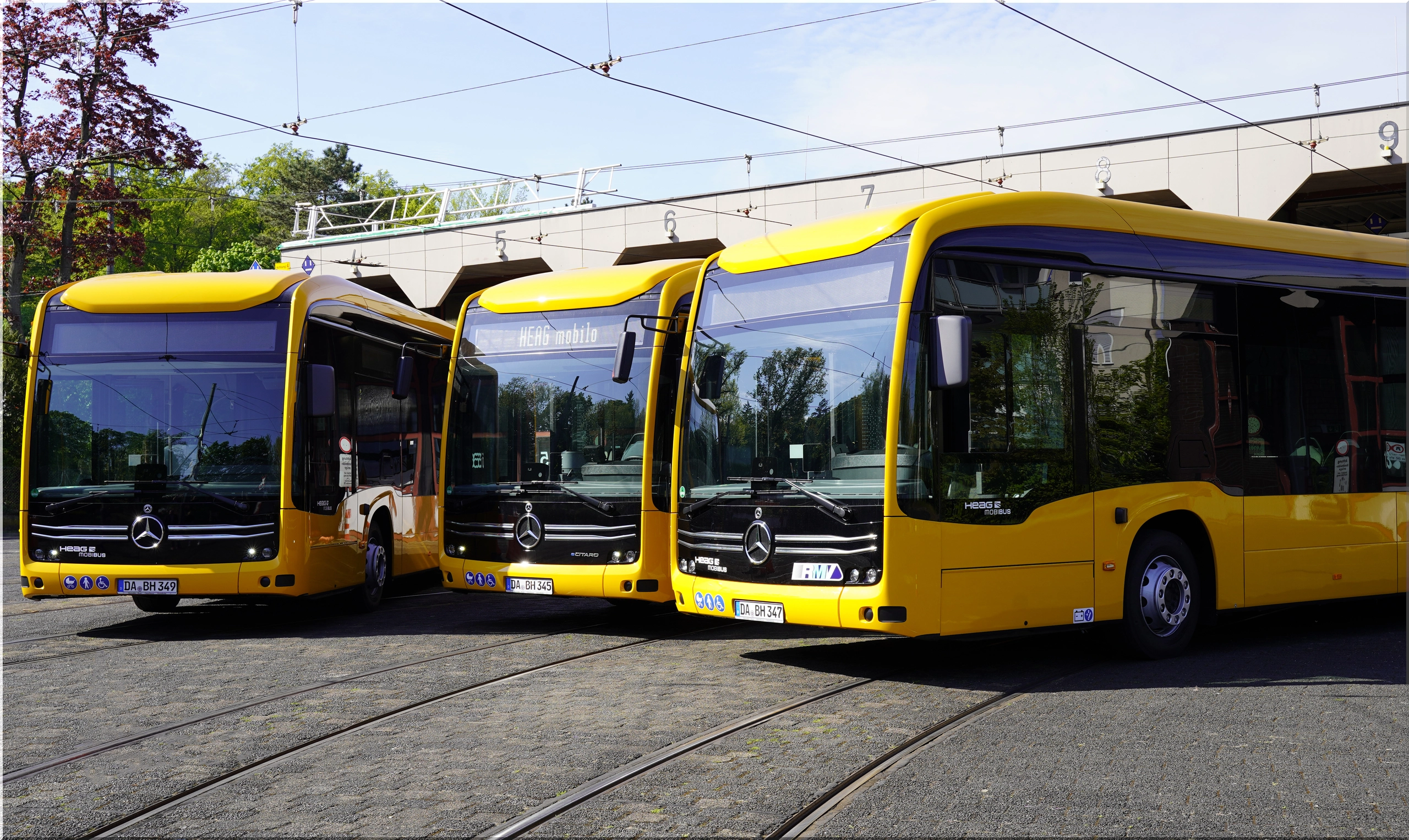
Daimler Buses has delivered five fully electric Mercedes-Benz eCitaro buses to HEAG mobilo, the public transport provider in Darmstadt, Germany. This move supports the company’s long-term effort to reduce urban emissions and shift to zero-emission public transportation.
The delivery, announced by Daimler Truck AG, reflects the growing demand for electric buses across European cities. Public transport operators continue to prioritize climate-friendly mobility solutions and meet stricter environmental regulations.
Why Electric Buses Matter in Public Transport
Urban transport networks are under pressure to reduce carbon dioxide (CO₂) emissions and meet sustainability goals. Electric buses offer several benefits:
- No local emissions
- Lower operating costs due to reduced energy consumption
- Reduced noise pollution
- Improved air quality in densely populated areas
The Mercedes-Benz eCitaro aligns with Germany’s national and EU-level climate targets. Its deployment helps operators comply with regulations without sacrificing performance.
Key Features of the eCitaro Electric Buses
The five eCitaro buses supplied to HEAG mobilo bring advanced technical specifications to the fleet. These vehicles use NMC 3 lithium-ion batteries. This battery technology delivers higher energy density, which allows longer ranges between charges.
Specifications of the eCitaro Buses Delivered
| Feature | Details |
|---|---|
| Model | Mercedes-Benz eCitaro |
| Number of Buses | 5 |
| Battery Technology | NMC 3 lithium-ion |
| Charging Method | Plug-in charging |
| Range per Charge | Up to 280 km (174 miles) under ideal conditions |
| Passenger Capacity | Up to 88 passengers |
| Noise Level | Significantly lower than diesel counterparts |
These buses are single-decker vehicles designed for city routes with high passenger turnover.
The Role of HEAG mobilo in Green Transit
HEAG mobilo operates public transport services in Darmstadt and the surrounding districts. With this delivery, Daimler Buses strengthens HEAG mobilo’s shift toward electrification.
The company already integrates electric and hybrid vehicles into its fleet. The addition of these five eCitaro units supports Darmstadt’s broader climate initiative, aiming to achieve zero-emission public transport operations by the coming decade.
Strategic Importance of Plug-In Charging
The eCitaro buses supplied to HEAG mobilo use plug-in charging technology. Plug-in charging provides several operational advantages:
- Lower infrastructure costs compared to pantograph systems
- Flexible charging times, including overnight depot charging
- Simplified maintenance processes
- Compatibility with existing depot layouts
These benefits help transit companies manage total cost of ownership (TCO) while transitioning to electric fleets.
Sustainability Targets and Regulatory Push
Germany’s federal government has introduced funding programs for low-emission buses to accelerate electrification. European Union directives also require public transport fleets to meet specific emission reduction benchmarks.
Public transport operators in Germany, including HEAG mobilo, are eligible for federal support covering part of the additional costs for electric buses and charging infrastructure.
The delivery of these five eCitaro buses positions HEAG mobilo to:
- Access government funding for electric mobility
- Fulfill Clean Vehicles Directive obligations
- Reduce dependency on fossil fuels
Benefits of NMC 3 Lithium-Ion Battery Technology
The NMC 3 battery system used in these eCitaro buses offers higher energy density. This translates into longer ranges and fewer charging cycles during daily operations.
Advantages of NMC 3 Batteries:
- Higher capacity in the same physical space
- Lower weight per kWh compared to older battery generations
- Supports temperature control systems for consistent performance
- Extends battery life under varying load conditions
These batteries help meet the practical needs of urban bus operators without compromising vehicle availability.
Market Growth for Electric Buses
The market for electric buses is expanding steadily in Europe and worldwide. Daimler Buses is one of several key players competing to supply zero-emission vehicles for public transport systems.
Electric Bus Market Growth Factors:
- National and EU-level climate policies
- Urban clean air zones
- Rising fuel prices for diesel vehicles
- Public demand for sustainable transportation
Electric buses now make up a significant share of new vehicle orders across major European cities.
Daimler Buses' Commitment to Electrification
Daimler Buses plans to expand its electric vehicle portfolio. The company focuses on providing solutions for urban and intercity routes, covering a wide range of public transport needs.
The Mercedes-Benz eCitaro platform will remain central to these efforts. Daimler Buses continues to invest in battery development, charging systems, and fleet management tools to support operators.
Looking Ahead: HEAG mobilo’s Fleet Electrification Strategy
The five new eCitaro buses represent a step in HEAG mobilo’s electrification strategy. The company will continue to evaluate:
- Energy consumption data from the new buses
- Route optimization based on charging cycles
- Expansion of charging infrastructure at depots
- Potential integration of opportunity charging systems in the future
The data collected from the operation of these buses will inform future procurement decisions. HEAG mobilo aims to balance operational efficiency with sustainability goals.
Impact on Public Transport Users
Passengers riding the new eCitaro buses will experience several improvements:
- Quieter rides with reduced vibration
- Consistent indoor climate control
- Lower local pollution levels at bus stops
- Modern accessibility features for all passengers
The buses meet accessibility standards with low floors and wide doors, facilitating easy boarding.
Summary of the Delivery and Its Significance
The delivery of five electric eCitaro buses to HEAG mobilo marks progress toward sustainable city transport. The move supports climate goals, improves passenger comfort, and reduces operating costs for the transport company.
This deployment reflects a broader trend as public transport systems across Europe turn to electric mobility solutions. The focus remains on reducing emissions, meeting regulatory requirements, and providing reliable urban transit services.
Daimler Buses continues to lead this transition by offering proven electric vehicle technologies tailored to operator needs. The collaboration with HEAG mobilo reinforces the growing role of battery-electric buses in modern public transport.
- Add new comment
- 188 views