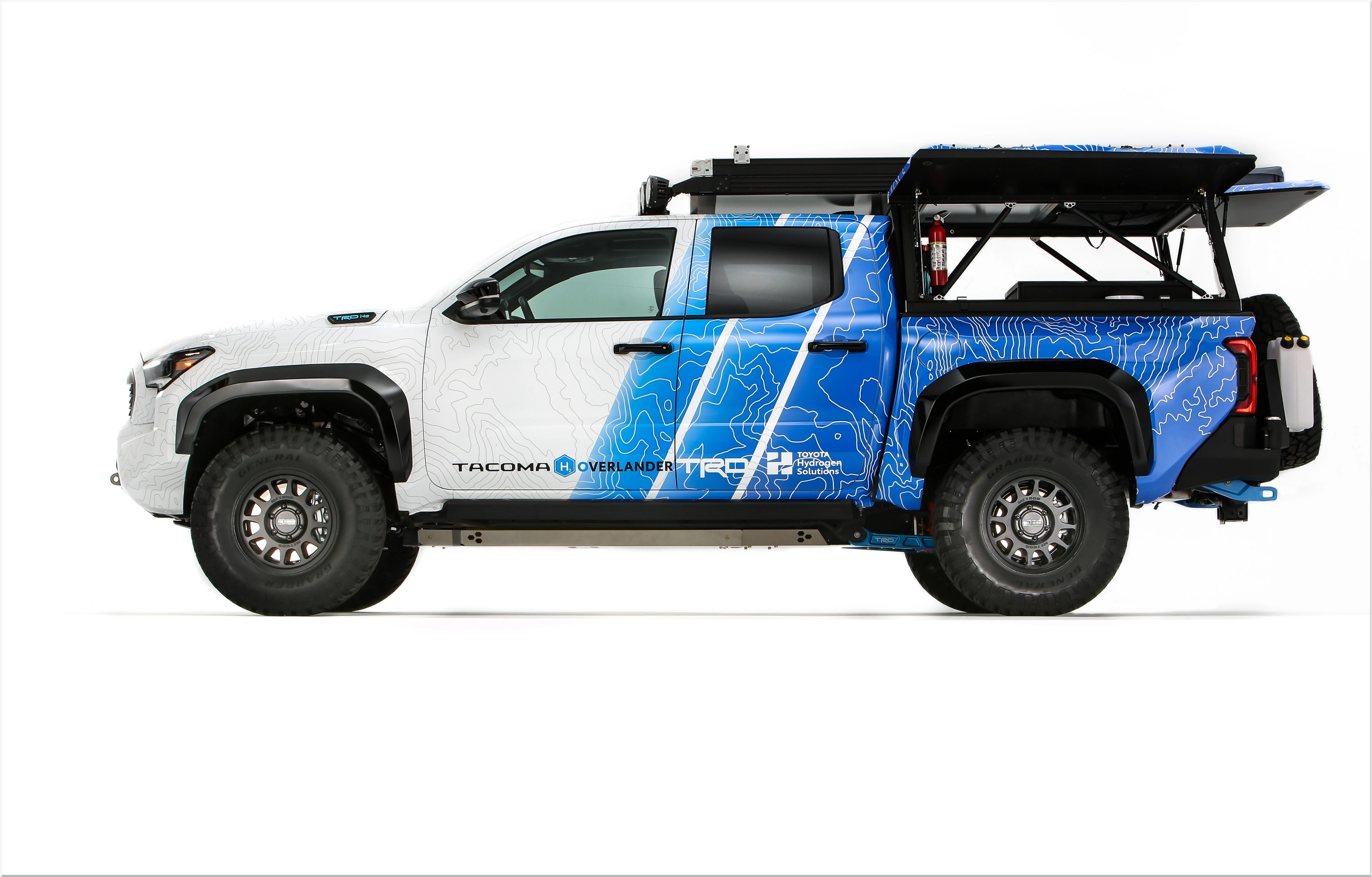
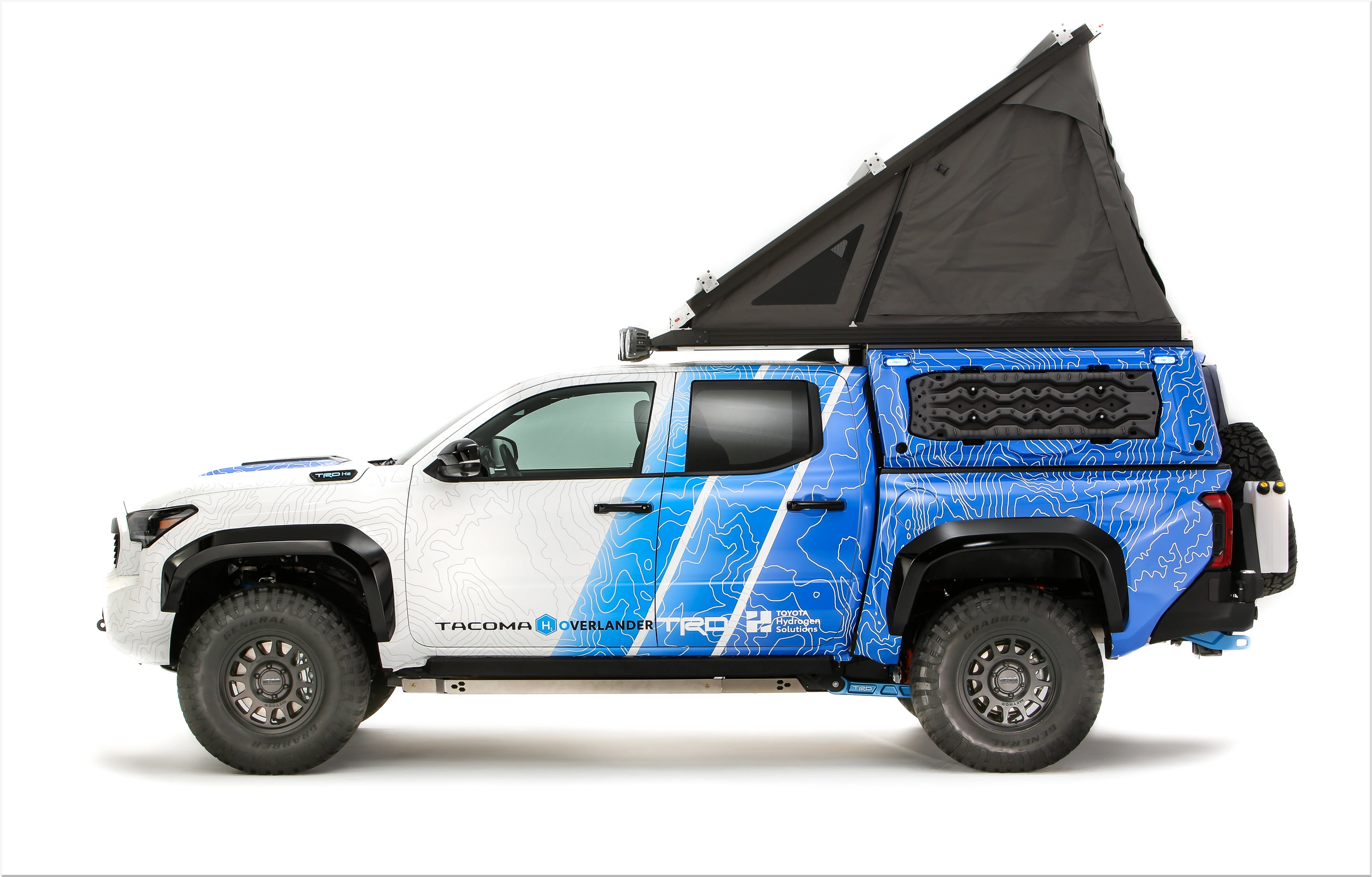
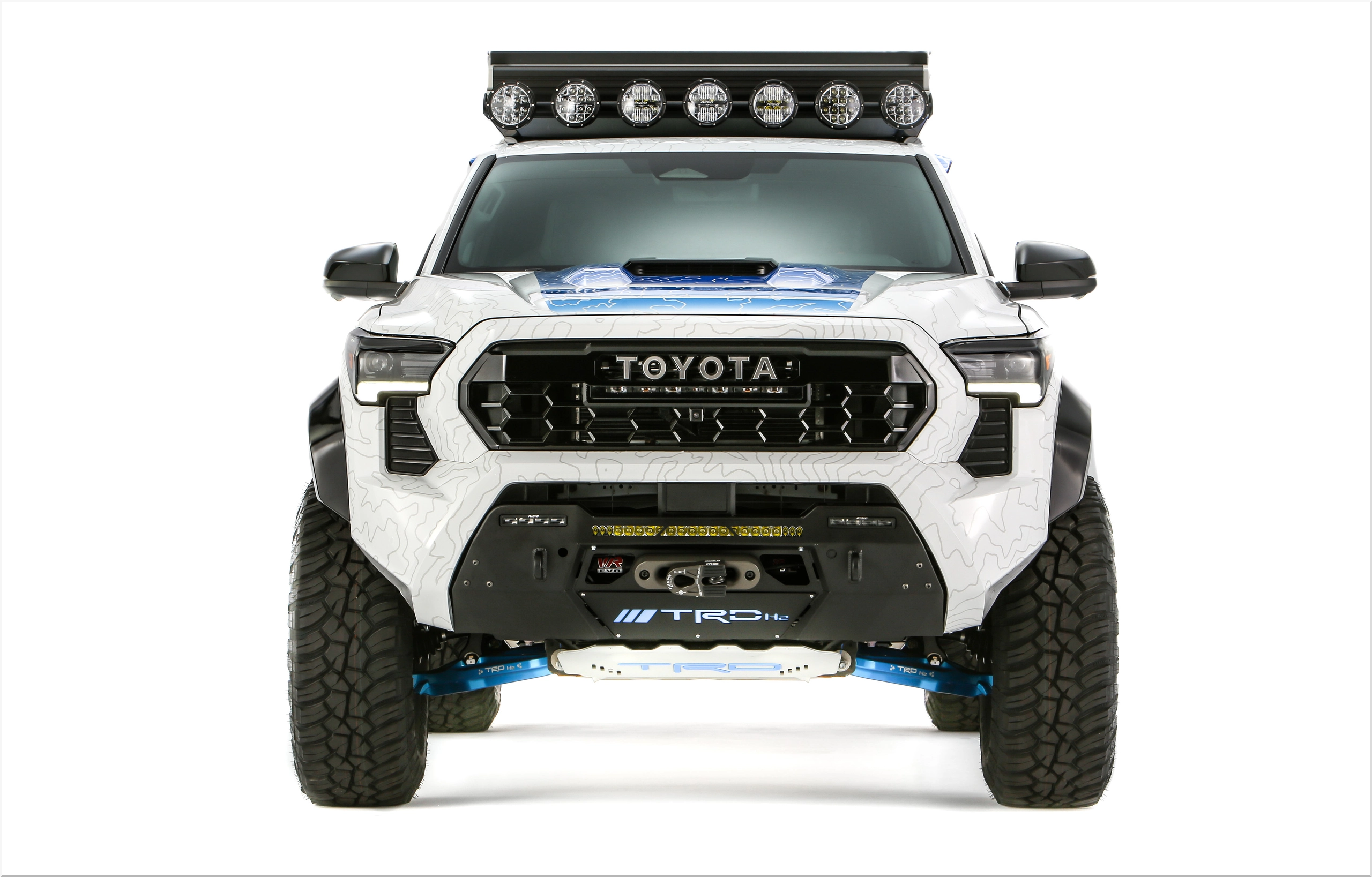
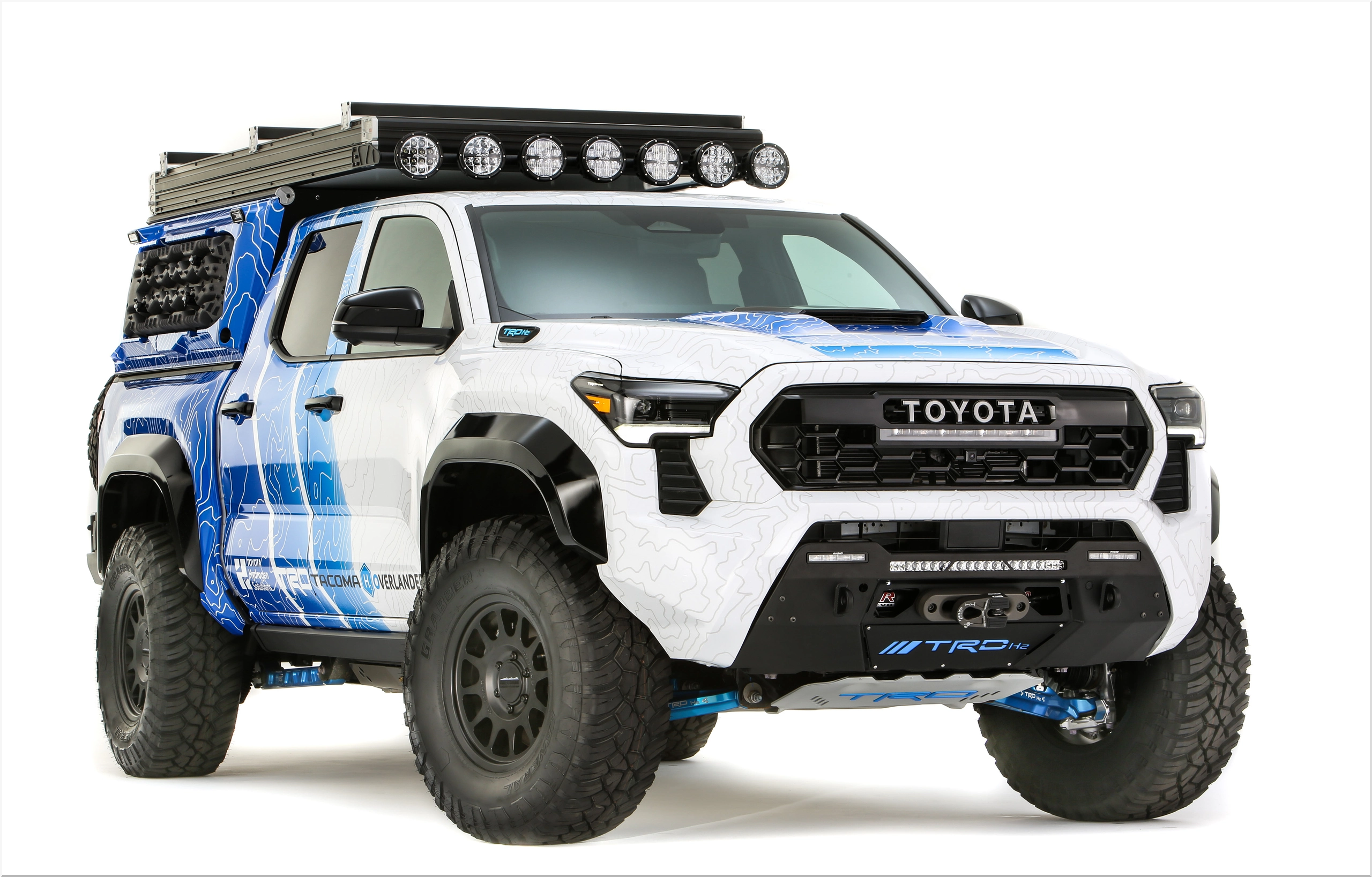
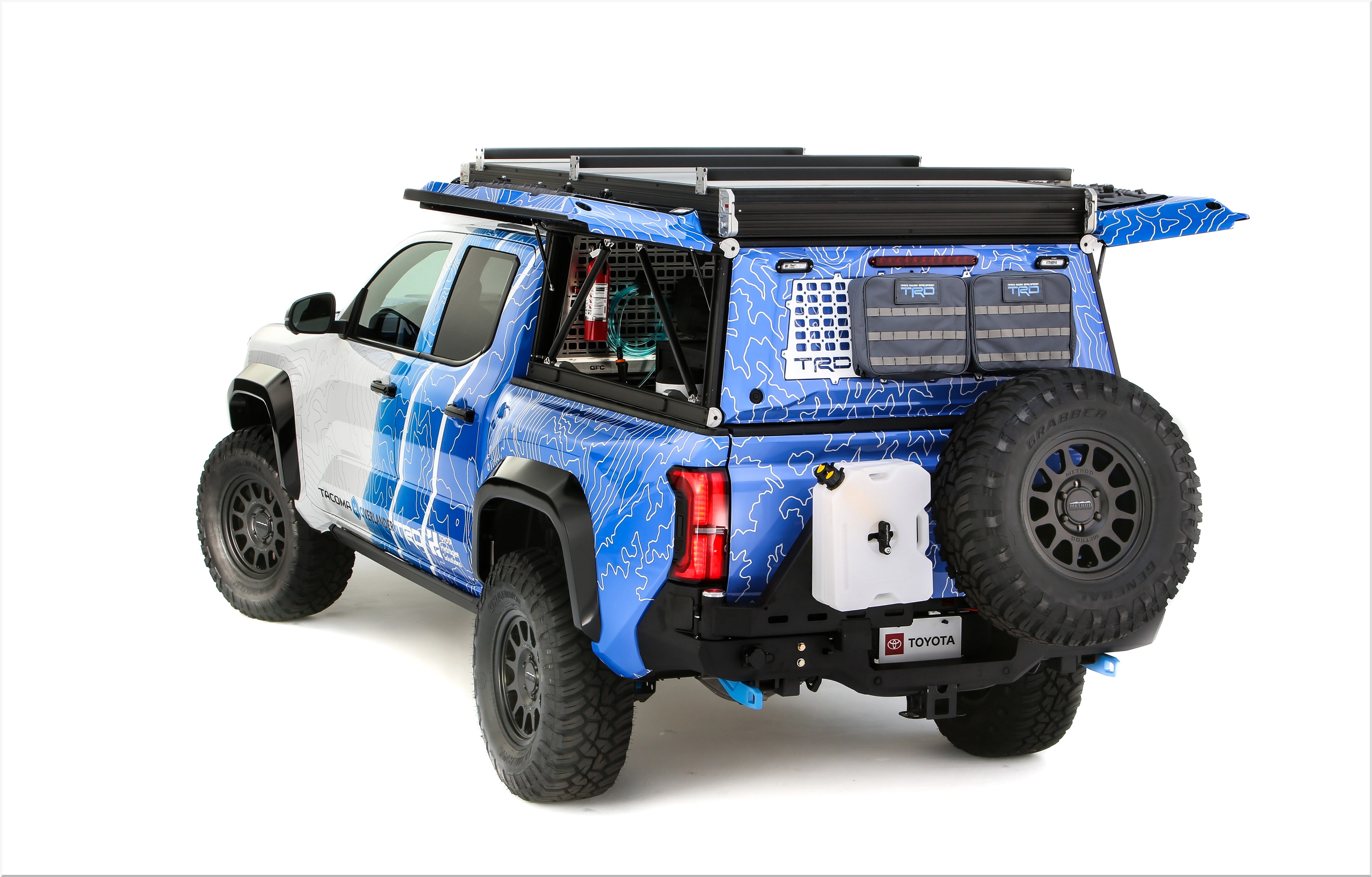
The Toyota Tacoma H2-Overlander Concept brings hydrogen fuel cell technology to the wilderness. Built on Toyota’s TNGA-F platform, this prototype pickup shows how zero-emission power can drive serious off-road performance while offering real utility in remote environments.
Hydrogen Power with Real Muscle
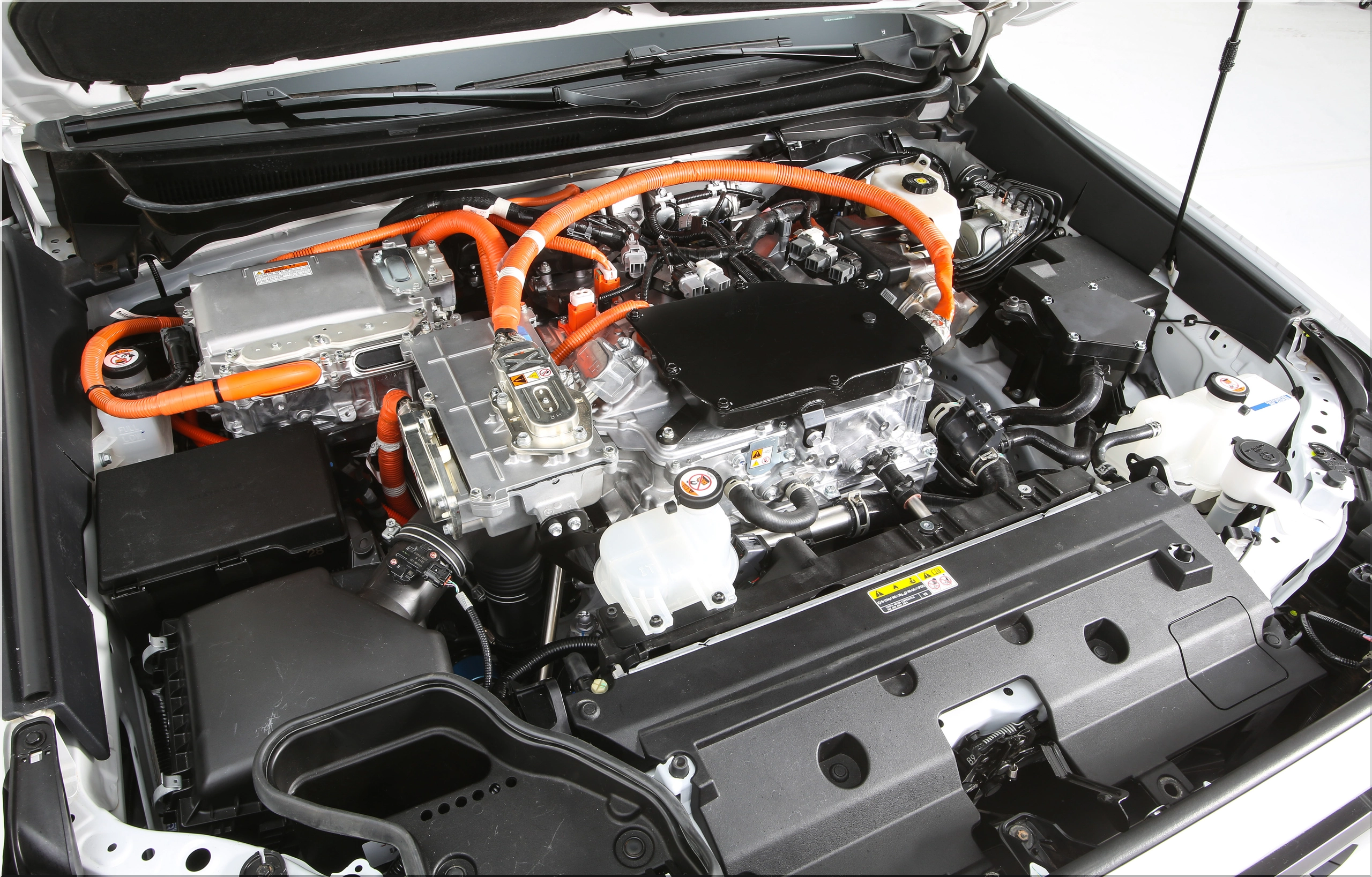
Developed by Toyota Racing Development (TRD) teams in California and North Carolina, the Tacoma H2-Overlander delivers 547 horsepower from two electric motors powered by a second-generation Toyota Mirai fuel cell stack and a 24.9-kWh lithium-ion battery. It produces electricity by combining hydrogen and oxygen, generating only water vapor as exhaust.
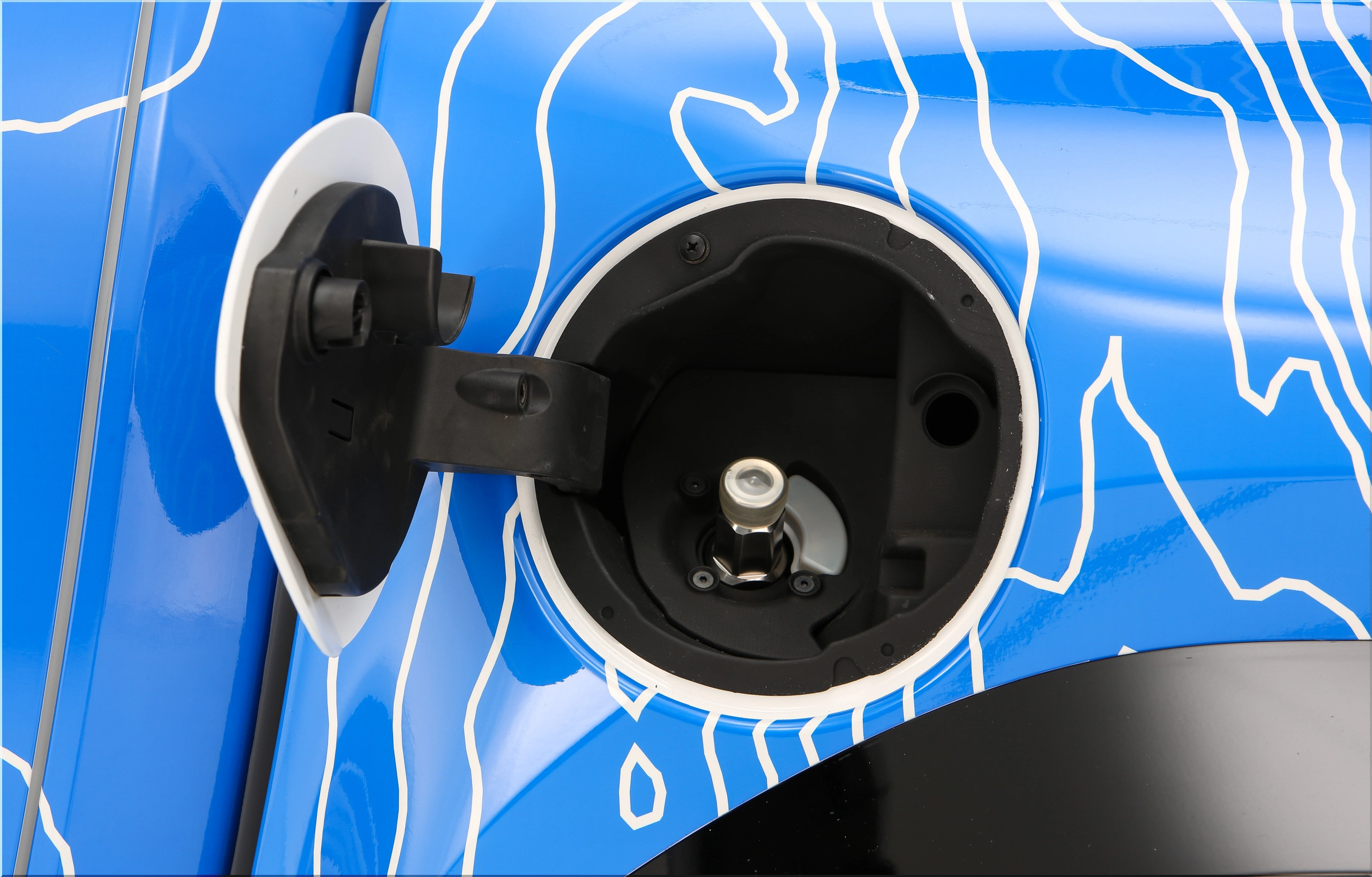
Three hydrogen tanks, with a total capacity of 6 kilograms, are mounted within the frame rails. Refueling takes minutes, addressing one of the biggest challenges facing battery-electric off-roaders: downtime. The truck can power itself and others, thanks to a 15-kW power takeoff system capable of running a home or charging two EVs simultaneously via dual NEMA 14-50 outlets.
Key performance data:
| Specification | Tacoma H2-Overlander Concept |
|---|---|
| Power output | 547 hp |
| Battery capacity | 24.9 kWh |
| Hydrogen capacity | 6 kg |
| Front motor | 225 kW |
| Rear eAxle | 188 kW |
| Power takeoff | 15 kW |
| Drive system | 4WD with front LSD and rear locker |
Trail-Ready Engineering
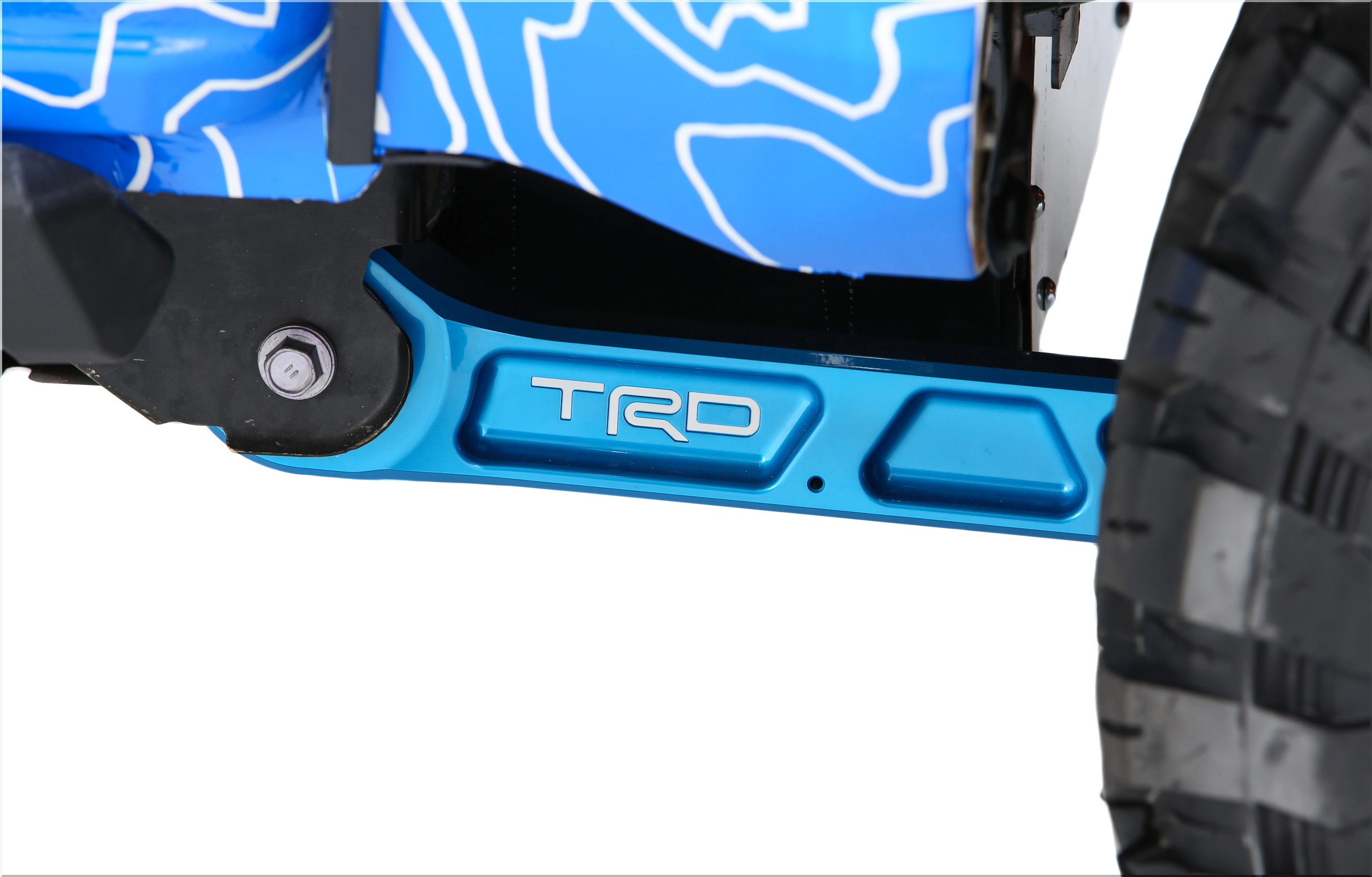
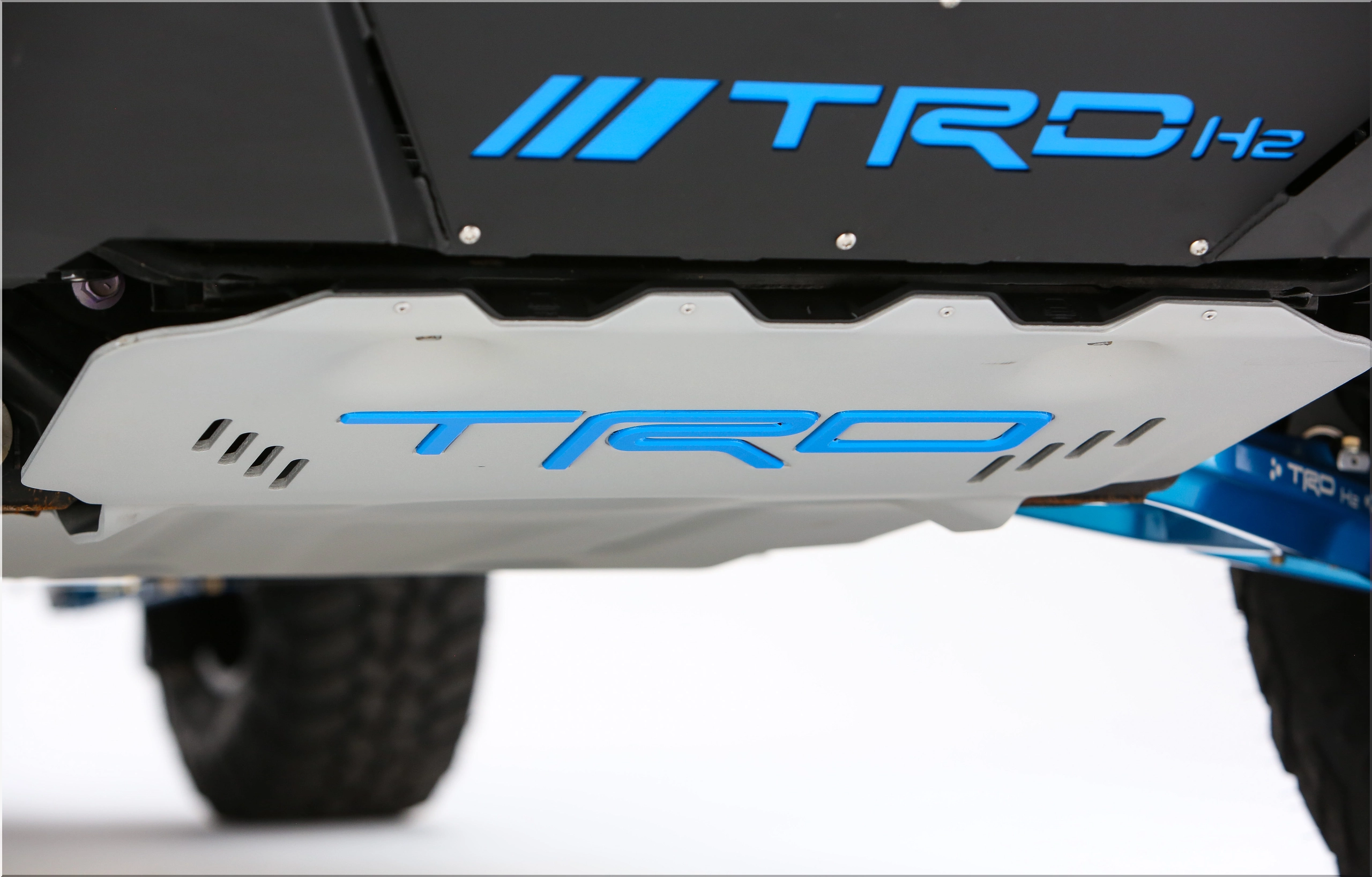
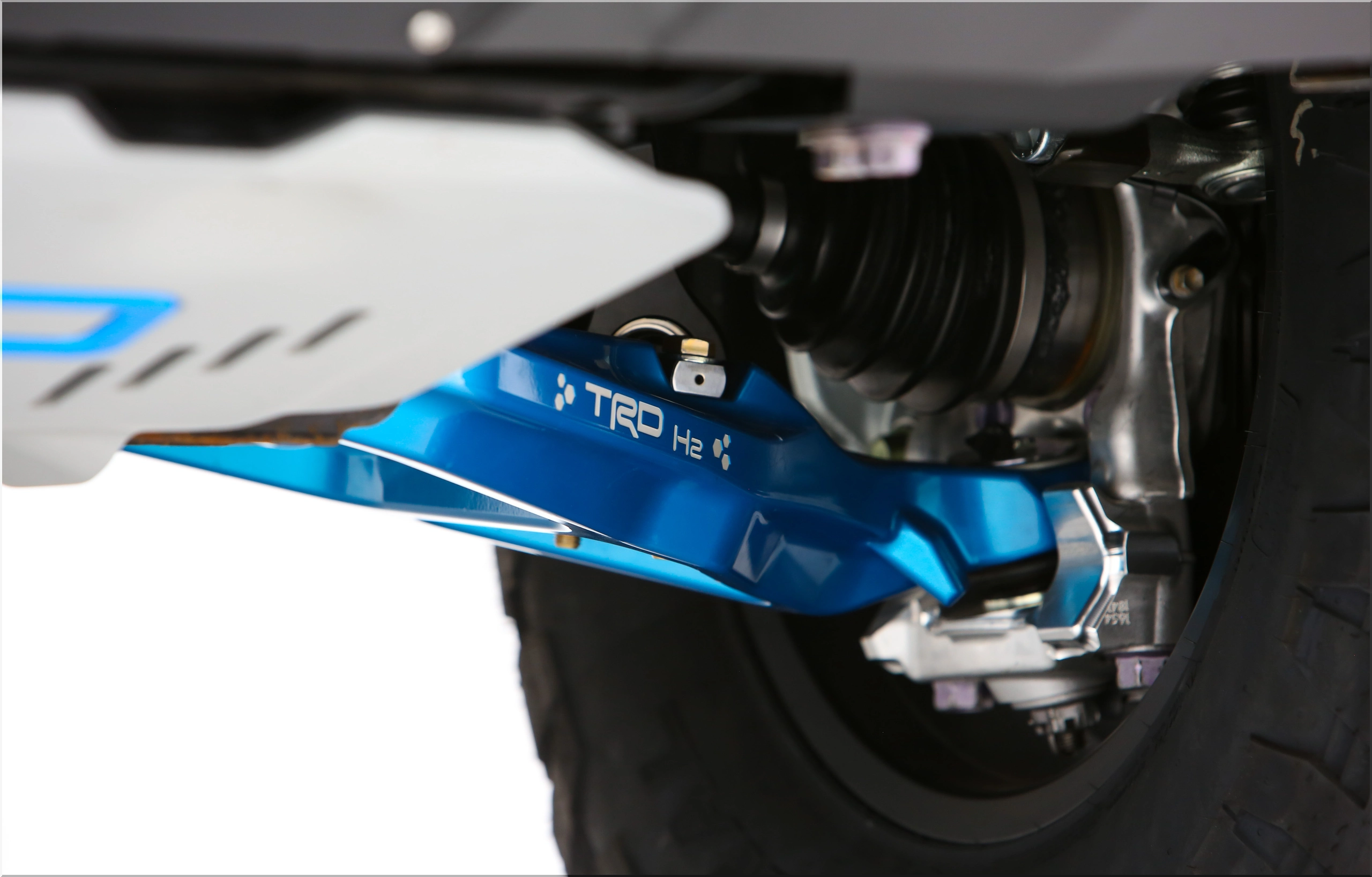
The TRD engineering team equipped the Tacoma H2-Overlander with components proven in extreme environments. A TRD billet long-travel kit and Fox 2.5 Performance Elite Series shocks ensure excellent suspension articulation. A Tundra-sourced front brake system improves stopping power, while custom 17×8.5-inch wheels with 35×12.5R17 off-road tires provide strong traction over challenging terrain.
Cooling is critical for both hydrogen fuel cells and electric drivetrains, so Toyota adapted a TRD custom cooling system using components from the Tacoma TRD Pro and Lexus RZ. The setup maintains thermal stability even under heavy off-road load.
Water Recovery: Turning Emissions into Utility
Toyota’s engineers created a patent-pending TRD exhaust water recovery system, one of the most distinctive innovations in this concept. It captures and filters the water produced by the hydrogen reaction, providing a clean source suitable for washing or showering. While not drinkable, the system offers practical value when fresh water is scarce in remote environments.
This feature reinforces the truck’s “leave no trace” approach—its tailpipe emits only water, and that water can even be reused. The system highlights how fuel cell technology can offer both environmental and survival benefits.
Designed for Real-World Use
Building the Tacoma H2-Overlander required major structural and powertrain redesigns. TRD engineers had just a few months to convert a gasoline Tacoma into a fully functional hydrogen-powered 4WD. Using advanced CAD modeling, 3D printing, and multi-site collaboration, teams in North Carolina and California completed the prototype for the 2025 SEMA Show.
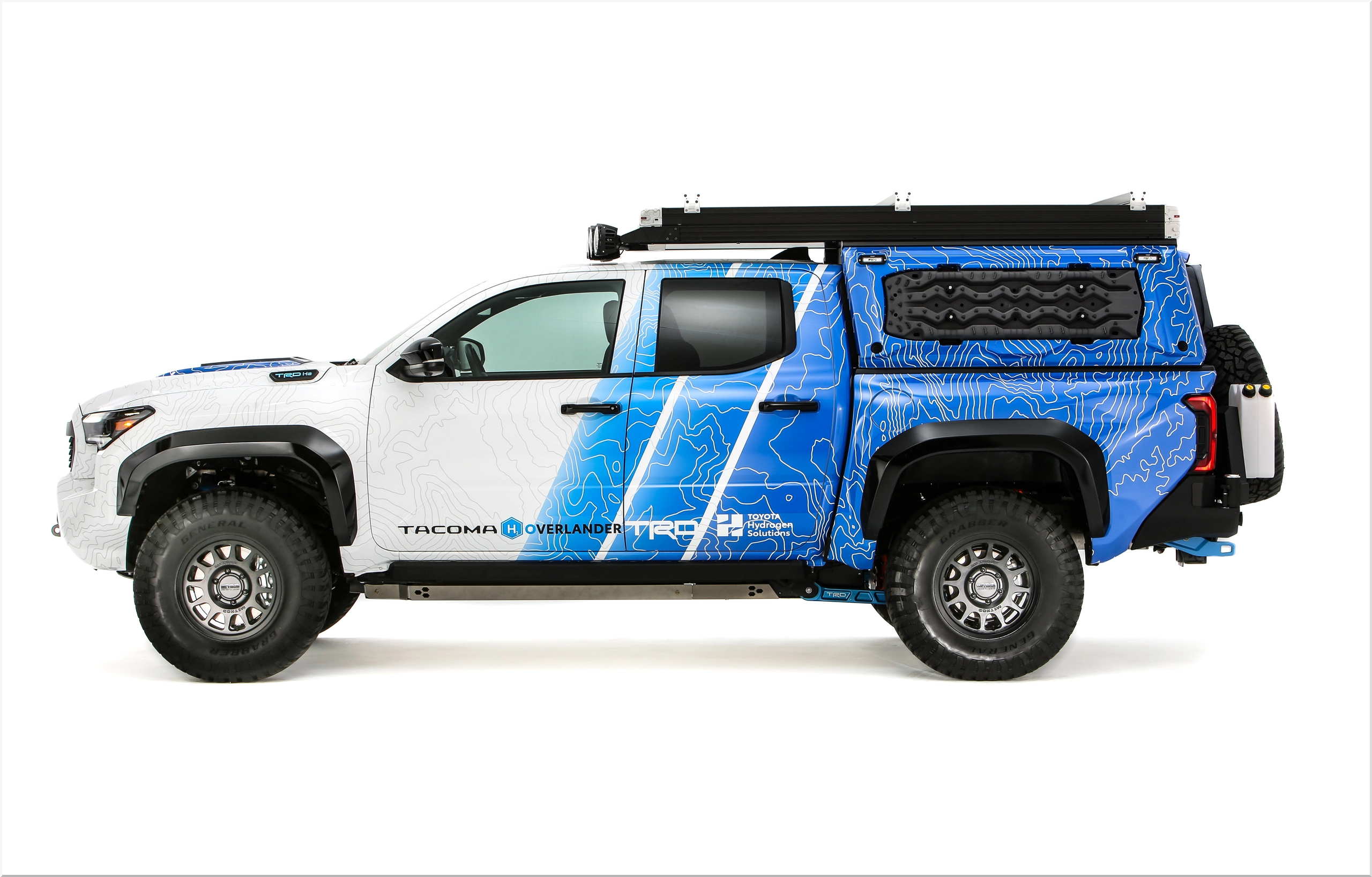
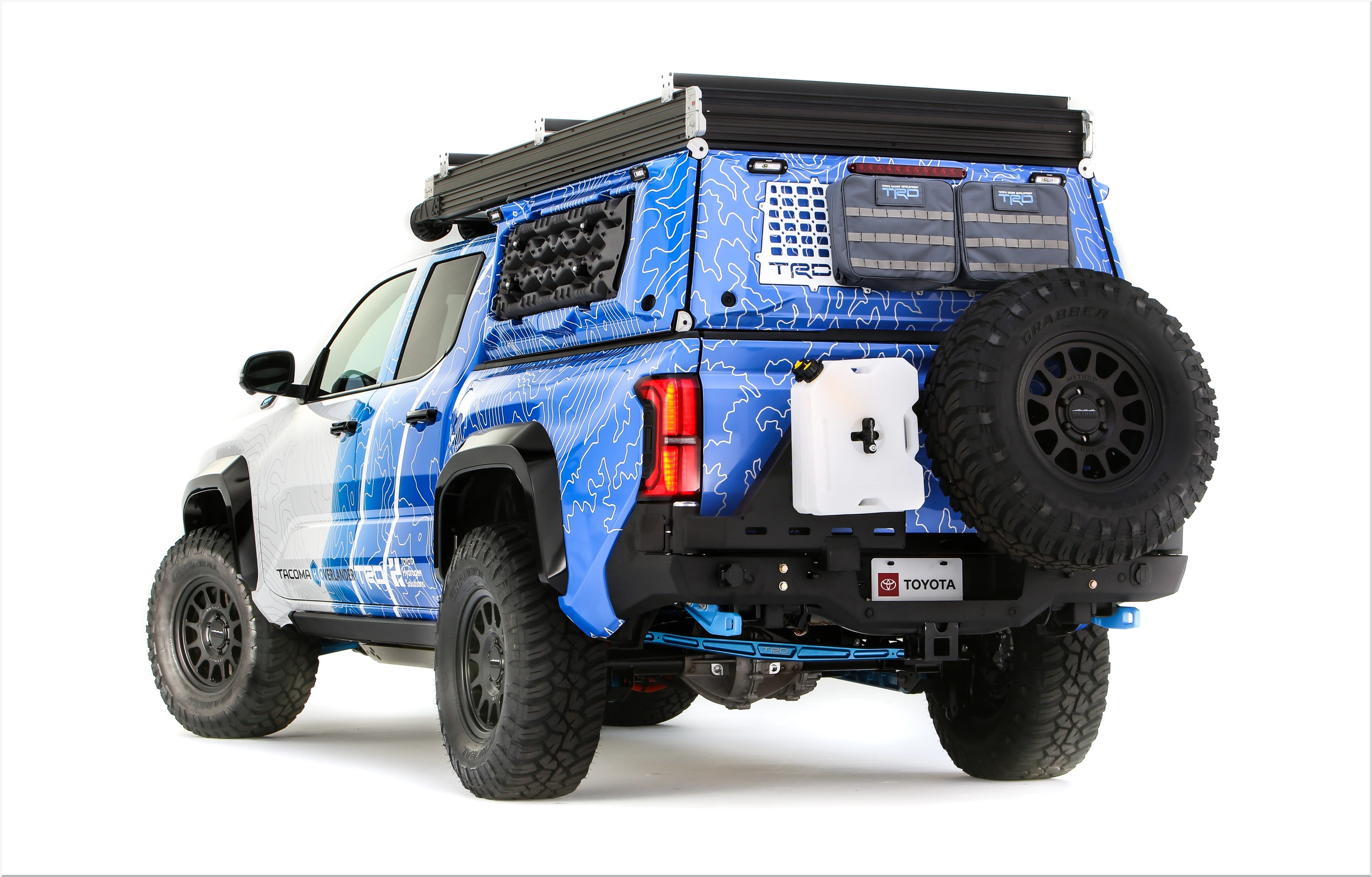
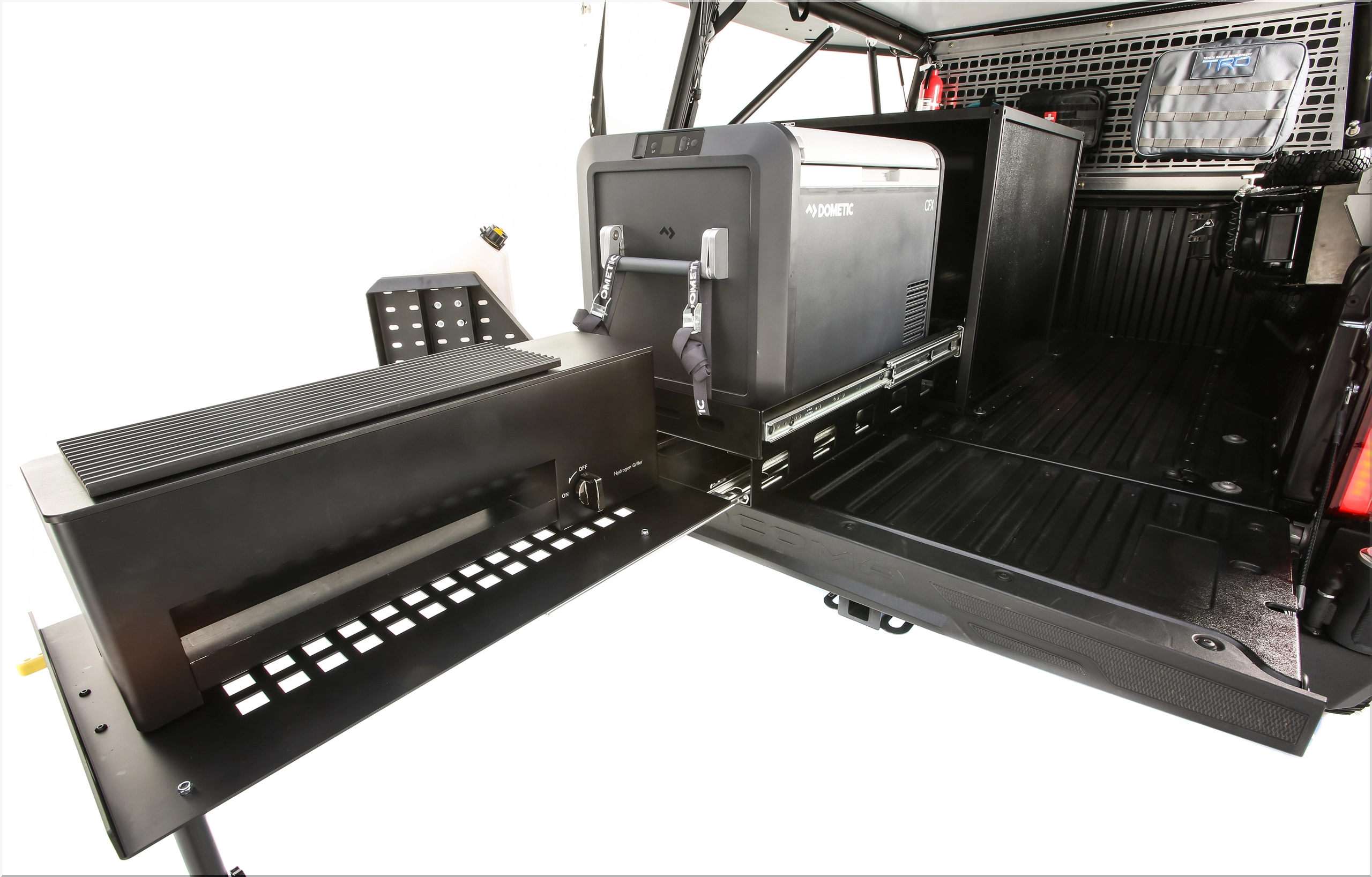
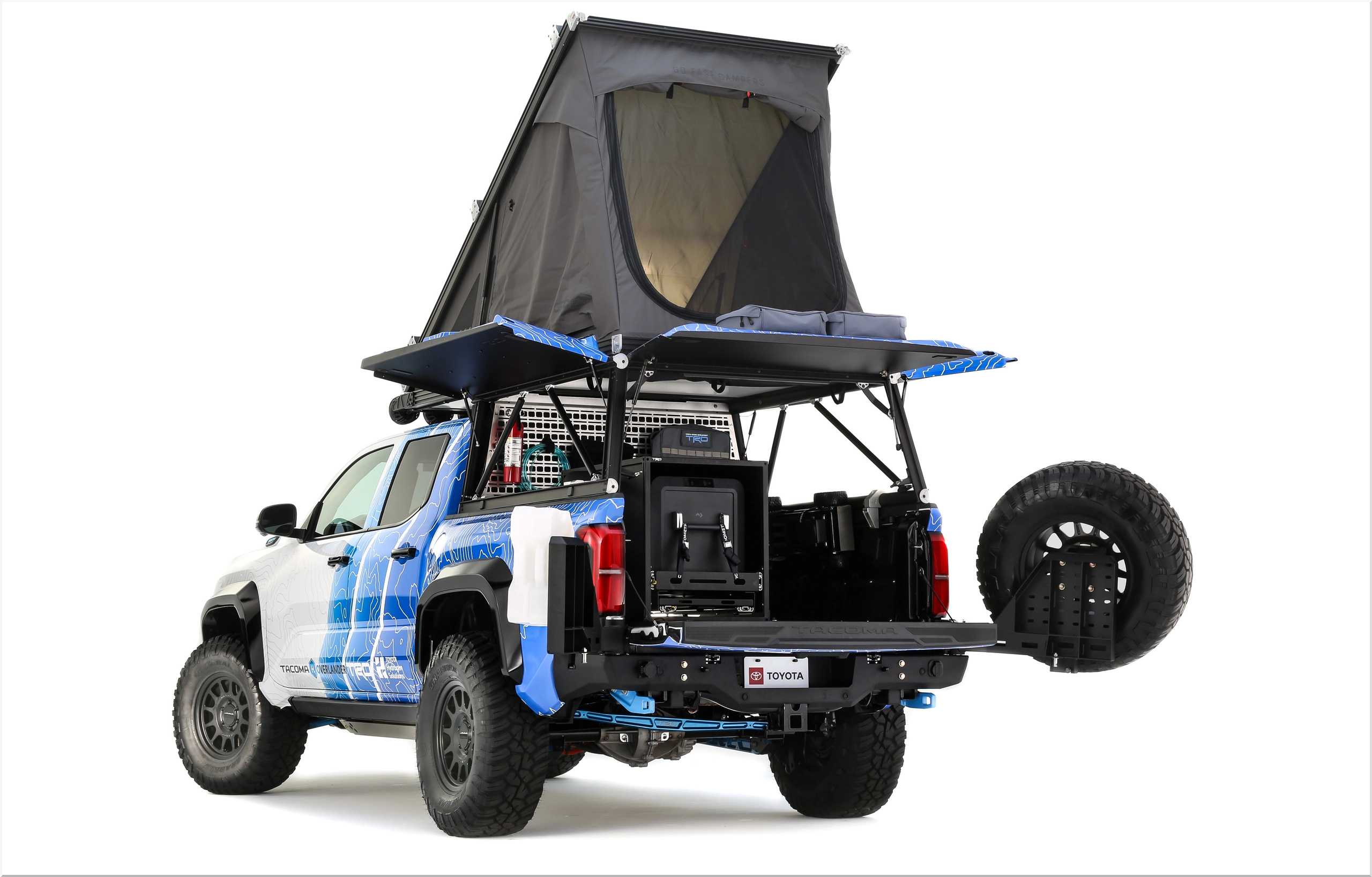
The body features a customized overlanding camper made with recycled carbon-fiber aero panels, heavy-duty bumpers, integrated recovery points, and dual swingouts. The bed includes tiedowns, a recovery board storage system, and practical camp lighting. Every component was engineered for function rather than flash.
Hydrogen as a Path to Carbon Neutrality
Toyota views the Tacoma H2-Overlander as part of its multi-pathway approach to carbon-neutral mobility. While battery-electric vehicles dominate the zero-emission conversation, hydrogen fuel cell systems provide faster refueling and extended range, making them ideal for off-road and remote applications.
Mike Tripp, Toyota’s Group Vice President of Marketing, said the truck demonstrates that “hydrogen isn’t just viable—it’s a core consideration in Toyota’s vision for what’s next.”
The concept also reflects Toyota’s practical approach to sustainability. By showing that hydrogen power can handle real-world challenges, Toyota adds another option to its growing lineup of clean mobility solutions, alongside hybrids, plug-in hybrids, and battery-electric vehicles.
Off-Road Electrification with Purpose
The H2-Overlander isn’t a design exercise—it’s a functional testbed for fuel cell integration, vehicle-to-load energy systems, and resource-efficient engineering. Its combination of instant torque, quick refueling, and off-grid power generation positions it as a realistic look at future expedition vehicles.
For serious off-roaders, the ability to:
- Charge other EVs
- Power a home or camp
- Generate reusable water
offers independence that battery-only solutions can’t yet match.
SEMA 2025: A Showcase of Future Powertrains
Toyota presented the H2-Overlander Concept at the 2025 SEMA Show in Las Vegas under the theme “Powered by Possibility.” The display featured a full range of Toyota builds—ICE, hybrid, PHEV, BEV, and FCEV—showing that the company sees multiple roads to decarbonization.
This concept vehicle, built as a special project prototype, is not available for sale and includes modifications that may affect warranty coverage and legality. Still, it underscores Toyota’s belief that the future of adventure vehicles lies in flexible, sustainable power systems that perform without compromise.
- Add new comment
- 162 views