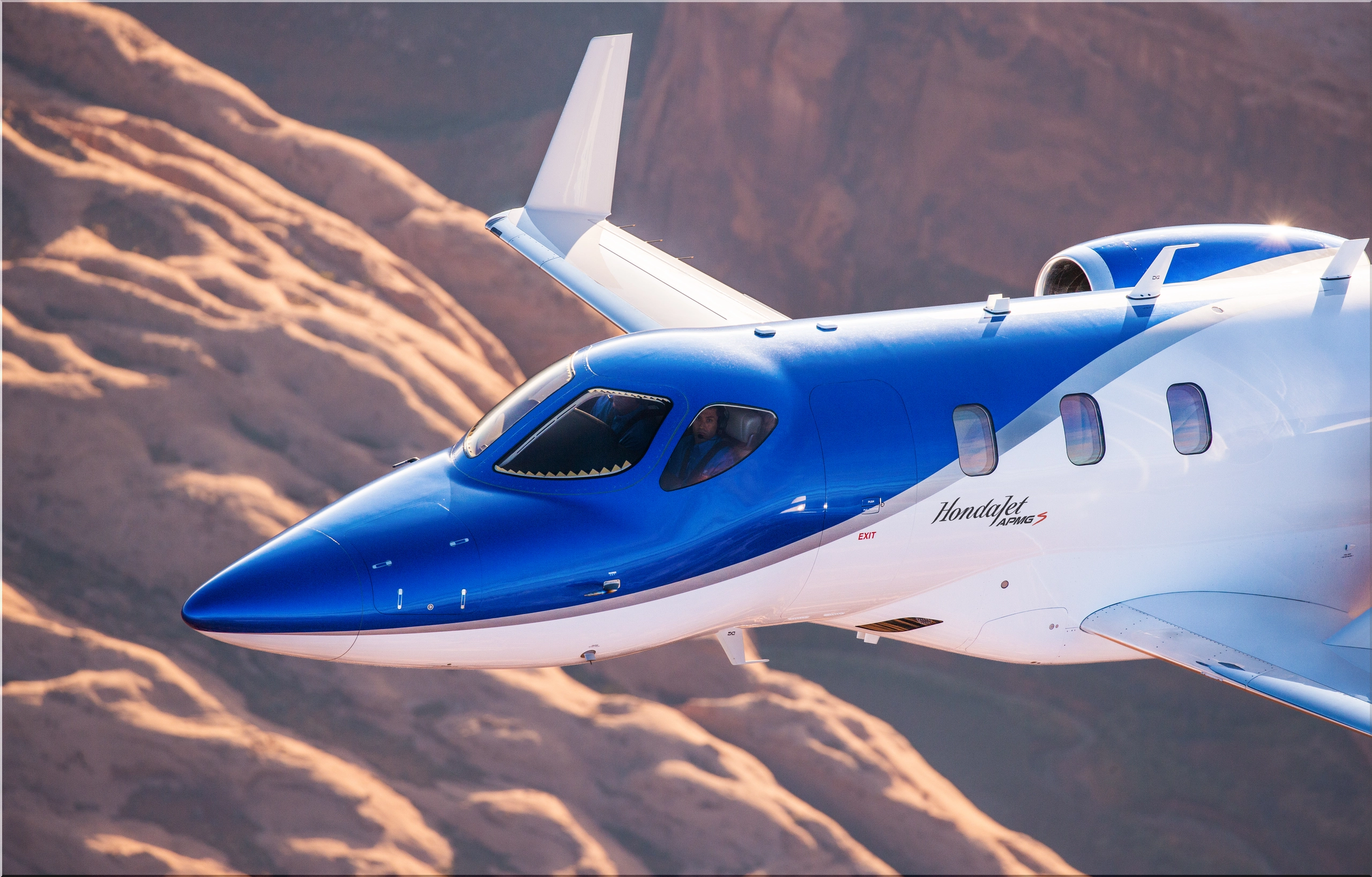
Honda Aircraft Company made a calculated move to extend the usable life of its light jet fleet. The new HondaJet APMG S upgrade targets owners of early HondaJet Classic and APMG aircraft who want modern capability without replacing the airframe.
The package pulls proven systems from later models and applies them where they matter most: avionics speed, handling precision, and payload flexibility. This approach protects asset value and tightens the gap between older aircraft and current production jets.
What the HondaJet APMG S Upgrade Delivers
The APMG S program focuses on operational gains rather than cosmetic changes. Honda designed the package to address real owner concerns tied to dispatch reliability, pilot workload, and mission planning.
Core objectives include:
- Extending fleet relevance
- Improving real-world performance
- Supporting future avionics expansion
Honda already applied the upgrade to several pre-owned aircraft offered through its own sales channels. That move signals confidence in both demand and long-term support.
Avionics: Faster Processing and Forward Compatibility
Avionics sit at the center of the APMG S upgrade. Honda replaces legacy hardware and software with systems derived from newer HondaJet variants.
Pilots gain:
- Faster processing speeds
- Quicker system response
- Improved integration across displays
These upgrades reduce cockpit friction during high-workload phases like departure and arrival. They also create headroom for future software enhancements, which matters as airspace complexity increases.
Graphical Weight and Balance
The upgrade adds Graphical Weight and Balance, a tool that simplifies preflight calculations. Pilots enter payload and fuel values. The system displays takeoff and landing weights in a clear visual format.
Operational benefits include:
- Faster dispatch decisions
- Fewer planning errors
- Clear margins before brake release
Owner-flown missions benefit the most from this feature.
Advanced Steering Augmentation System Improves Control
One of the most meaningful additions involves the Advanced Steering Augmentation System. Honda previously limited this system to newer aircraft.
With APMG S, earlier jets gain:
- Improved directional control during takeoff and landing
- Expanded crosswind capability
- More predictable ground handling
These gains affect daily operations. Better handling translates into fewer weather-related delays and higher dispatch confidence.
300-Pound MTOW Increase Changes Mission Planning
The APMG S upgrade increases Maximum Takeoff Weight by 300 pounds compared to unmodified early HondaJets. That figure carries immediate operational impact.
Added MTOW supports:
- Higher usable payload
- Greater fuel flexibility
- Expanded range options
Owners no longer face the same tradeoffs between passengers, baggage, and fuel. This change alone reshapes how many missions pencil out.
Practical Use Cases
With the added MTOW, operators can:
- Carry full fuel with additional baggage
- Maintain reserves without offloading passengers
- Fly longer legs under standard conditions
These improvements directly affect trip efficiency and resale appeal.
Installation Network and Certification Status
The Federal Aviation Administration has approved the APMG S upgrade for U.S.-registered aircraft. Additional certifications for international markets are planned.
Honda performs installations through:
- The Greensboro Service Center
- A global network of 21 Authorized Service Centers
This distribution limits downtime and allows owners to combine the upgrade with scheduled maintenance events.
Interior Refurbishment Options Add Market Appeal
Honda offers optional interior updates during the APMG S installation window. Owners can refresh cabin materials and finishes while the aircraft is already down.
Benefits include:
- Reduced total downtime
- Lower combined labor cost
- Stronger resale positioning
Cabin condition often shapes first impressions in the pre-owned market. Honda clearly accounts for that reality.
Effect on the Pre-Owned HondaJet Market
Early HondaJets often face pricing pressure as newer variants enter service. Capability gaps accelerate depreciation, even when airframes remain sound.
The APMG S program narrows those gaps.
Market impact includes:
- Improved buyer confidence
- Slower depreciation curves
- Better alignment across model years
Honda placing upgraded aircraft into its own pre-owned inventory reinforces this strategy.
How the APMG S Fits Honda's Broader Strategy
Honda Aircraft Company has built its brand on incremental refinement. The APMG S upgrade reflects that mindset.
Rather than forcing owners into new purchases, Honda updates existing assets. This approach builds loyalty and stabilizes fleet value as the company develops future programs like the HondaJet Echelon.
Long-term support drives credibility in aviation. Honda continues to invest accordingly.


Who Should Consider the APMG S Upgrade
The APMG S package targets owners who:
- Operate HondaJet Classic or APMG aircraft
- Want Elite S-level handling and avionics
- Plan to retain or resell in a competitive market
Operators flying in variable weather or payload-sensitive missions will see the strongest returns.
Decision Checklist
Before committing, owners should review:
- Typical mission length and payload
- Crosswind exposure at home bases
- Remaining ownership timeline
- Current pre-owned market trends
For many operators, upgrading offers a better cost equation than replacing the aircraft.
What Now: Actionable Next Steps
Owners interested in the HondaJet APMG S upgrade should move with a defined plan.
Next actions:
- Contact an Authorized Service Center for scheduling
- Align installation with planned maintenance
- Evaluate interior update options
- Assess resale impact using current market data
The APMG S program gives early HondaJet owners a direct path to modern performance while keeping acquisition costs in check. That result fits how serious operators manage aircraft assets.
- Add new comment
- 96 views