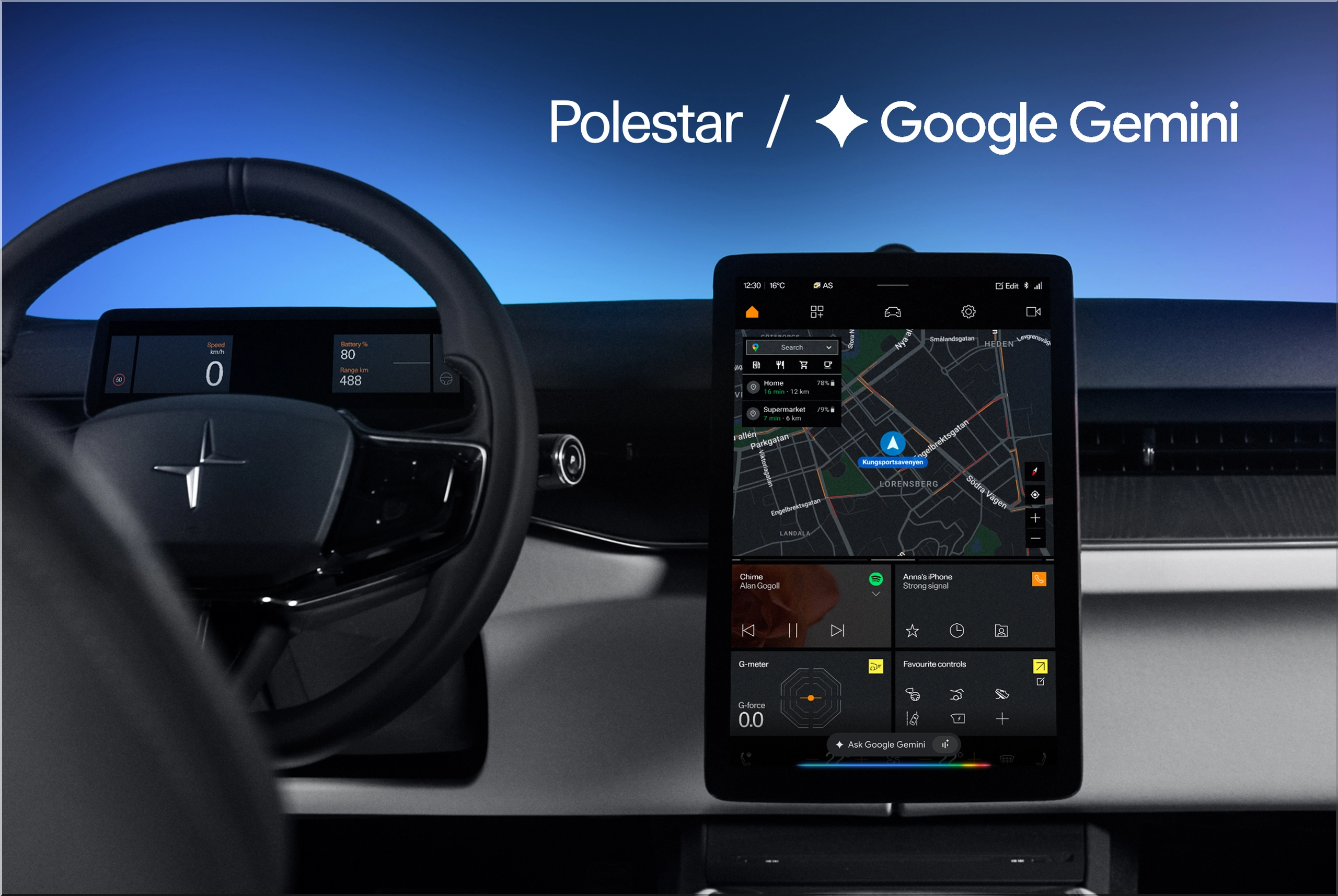
Google Gemini x Polestar Driving Experience
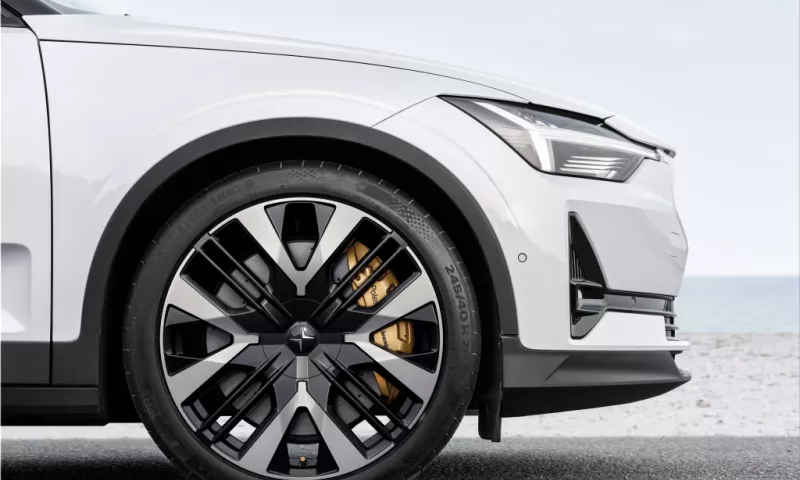
Polestar plans to integrate Google Gemini across all current models, starting with the Polestar 2. The rollout follows a public demo in the Polestar 5 at the Slush tech event in Helsinki. The company wants to widen the role of AI voice control in daily driving. The move supports Polestar’s focus on software-driven features that shorten task time and reduce driver workload.
Gemini replaces Google Assistant. The new system builds on generative AI. Drivers can start longer conversations, ask follow-up questions, or request guidance on tasks that previously needed manual effort. A simple prompt—“Hey Google, let’s talk”—activates Gemini Live, allowing open-ended voice interaction.
Polestar says the update will reach drivers in 2026. It launches first in US English, with expanded languages planned later.
Why Polestar Needs a Smarter Voice Assistant
The EV market keeps moving toward software value, not hardware upgrades. Fast voice control matters when a driver wants quick answers with minimal distraction. Polestar claims Gemini raises performance in three categories:
- Faster request handling
- More accurate responses
- Expanded task scope
The AI engine processes context. That creates shorter response loops. A driver can ask for route changes, charging data, or traffic updates in one conversation rather than repeating command phrases.
Key Features Coming With Google Gemini
Gemini adds features that go far beyond earlier voice systems. Polestar confirmed the following capabilities in its release:
Expanded Voice Commands
Drivers gain access to conversational prompts. Tasks now extend to:
- Multi-step navigation
- Charging-station comparisons
- Basic knowledge queries
- Long-form question sessions
Gemini Live
The Gemini Live mode supports brainstorming. Drivers can ask about trip planning, energy use, or learning topics during a commute. The system keeps context across questions, which cuts the need to restate details.
Replacement of Google Assistant
Google Assistant will phase out. Every current Polestar model will move to Gemini through a software update. This shift positions Polestar closer to Google’s latest automotive software program.
What Drivers Should Expect in 2026
Polestar plans a full release through a Google update. Owners with active data plans can download the new assistant once available. The company did not list a subscription price. Based on similar services, optional connectivity features in the industry range from $10 to $25 USD per month. That gives buyers a baseline for long-term cost planning.
A table summarizing Polestar’s upcoming AI features:
| Feature | Benefit | Driver Impact |
|---|---|---|
| Google Gemini | Upgraded AI voice system | Faster task handling |
| Gemini Live | Conversational mode | Longer sessions without repetition |
| Context memory | Tracks follow-up questions | Fewer manual inputs |
| Navigation support | Multi-step routing | Reduced screen interaction |
| Charging info | Real-time comparisons | Better stop planning |
Why This Move Helps Polestar Stay Competitive
Polestar faces heavy pressure from rivals that use advanced in-car AI. The company needs stronger voice-driven interfaces to stay aligned with expectations from EV buyers. Drivers expect quick updates, accurate range data, and hands-free convenience. Gemini helps close that gap.
The upgrade also supports Polestar’s larger goals. The brand wants to double down on connected-car services, create new revenue streams, and keep drivers inside its ecosystem. Digital features now play a measurable role in customer retention.
What the Slush Demo Reveals
The public preview in the Polestar 5 gives early signals about user experience. Attendees interacted with Gemini in real time, testing conversation flow and latency. Reports from analysts at the event point to smoother response speed than older systems.
Google’s product team says the collaboration with Polestar reflects years of work in the connected-car segment. The two companies want roadside tasks to rely more on voice and less on screens.
Market Impact
By pushing AI voice control across the lineup, Polestar sets a uniform standard. Buyers do not need to step up to a higher trim to access the software. That simplifies the sales pitch and strengthens the message that every Polestar comes with advanced digital tools out of the box.
Competitors such as Tesla, BMW, and Mercedes use their own AI systems. Polestar’s strategy hinges on using Google’s cloud tools rather than building a separate platform. That approach shortens development cycles and keeps updates frequent.
What Owners Should Do Next
The update arrives in 2026. Until then, drivers can prepare by:
- Updating software to the latest version
- Activating a data plan with adequate bandwidth
- Checking in-car settings for Google account access
- Monitoring Polestar announcements for release timing
Bottom Line
Polestar plans to push Google Gemini into every model starting next year. The upgrade gives drivers a faster, more capable AI voice assistant that cuts frustration and speeds up everyday tasks. As EV buyers demand stronger software features, Polestar positions itself to meet those expectations while reinforcing its technology-first identity.
- Add new comment
- 142 views