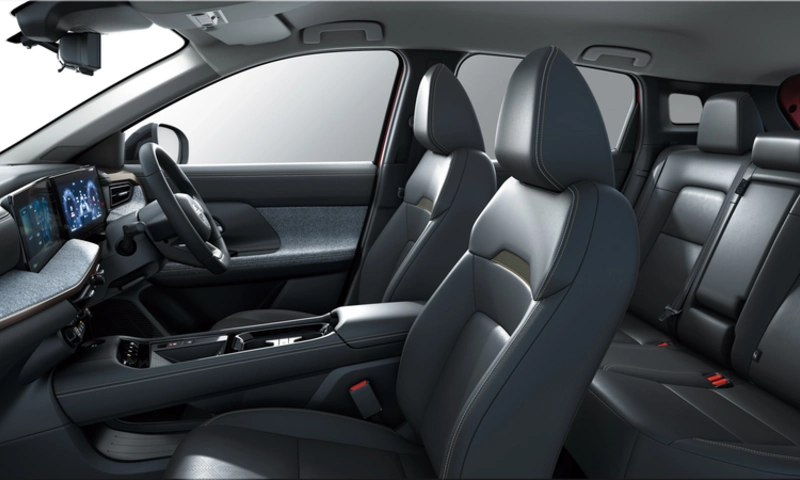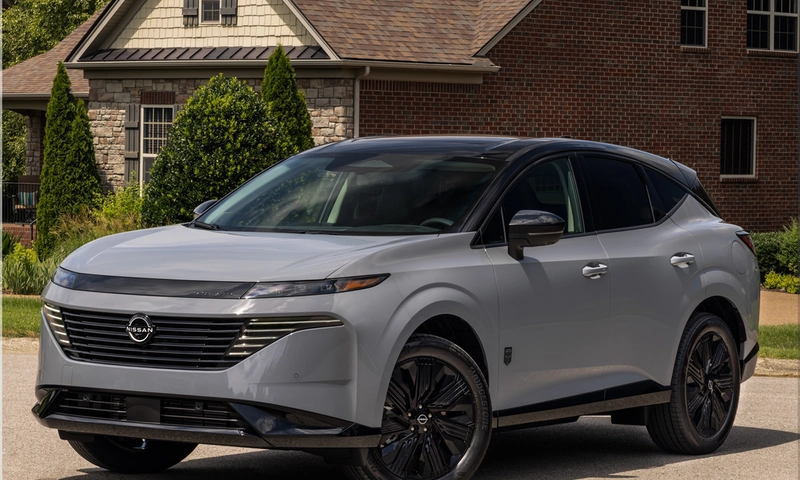
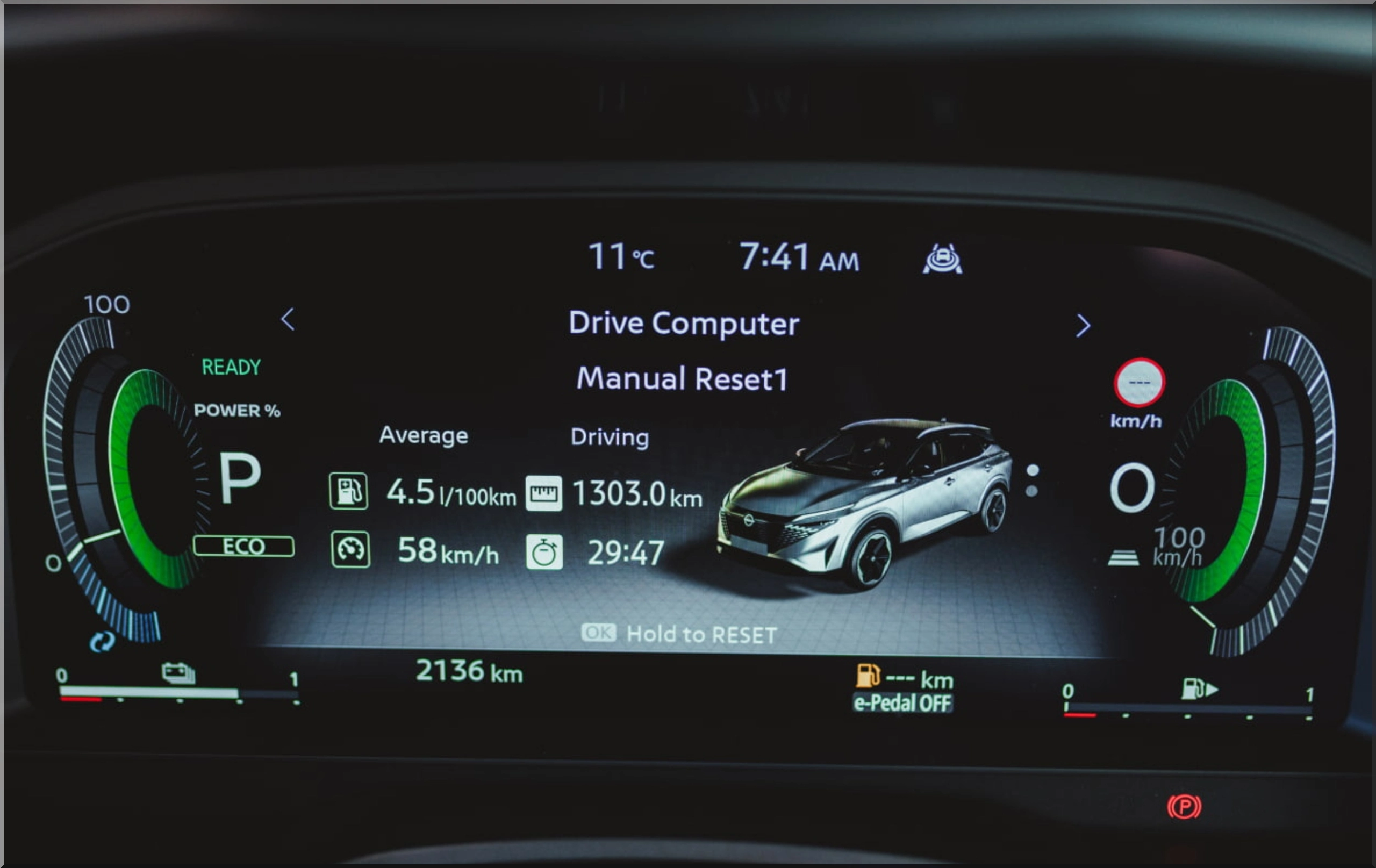
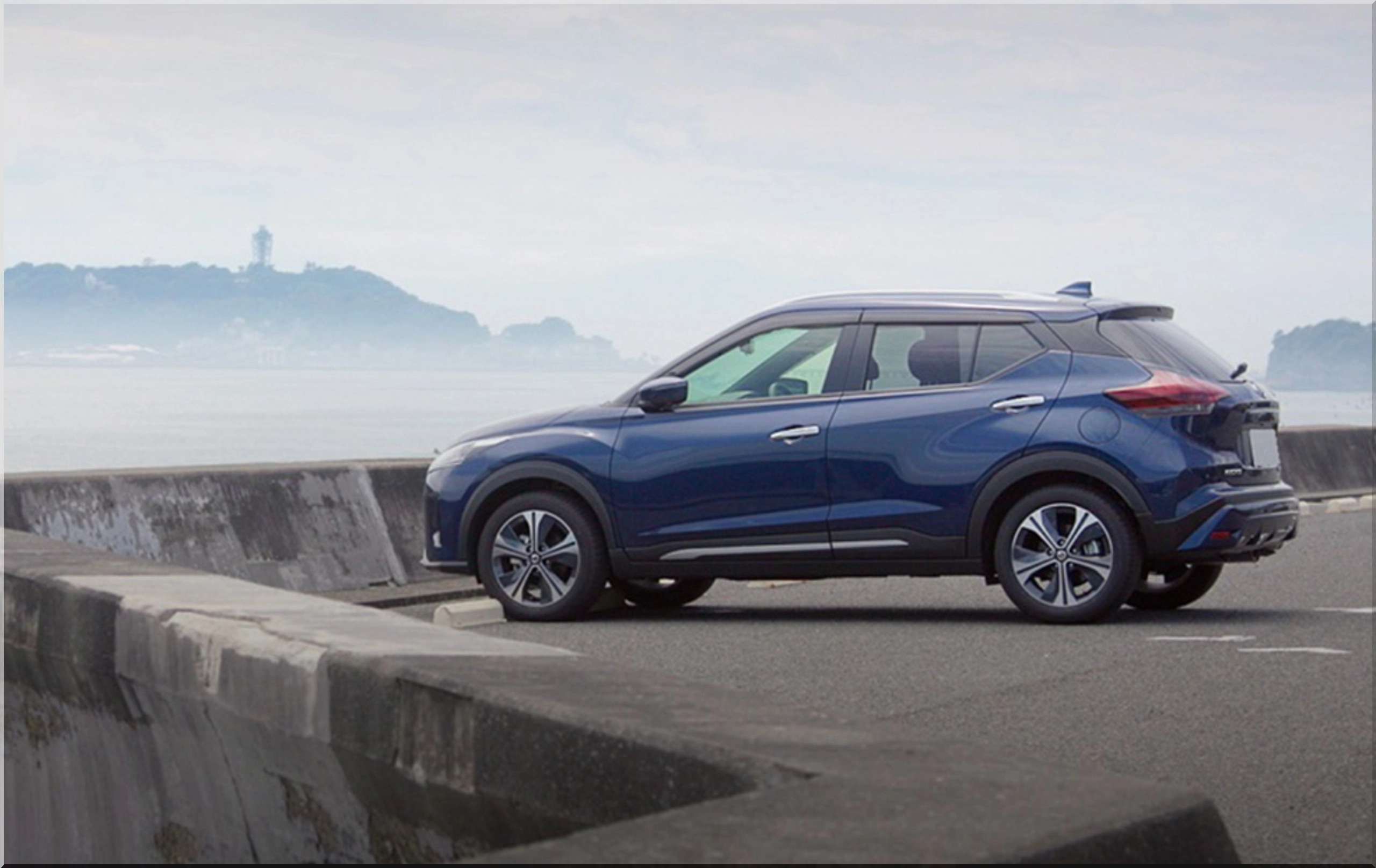
The Nissan Qashqai e-POWER makes a blunt case for the hybrid buyer who likes electric drive but hates charging stops. In Tasmania, a new Qashqai equipped with Nissan e-POWER technology covered more than 1,300 km, or roughly 808 miles, on a single tank of gasoline while averaging 4.5 L/100 km, equal to about 52 mpg US. That run did not happen on a closed test loop. Nissan sent the crossover across steep climbs, coastal roads, and highway stretches, which makes the result far more useful than a lab figure.
For American drivers, the timing counts. Nissan plans to bring third-generation e-POWER to North America in the next-generation Rogue during FY26, which gives the brand a serious answer to the Toyota RAV4 Hybrid and Honda CR-V Hybrid crowd. The pitch sounds simple: gasoline goes in, electric power drives the wheels, and no charging cable enters the picture.
How Nissan e-POWER Works
Nissan e-POWER uses a series-hybrid layout. The gasoline engine does not drive the wheels directly. Instead, it generates electricity for the battery and motor, while the electric motor handles propulsion every time the vehicle moves.
That setup changes the driving feel. A normal hybrid can split work between the engine and electric motor, often through a transmission or power-split device. e-POWER keeps the wheel-drive job electric, so throttle response feels closer to a battery EV.
| System Type | What Drives the Wheels | Charging Requirement | Driver Feel |
|---|---|---|---|
| Nissan e-POWER | Electric motor only | No plug needed | EV-like torque, gasoline range |
| Conventional hybrid | Gas engine, electric motor, or both | No plug needed | Mixed gas-electric feel |
| Plug-in hybrid | Electric motor and gas engine | Plug needed for full value | EV use for short trips |
| Battery EV | Electric motor only | Plug required | Pure electric drive |
In addition, regenerative braking sends deceleration energy back into the battery. That helps on hilly roads, where downhill stretches can recover energy that a conventional gasoline vehicle burns away as heat through its brakes.
The Tasmania Result In Real Numbers
Looking at the data, the Tasmania run shows the core advantage of Nissan Qashqai e-POWER efficiency: long range without charging downtime. A 55-liter tank equals about 14.5 US gallons. At the observed 4.5 L/100 km pace, the Qashqai produced an endurance figure that many compact SUVs can only approach with a much larger tank.
| Data Point | Nissan Qashqai e-POWER Figure | US-Friendly Conversion |
|---|---|---|
| Tasmania range | Over 1,300 km | Over 808 miles |
| Average fuel use | 4.5 L/100 km | About 52 mpg US |
| Fuel tank | 55 liters | About 14.5 gallons |
| Claimed Australian range | Up to 1,341 km | About 833 miles |
| Combined consumption | 4.1 L/100 km | About 57 mpg US |
| CO2 output | 92 g/km | Low for a compact crossover |
That last figure needs context. The Australian spec sheet lists 3.8 L/100 km city, 4.3 L/100 km highway, and 4.1 L/100 km combined for the current Qashqai e-POWER. City efficiency looks strong because electric drive and regeneration work hardest in stop-and-go use.
Third-Generation e-POWER Brings The Engineering Payoff
Specifically, Nissan's newest system uses a 5-in-1 modular powertrain unit that packages the motor, generator, inverter, reducer, and increaser into a tighter assembly. That saves space, cuts vibration, and reduces energy losses. Nissan also uses a flat-wire motor coil to push more current through a compact motor design, while the inverter gains double-sided cooling to improve high-speed efficiency.
The engine side also received serious work. The 1.5-liter turbocharged three-cylinder generator engine now uses Nissan's STARC combustion concept, which stabilizes combustion through stronger in-cylinder airflow and a more controlled spark area. In plain English, the engine can run in a narrower, more efficient operating zone because it does not need to chase wheel speed like a normal drivetrain.
| Hardware Detail | Figure Or Function | Why It Helps |
|---|---|---|
| Engine | 1.5-liter turbo 3-cylinder | Generates electricity, not direct wheel power |
| Motor output | 140 kW standard, 151 kW in Sport | About 188 hp to 202 hp |
| Torque | 311 Nm from 0-3,600 rpm | About 229 lb-ft from launch |
| Battery | 2.1 kWh | Buffers power and regeneration |
| 0-100 km/h | 7.9 seconds, 7.6 seconds in Sport | Quick compact-SUV response |
| Top speed | 170 km/h | About 106 mph |
Consequently, the Qashqai e-POWER does not need a conventional multi-gear automatic. It uses a reduction-drive setup, which fits the EV-like character and removes shift behavior from everyday acceleration.

Why This Helps Drivers
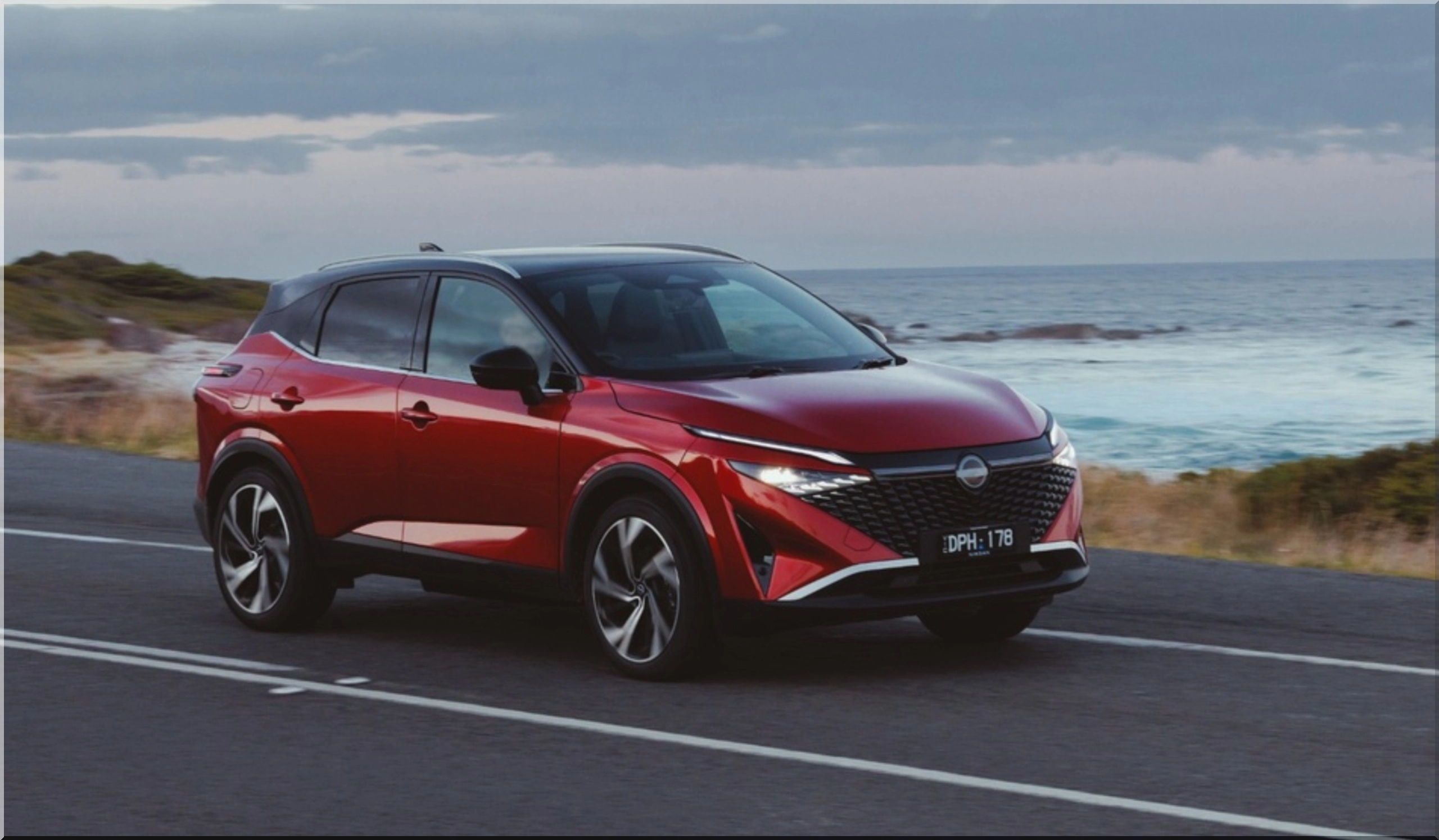
The Nissan Qashqai e-POWER formula fits buyers who want fewer stops, strong low-speed response, and less charging anxiety. It will not replace a full EV for drivers who can charge cheaply at home. It will make far more sense for apartment dwellers, road-trippers, and suburban families who want hybrid fuel savings without planning every stop around a plug.
Key buyer wins include:
- Electric-motor acceleration without home charging.
- Long gasoline range for highway travel.
- Lower brake wear potential through regenerative braking.
- Quiet low-speed driving because the engine can stay off or run as needed.
- Compact SUV practicality with a 2,665 mm wheelbase, about 104.9 inches.
From an expert perspective, e-POWER works best when Nissan controls the engine as a generator rather than asking it to behave like a normal propulsion engine. That engineering choice lets the motor deliver the torque curve drivers feel, while the gasoline unit focuses on efficient electricity production.
Pro-Tip: Should US Buyers Wait For Nissan e-POWER?
Wait for the Nissan Rogue e-POWER if you want hybrid fuel economy but dislike plug-in charging. The coming Rogue version should suit long commutes, family road trips, and mixed city-highway driving better than a gas-only compact SUV. By comparison, a plug-in hybrid still makes more sense if your daily driving stays under its electric range and you can charge overnight.
Do not buy e-POWER expecting pure EV running with a big battery. Buy it for the opposite reason: it gives you electric motor drive while keeping gasoline refueling fast and familiar. That tradeoff looks very American.
- Add new comment
- 84 views