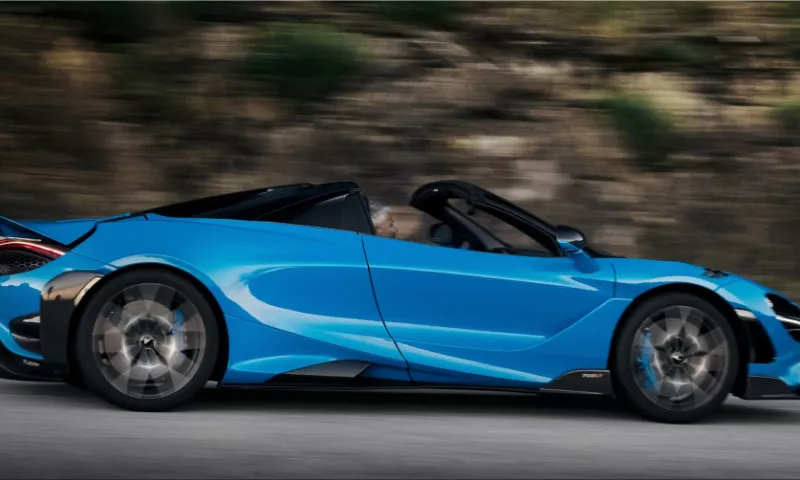
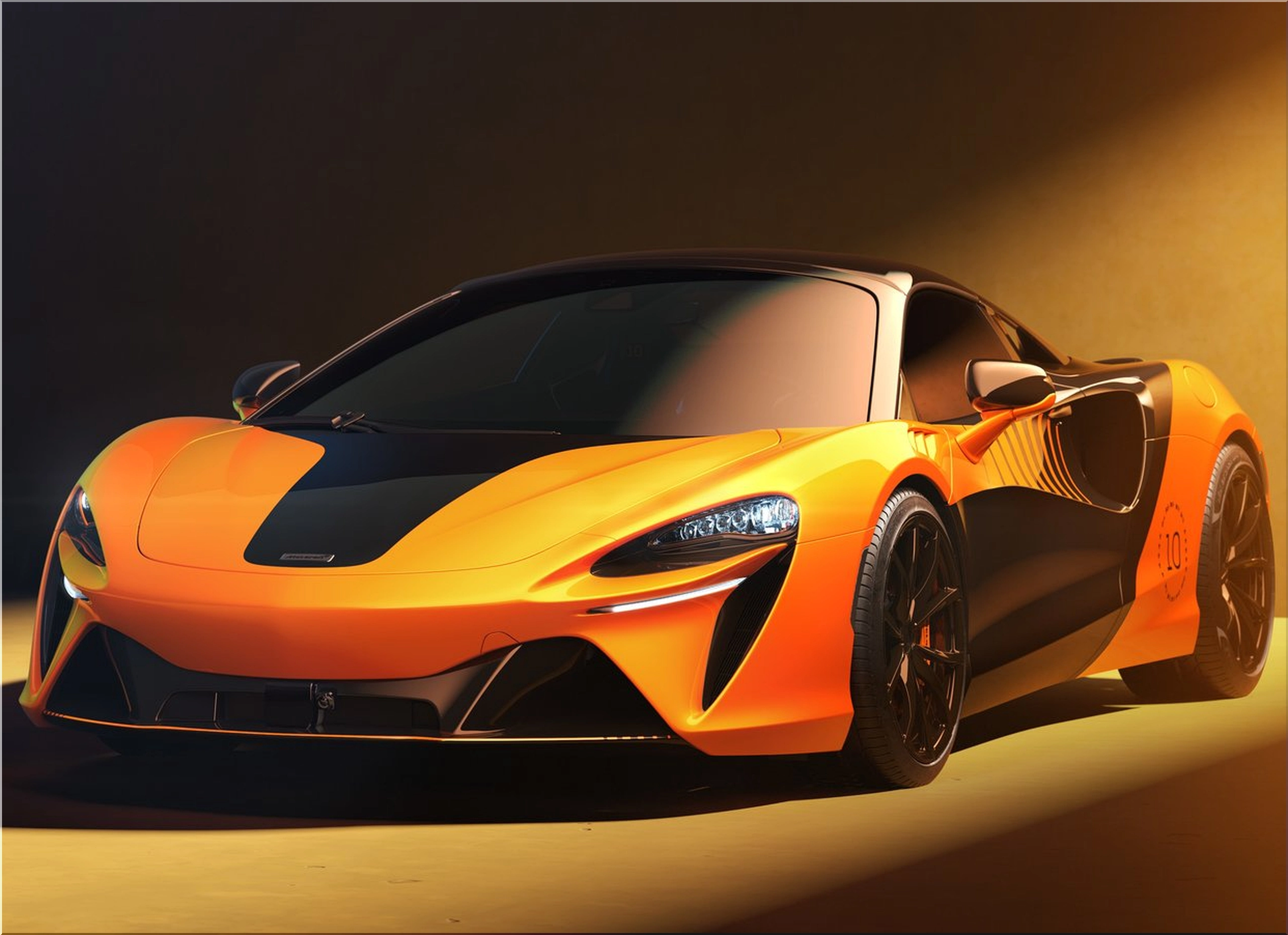
The McLaren Artura Spider MCL39 Championship Edition represents a technical milestone for the Woking-based manufacturer. This production run consists of ten units globally to mark the 10th Formula 1 World Constructors Championship title secured in 2025. This vehicle utilizes the high-performance hybrid (HPH) powertrain to deliver immediate torque and sustained top-end power.
McLaren Automotive developed this specific edition through McLaren Special Operations (MSO) to integrate racing history with road-going performance. The vehicle honors the McLaren MCL39 race car, which dominated the 2025 season with twelve victories in the first fifteen rounds. Lando Norris also secured his first World Drivers Championship in the same machinery, providing the impetus for this commemorative project.
The engineering focus centers on power-to-weight efficiency and aerodynamic stability. By utilizing the Carbon Fibre Monocage II-S, engineers achieved a dry weight of approximately 3,219 pounds (1,460 kg). This structural rigidity supports the retractable hardtop mechanism without compromising the chassis integrity required for high-speed cornering.
Twin-Turbocharged V6 Powertrain Mechanics
The core of the McLaren Artura Spider MCL39 Championship Edition is the M630 3.0-liter twin-turbocharged V6 engine. This internal combustion unit features a 120-degree V-angle, which allows the turbochargers to sit within the hot vee for better thermal efficiency. This configuration also lowers the center of gravity of the vehicle to improve lateral stability during high-speed transitions.
The engine produces 597 horsepower and 431 lb-ft of torque on its own. When combined with the axial flux E-motor, the total system output reaches 690 horsepower (700 PS) and 531 lb-ft of torque. The electric motor provides instant torque filling, which mitigates turbo lag at low engine speeds.
The axial flux E-motor weighs only 34 pounds (15.5 kg) yet generates significant power density. It integrates directly into the transmission housing to reduce mechanical complexity and weight. This motor allows for an electric-only range of approximately 19 miles (31 km) for silent operation in urban environments.
Hybrid Battery and Energy Management
A 7.4 kWh lithium-ion battery pack provides the energy for the hybrid system. McLaren positioned the battery low in the chassis behind the fuel tank to optimize weight distribution. The cooling system uses refrigerant to maintain optimal operating temperatures for the cells, which extends the life of the battery and ensures consistent performance.
The 8-speed SSG transmission does not contain a mechanical reverse gear. Instead, the axial flux E-motor handles all reversing duties by spinning in the opposite direction. This design choice saved several pounds of weight and shortened the physical length of the gearbox.
Technical Specification Overview
| Component | Measurement / Specification |
|---|---|
| Engine Type | 3.0L V6 Twin-Turbo (120-degree V) |
| Total Horsepower | 690 hp (700 PS) |
| Total Torque | 531 lb-ft (720 Nm) |
| 0-60 MPH | 3.0 Seconds |
| Top Speed | 205 MPH (330 km/h) |
| Dry Weight | 3,219 lbs (1,460 kg) |
| Battery Capacity | 7.4 kWh |
| Transmission | 8-Speed Seamless Shift Gearbox (SSG) |
Aerodynamic Profile and Exterior Modifications
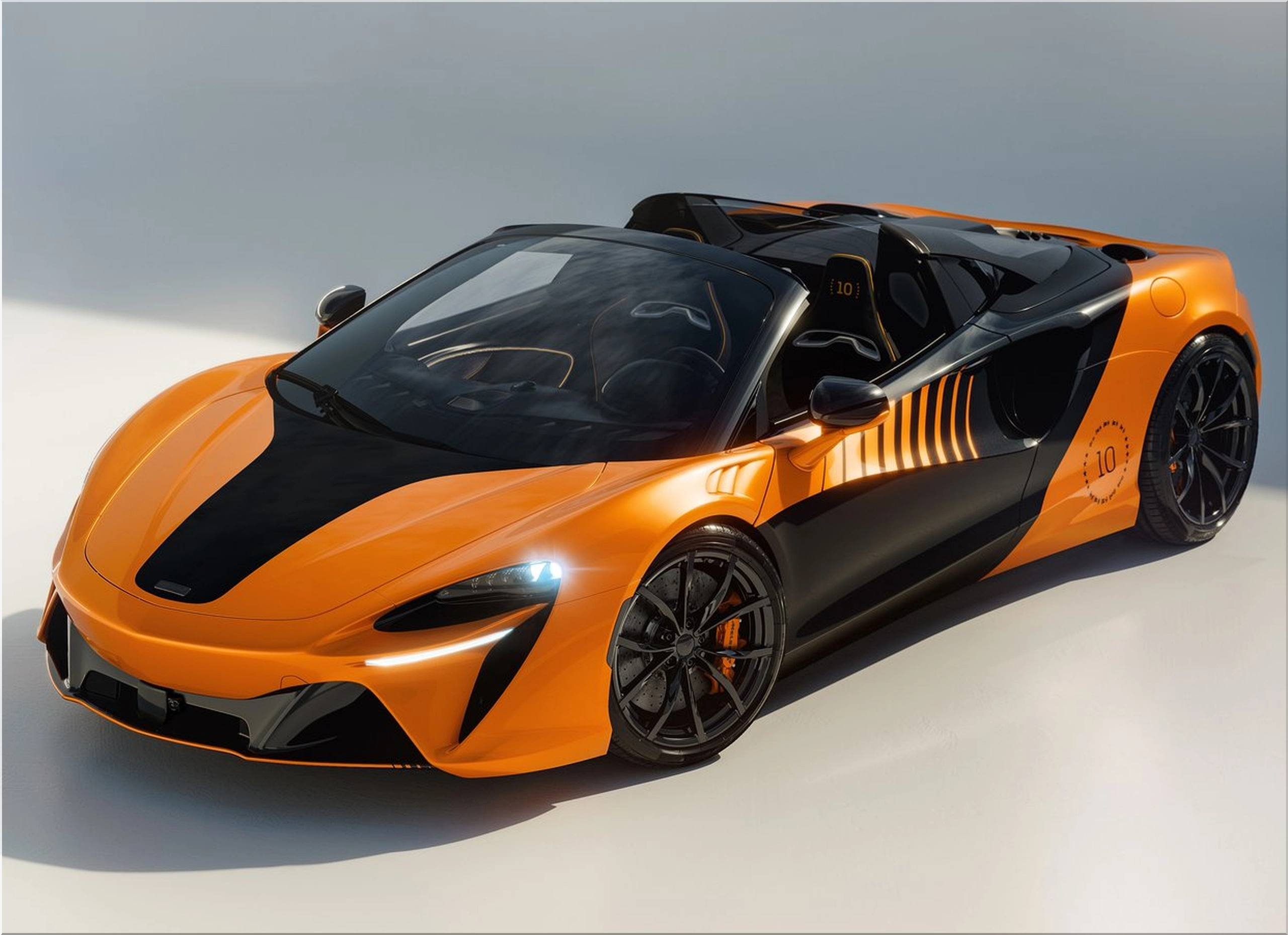
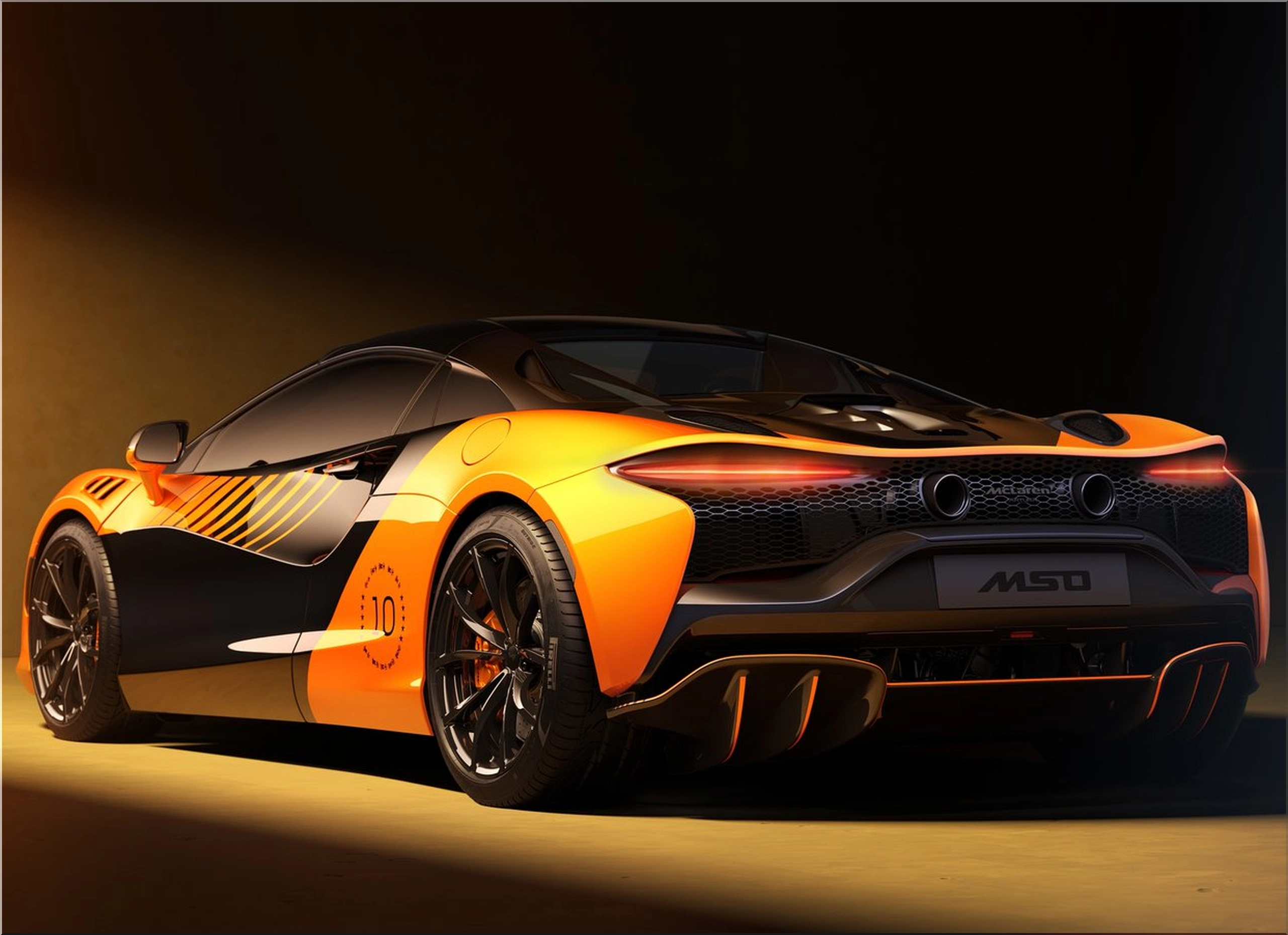
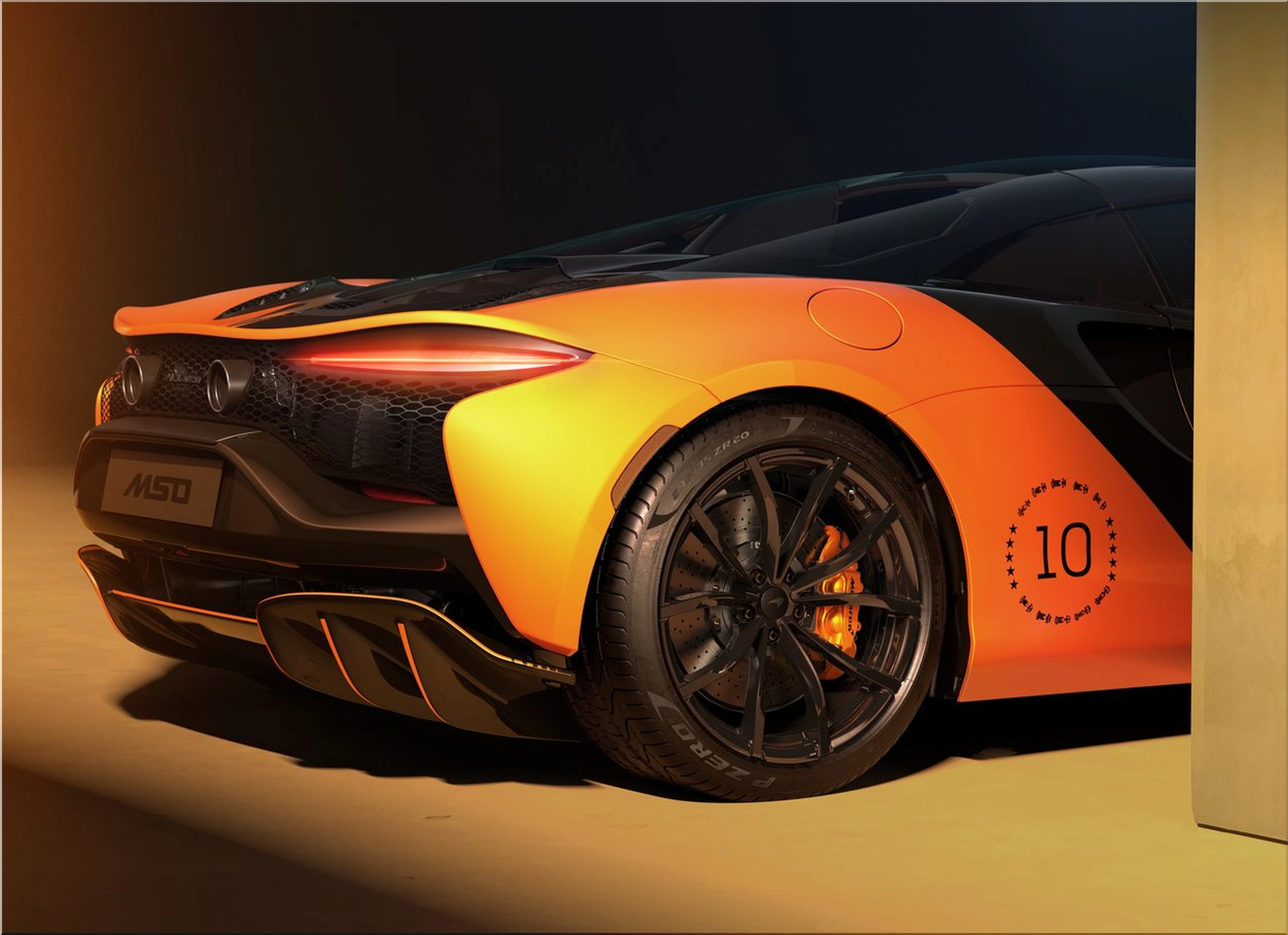
The exterior of the McLaren Artura Spider MCL39 Championship Edition features a custom-painted livery. MSO technicians applied Myan Orange and Onyx Black to mirror the 2025 Formula 1 livery. The paint application process requires hundreds of hours to achieve the gradient transition seen on the front fenders and side intakes.
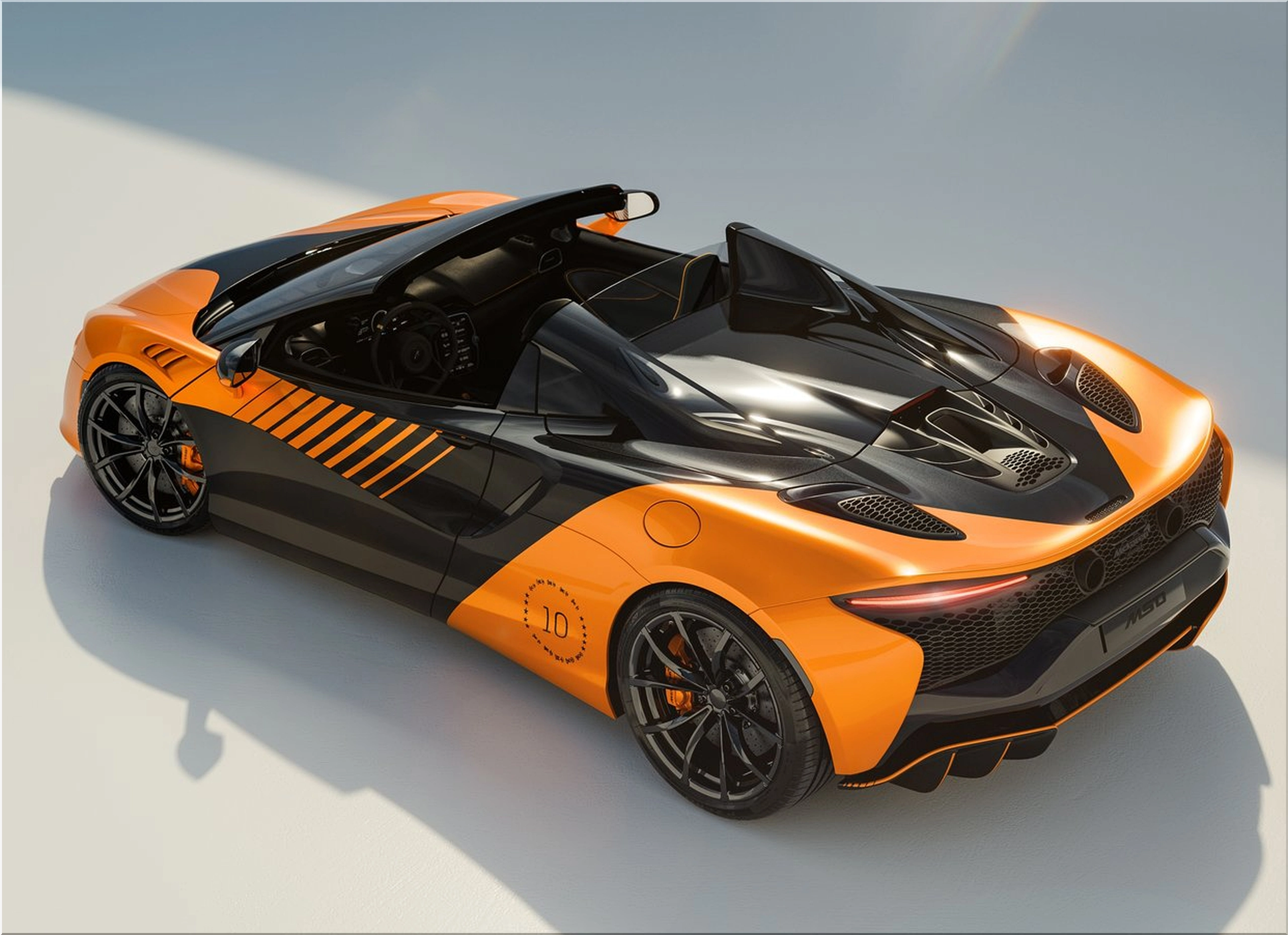
Specific aerodynamic elements include the rear buttresses, which direct airflow toward the engine cover to assist with cooling. The Stealth Badge Pack replaces standard chrome finishes with dark-tinted alternatives. In addition, the Sports Exhaust with a Stealth Exhaust Finisher provides a more aggressive auditory profile compared to the standard Artura.
The retractable hardtop (RHT) operates in 11 seconds at speeds up to 31 mph (50 km/h). This carbon fiber and composite panel stows away without obstructing the cooling vents for the hybrid powertrain. McLaren engineers designed the RHT to maintain the same drag coefficient as the coupe variant when the roof is closed.
Pro-Tip: Owners should verify that the retractable hardtop seals are free of debris to maintain the aerodynamic seal at speeds exceeding 150 mph.
Chassis and Suspension Geometry
The McLaren Artura Spider MCL39 Championship Edition uses Proactive Damping Control to manage road surfaces. Sensors monitor the road every millisecond to adjust the damping rates of the shocks. This system allows the driver to choose between Comfort, Sport, and Track modes depending on the environment.
The rear suspension architecture uses a multi-link system that separates lateral and longitudinal stiffness. This separation improves traction when exiting corners and provides better stability under heavy braking. The electronic differential (E-diff) manages torque distribution between the rear wheels to minimize understeer.
Braking performance relies on carbon-ceramic discs and lightweight aluminum calipers. The front 6-piston calipers grip 15.4-inch (390 mm) discs, while the rear 4-piston calipers use 15.0-inch (380 mm) discs. These components provide the stopping power necessary to decelerate from 124 mph (200 km/h) to a standstill in just 354 feet (108 meters).
Interior Customization and Driver Interface
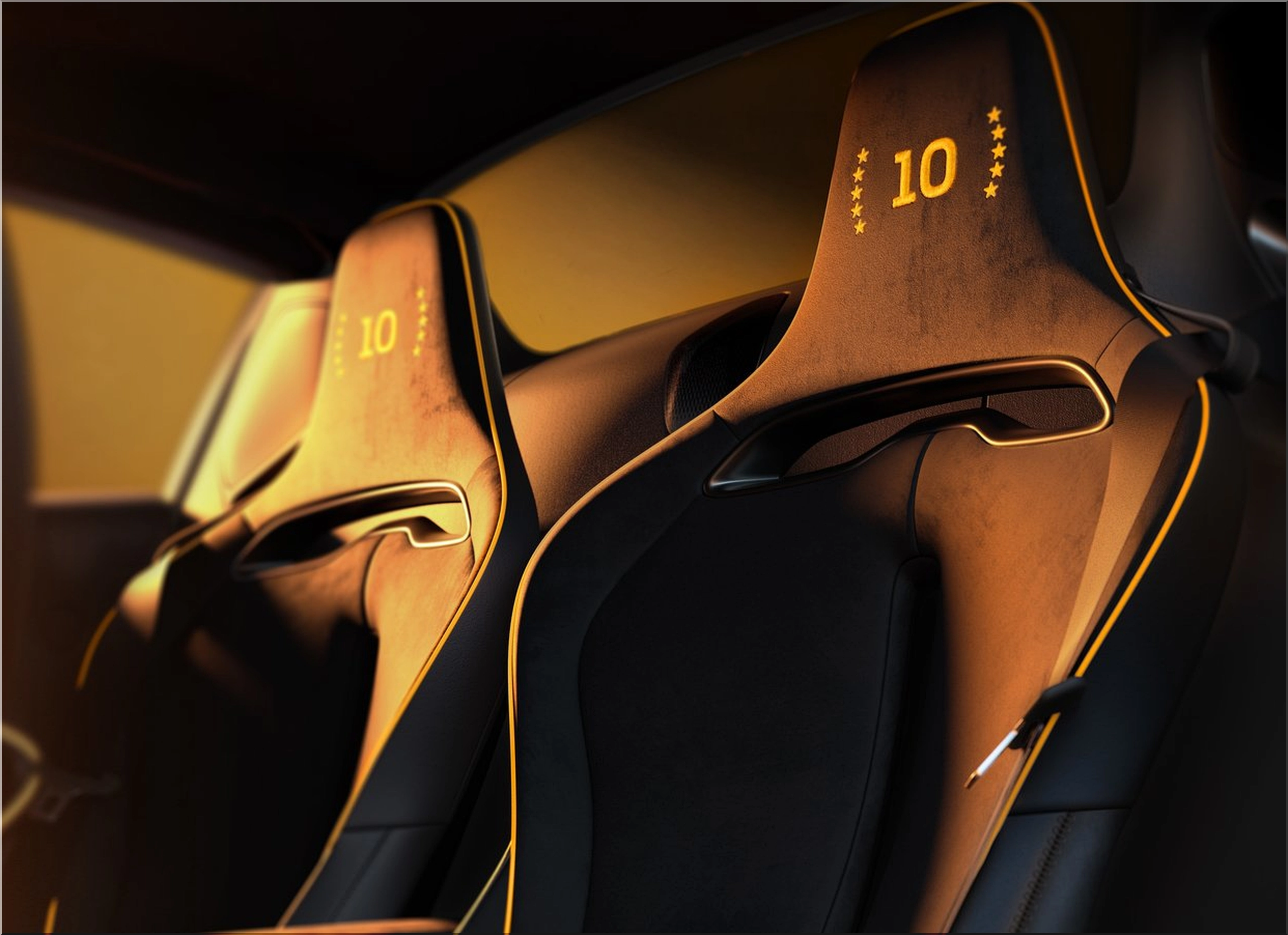
Inside the cabin, the McLaren Artura Spider MCL39 Championship Edition features Performance Carbon Black Alcantara. Jet Black Nappa Leather provides a durable surface for high-wear areas like the seat bolsters. MSO technicians added McLaren Vision Orange piping to the seats to coordinate with the exterior livery.
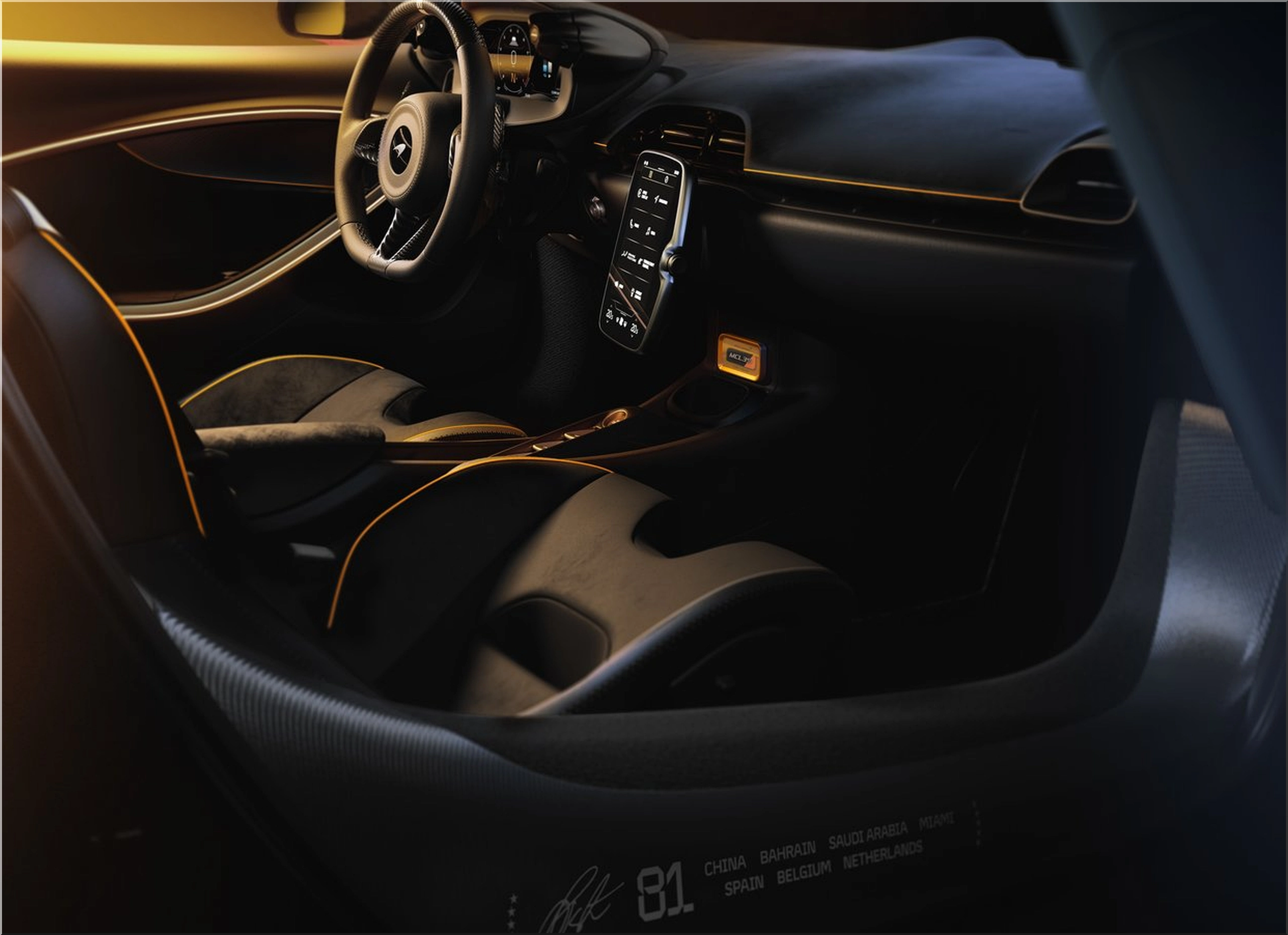
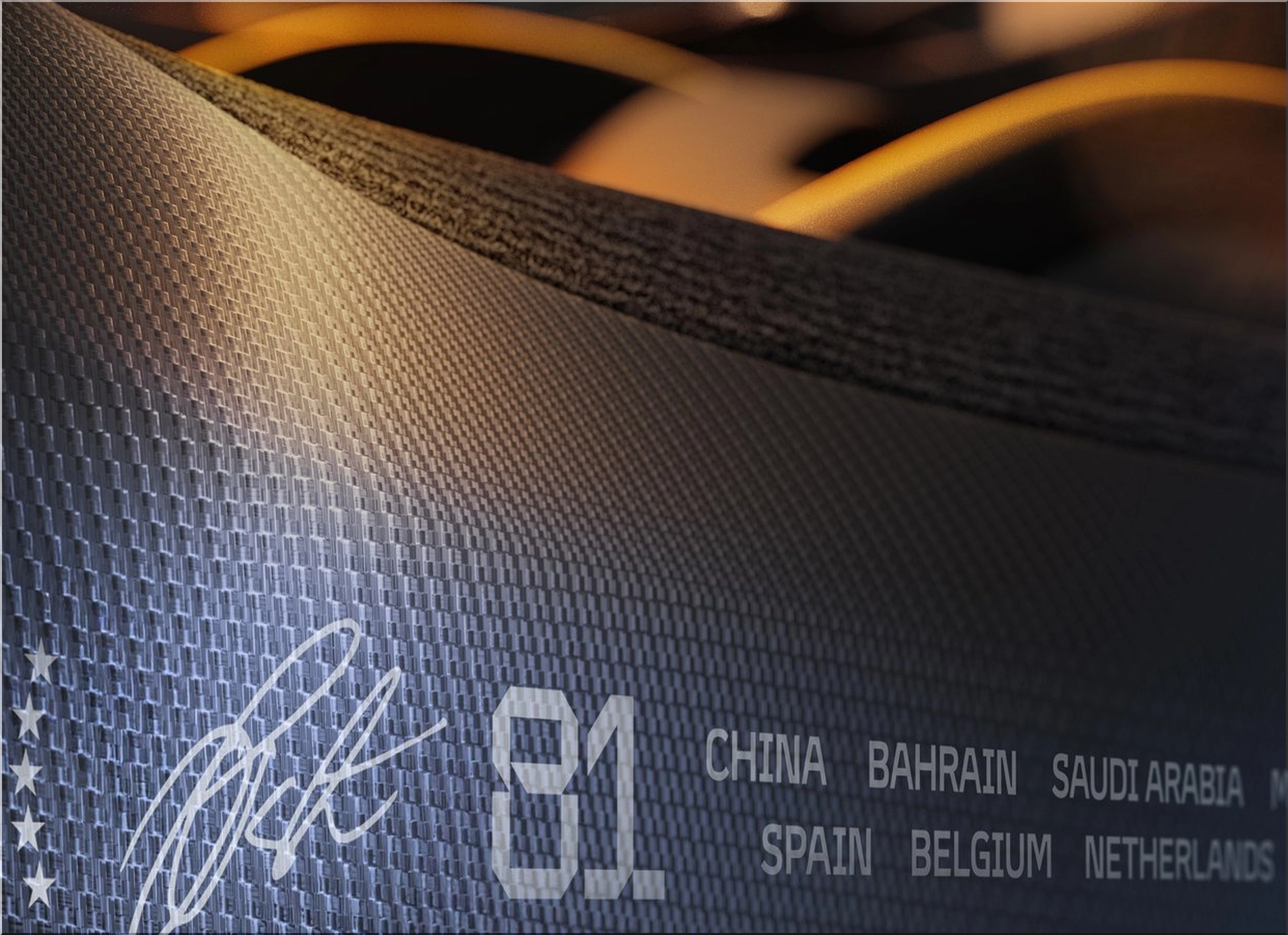
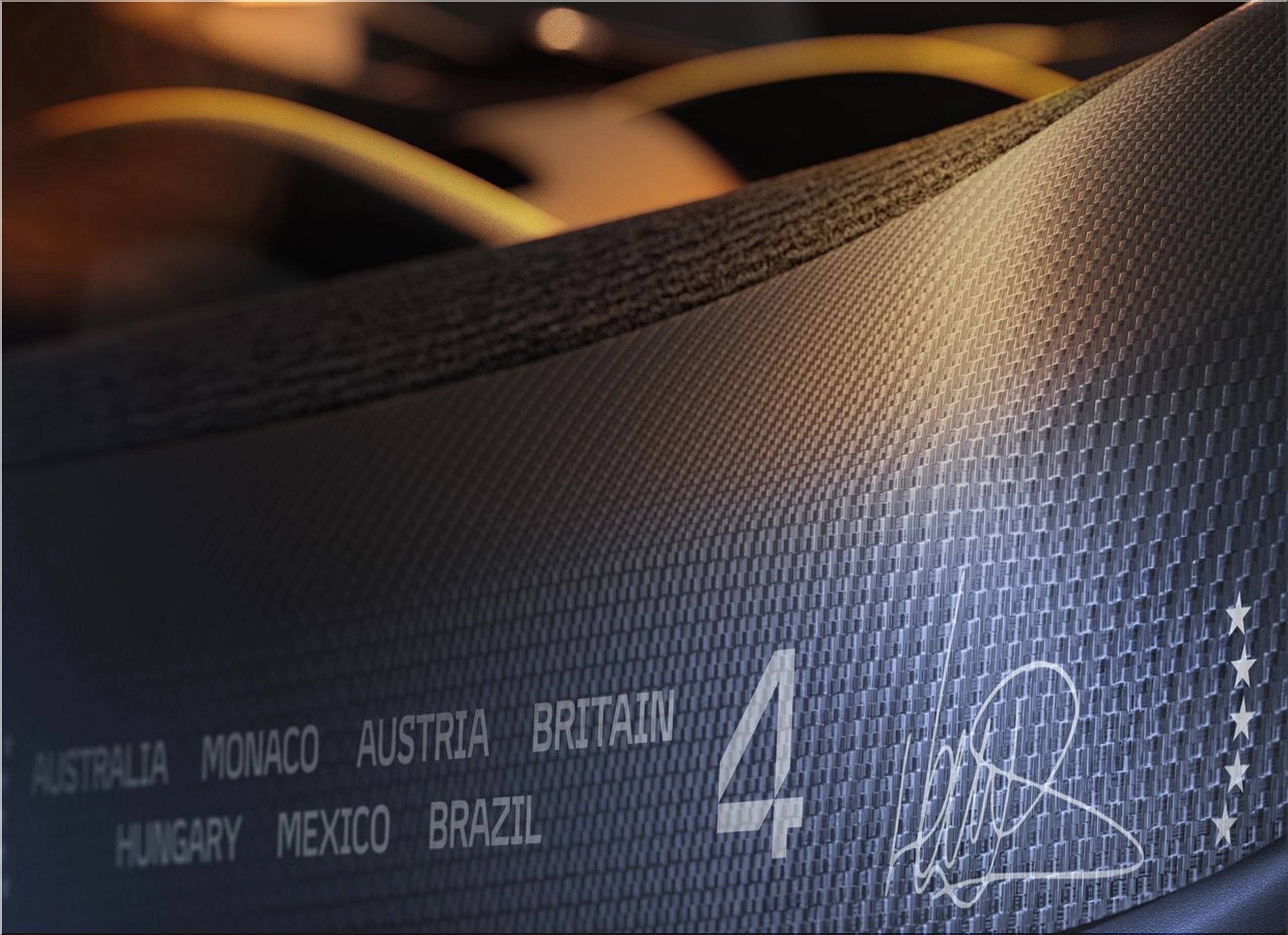
The steering wheel includes a Myan Orange 12 o'clock marker with a '10' detail to signify the championship count. Carbon fiber monocoque sills display the signatures of Lando Norris and Oscar Piastri. These signatures are hand-applied and protected by a clear coat to ensure they remain intact over time.
Each of the ten cars receives a Custom Casement Plaque on the center console. A Custom Track Record Plaque sits inside the luggage compartment, listing every win and pole position achieved during the 2025 season. These details emphasize the historical significance of this specific vehicle within the McLaren lineup.
Comparative Market Analysis
The McLaren Artura Spider MCL39 Championship Edition competes in the high-end hybrid supercar segment. Primary rivals include the Ferrari 296 GTS and the Lamborghini Temerario. The McLaren distinguishes itself through its low curb weight and Formula 1 heritage.
Supercar Performance Comparison
| Metric | McLaren Artura Spider | Ferrari 296 GTS | Lamborghini Temerario |
|---|---|---|---|
| Engine Type | 3.0L V6 Hybrid | 3.0L V6 Hybrid | 4.0L V8 Hybrid |
| Power (hp) | 690 | 818 | 907 |
| Weight (lbs) | 3,219 | 3,395 | 3,725 |
| Power-to-Weight | 479 hp/ton | 533 hp/ton | 487 hp/ton |
| EV Range (mi) | 19 | 15 | 10 |
| Limited Edition? | Yes (10 Units) | No | No |
Looking at the data, the McLaren Artura Spider offers the lightest chassis in this group. While the Ferrari and Lamborghini produce higher peak horsepower figures, the McLaren focuses on agility and driver feedback. The limited production run of the MCL39 Edition adds a layer of exclusivity that the mass-produced competitors do not offer.
Pro-Tip: Prospective buyers should focus on the power-to-weight ratio rather than peak horsepower when evaluating track performance, as lighter vehicles offer better braking and turn-in response.
Engineering Logic of the 120-Degree V6
The decision to use a 120-degree V6 engine was based on packaging and performance requirements. This wide angle allows the engine to sit lower in the frame compared to a 60-degree or 90-degree V6. By lowering the engine, McLaren engineers reduced the center of gravity by approximately 40 mm (1.57 inches).
This configuration also creates a shorter engine, which allows the engineers to push the cockpit forward. This change improves visibility for the driver and creates more space for the hybrid battery and fuel tank. The symmetrical layout of the turbochargers within the V also ensures equal pressure for both cylinder banks.
The use of a dry-sump lubrication system prevents oil starvation during high-G maneuvers. This system uses multiple scavenge pumps to move oil into a separate reservoir. Consequently, the engine can withstand cornering forces that would cause a standard wet-sump engine to fail.
Thermal Management in the Hybrid System
Managing heat is a significant challenge for a hybrid supercar. The McLaren Artura Spider MCL39 Championship Edition uses five separate cooling circuits. One circuit handles the engine oil, while another manages the coolant for the internal combustion engine.
A dedicated low-temperature circuit cools the charge air for the turbochargers. The axial flux E-motor and the power electronics have their own cooling loop to prevent derating during track use. Finally, the battery pack uses a refrigerant-based cooling system to maintain a stable temperature between 77 and 104 degrees Fahrenheit (25-40 degrees Celsius).
The air intakes located on the rear fenders provide the primary airflow for these systems. MSO optimized these intakes to increase airflow by 15 percent compared to the standard coupe. This improvement allows the Spider to maintain peak performance even during prolonged sessions at a race track.
The Significance of the MCL39 Livery
The paintwork on this edition is more than an aesthetic choice. It serves as a physical representation of the 2025 Formula 1 season. MSO uses a multi-stage painting process that includes hand-masking and airbrushing. The Myan Orange color has been a staple of McLaren racing since the 1960s, and its application here connects the modern hybrid technology to the brand history.
The Onyx Black sections utilize a high-gloss finish that provides a sharp visual break from the orange panels. This high-contrast look emphasizes the curves of the bodywork and the functional air vents. By hand-painting the livery, McLaren ensures that no two cars are exactly identical in their gradient transitions.
The inclusion of the Stealth Badge Pack contributes to the aggressive appearance. This pack darkens the McLaren speedmark and the Artura lettering on the rear deck. The result is a cohesive look that mirrors the stealthy appearance of a Formula 1 car during night races.
Digital Integration and Track Telemetry
The McLaren Artura Spider MCL39 Championship Edition features the MIS II infotainment system. This system includes two high-definition screens that provide navigation, media, and vehicle settings. The driver can access the McLaren Track Telemetry (MTT) app to record lap times and analyze performance data.
MTT uses GPS data to track the vehicle on a circuit. It records throttle position, braking force, and steering angle to help the driver identify areas for improvement. This data can be downloaded to a smartphone or computer for a detailed analysis after the track session.
The digital instrument cluster moves with the steering column to ensure that the driver always has a clear view of the gauges. The cluster displays critical information such as gear selection, engine RPM, and battery state of charge. In Track mode, the display simplifies to show only the most important performance metrics.
Transmission and E-Diff Performance
The 8-speed SSG transmission provides shift times of less than 200 milliseconds. This speed is achieved through the use of pre-selected gears and a dual-clutch arrangement. The transmission software adapts to the driving style of the operator, providing smoother shifts in Comfort mode and sharper shifts in Track mode.
The electronic differential is integrated into the transmission and works with the stability control system. By applying braking force to the inner wheel and sending more torque to the outer wheel, the E-diff helps the car rotate during corner entry. This system is faster and more precise than a traditional mechanical limited-slip differential.
In addition, the E-diff allows for different degrees of drift. The Variable Drift Control (VDC) system lets the driver choose the amount of electronic intervention. This allows skilled drivers to slide the rear of the car while still having a safety net in place.

Manufacturing Process at the MCTC
McLaren produces the carbon fiber chassis for the Artura at the McLaren Composites Technology Centre (MCTC) in Sheffield. This facility uses a proprietary Resin Transfer Moulding (RTM) process. This process allows for the creation of complex shapes while maintaining high strength and low weight.
The Carbon Fibre Monocage II-S is the foundation of the Spider. It includes a specific structure for the rollover protection system. This structure is integrated into the chassis to provide safety for the occupants without the need for heavy steel bars.
After the chassis is built, it is shipped to the McLaren Production Centre (MPC) in Woking for final assembly. At the MPC, technicians hand-assemble the engine, transmission, and interior components. Each car undergoes a rigorous quality control check, including a monsoon test and a road test, before it is delivered to the client.
Driving Dynamics: Steering and Feedback
McLaren continues to use electro-hydraulic steering instead of a fully electric system. This choice provides the driver with more tactile feedback from the front tires. The hydraulic system communicates changes in road surface and grip levels more effectively than an electric motor.
The steering rack has a fixed ratio of 12.6:1, which provides a fast and predictable response. This helps the driver place the car accurately on the road or track. The steering weight also changes based on the driving mode, becoming heavier and more communicative in Sport and Track settings.
The brake pedal feel is also a priority for McLaren. The system does not use regenerative braking through the brake pedal. Instead, the E-motor provides regen when the driver lifts off the throttle. This ensures that the brake pedal always has a consistent and firm feel, which is critical for high-performance driving.
Formula 1 Performance Data Integration
The Custom Track Record Plaque is a unique feature of the McLaren Artura Spider MCL39 Championship Edition. It lists the 12 victories achieved by the team in the 2025 season. These wins occurred at iconic tracks such as Silverstone, Spa-Francorchamps, and Monza.
The plaque also notes the number of pole positions and fastest laps. This data serves as a reminder of the dominance of the MCL39 race car. For the ten owners, this plaque turns the car into a historical document that tracks the success of the McLaren Racing team.
In addition to the plaques, each owner receives a 2025 Formula 1 Constructors Championship keepsake. This item is exclusive to the ten clients and is not available for purchase separately. It serves as a tangible link between the road car and the championship-winning race team.
Wheel and Tire Technology
The Artura Spider comes equipped with 19-inch front and 20-inch rear lightweight alloy wheels. These wheels use a 10-spoke design that reduces unsprung weight. Lower unsprung weight allows the suspension to react more quickly to bumps and improves the overall ride quality.
The tires are Pirelli P ZERO Corsa units developed specifically for the Artura. These tires use a unique compound that provides high grip in dry conditions while still being safe for road use. The tires also include the Pirelli Noise Cancelling System (PNCS), which uses sound-absorbing foam inside the tire to reduce cabin noise.
For owners who plan to use their cars on the track, McLaren offers the Pirelli P ZERO Trofeo R as an option. This tire is designed for maximum dry grip and provides a significant improvement in lap times. However, it has a shorter lifespan and lower wet-weather performance compared to the standard Corsa.

What now?
- Monitor Production: With only ten units available globally, this edition will likely sell out immediately through existing McLaren client channels.
- Review Technical Documentation: Examine the 120-degree V6 engine architecture to understand how it differs from traditional supercar engines.
- Assess the Hybrid Value: Analyze how the axial flux E-motor improves low-end torque compared to non-hybrid competitors.
- Consult MSO: If you cannot secure one of these ten units, contact McLaren Special Operations to discuss a custom-painted Artura Spider that incorporates similar design elements.
- Evaluate Long-Term Value: Consider the historical significance of a 10th-anniversary championship edition when assessing the car as a potential investment.
The McLaren Artura Spider MCL39 Championship Edition is a precise engineering response to a historic racing victory. It combines the latest in hybrid powertrain technology with the heritage of a world-winning Formula 1 team. The technical specifications and limited production confirm its status as a collector's item and a high-performance machine.
- Add new comment
- 136 views