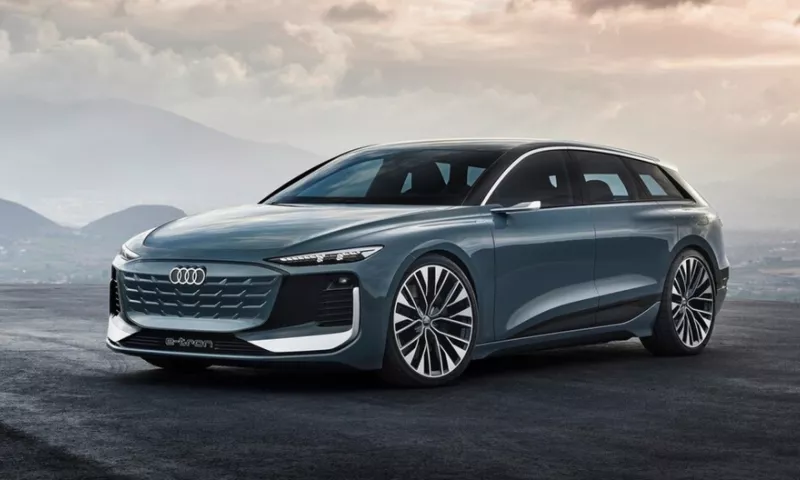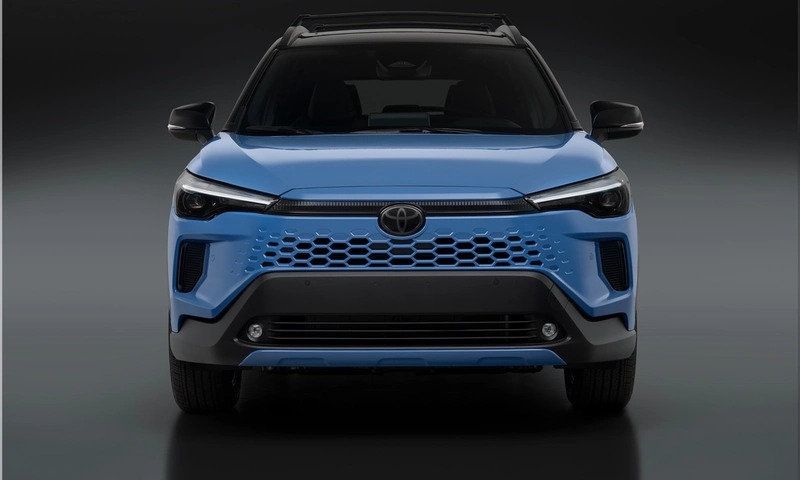
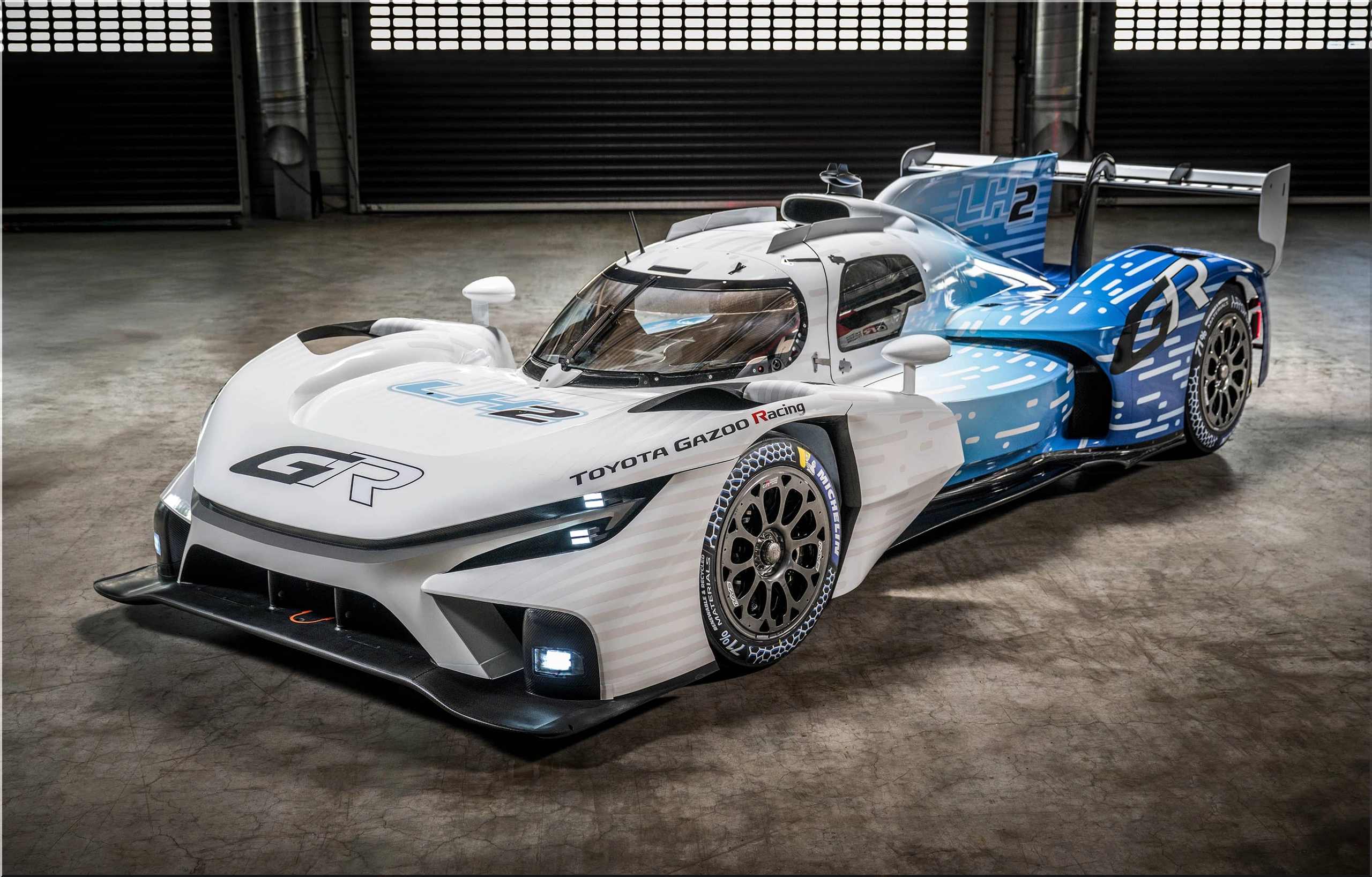
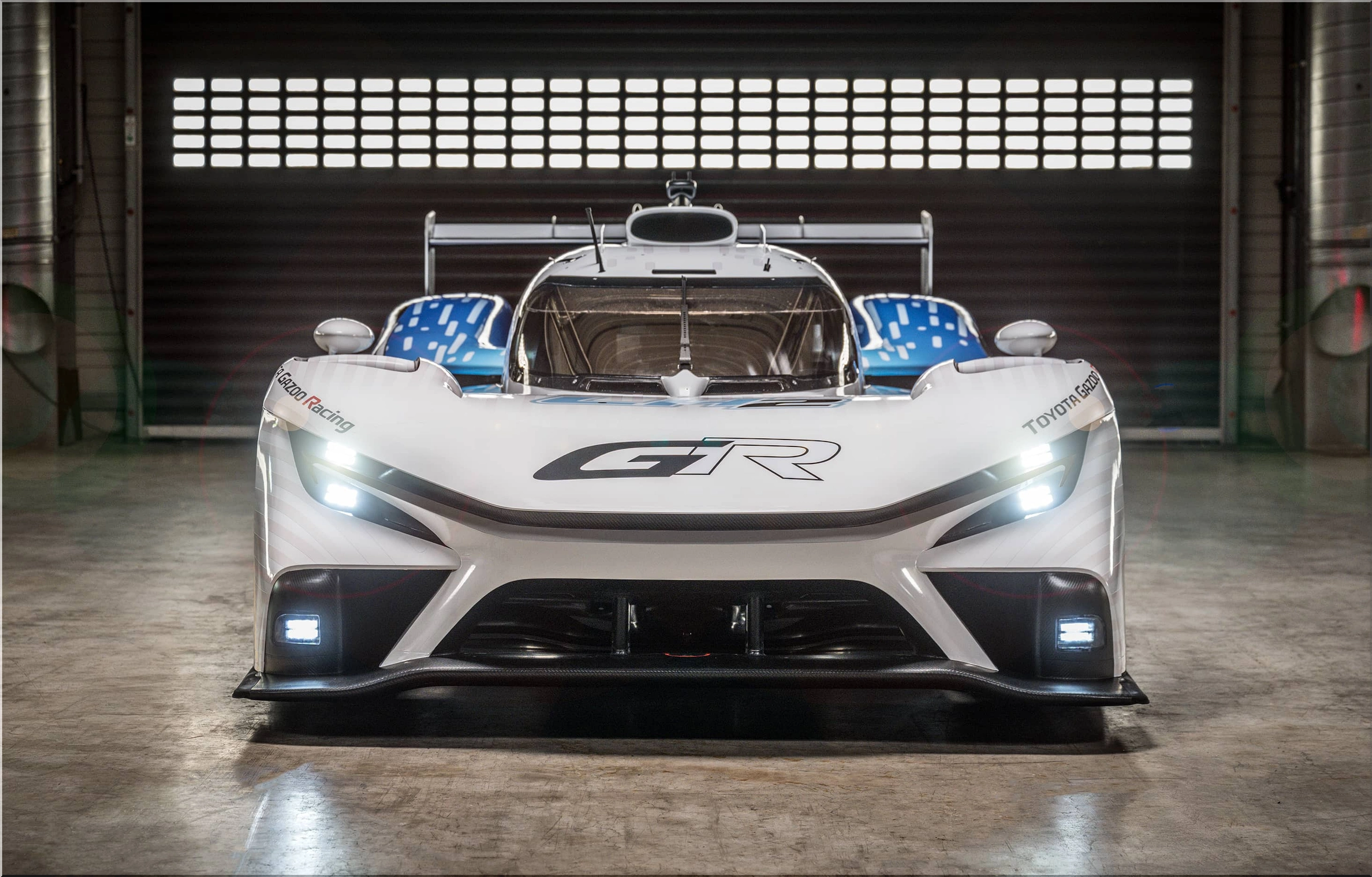
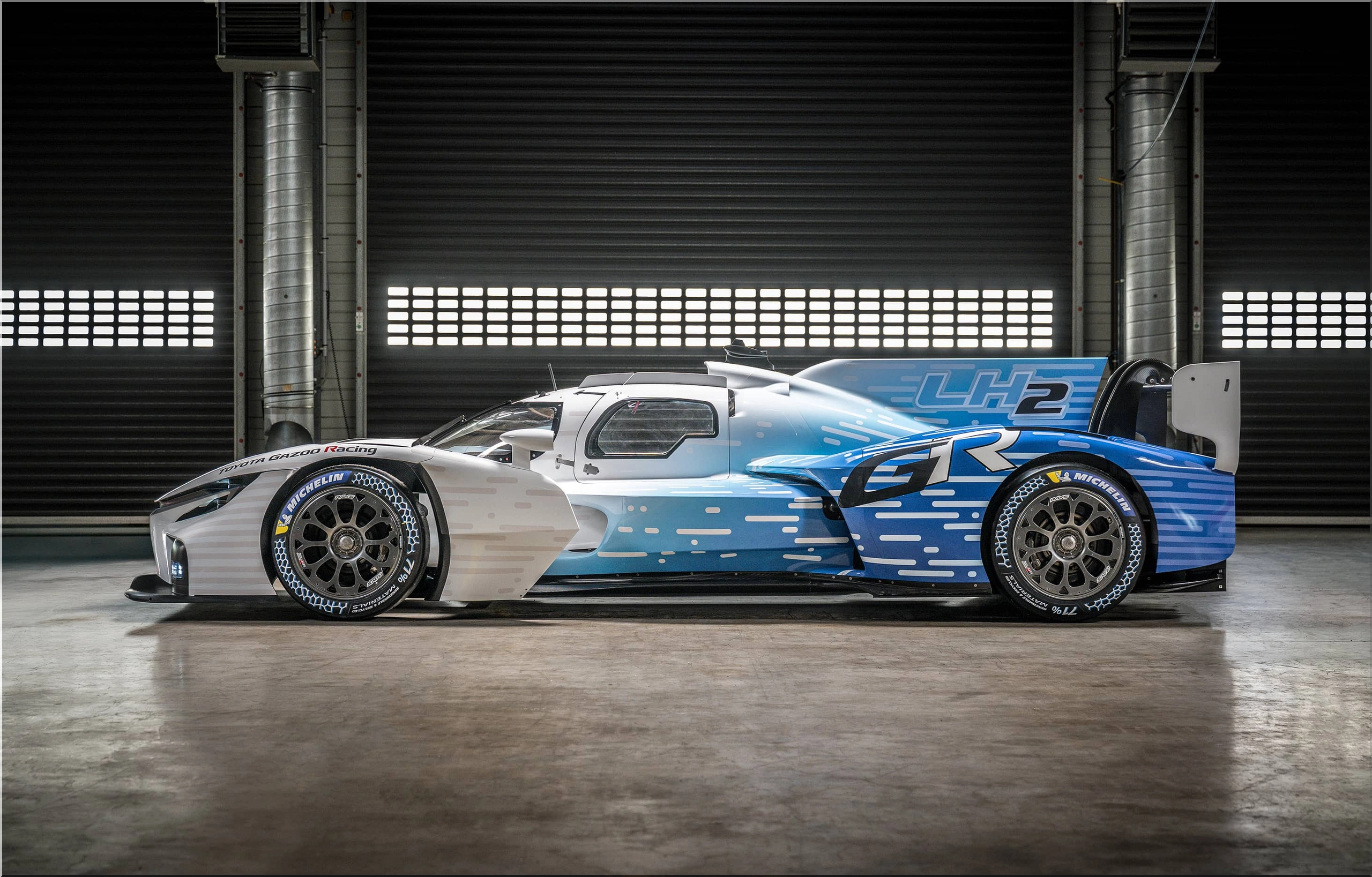
Toyota Gazoo Racing unveiled the GR LH2 Racing Concept at the 2025 24 Hours of Le Mans. The car features a liquid hydrogen engine instead of a hybrid system, built on the GR010 Hypercar chassis. The project explores hydrogen combustion as an alternative to EV racing platforms.
Why Liquid Hydrogen?
Liquid hydrogen has higher energy density than its gaseous counterpart, allowing longer runs with less weight. It emits only water vapor, delivering zero-carbon emissions.
Storage requires cryogenic fuel tanks that keep the hydrogen stable at -253 °C. These systems demand robust thermal management and safety protocols.
Project Objectives
- Test real-world hydrogen combustion systems on track
- Refine cryogenic refueling infrastructure
- Validate FIA-approved safety protocols
- Develop dealer-to-track hydrogen supply chains
Technical Specifications
| Spec | Details |
|---|---|
| Base | GR010 HYBRID Hypercar chassis |
| Powertrain | Hydrogen combustion engine with hybrid support |
| Hydrogen Storage | Liquid, cryogenically stored |
| Dimensions | 5,100 mm length × 2,050 mm width |
Motorsport Background
- 2021: Corolla H2 debuts in Super Taikyu Series with gaseous hydrogen.
- 2022: GR Yaris H2 performs a demo at Ypres Rally.
- 2023: GR H2 Concept revealed at Le Mans, setting stage for GR LH2.
Track-Ready Prototype
The GR LH2 is a fully functional prototype, not just a design mock-up. It’s built for track testing and will collect data on engine efficiency, thermal systems, and safety procedures.
While no public testing dates have been announced, Toyota engineers confirmed it's operational and test-ready.
Strategic Implications
Motorsport as an R&D Platform
High-intensity racing conditions provide Toyota a chance to refine systems faster than road testing. It speeds up innovation for future commercial applications.
Regulatory Tailwinds
The FIA has cleared liquid hydrogen powertrains for competition. This could fast-track Toyota’s entry into a future Le Mans hydrogen class.
Industry Challenge
Rival manufacturers now face pressure to invest in hydrogen development or fall behind in next-gen racing. The infrastructure gap remains the biggest challenge.
Advantages and Drawbacks
Advantages
- High energy density extends race range.
- Refueling is faster than EV charging.
- Zero-emission output aside from water vapor.
Challenges
- Cryogenic tanks are complex and expensive.
- Fueling network is almost nonexistent.
- EV competition continues gaining efficiency and infrastructure dominance.
Next Steps
Toyota will continue collecting track data. Future milestones may include:
- Live circuit fuel tests
- Public demo runs
- Side-by-side benchmarking vs EV and hybrid systems
WEC rule updates may open a formal class for hydrogen prototypes as early as 2028.
Conclusion
The GR LH2 Racing Concept proves that hydrogen combustion can meet motorsport demands while producing zero emissions. It confirms racing’s role in high-pressure tech development.
For hydrogen to succeed off-track, Toyota must lower cost and expand infrastructure before batteries dominate. The race is on.
- Add new comment
- 150 views