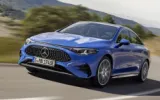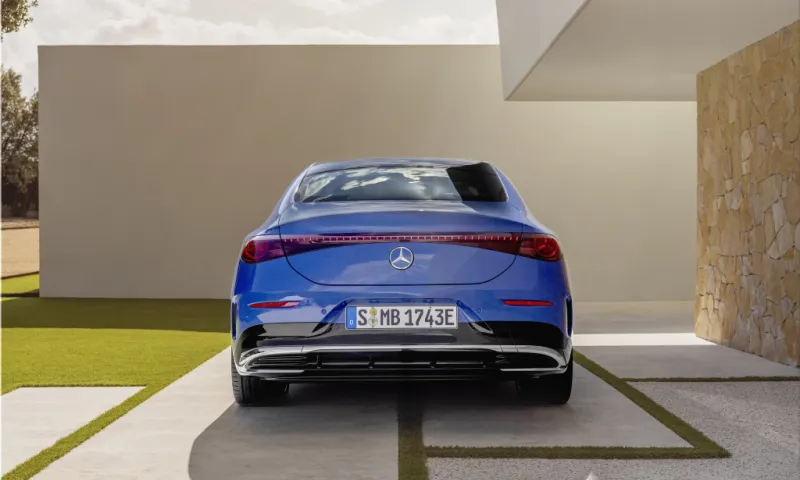
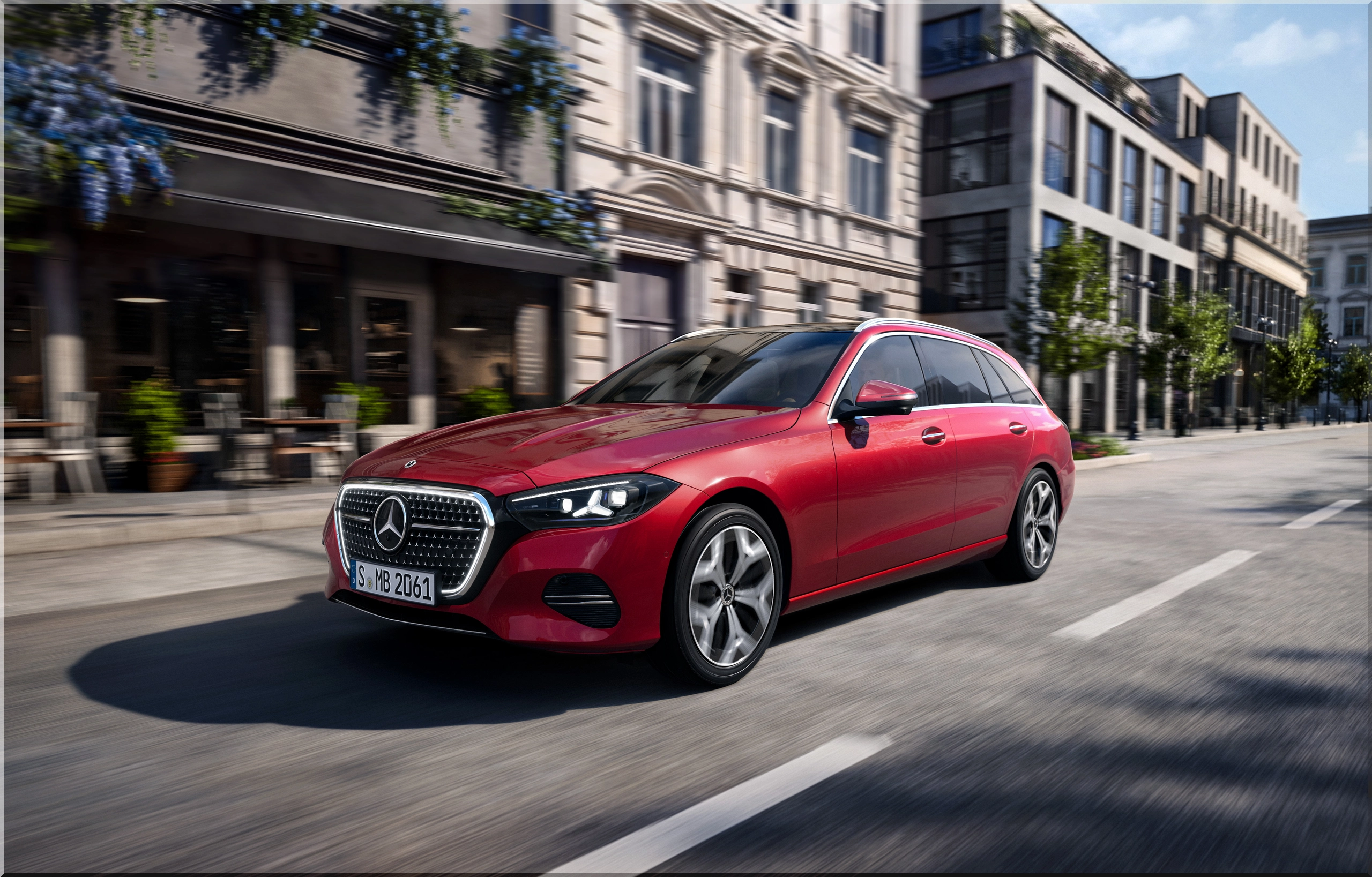
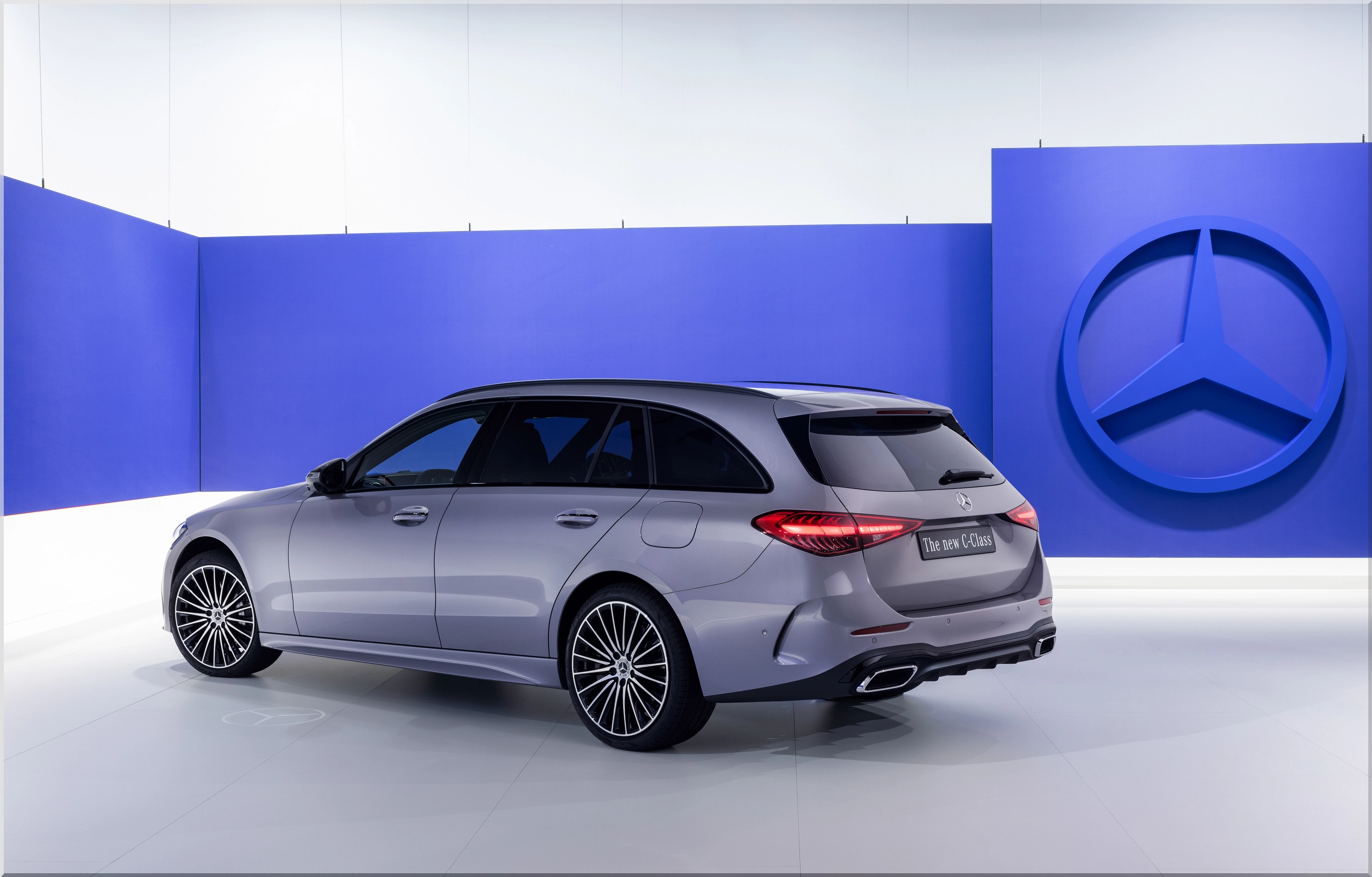
The 2027 Mercedes-Benz C-Class receives the largest technical update since the current generation arrived. Mercedes has revised the gasoline and diesel engines, expanded plug-in hybrid capability, retuned the suspension, installed its MB.OS software platform, and introduced a cabin assistant powered by several artificial intelligence systems.
This is still the familiar compact luxury sedan and wagon formula. Yet the engineering changes run much deeper than the redesigned grille and star-shaped lighting graphics suggest.
European customers can order the updated Mercedes-Benz C-Class in sedan and wagon body styles. The German-market C 200 sedan starts at roughly $57,000, based on currency conversion from its local price with tax. Mercedes has not confirmed US pricing, powertrain availability, or an American launch schedule.
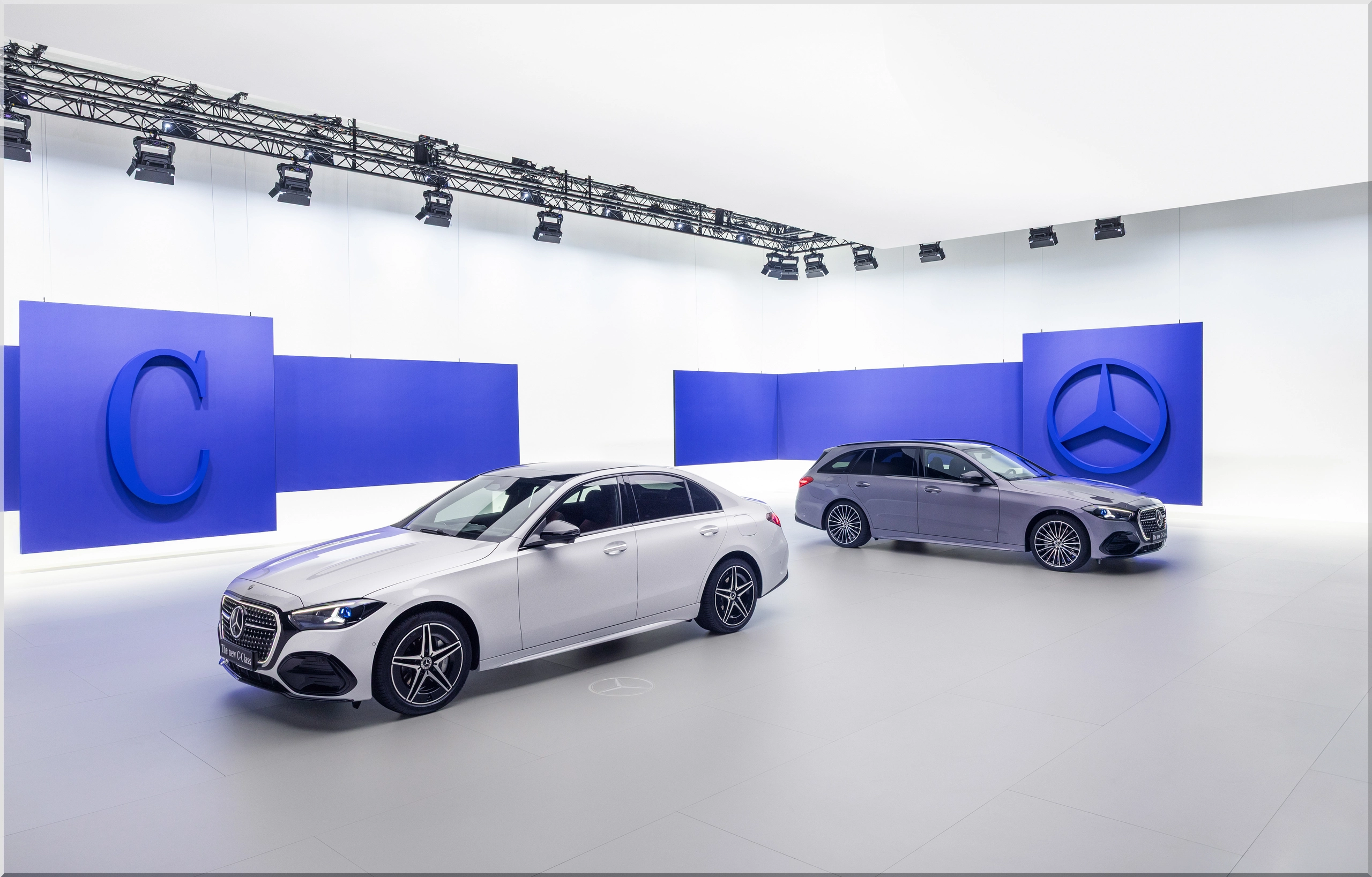
2027 Mercedes-Benz C-Class Specifications
The revised lineup starts with three versions of Mercedes' 2.0-liter M 254 EVO turbocharged four-cylinder gasoline engine. Every gasoline model uses a 48-volt electrical system and the company's second-generation integrated starter-generator.
| Model | Engine output | Engine torque | ISG assistance | Drivetrain |
|---|---|---|---|---|
| Mercedes-Benz C 200 | 177 hp | 199 lb-ft | Up to 23 hp and 151 lb-ft | RWD or AWD, market dependent |
| Mercedes-Benz C 250 | 218 hp | 236 lb-ft | Up to 23 hp and 151 lb-ft | RWD or AWD, market dependent |
| Mercedes-Benz C 300 | 258 hp | 295 lb-ft | Up to 23 hp and 151 lb-ft | RWD or AWD, market dependent |
| Mercedes-Benz C 400 e 4MATIC | 395 hp combined | 479 lb-ft combined | Plug-in hybrid motor | AWD |
The integrated starter-generator can contribute 17 kW, equal to about 23 hp, and 205 Nm, or 151 lb-ft. Drivers should not add those figures directly to the engine's rated peak output because the gasoline engine and electrical system do not always reach maximum output at the same time.
Mercedes uses the 48-volt system to restart the engine, recover energy under deceleration, support low-rpm acceleration, and let the vehicle coast with the gasoline engine switched off. Consequently, the starter-generator can reduce fuel use while smoothing the transition between coasting and powered driving.
An Electric Compressor Attacks Turbo Lag
The M 254 EVO also gains an electrically driven auxiliary compressor. Powered by the 48-volt system, the compressor spins rapidly before the exhaust-driven turbocharger builds full boost.
That strategy targets a familiar weakness in small turbo engines: delayed response at low engine speeds. The electric compressor fills the torque gap when the driver accelerates away from a stop, exits a corner, or requests a quick burst of passing power.
From an expert perspective, this technology may prove more valuable in daily driving than another small increase in peak horsepower. Immediate low-speed response makes a four-cylinder engine feel larger and reduces the transmission's need to select a lower gear.
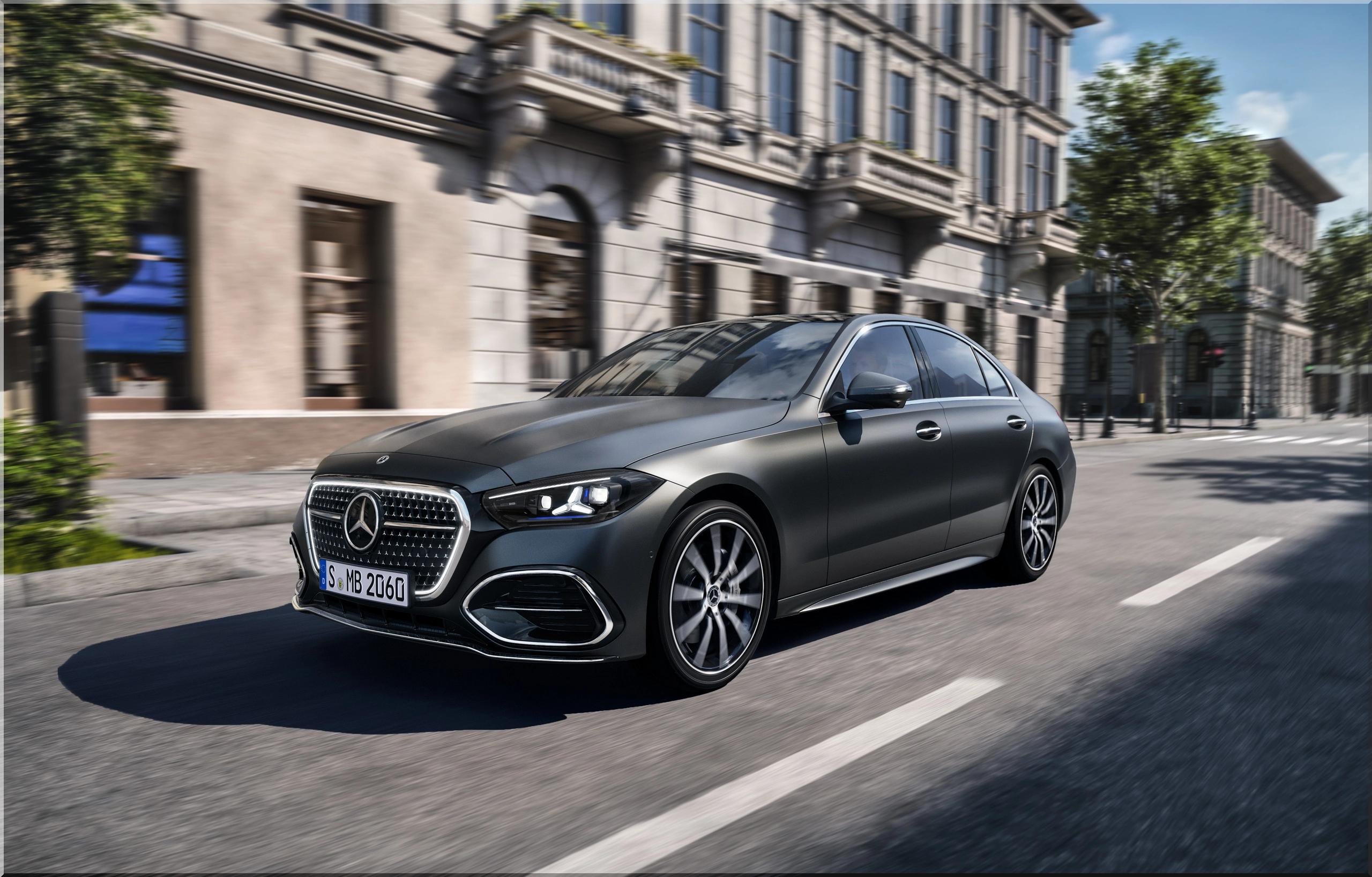
C 400 e Plug-In Hybrid Offers 62 Miles of Electric Range
The Mercedes-Benz C 400 e 4MATIC sits at the top of the announced non-AMG range. Its gasoline engine and electric motor produce a combined 395 hp and 479 lb-ft of torque, sending power through an all-wheel-drive system.
A 19.53-kWh usable battery supports up to 62 miles of electric range under the European WLTP procedure. US EPA range would likely come in lower, but Mercedes has not released an official EPA figure.
| Plug-in hybrid specification | C 400 e 4MATIC |
|---|---|
| Combined output | 395 hp |
| Combined torque | 479 lb-ft |
| Usable battery capacity | 19.53 kWh |
| Maximum WLTP electric range | 62 miles |
| AC charging rate | 11 kW |
| DC fast-charging rate | 55 kW |
| Drivetrain | All-wheel drive |
The 55-kW DC charging capability gives the C 400 e a practical edge over plug-in hybrids that accept AC power only. A driver can add a meaningful amount of electric range during a short stop instead of waiting several hours for a full AC session.
Still, the charging feature pays off only when the owner plugs in regularly. Running a plug-in hybrid with an empty battery forces the gasoline engine to move the additional mass of the battery, motor, and related hardware.
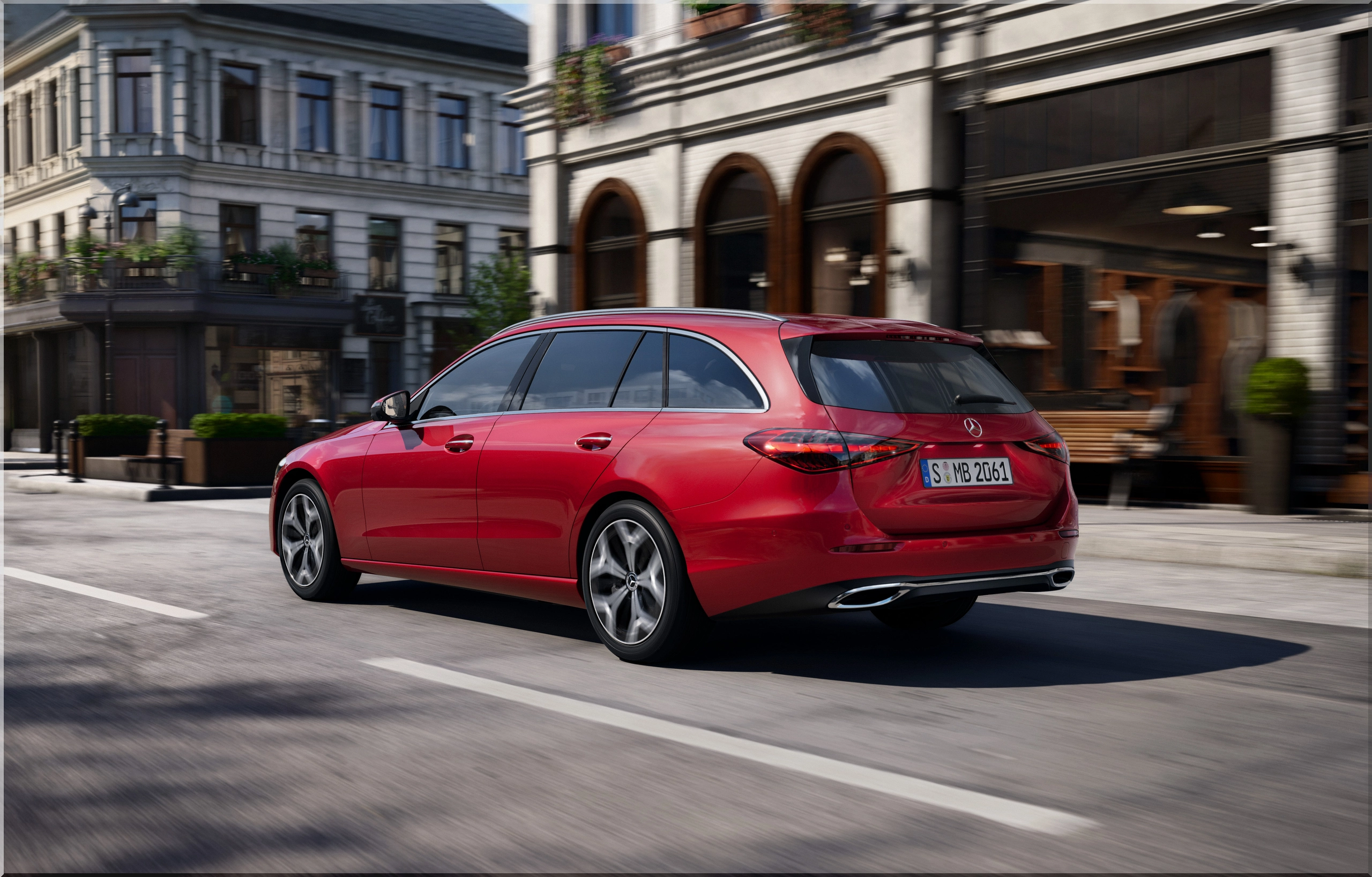
Pro-Tip: Who Should Buy the Plug-In Hybrid?
Choose the C 400 e if you can charge at home and cover most weekday driving within roughly 40 to 50 miles. That pattern lets the electric motor handle commuting while the gasoline engine removes charging anxiety on long interstate trips.
Choose a mild-hybrid C 300 if you lack dependable charging access or spend most of your time driving long distances. The simpler configuration carries less battery mass and asks for no change in daily routine.
Rear-Axle Steering Shrinks the Turning Circle
Mercedes has retuned the chassis with firmer mounting points and revised adjustable dampers. A four-link front axle controls wheel movement, while a five-link rear axle supports stable tracking and precise suspension geometry.
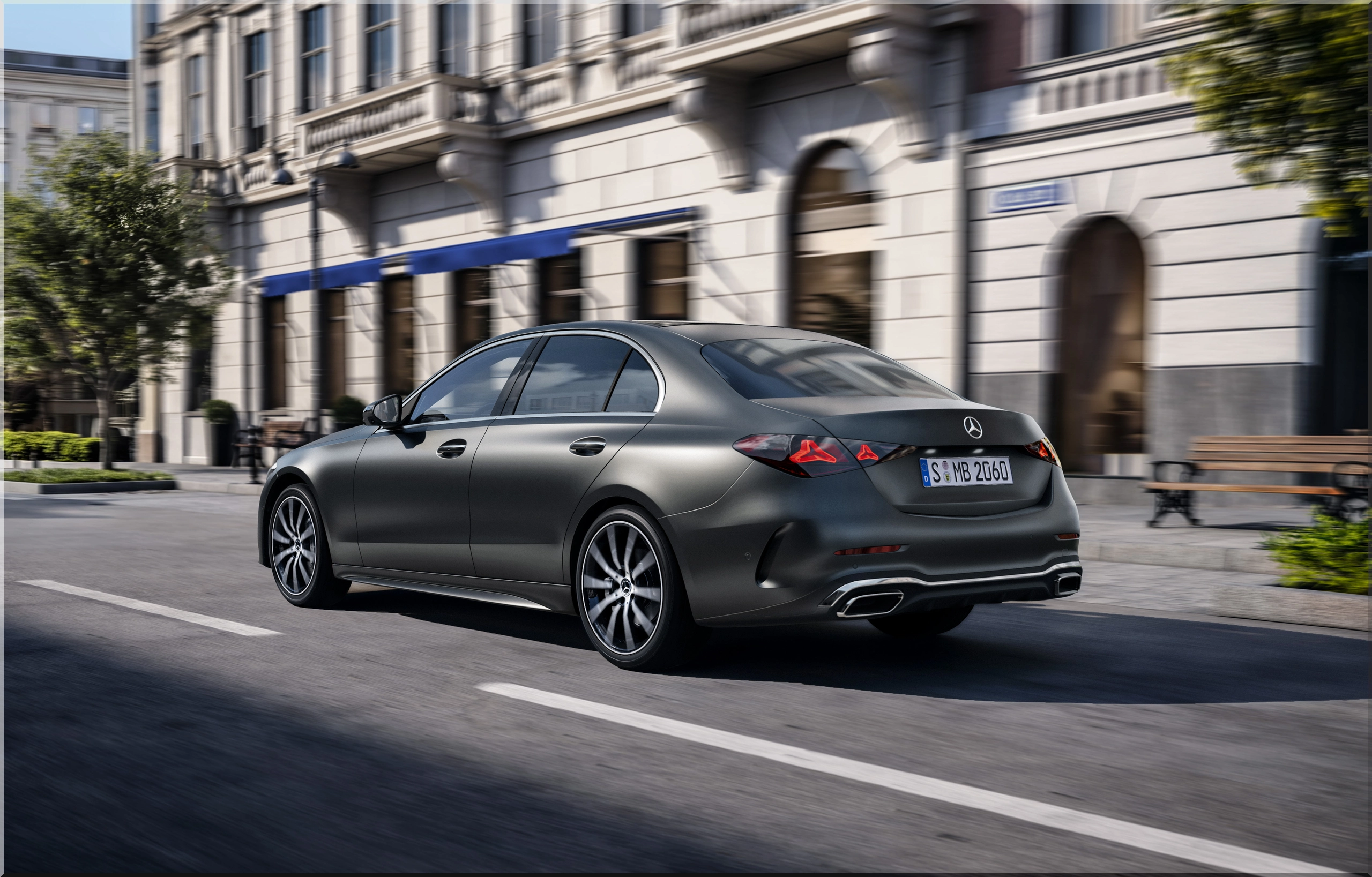
Optional rear-axle steering turns the rear wheels by as much as 2.5 degrees. Below 62 mph, the rear wheels turn opposite the front wheels, producing the effect of a shorter wheelbase. Above 62 mph, they turn in the same direction to improve stability during fast lane changes.
The system reduces the turning circle by 16.9 inches to 34.9 feet. That figure beats the approximately 37.4-foot turning circle of a BMW 330i and makes the Mercedes easier to place in tight parking garages.
Mercedes also lists a drag coefficient of 0.24 for the sedan and 0.26 for the wagon. Redesigned mirror bases, an additional windshield seal, refined rear separation edges, and a new exhaust mounting arrangement aim to cut wind and vibration noise.
MB.OS Brings Several AI Systems Into One Cabin
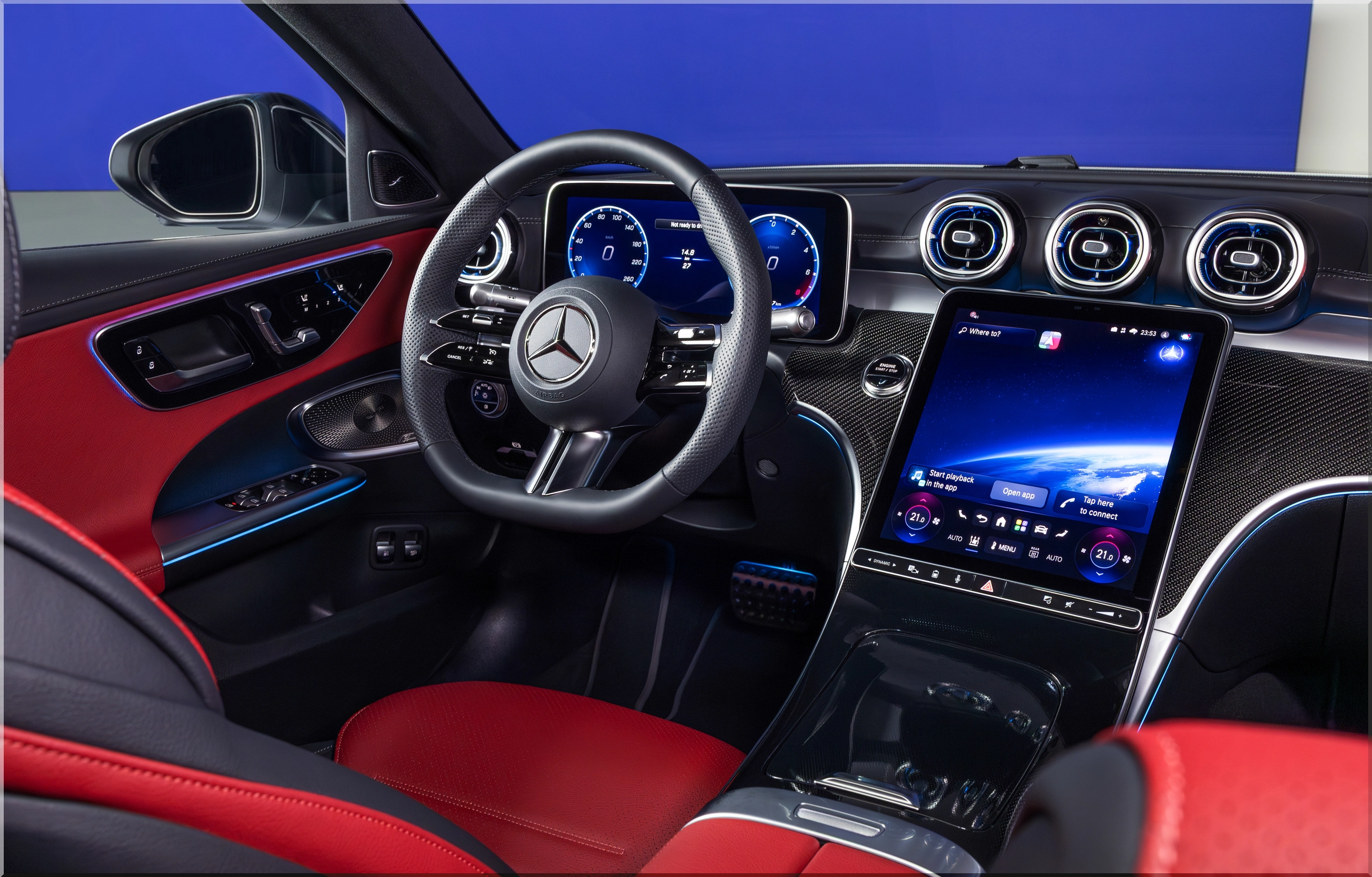
The most significant cabin change lives behind the screens. The Mercedes-Benz Operating System, or MB.OS, now controls key vehicle domains and supports over-the-air software updates.
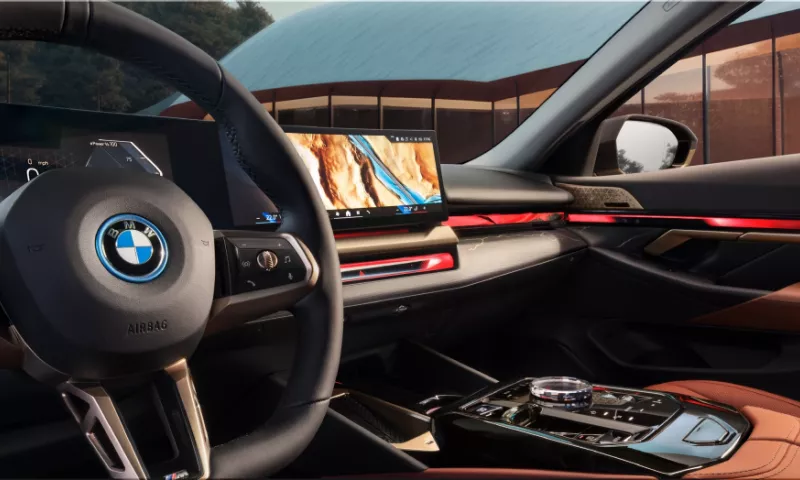
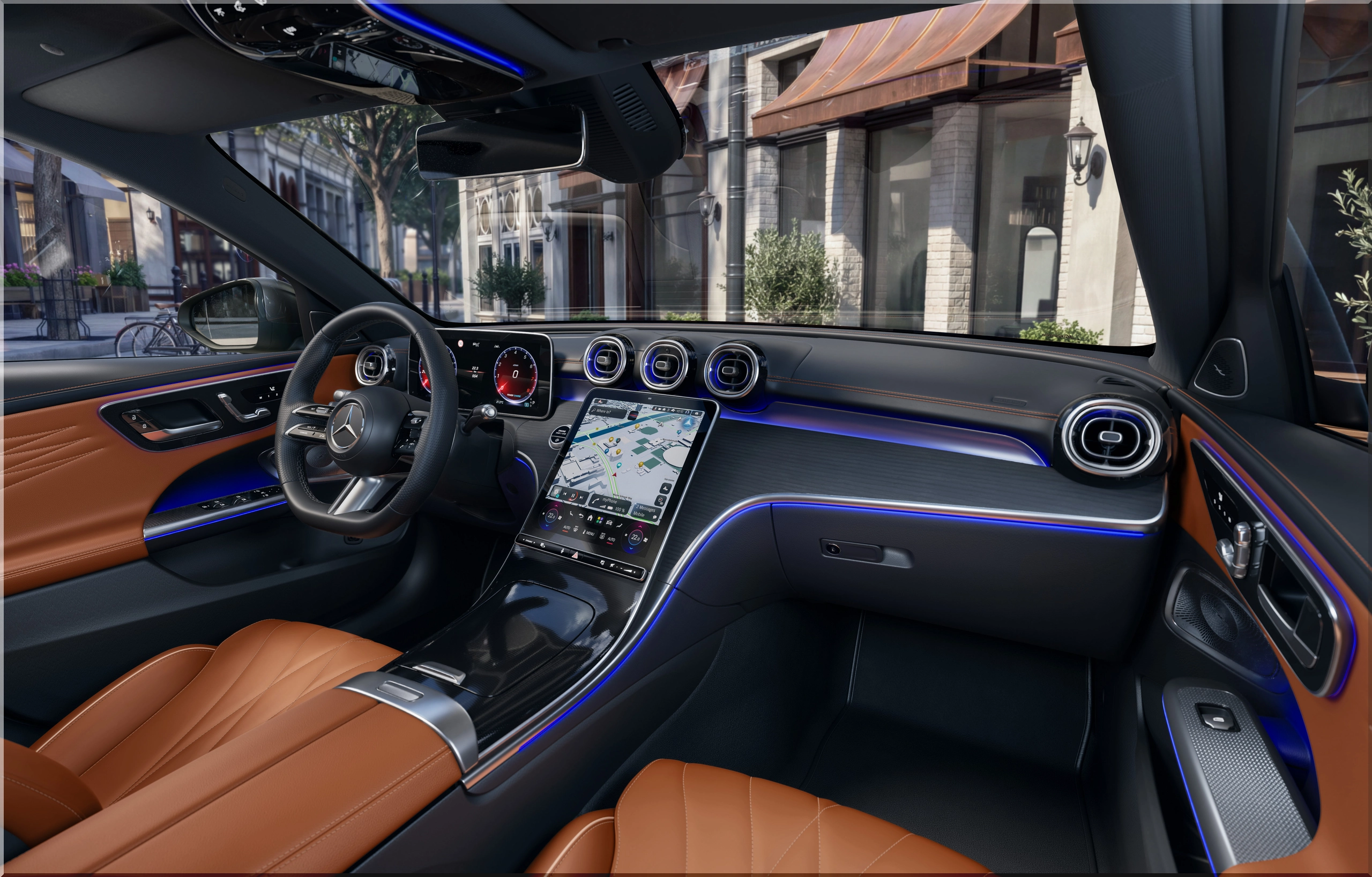
Drivers face a 12.3-inch digital instrument panel and an 11.9-inch portrait-oriented central touchscreen. Mercedes also restores easier steering-wheel operation through a rocker switch for cruise-control functions and a physical roller for audio volume.
The fourth-generation MBUX assistant draws from ChatGPT, Microsoft Bing, and Google Gemini. Each service handles different types of requests, while short-term memory lets the assistant retain context across multi-part conversations.
Specific capabilities include:
- Answering general questions through natural speech
- Searching for parking spaces and charging stations
- Providing destination and point-of-interest details
- Finding music when the driver forgets the title or artist
- Displaying current weather, currency conversions, and stock prices
- Updating vehicle software and selected functions remotely
Google Maps supplies the navigation foundation. In addition, Google's Automotive AI Agent can answer detailed questions about destinations without forcing the driver through several menus.
Software subscriptions deserve scrutiny. Some Digital Extras can expire, require a data plan, or carry renewal fees. Buyers should review which driver-assistance, navigation, entertainment, and connectivity features remain active after the initial ownership period.
Safety Hardware and Digital Light Technology
The updated Mercedes-Benz C-Class safety suite can use as many as 10 cameras, five radar sensors, and 12 ultrasonic sensors. MB.OS processes the sensor data and supports steering, braking, acceleration, lane centering, lane changes, and parking functions.
Available MB.DRIVE Assist Plus can initiate an automatic highway lane change. Parking hardware can identify a suitable space, steer into it, and guide the vehicle back out. A reverse function can also retrace part of a route previously driven forward, which may help on narrow driveways or confined access roads.
The optional Digital Light system uses micro-LED hardware and a new processing chip. Mercedes claims a 40 percent larger high-resolution illumination field and up to 50 percent lower energy consumption than the prior system.
Interior Comfort and Wagon Cargo Capacity
Optional multicontour front seats use inflatable side-bolster cushions, four-way lumbar adjustment, and massage programs. The available air-quality package adds ionization, an activated-charcoal filter, and a fragrance generator.
An upgraded Burmester 3D audio system supplies 15 speakers and 710 watts. Occupancy detection can focus sound on the first row, second row, or occupied seating positions. Drivers can also adjust the perceived spatial effect across 10 levels.
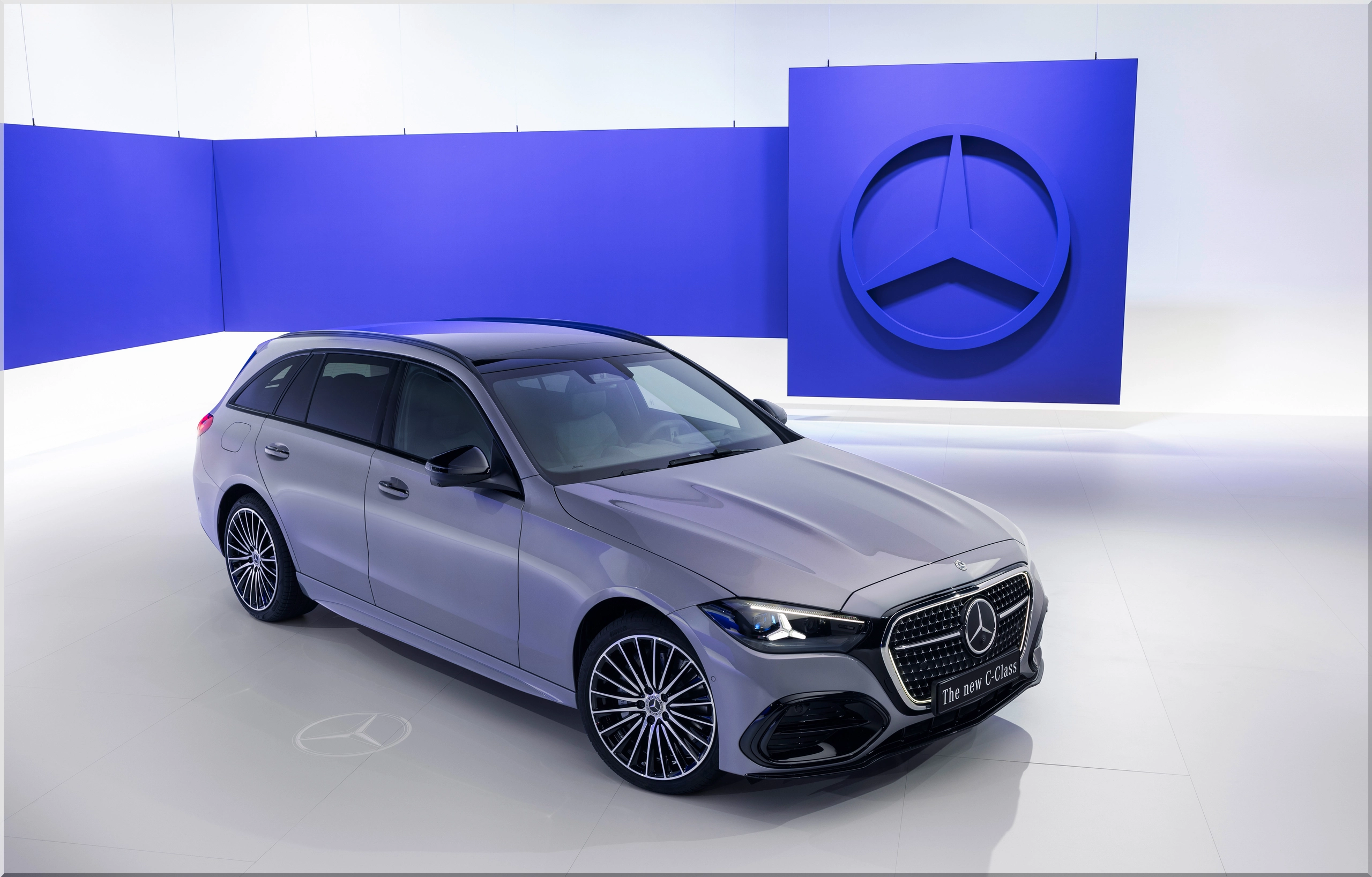
The wagon provides 17.3 cubic feet of cargo room behind its rear seats and 53.3 cubic feet with them folded. A standard 40:20:40 split allows owners to carry long objects while keeping two rear seating positions usable.
How the C-Class Compares With Key US Rivals
US specifications for the updated C-Class remain unconfirmed, so this comparison uses the announced C 300 engine rating and current American-market rival data.
| Model | Base comparison output | Key advantage | Key limitation |
|---|---|---|---|
| Mercedes-Benz C 300 | 258 hp plus 48-volt support | Rear steering, AI-based cabin tech | US price and release timing unconfirmed |
| BMW 330i | 255 hp | Sharp chassis response, 16.9-cu-ft trunk | Smaller technology update |
| Audi A5 | 268 hp | 22.6-cu-ft liftback cargo area | Heavier body and wider turning circle |
| Genesis G70 2.5T | 300 hp | Strong standard output | Small 10.5-cu-ft trunk |
Looking at the data, the C-Class does not win through raw gasoline horsepower. The Genesis produces more, while the Audi posts a slight advantage. Mercedes instead concentrates on low-rpm electrical assistance, rear-wheel steering, plug-in hybrid range, lighting performance, and software capability.
Why This Update Matters to US Buyers
The new C-Class shows how Mercedes plans to keep combustion-powered luxury sedans relevant during slower-than-expected EV adoption. Mild-hybrid engines reduce waste without demanding a charger, while the C 400 e offers enough electric range to cover many daily commutes.
The car's biggest risk comes from market availability. Mercedes may offer fewer engine choices in the United States, and the company has not announced American prices or an on-sale date.
If the US receives the C 300 and C 400 e, buyers will gain two clearly separated choices: one for effortless gasoline ownership and one for regular electric commuting. That practical split makes more sense than forcing every compact luxury customer into the same powertrain.
- Add new comment
- 66 views