Hyundai's Next Industrial Export: Exoskeletons Built for Real-World Work
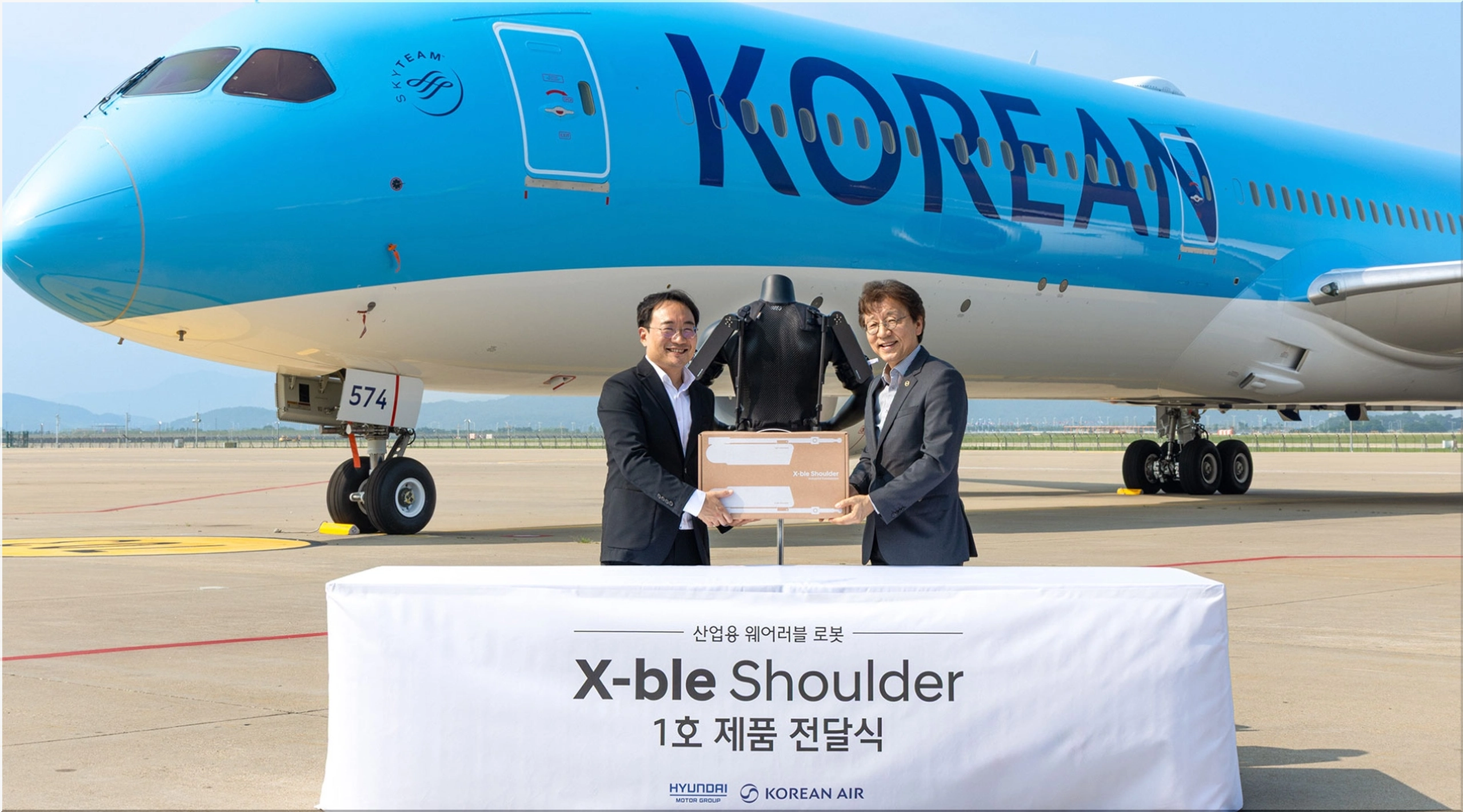
Hyundai Motor Company and Kia Corporation just entered a new sector with the delivery of their first industrial wearable robot, the X-ble Shoulder, to Korean Air. Forget science fiction—this is about aviation-grade gear built for overhead labor, optimized to reduce injuries and downtime. It’s targeted, efficient, and ready for scale. Hyundai and Kia are not dabbling in robotics—they're applying it.
Key Highlights from the Launch
- First delivery made to Korean Air on July 8, 2025.
- Deployment spans commercial airliners, military aircraft, UAM systems, drones, and satellite launch vehicles.
- Broader rollout across Korea begins this year; global expansion set for 2026.
- Target industries include construction, shipbuilding, and agriculture.
What Is the X-ble Shoulder?
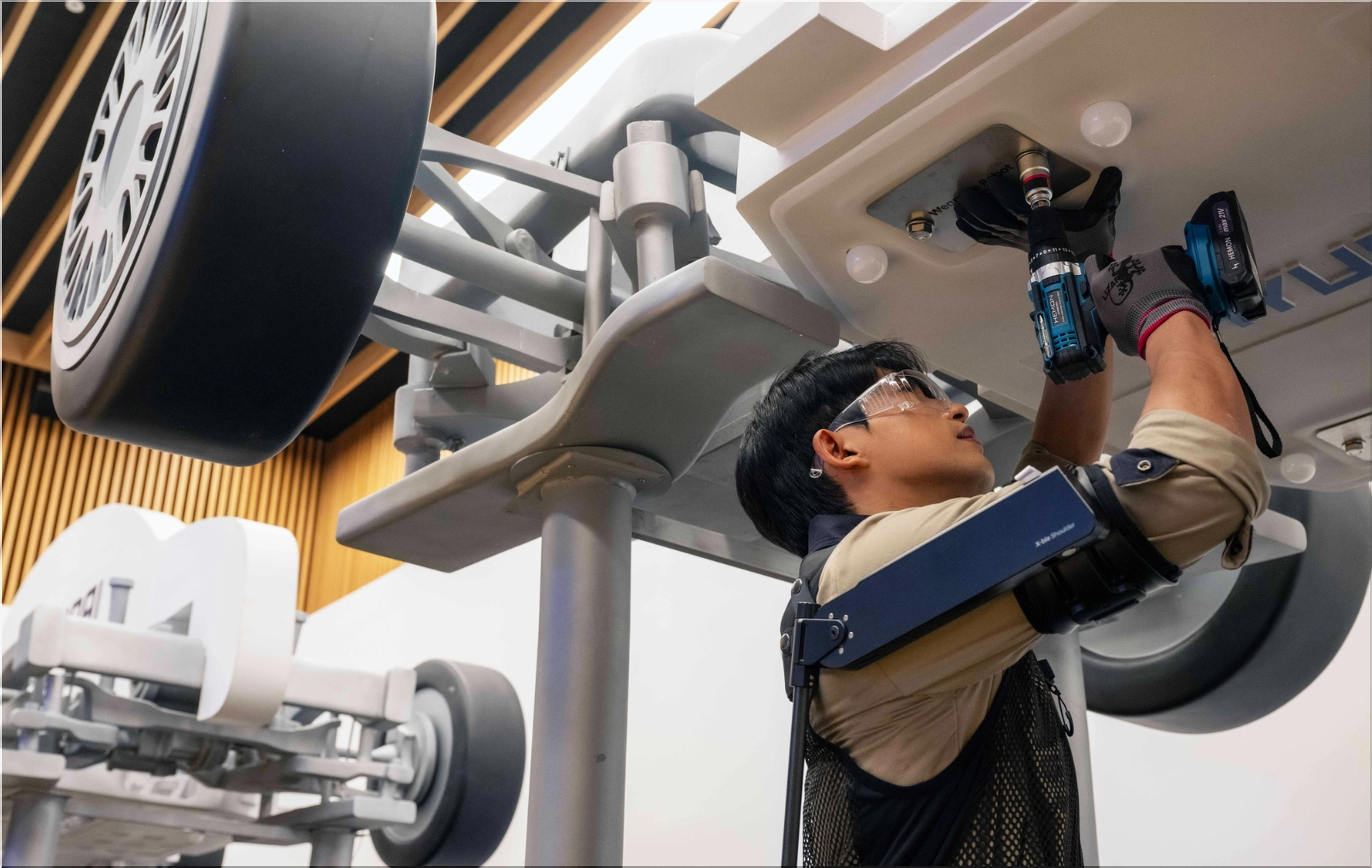
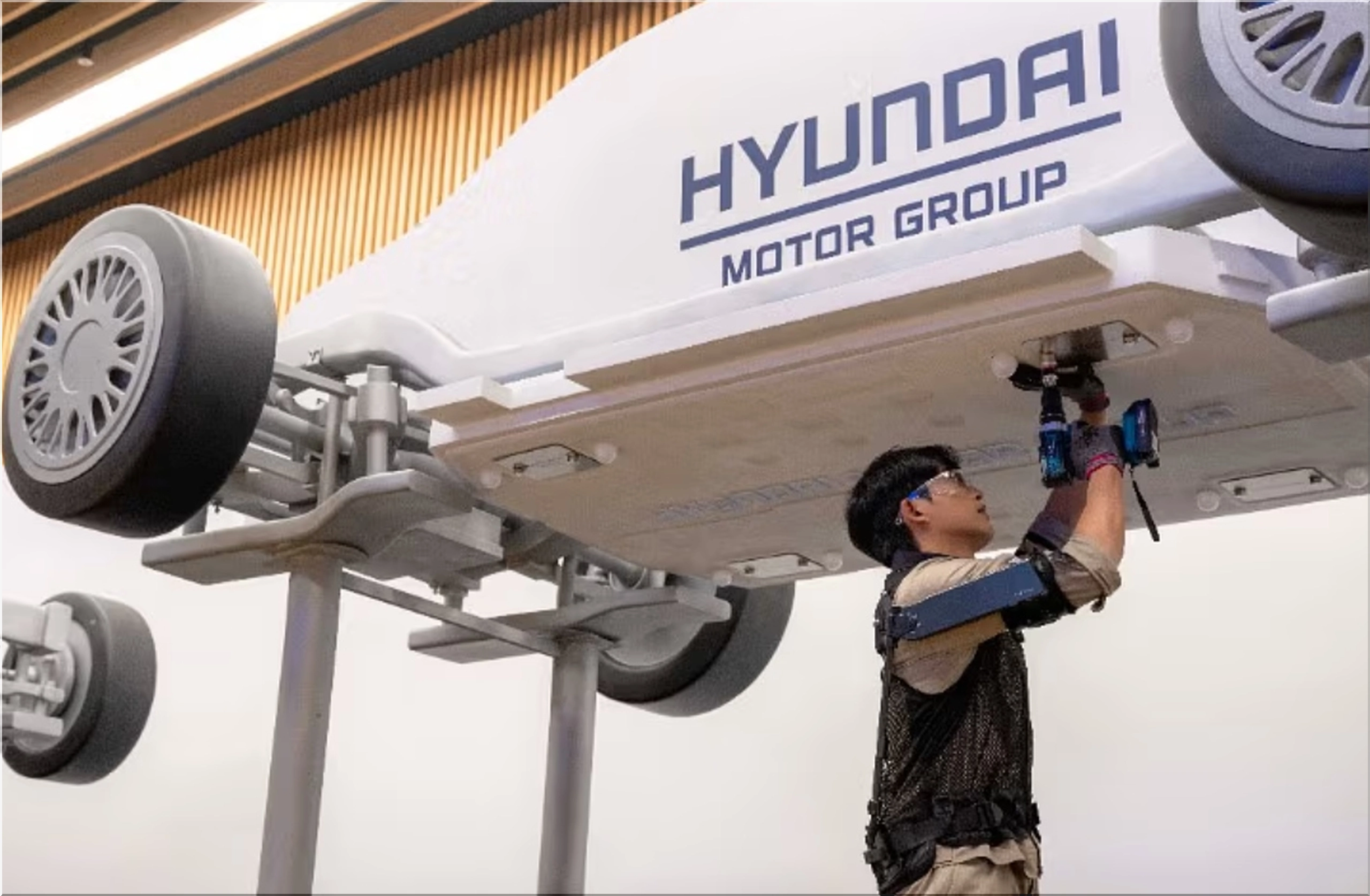
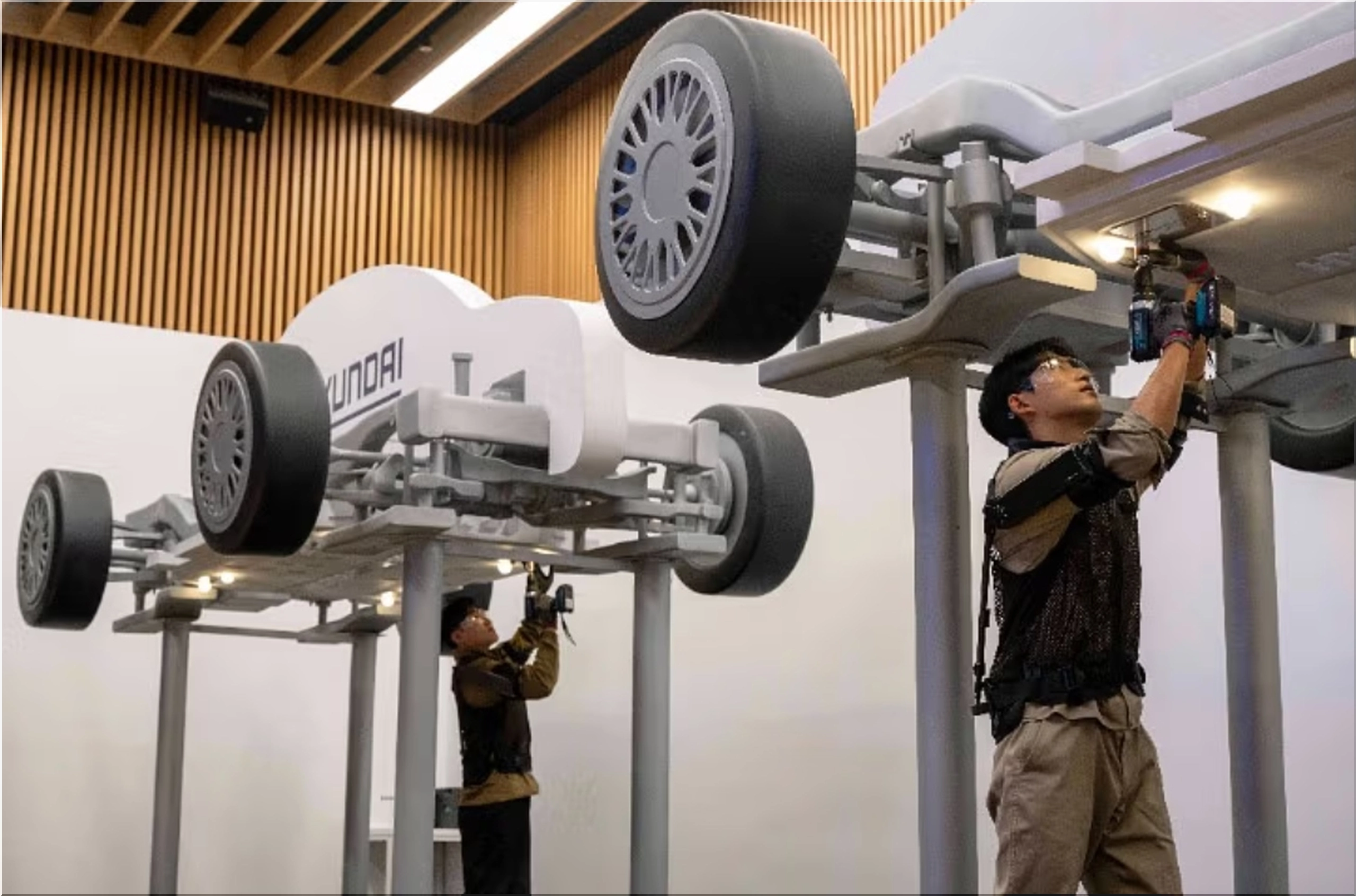
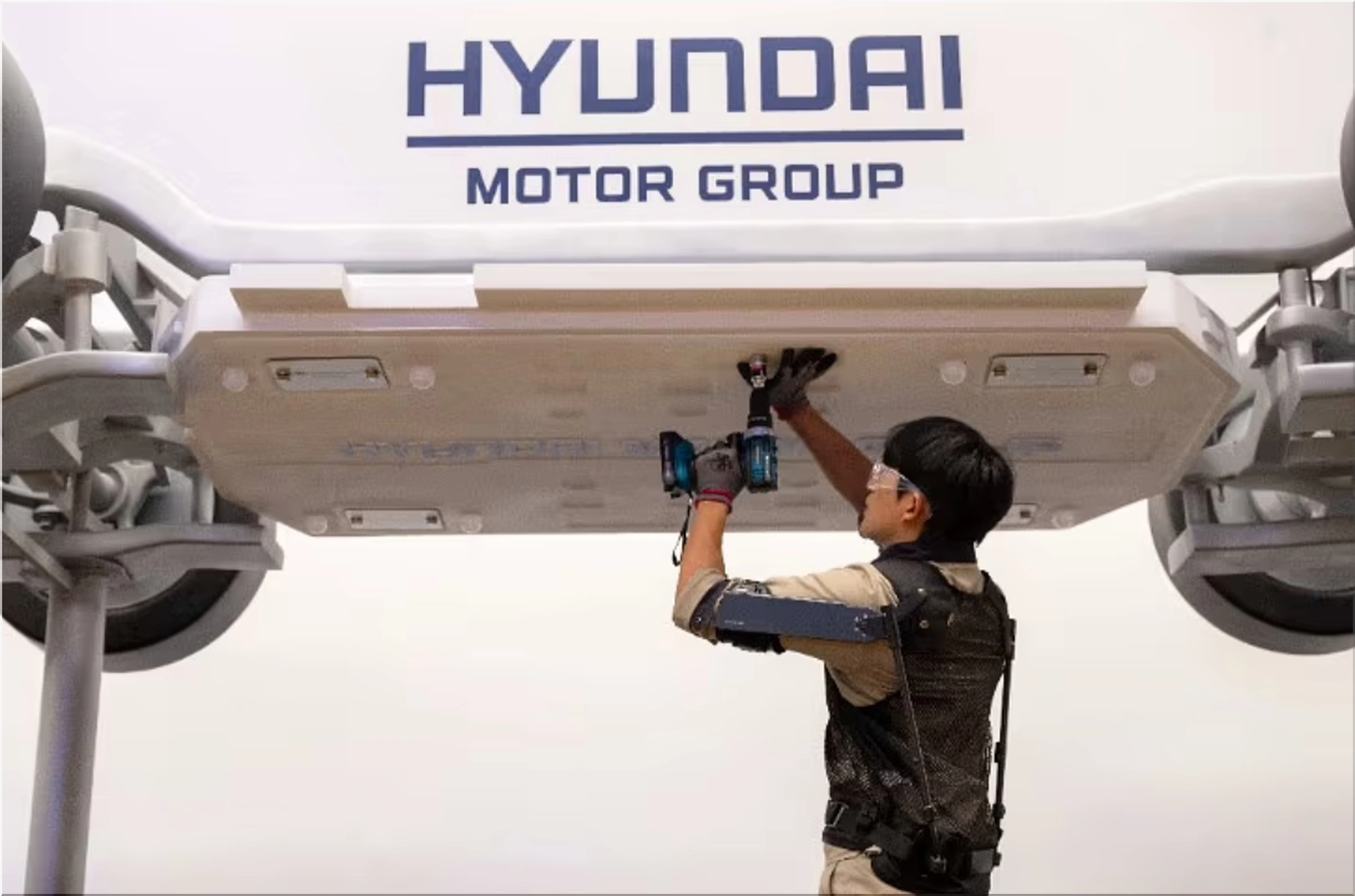
The X-ble Shoulder is a wearable robotic device. Designed and engineered by Hyundai and Kia’s Robotics LAB, it's made to assist with repetitive overhead tasks, particularly in maintenance environments.
Core Functions:
- Reduces shoulder load for overhead labor.
- Provides assistive torque using a non-powered mechanical system.
- No battery. No charging. Minimal maintenance.
This exosuit is not electric, not motorized, and not digital. It uses a non-powered torque generation mechanism, meaning it works without external energy input. That keeps it light, durable, and always operational.
Why Aviation Is the First Stop
Overhead work is routine in aircraft maintenance. That means:
- Frequent deltoid activation.
- Elevated risk of shoulder joint injuries.
- Persistent muscle fatigue.
Korean Air, the first customer, plans to integrate the X-ble Shoulder across its aerospace division, including its UAM programs, military aircraft, and stealth systems. The company is already reviewing further adoption.
Hyunboh Jung, Korean Air's Managing VP of Aerostructure, called the tech a productivity booster and emphasized its role in improving worker health and safety.
Data-Backed Impact
The X-ble Shoulder’s performance isn’t speculative—it’s measured:
| Feature | Performance Gain |
|---|---|
| Shoulder joint load reduction | Up to 60% |
| Deltoid muscle activity reduction | Up to 30% |
| Power source | Non-powered |
| Battery life | N/A (no battery) |
| Certification | ISO 13482, EU Machinery Directive |
Over 300 workers participated in pilot tests. Hyundai and Kia used their own global production sites for real-world data. Feedback loops informed final ergonomic and performance tuning.
How It Works: Simplicity and Physics
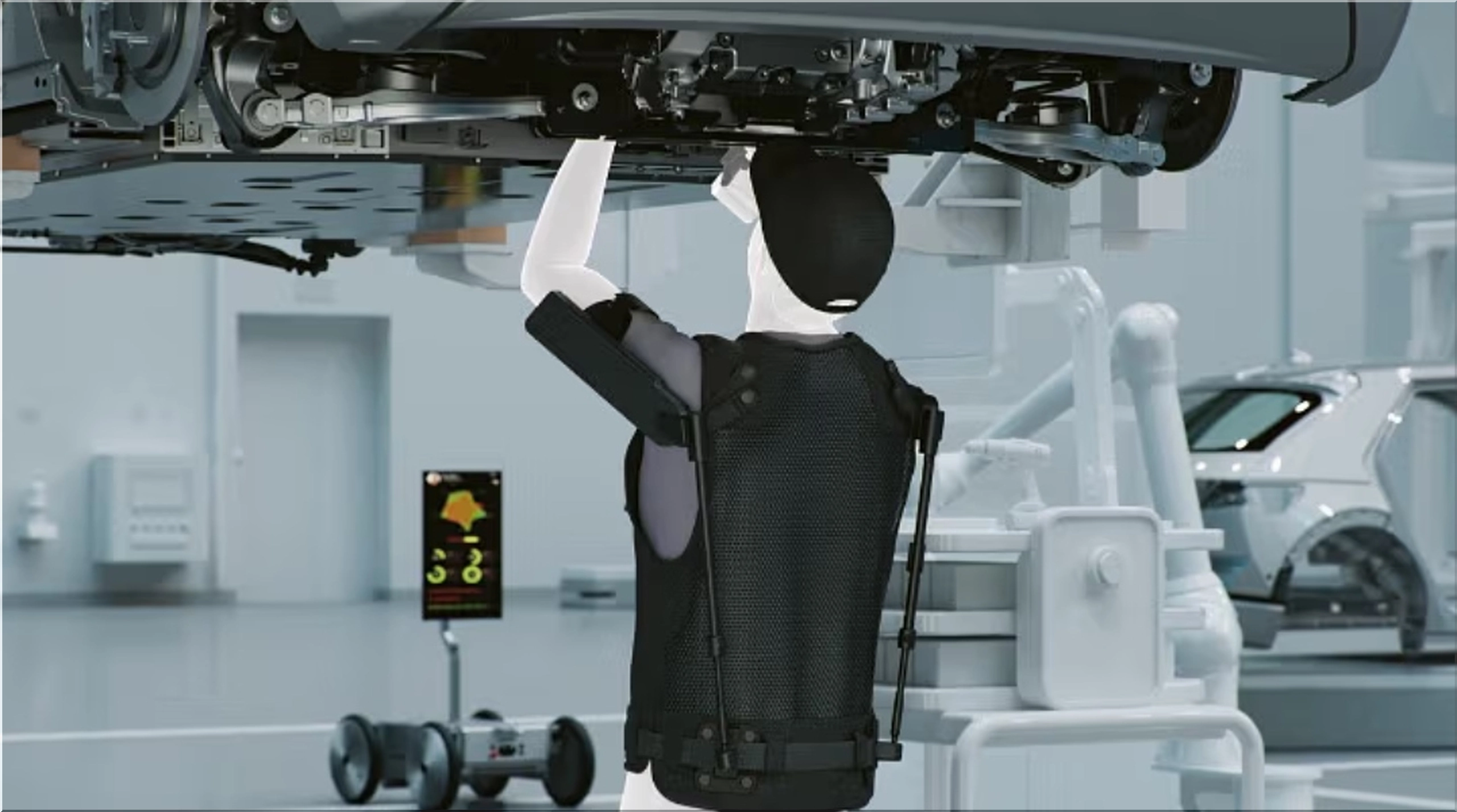
The X-ble Shoulder’s advantage comes from its muscle compensation module. Instead of relying on electronics, it applies passive assistive torque. When the user lifts their arms, the system counters gravitational pull on the upper arms and shoulders.
This reduces strain on the:
- Rotator cuff
- Anterior and lateral deltoids
- Glenohumeral joint
That’s where injury risk often starts in maintenance roles.
Because the system is non-electrical, there’s no risk of downtime due to power issues. No charging means no break in usage, and no battery means reduced weight, complexity, and cost.
Safety First: Verified Certifications
Hyundai and Kia didn’t ship this gear without validation.
- In February 2025, the X-ble Shoulder received ISO 13482 certification for personal assistant robots from DNV, Norway.
- In May 2025, it met the EU Machinery Directive, clearing it for industrial use across Europe.
The robot also won the 2025 iF Design Award (Product – Industry category) and secured a GOOD DESIGN Award in 2024.
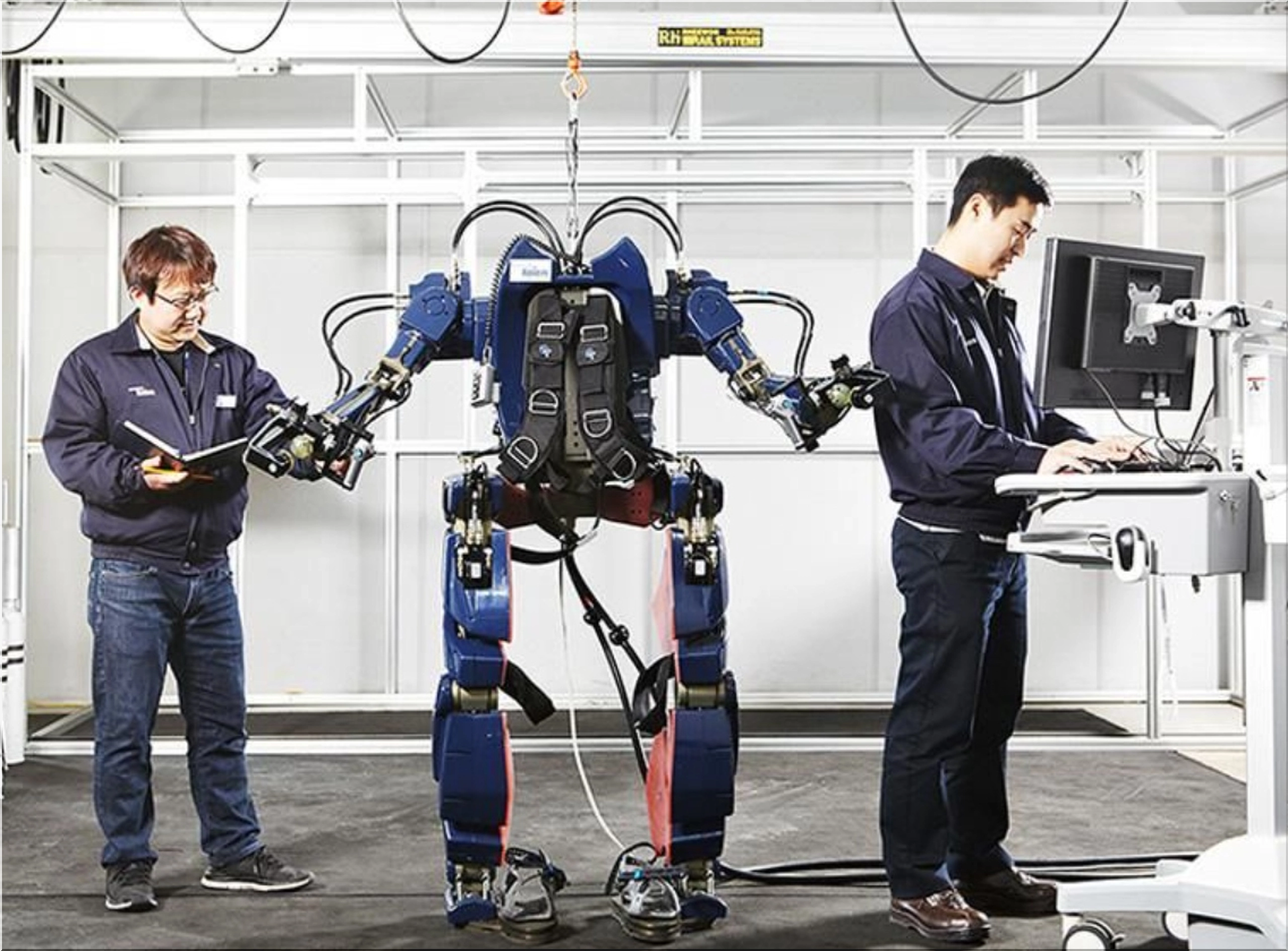
This gear’s form follows function. Industrial design, but internationally recognized.
What This Means for Hyundai and Kia
This launch isn’t about chasing trends. It’s about applying existing robotics R&D into high-ROI verticals. Hyundai Motor Group already leads in EV development, hydrogen mobility, and AI research.
Now it’s turning human labor into a strategic efficiency play.
- Labor-intensive industries see rising health costs and worker fatigue.
- Wearables that don’t need power or high maintenance have clear cost advantages.
- Hyundai and Kia are shipping these to Group affiliates in Korea before 2026 export ramp-up.
The use case goes beyond aviation.
Target Sectors for 2026 Global Rollout
Hyundai and Kia have already flagged three industries for international expansion:
- Construction
- Shipbuilding
- Agriculture
In each sector, the labor involves overhead tasks. That means higher rates of musculoskeletal issues, downtime, and labor churn. Robotics offers measurable ROI through injury reduction and productivity improvement.
Competitive Advantage: Why This Is Different
Most industrial wearables fall into one of two categories:
- Powered exosuits – Heavier, costly, need charging, often overengineered.
- Bracing systems – Limited support, low ergonomic flexibility.
The X-ble Shoulder positions itself as a third option:
- No power requirements
- High user mobility
- Certified for industrial use
- Easy maintenance and long durability window
This makes it scalable across price-sensitive and reliability-focused sectors.
What to Watch Next
Hyundai and Kia already confirmed pre-orders from other industrial customers in Korea. The timeline:
- Late 2025: Expanded domestic rollout to construction and shipbuilding customers.
- Early 2026: Begin global distribution.
- Post-2026: Potential integration into automotive production lines outside Korea.
While it’s still early, the groundwork is set. Hyundai and Kia are not testing ideas—they’re delivering working units.
Bottom Line: This Is a Business Move, Not a Prototype
The X-ble Shoulder isn’t a vision or a concept. It’s built, tested, certified, and now delivered. Korean Air isn’t a beta customer—they’re operationalizing it. Hyundai and Kia’s robotics team didn’t pitch this to consumers. They sold it directly to heavy-industry customers who want ROI.
With certifications in place and real-world feedback from over 300 workers, Hyundai and Kia have a product that fits actual industrial needs.
And it’s only the beginning.
- Add new comment
- 289 views