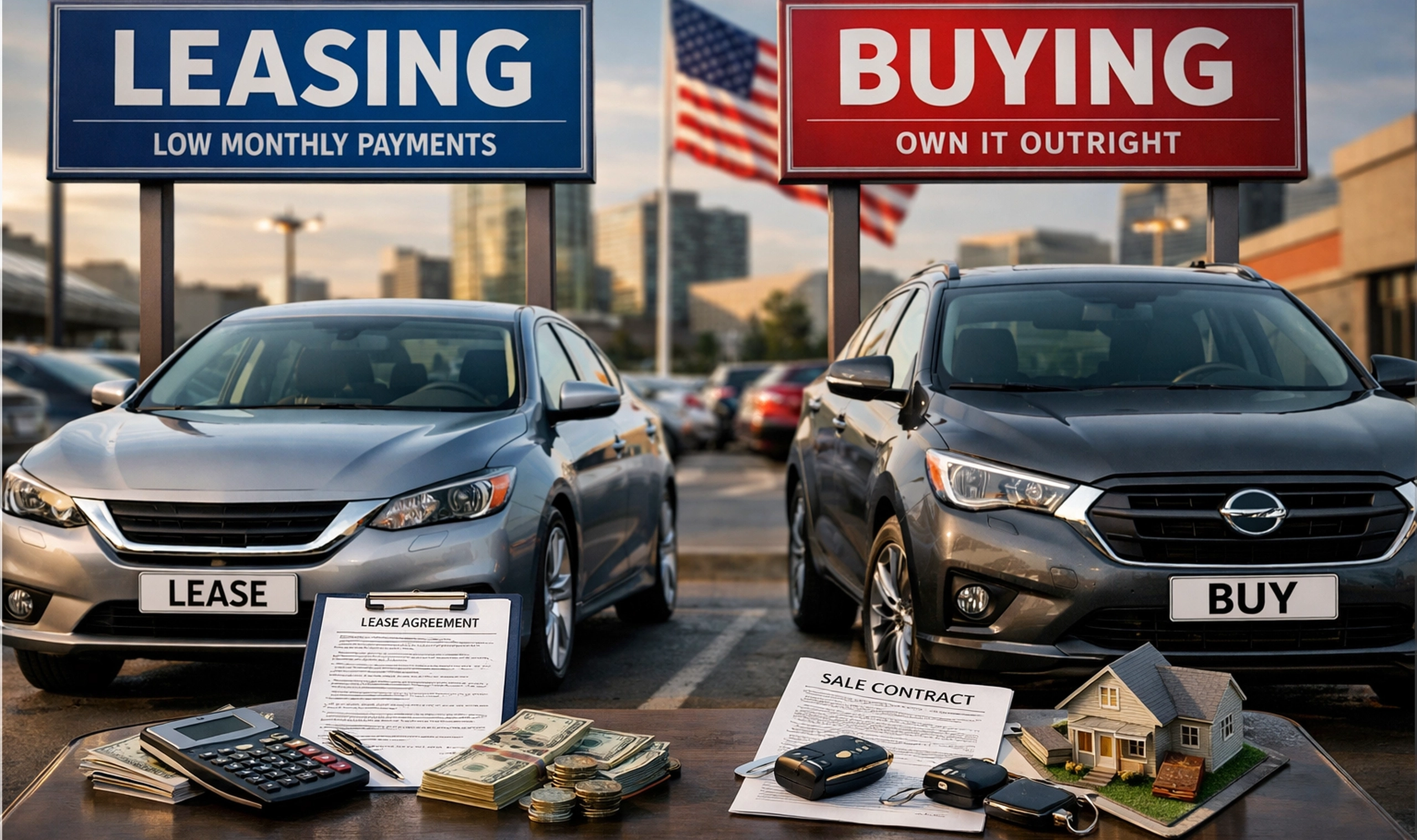
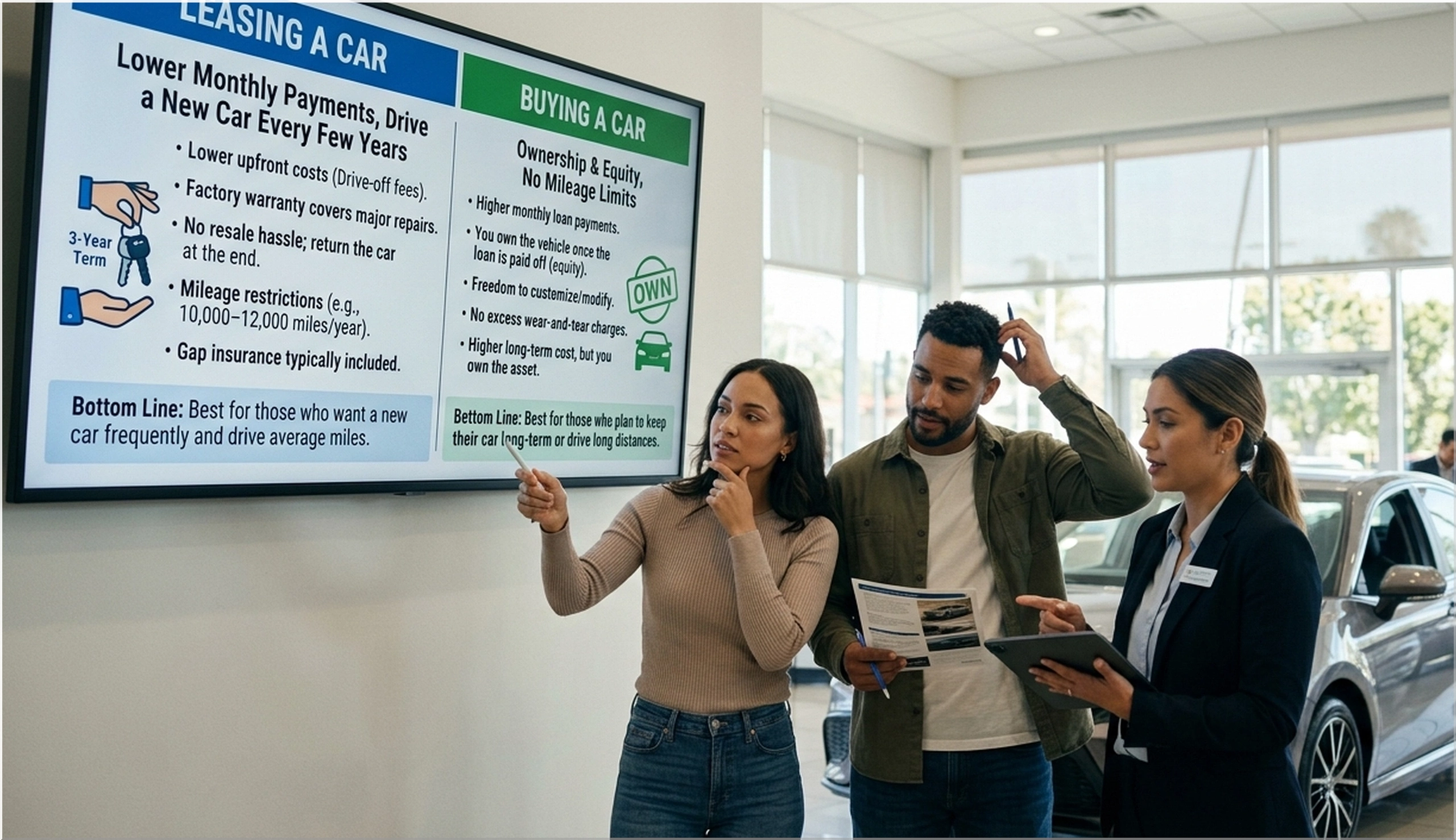
Leasing and buying are not two versions of the same deal. They are two different financial products that reward different types of US drivers.
- Buying builds long-term ownership value. You eventually have a payment-free car and an asset you can sell.
- Leasing buys short-term predictability. You pay for depreciation and use, then return the car, usually while it is still under warranty.
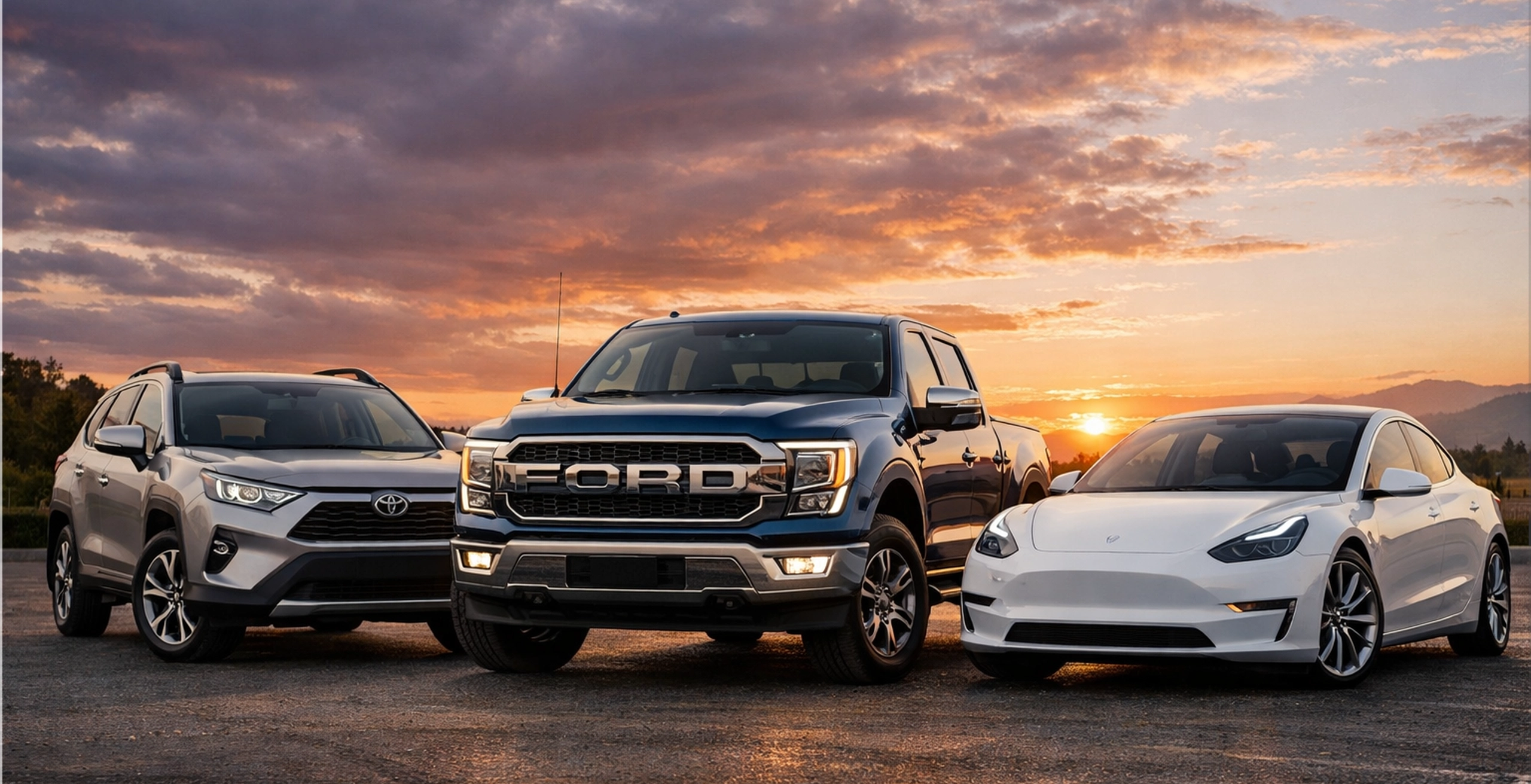
This guide explains who leasing makes sense for, who it does not, and how costs compare using real US-market lease structures and model examples like the Toyota RAV4, Ford F-150, and Tesla Model 3.
Quick Definitions That Actually Matter
Lease
A contract where you pay for the vehicle's depreciation during the lease term, plus a finance charge and fees. You return the car at the end unless you buy it for a preset price.
Buy
You pay cash or finance the full vehicle price. You own the car after payoff, with full flexibility to keep or sell.
Residual Value
The predicted value of the car at lease end. Higher residual usually means a lower lease payment.
Money Factor
The lease version of an interest rate. Dealers may quote this instead of APR.
Pro-Tip: Ask for the money factor and the residual value in writing. If a dealer refuses, treat that as a pricing red flag.
How Leasing Works in the US (Plain English)
When you lease, you pay for:
- Depreciation during the term (what the car loses in value)
- Finance charge (money factor)
- Fees (acquisition and disposition)
- Taxes (state-dependent)
Most US leases are built around:
- 36 months
- 10,000 to 15,000 miles per year (12,000 is common)
This is why leasing feels predictable. The contract assumes a predictable life.
The Lease Fees US Buyers Underestimate
Leasing is not "just a monthly payment." Common cost layers include:
Acquisition Fee
A one-time fee charged at lease start. A real-world example: Toyota lease offers commonly show a $750 acquisition fee.
Disposition Fee
A fee charged when you return the car at lease end. Not every brand charges the same, but it is common.
Mileage Overage Fee
Most leases charge an excess-mile rate. In the US, 15 to 30 cents per mile is common. Tesla's published overage rate is $0.25 per mile.
Wear-and-Tear Charges
Wheels, tires, dents, cracked windshields, and interior damage can trigger charges at turn-in.
Pro-Tip: If you know you will exceed miles, consider choosing a higher mileage allowance up front. It usually costs less than paying overages later.
How Buying Works in the US (Plain English)
Buying is simpler because there is no usage contract.
When you buy, you pay for:
- The full vehicle price (cash or loan)
- Interest if financed
- Taxes and fees
- Maintenance once warranty ends
Buying rewards you when you keep the vehicle long enough to hit the "payment-free years" after payoff.
Leasing vs Buying: The One Sentence Truth
- Leasing is a good short-term tool if you stay inside the rules.
- Buying is a good long-term strategy if you keep cars long enough.
If you keep cars five years or longer, buying usually wins on total cost.
If you replace cars every two to three years, leasing can make sense when the deal is structured well.
Who Leasing Makes Sense For in the US
Leasing works best for drivers with predictable patterns and a short replacement cycle.
Leasing makes sense if you:
- Drive 10,000 to 15,000 miles per year and can stay under the limit
- Want a new car every 2 to 3 years
- Prefer constant warranty coverage
- Live in a market where lease deals are strong
- Want a lower payment to access a higher trim
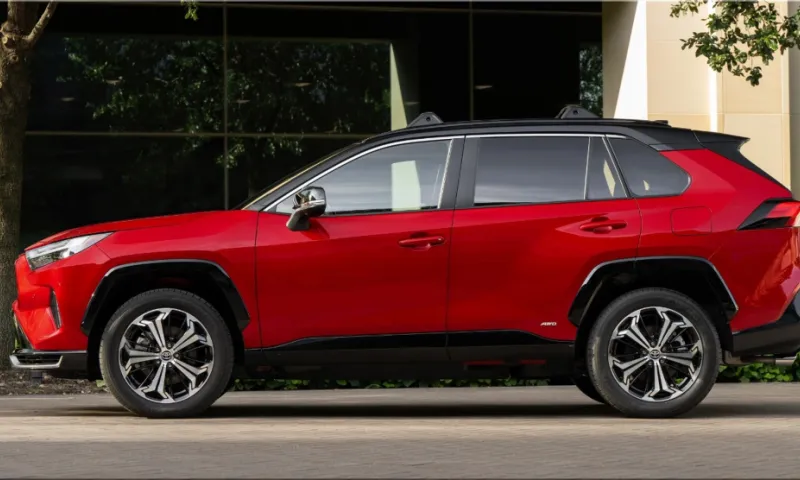
Model example: Toyota RAV4
The Toyota RAV4 is a classic lease candidate because it often holds value well and has wide demand. Toyota lease offers commonly use a 36-month, 12,000 miles per year structure with a defined due-at-signing amount.
Leasing can fit a RAV4 buyer who:
- wants predictable costs
- drives consistent miles
- plans to swap vehicles every three years
Who Leasing Does NOT Make Sense For
Leasing punishes unpredictable mileage and hard use.
Leasing does not make sense if you:
- Drive more than 15,000 miles per year
- Road trip constantly or commute long distances
- Use a vehicle for work, towing, or rough conditions
- Modify your vehicle
- Keep vehicles long-term
- Hate turn-in inspections and end fees
Model example: Ford F-150
A Ford F-150 is often used for towing, hauling, job sites, and high mileage. That behavior fights lease rules and increases wear charges. Many F-150 owners do better buying because long-term utility and resale demand can be strong.
The Cost Comparison Buyers Get Wrong
Most people compare:
- Lease payment vs loan payment
That comparison is incomplete.
The fair comparison is:
- Total cost over the same timeline
Below are three timelines that match how Americans actually own cars.
Cost Comparison: 3 Years (Short-Term Ownership)
At three years, leasing can look strong because:
- the car stays in warranty
- the payment may be lower
- you avoid long-term repair risk
But you also pay:
- acquisition fee
- potential disposition fee
- possible wear and mileage charges
3-year takeaway
Leasing can win at 3 years if:
- you stay under miles
- the deal has low due-at-signing
- you avoid add-ons and wear charges
Buying can still win if:
- you negotiate a strong price
- you get a low APR
- the model holds value
Cost Comparison: 6 Years (The Reality Test)
This is where buying usually pulls ahead.
What happens over 6 years:
- A typical leaser does two leases back-to-back
- A buyer pays off a 60-month loan and then has a payment-free year
6-year comparison table
| Factor | Lease Twice (6 years) | Buy Once (6 years) |
|---|---|---|
| Monthly payment | Often lower | Often higher |
| Warranty coverage | Usually continuous | Ends unless extended |
| Flexibility | Low | High |
| Risk of surprise fees | Medium | Low |
| Asset at end | No | Yes |
If you keep cars longer than one lease term, buying usually wins on total cost.
Cost Comparison: 9 to 10 Years (Where Buying Crushes Leasing)
At this point, buying typically becomes dramatically cheaper because:
- you have multiple payment-free years
- you can sell the vehicle any time
- you avoid repeated lease fees
Leasing at 9 to 10 years usually means:
- three lease cycles
- constant payments
- repeated acquisition and disposition fees
If you are a long-term owner, leasing is usually the expensive choice.
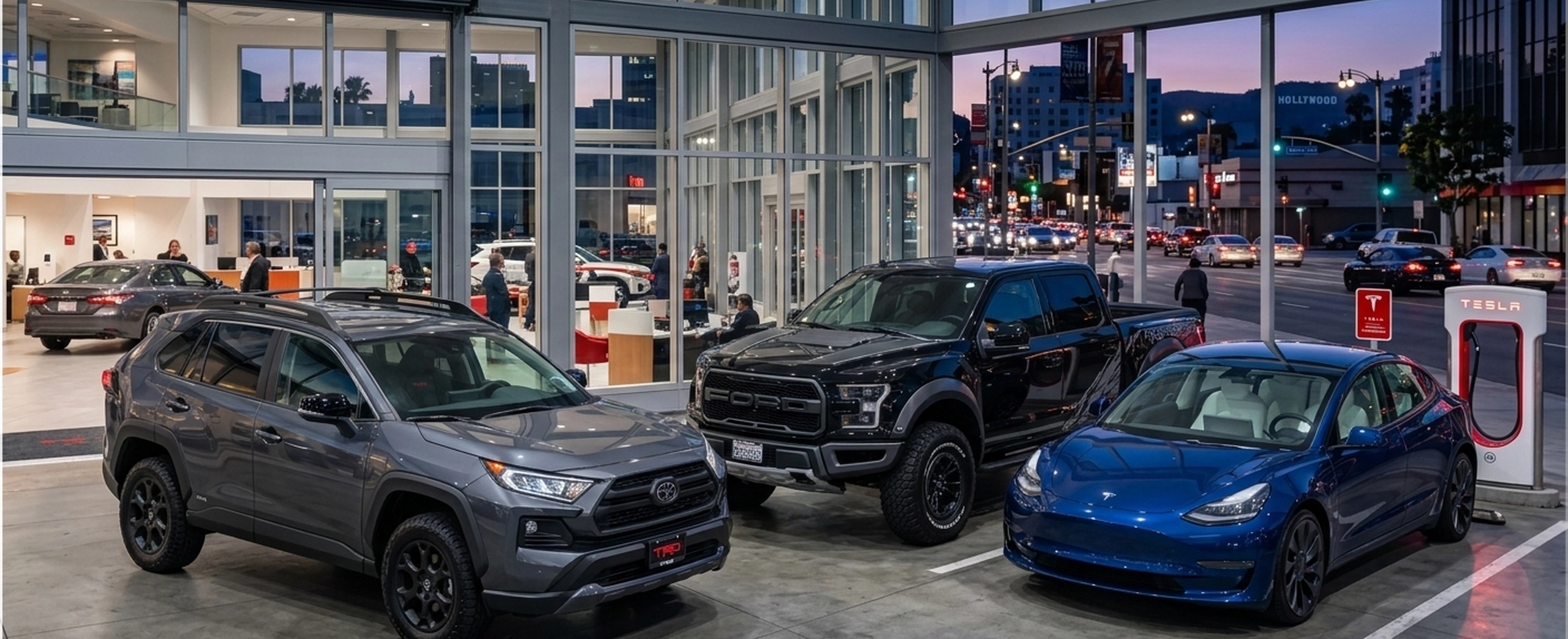
Real Brand and Model Examples (With Real Deal Structures)
These are not hypotheticals. These are the types of lease structures US buyers actually see.
Toyota RAV4 lease structure example
- 36-month lease
- 12,000 miles per year
- due-at-signing required
- acquisition fee shown in the offer (example: $750)
Why it matters: the RAV4 tends to lease well when the offer terms are strong because payment math is helped by a strong predicted end value.
Ford F-150 lease structure example
Ford's published lease incentives commonly show:
- 36-month term
- a specific monthly payment
- a defined amount due at signing
- taxes and fees excluded from the headline payment
Why it matters: a low advertised payment can still become expensive if you drive high miles or use the truck hard.
Tesla Model 3 lease structure example
Tesla publishes:
- standard mileage allowances
- excess mileage fee of $0.25 per mile
- a clear digital process without dealership negotiation
Why it matters: Tesla lease terms are more transparent, but you still face the same math. If you exceed miles, you pay.
Leasing vs Buying by Vehicle Type (US Reality)
Compact SUVs and crossovers (Toyota RAV4, Honda CR-V class)
Leasing can make sense for drivers who want predictable costs and switch vehicles every three years. Buying makes sense for long-term owners.
Full-size pickups (Ford F-150, Chevy Silverado class)
Buying usually makes more sense due to:
- higher miles
- heavier use
- strong resale demand
EVs (Tesla Model 3 class)
Leasing can make sense for drivers who want lower exposure to:
- resale value swings
- rapid tech change
Buying can make sense for:
- long-term owners
- stable home charging situations
- drivers who plan to keep the car well beyond payoff
The Quick Decision Rule for US Drivers
Leasing is usually better if:
- you keep cars 2 to 3 years
- you drive predictable miles
- you want warranty coverage continuously
- you value convenience and low hassle over long-term cost
Buying is usually better if:
- you keep cars 5+ years
- you drive high mileage
- you want freedom and flexibility
- you want payment-free years later
Pro-Tips That Save Money (Either Path)
- Negotiate the vehicle price even if you lease
- Keep due-at-signing low on leases, do not prepay depreciation
- Choose the shortest loan term you can comfortably afford if buying
- Separate trade-in, price negotiation, and financing into separate steps
- Treat "low monthly payment" as a sales tactic until the full math is clear
Final Takeaway
Leasing is not cheaper. It is a controlled, short-term ownership product. Buying is a long-term ownership strategy that rewards patience.
If you want a new vehicle every few years and your mileage is predictable, leasing can make sense with the right deal.
If you want the lowest cost over time and you keep vehicles past one lease cycle, buying usually wins.
- Add new comment
- 112 views