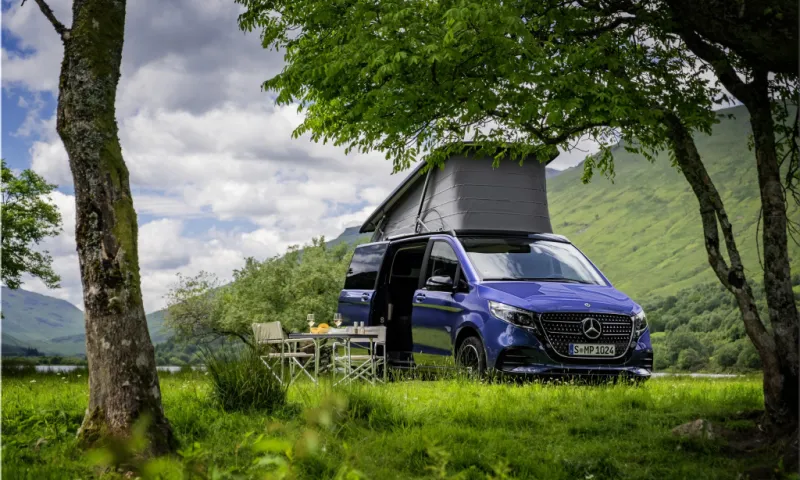
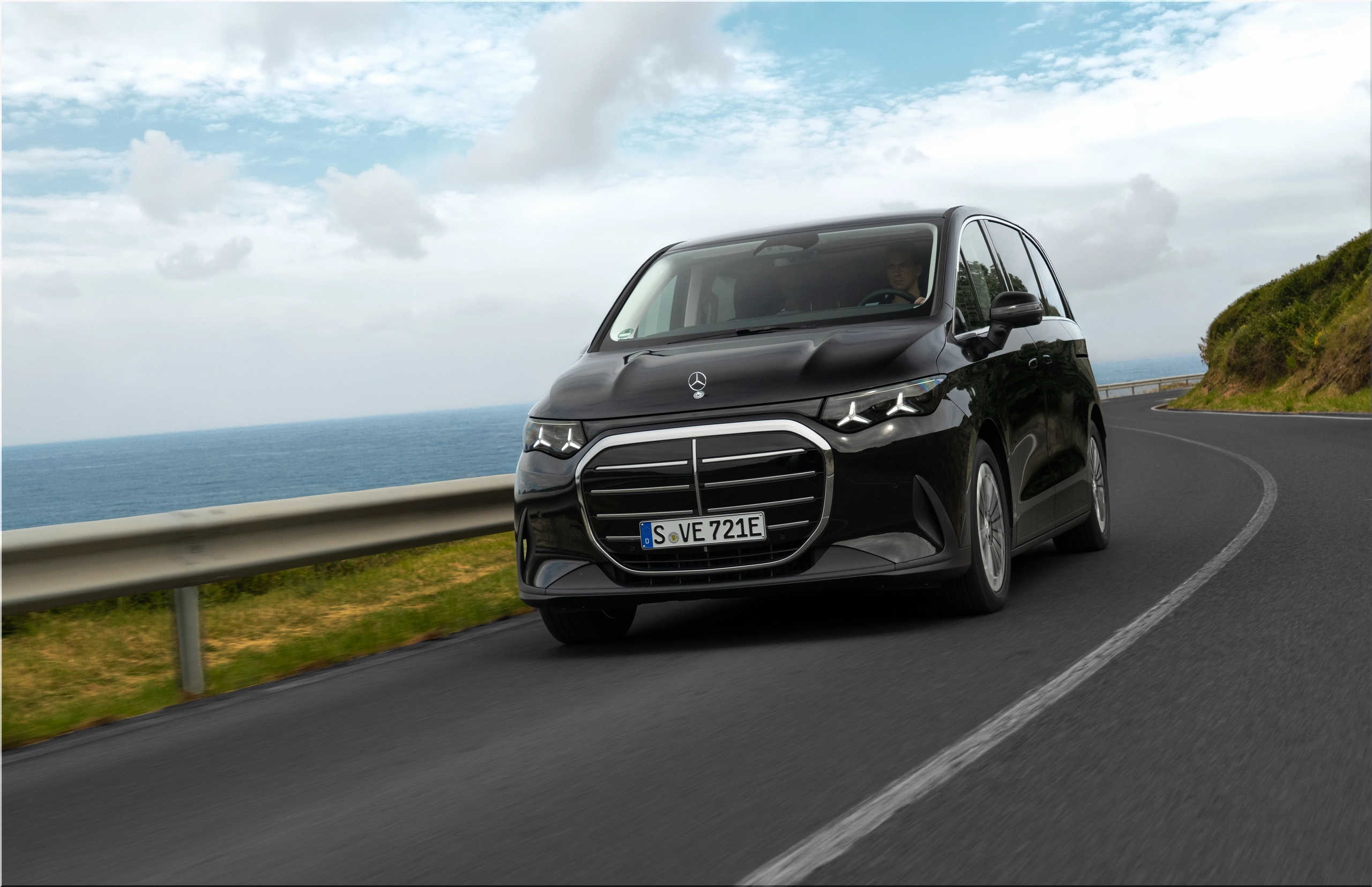
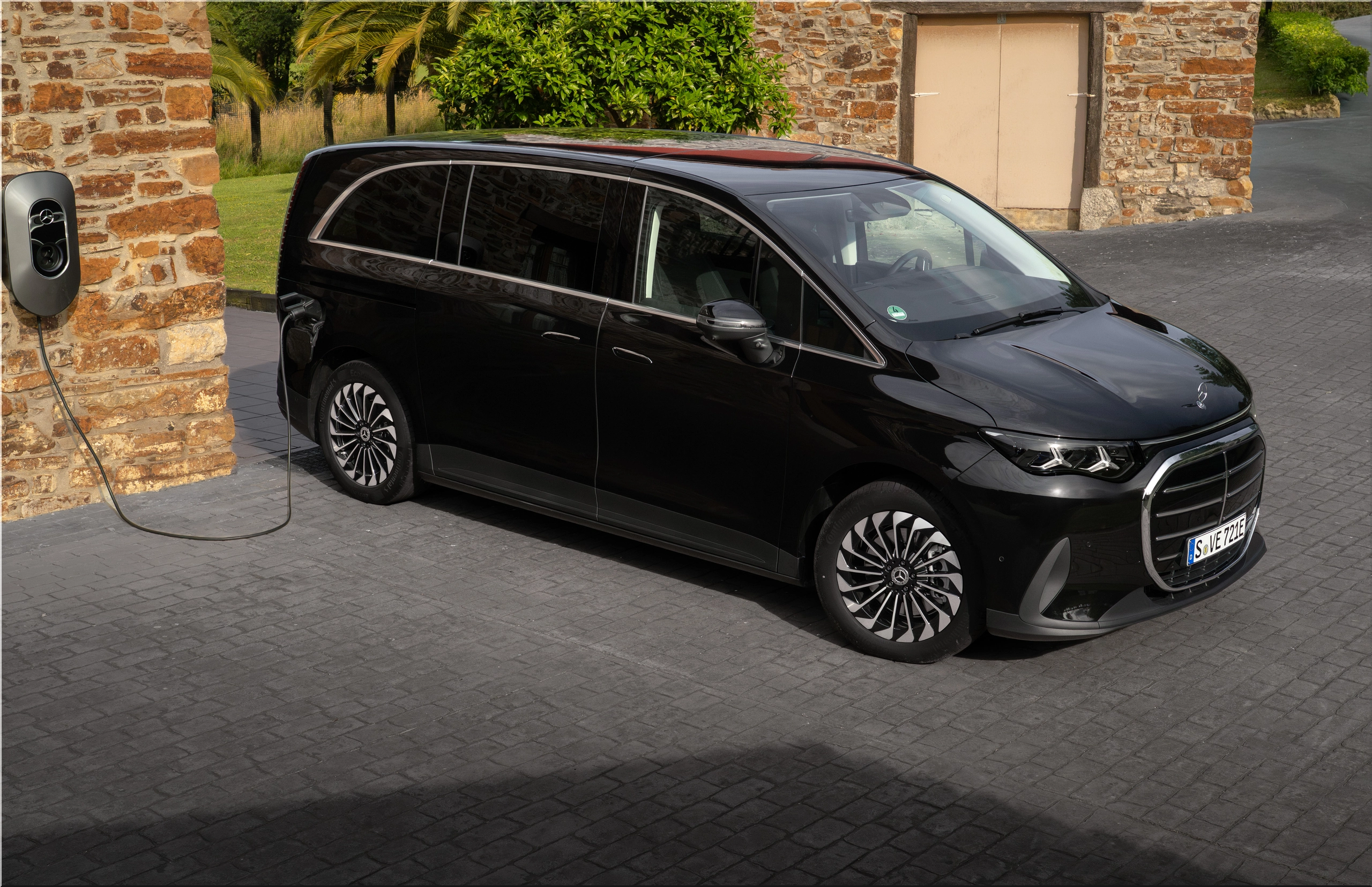
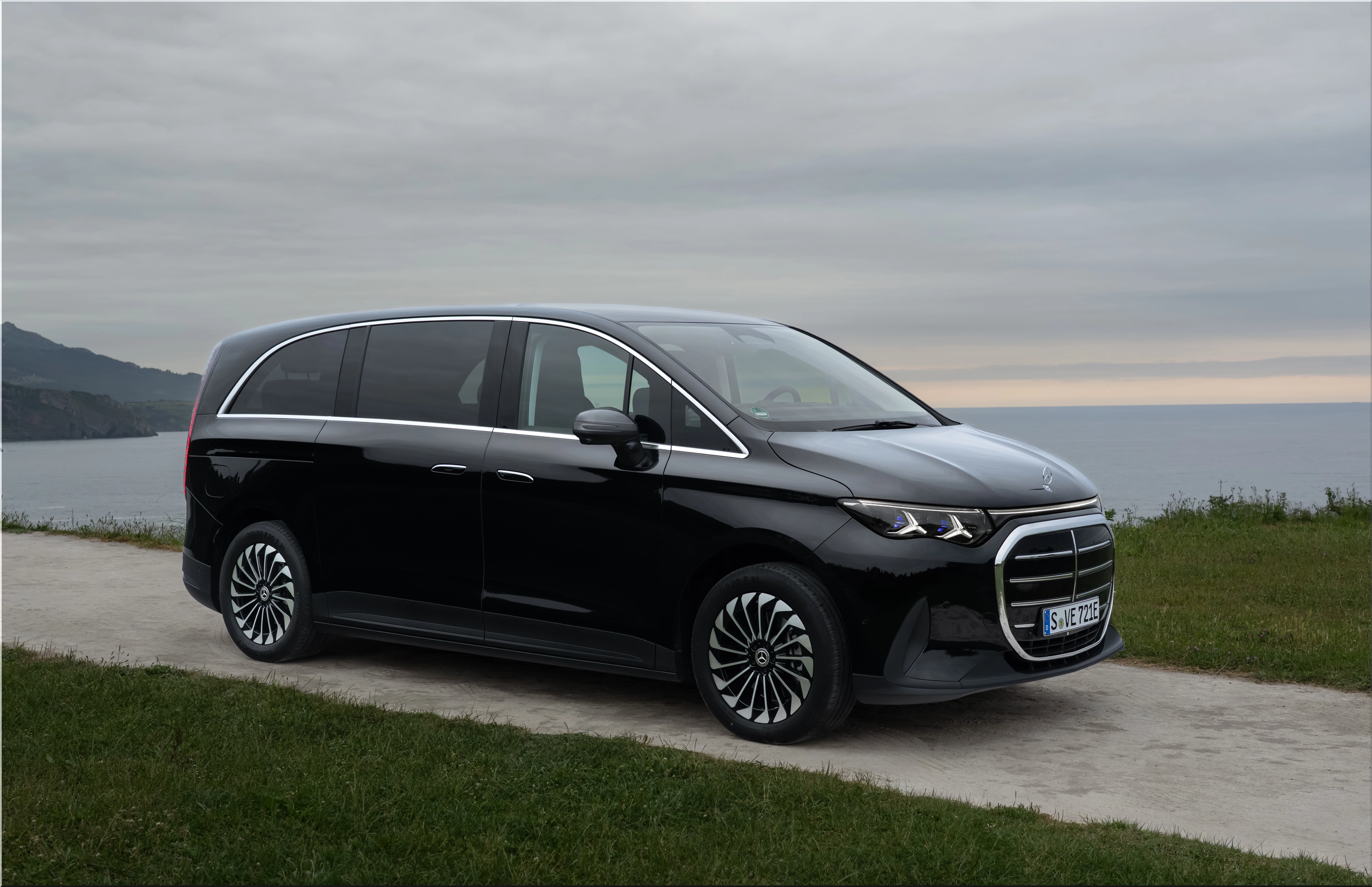
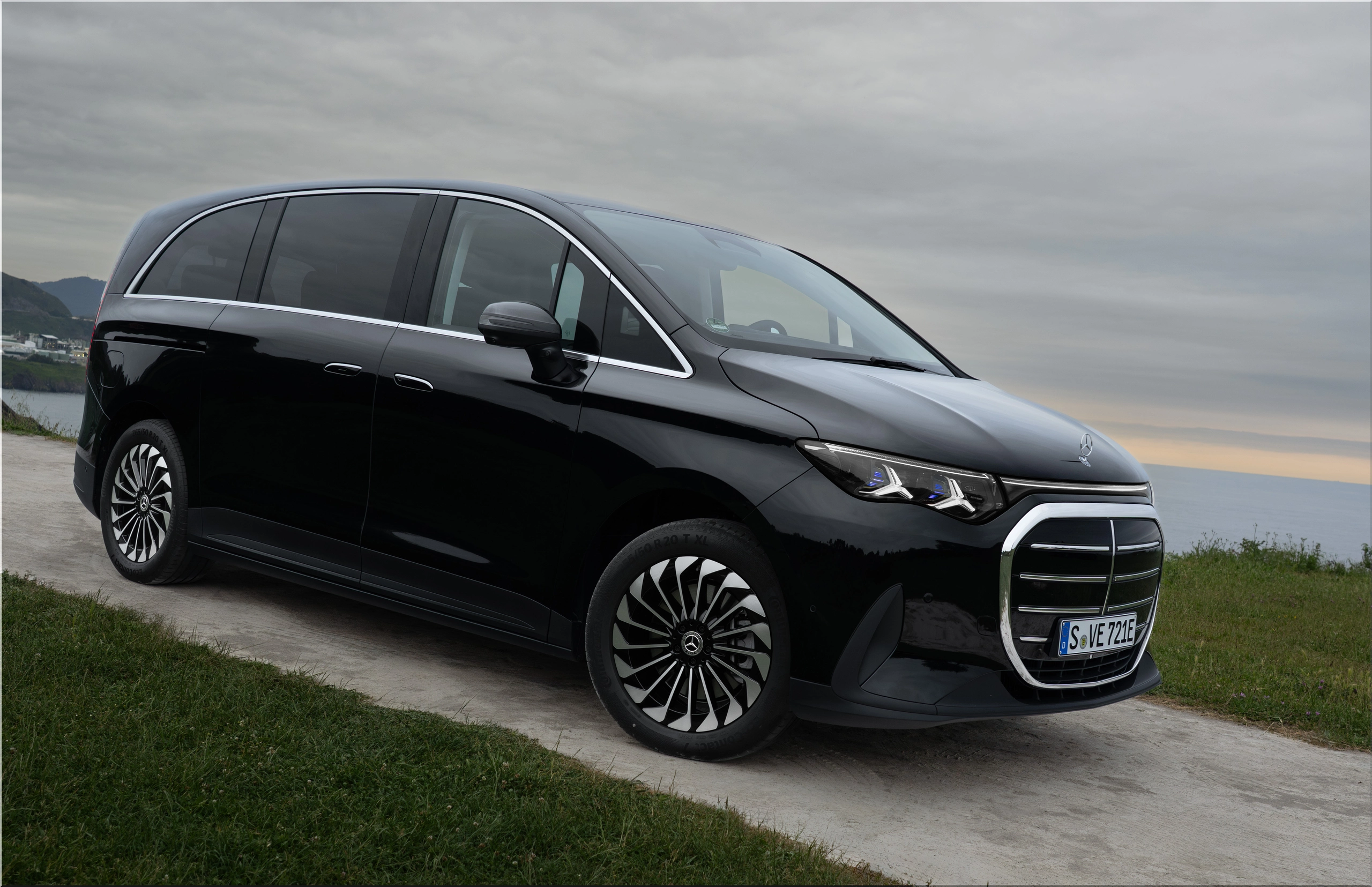
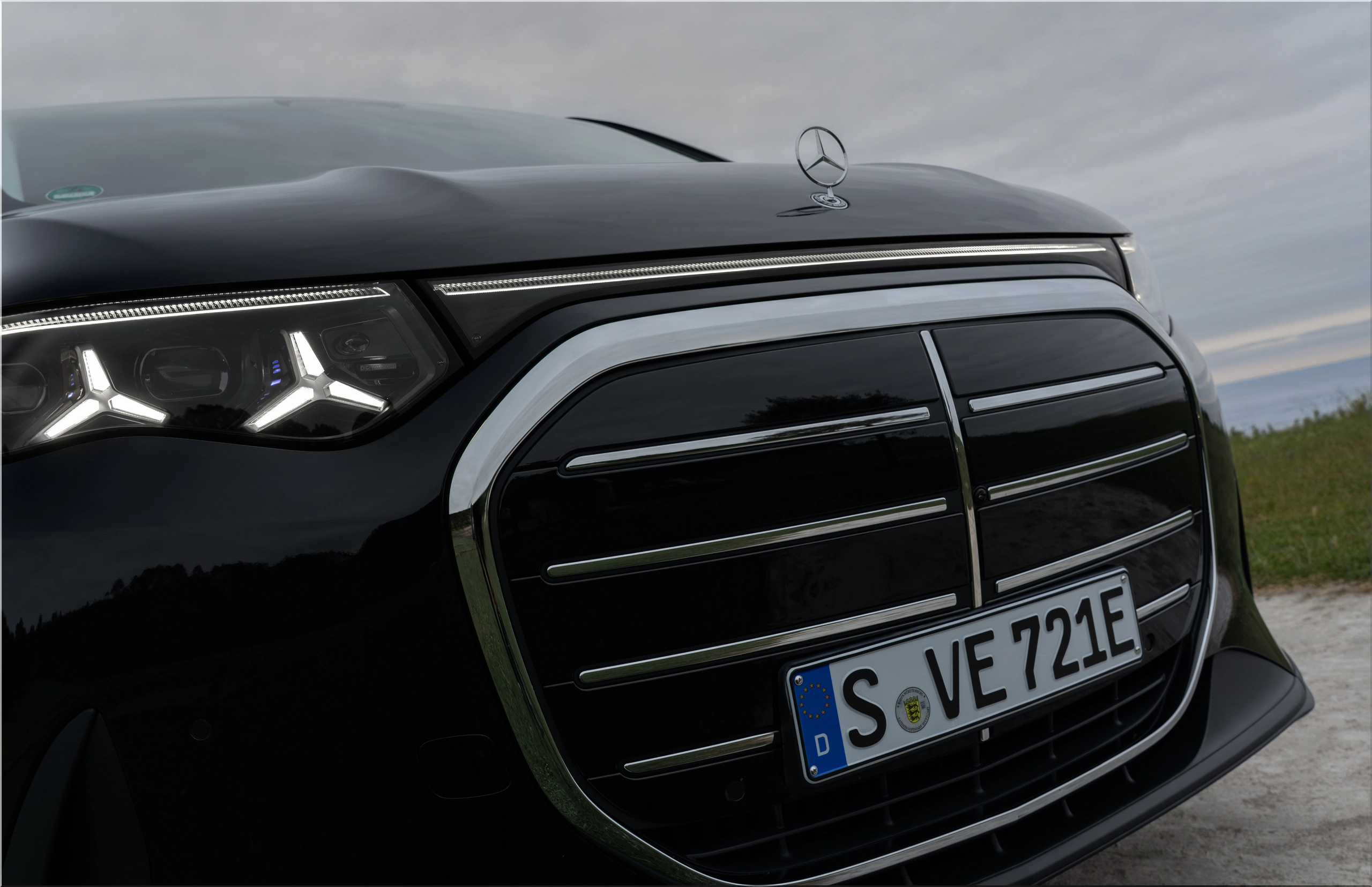
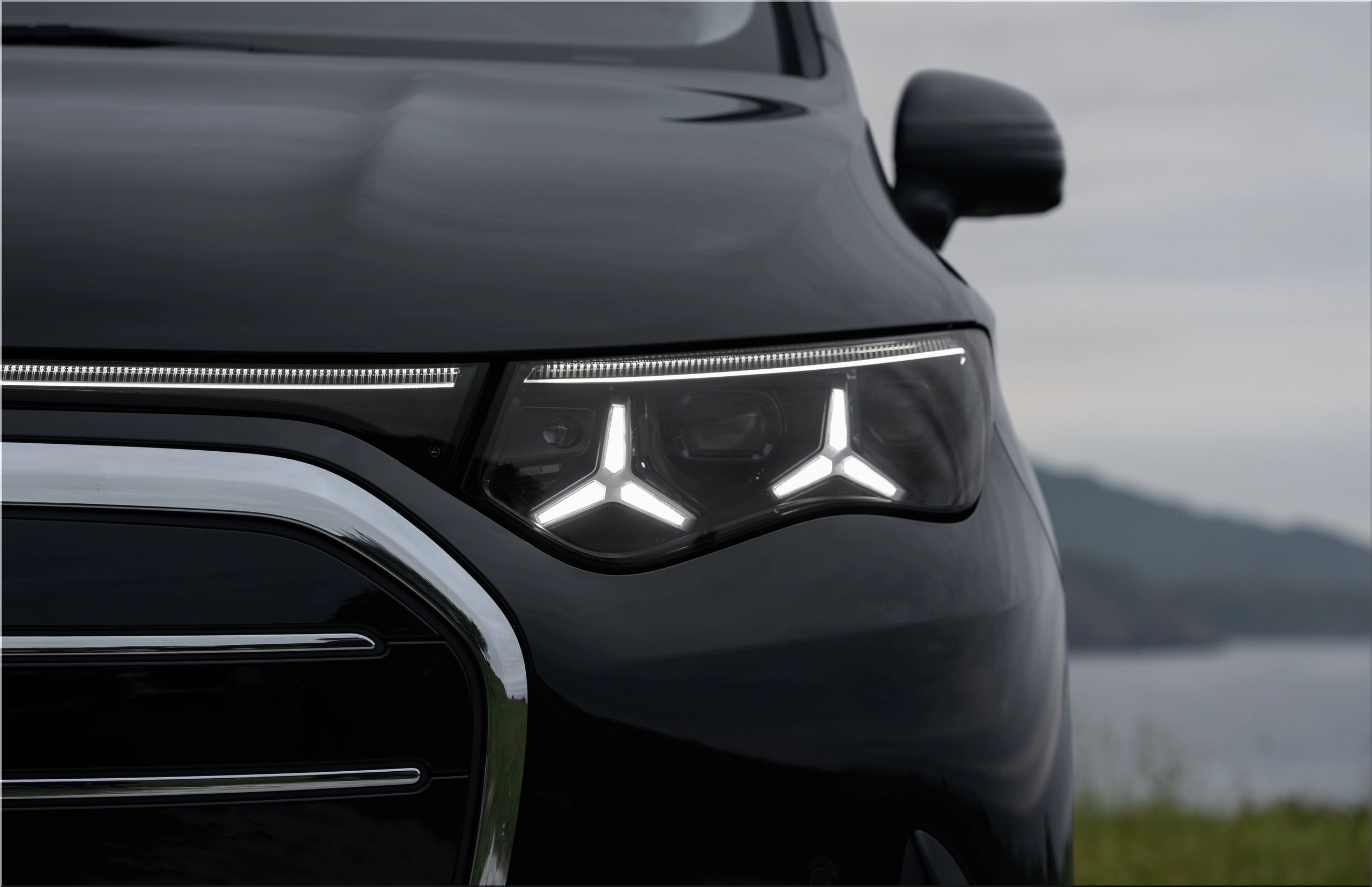
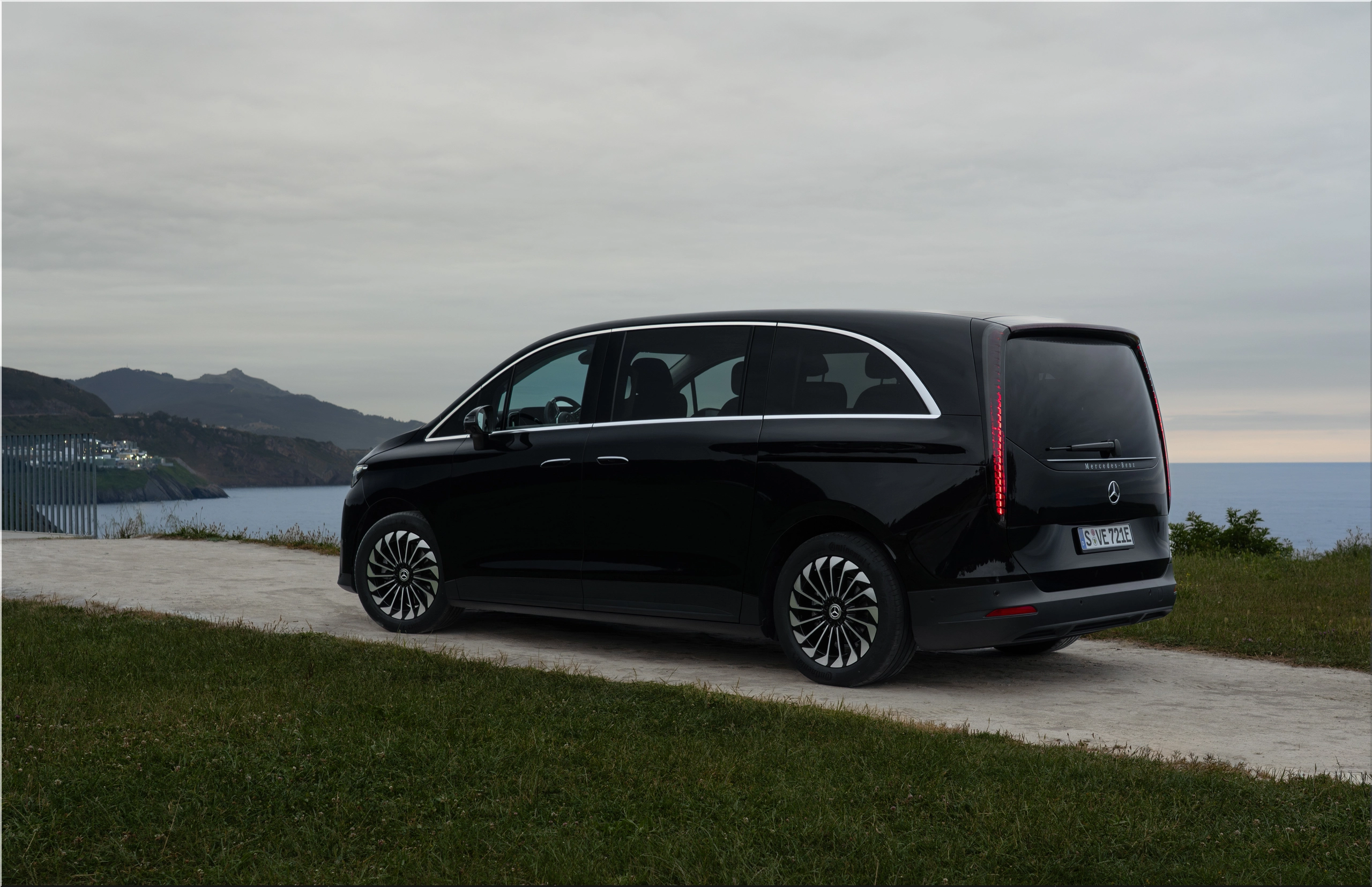
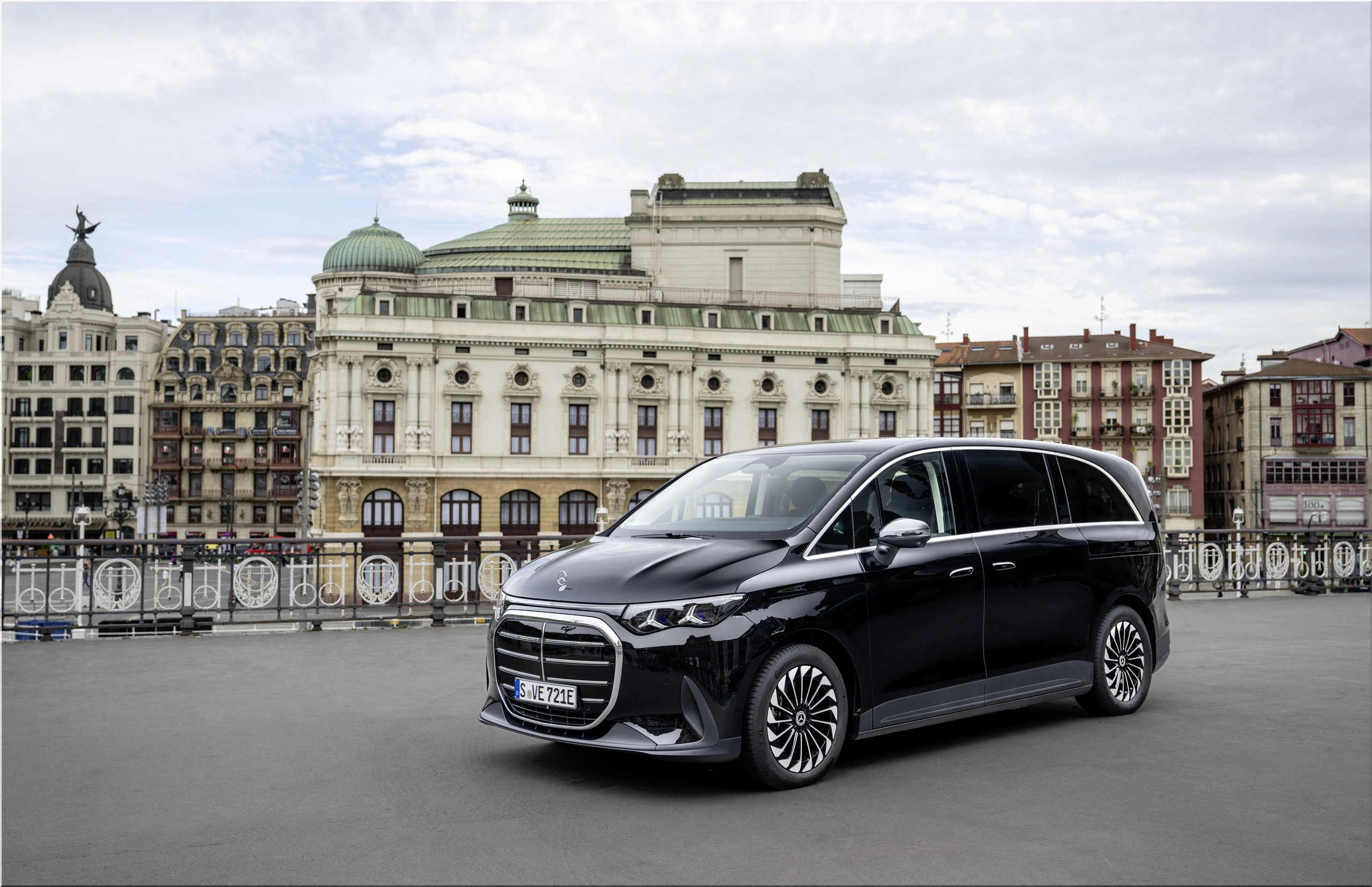
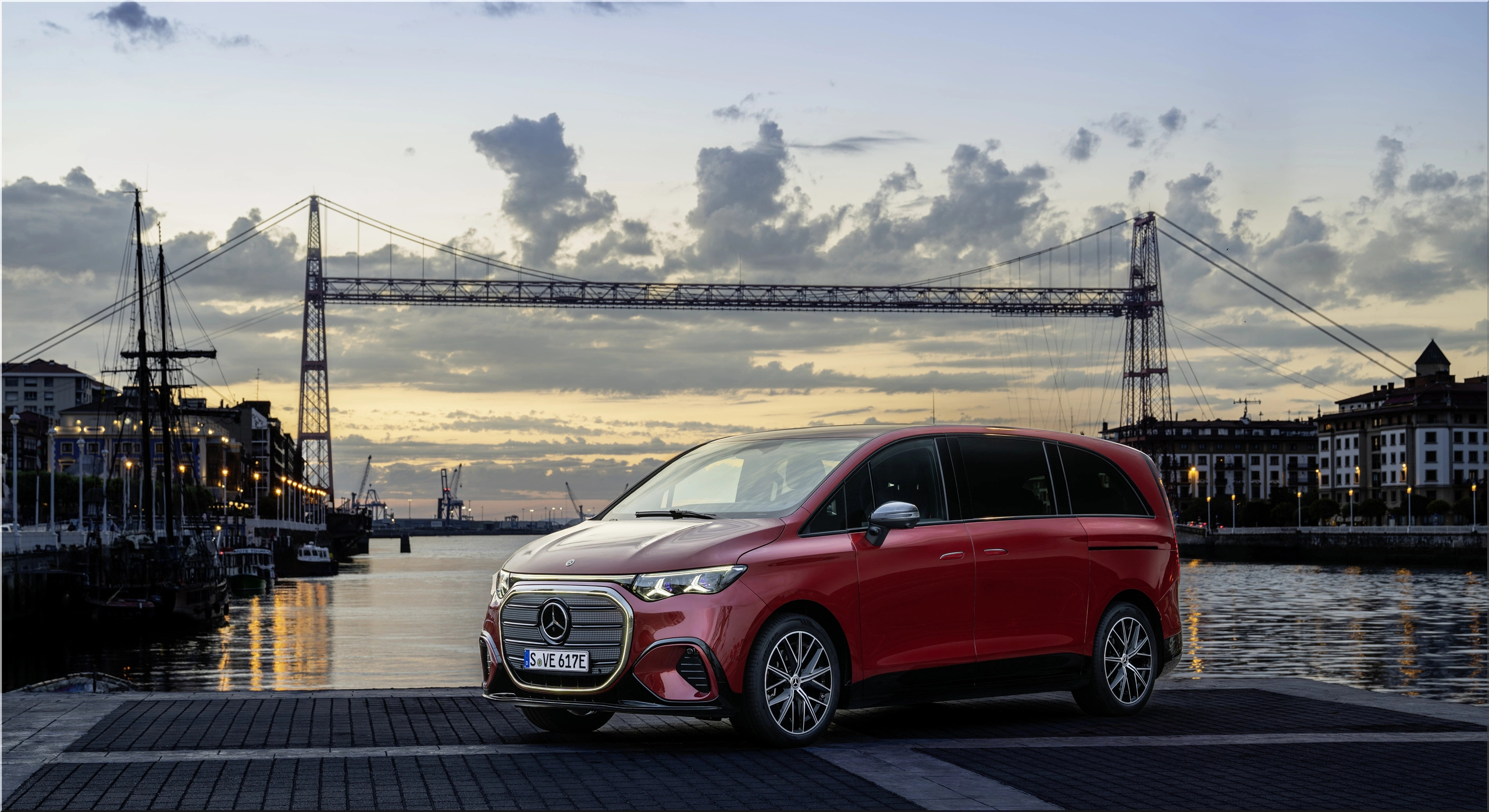
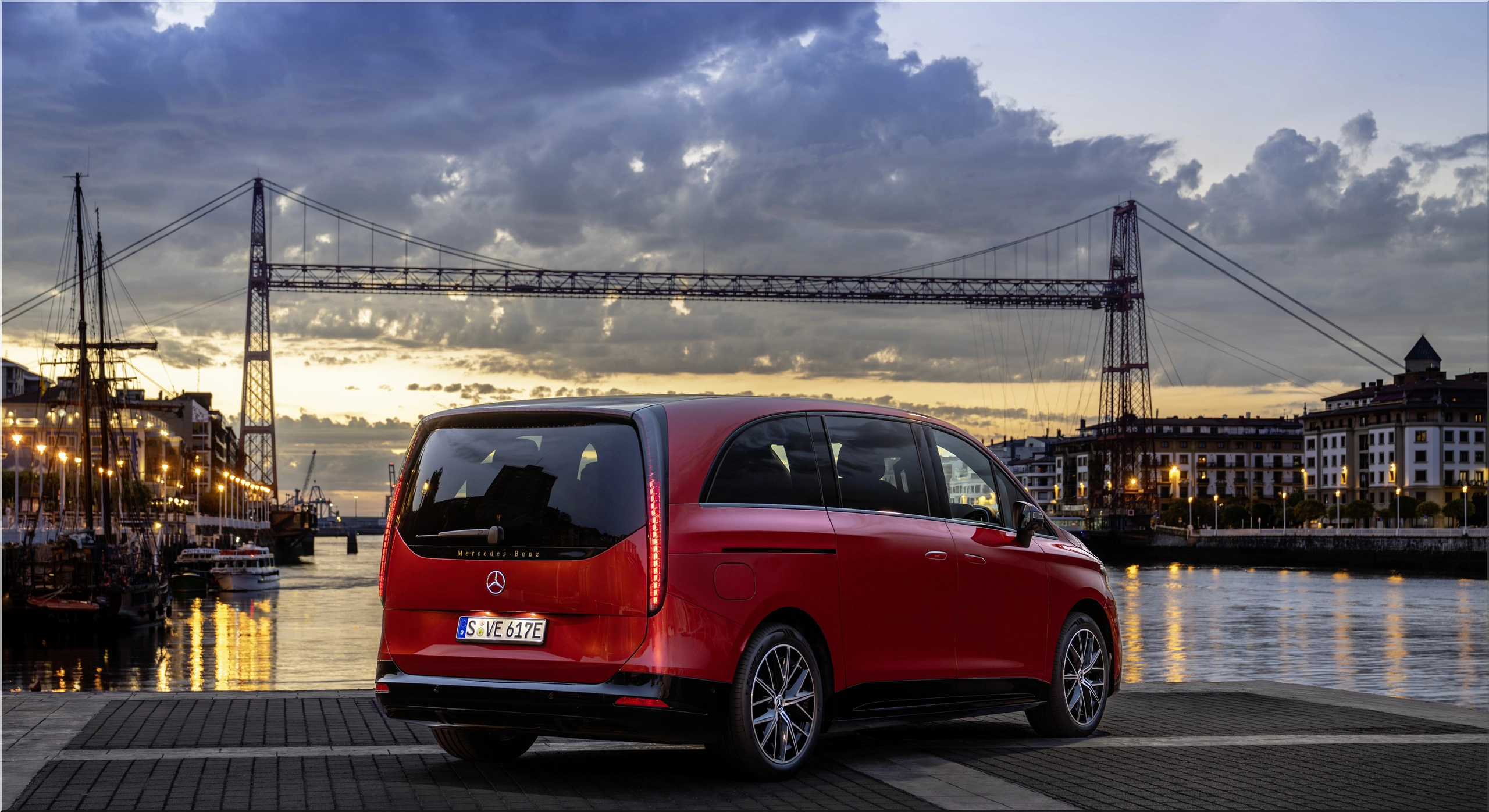
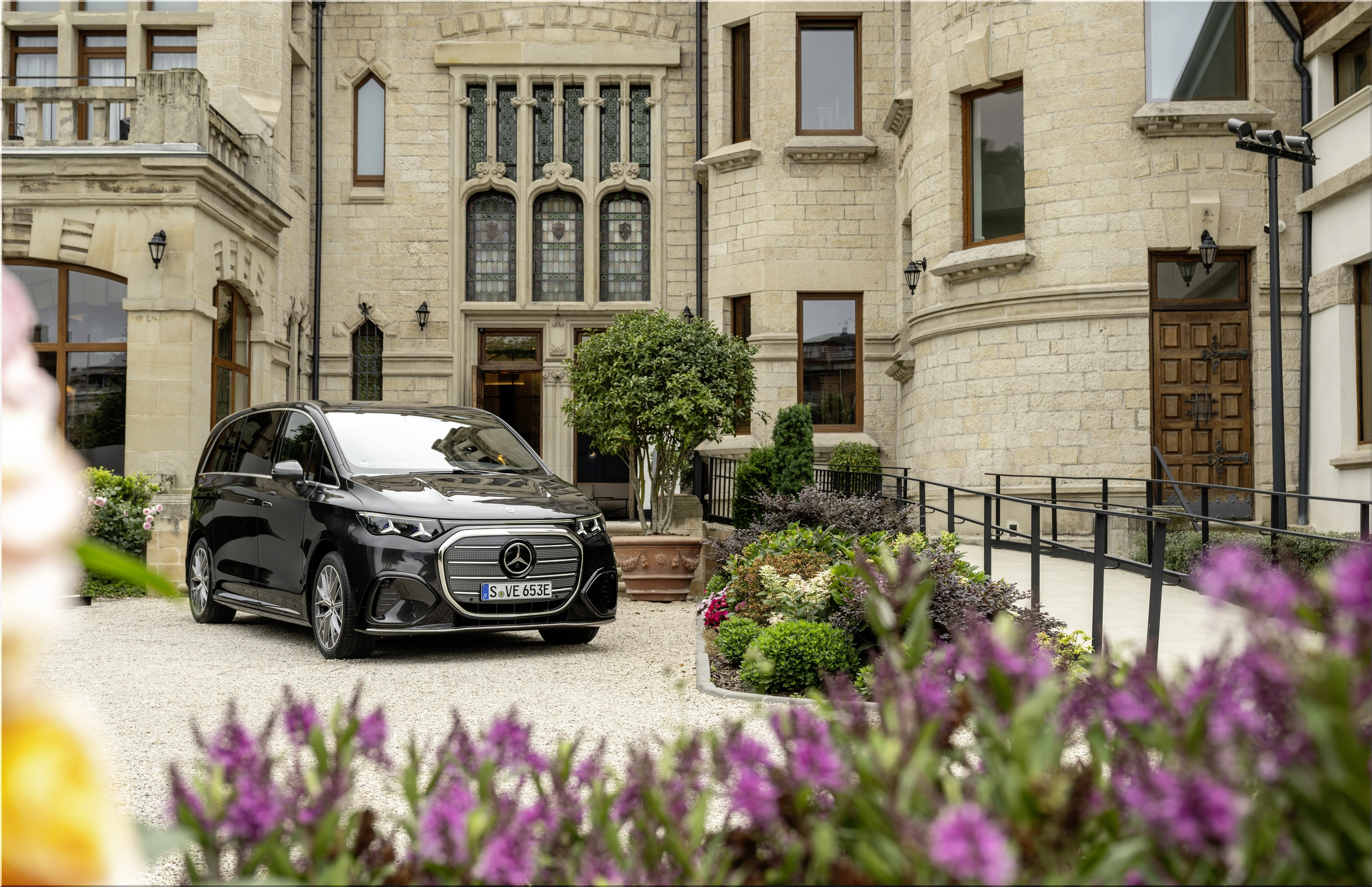
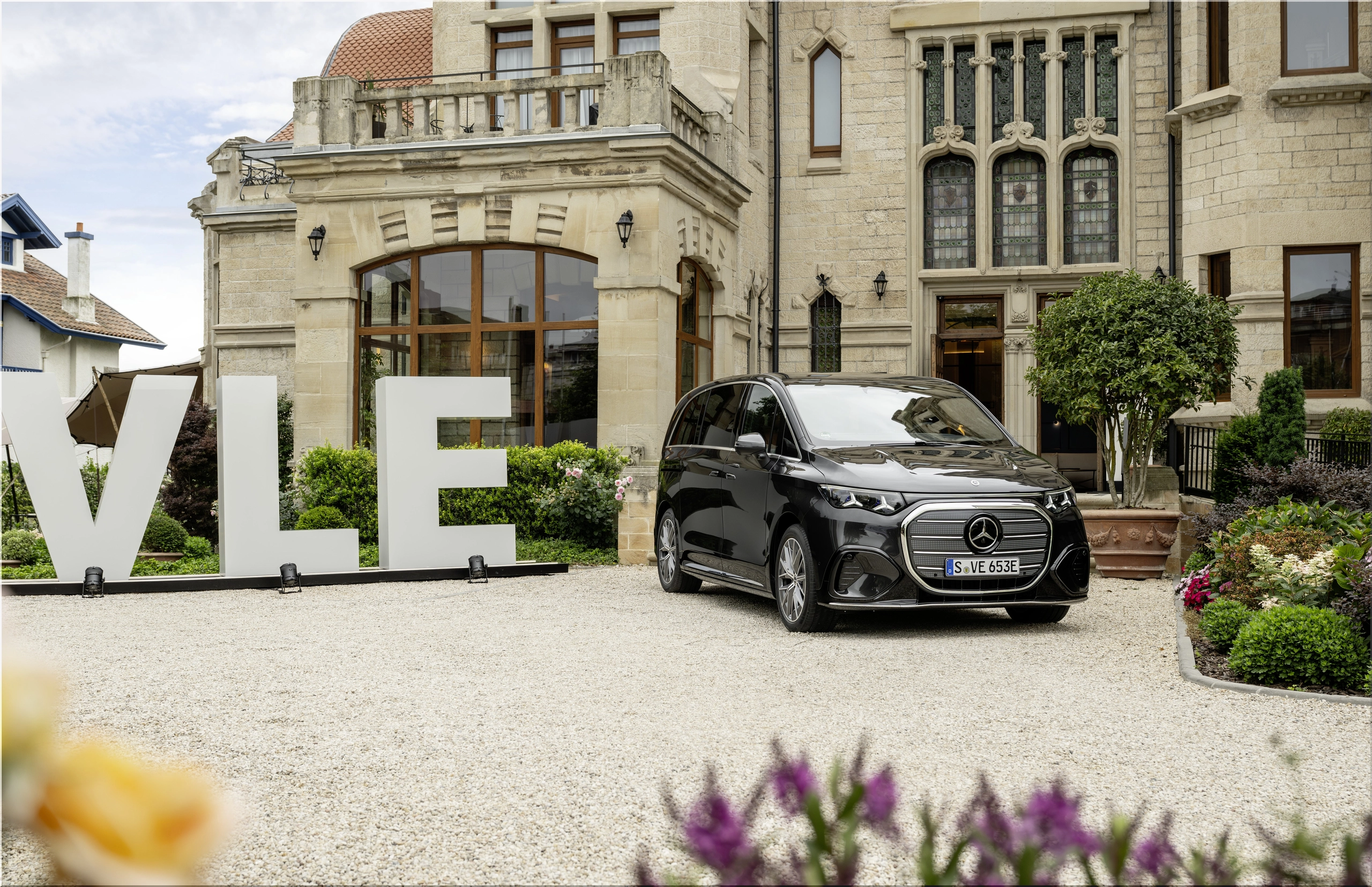
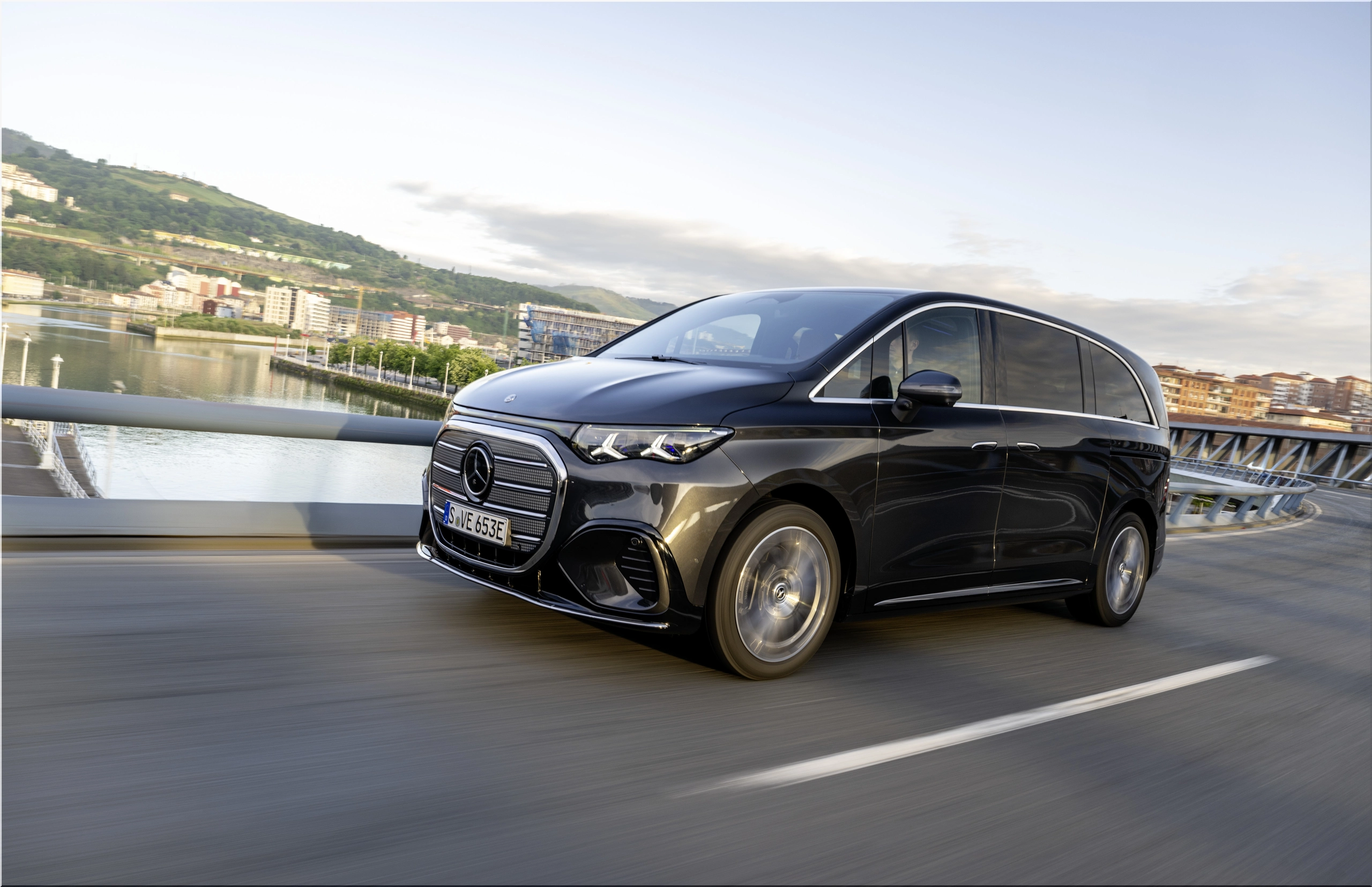
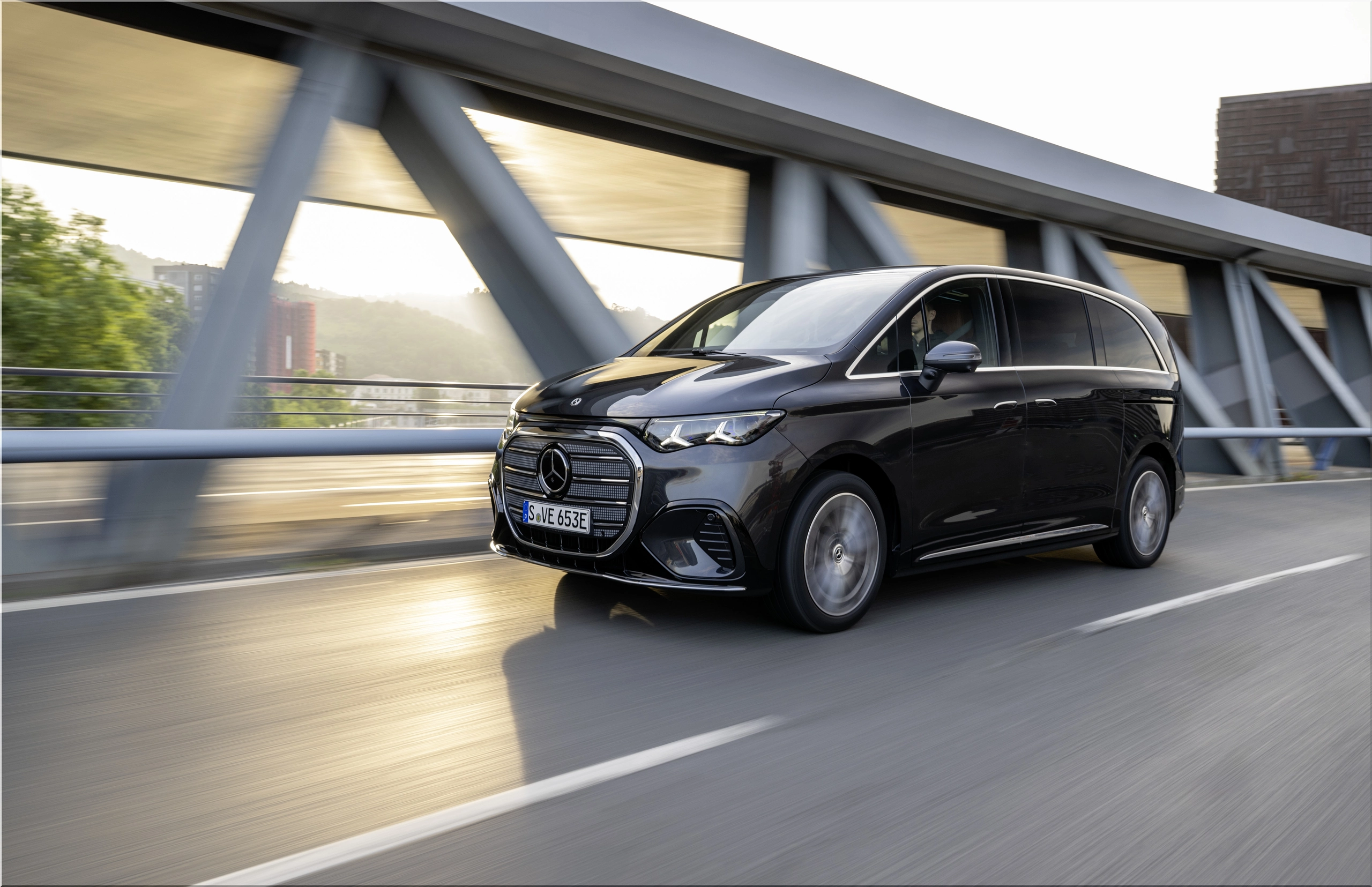
The Mercedes-Benz VLE electric van attacks a strange but profitable space: luxury travel for people who want S-Class comfort, SUV practicality, and airport-shuttle space without the fuel bill or diesel clatter. Mercedes calls it a Grand Limousine. Fine. The shape still says van, but the hardware says something much more serious.
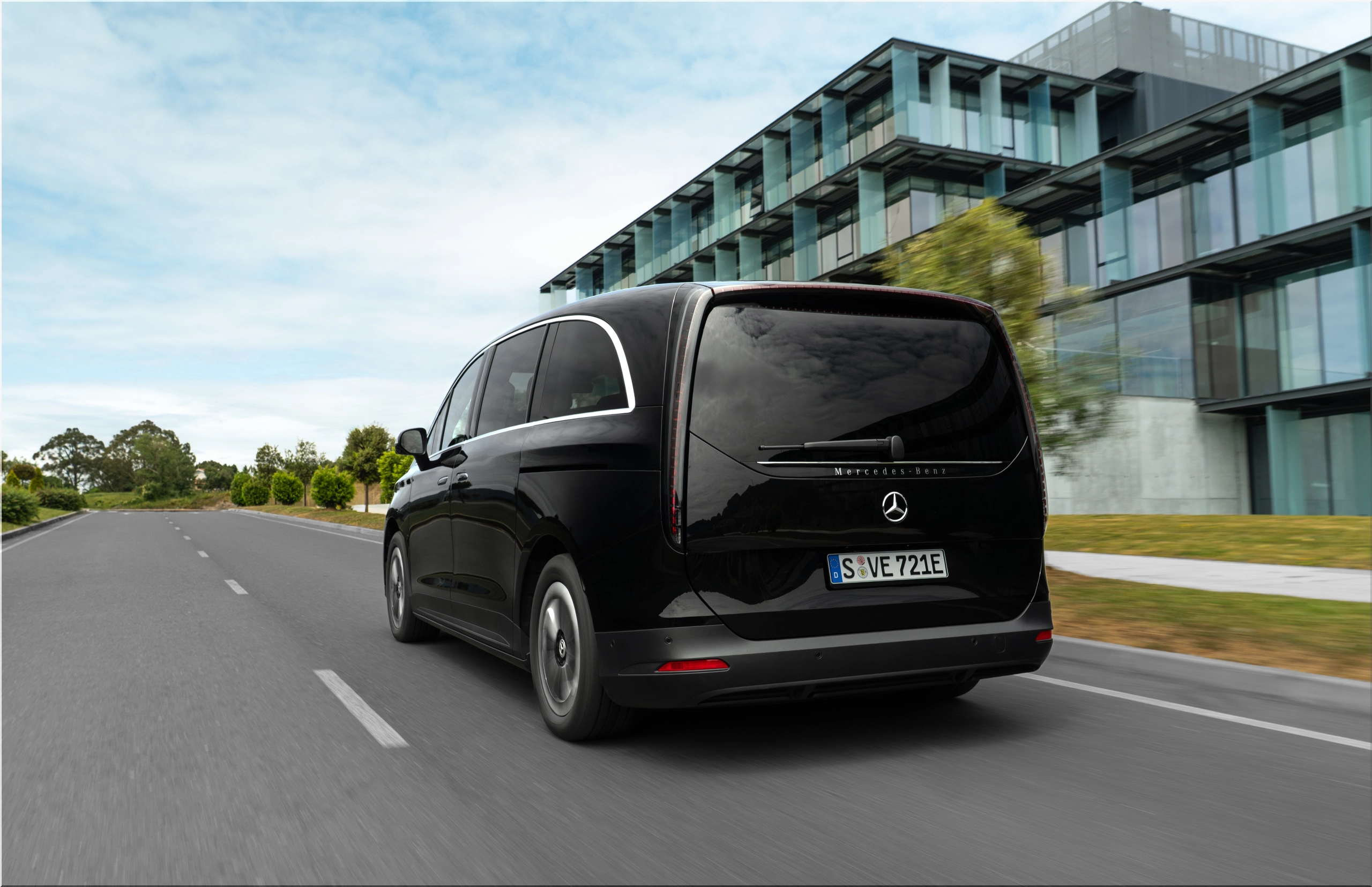
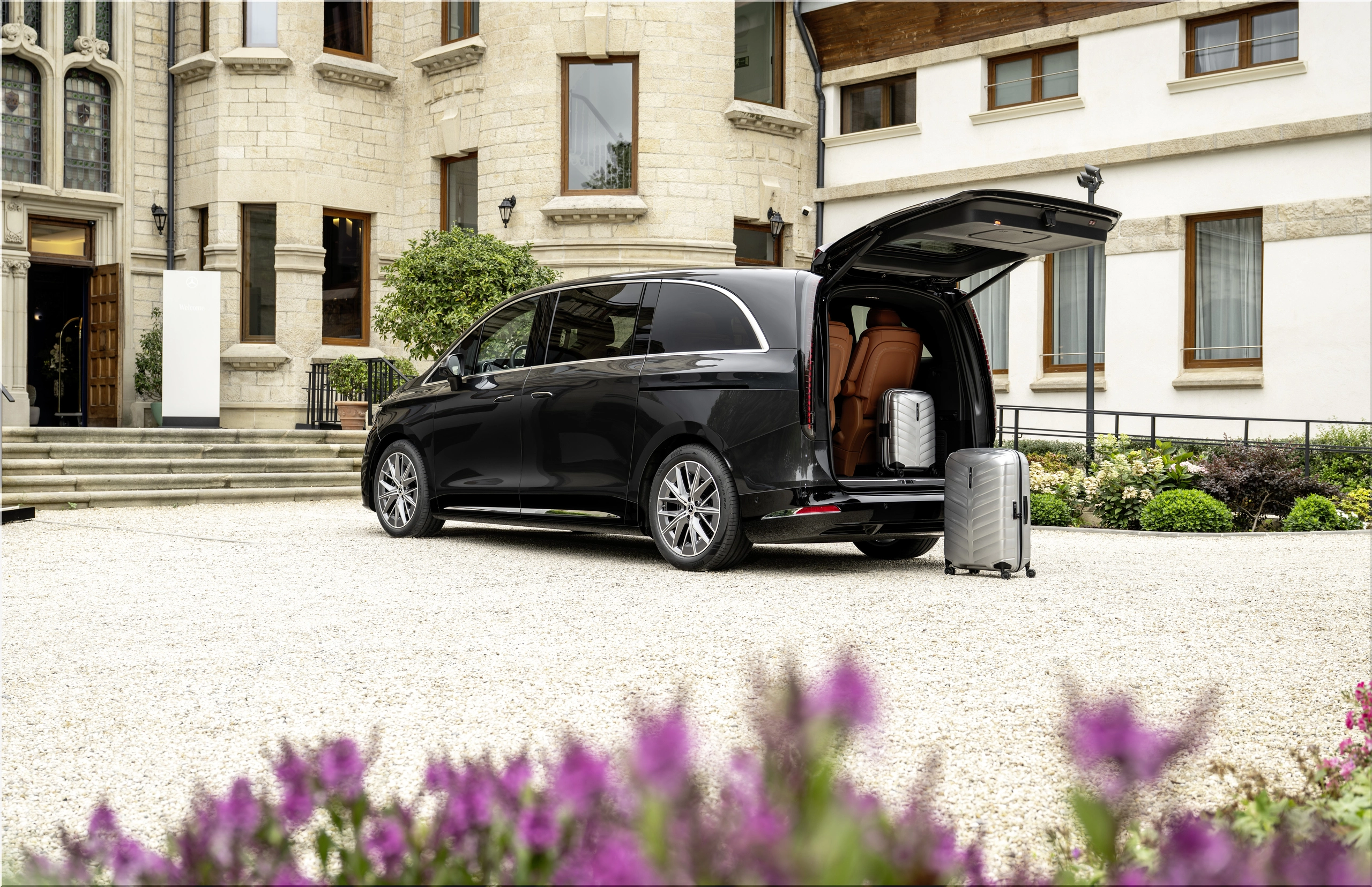
The Mercedes-Benz VLE 300 launches with a 115 kWh lithium-ion battery, 800-volt electrical architecture, up to 300 kW DC fast charging, and a claimed WLTP range above 700 km, or roughly 435 miles. That number will not translate directly to EPA range in the United States, where a 320-340 mile estimate makes more sense for the longer-wheelbase version. Still, for a vehicle that can carry up to eight people and swallow road-trip luggage, the engineering target looks ambitious rather than theatrical.
Mercedes-Benz VLE Specs: The Numbers That Define This Electric Luxury Van
Looking at the data, Mercedes did not design the VLE as a converted delivery van with leather seats thrown at the problem. It rides on the new modular Van Architecture, uses a flat battery pack under the floor, and places its cabin packaging around people first. That strategy matters because large electric vans usually lose the range fight before they leave the driveway.
| Specification | Mercedes-Benz VLE 300 | Mercedes-Benz VLE 400 4MATIC |
|---|---|---|
| Powertrain | Single motor, front-wheel drive | Dual motor, all-wheel drive |
| Output | 272 hp / 203 kW | 413 hp / 310 kW |
| Torque | 279 lb-ft | 420 lb-ft combined |
| Battery | 115 kWh lithium-ion | 115 kWh lithium-ion |
| Architecture | 800 volts | 800 volts |
| Peak DC charging | 300 kW | 300 kW |
| Claimed WLTP range | More than 700 km / 435 miles | Lower, depending on equipment |
| 0-60 mph | About 9.4 seconds est. | About 6.4-6.5 seconds |
| U.S. wheelbase | 138.0 in / 3,505 mm | 138.0 in / 3,505 mm |
| U.S. length | 215.9 in / 5,484 mm | 215.9 in / 5,484 mm |
| Width | 78.7 in / 1,999 mm | 78.7 in / 1,999 mm |
| Height | About 75.7 in / 1,923 mm | About 75.7 in / 1,923 mm |
| Max cargo volume | Up to 152 cu ft | Up to 152 cu ft |
Specifically, the VLE 400 4MATIC answers the one question every large EV people mover faces: does it feel heavy? With more than 400 hp and all-wheel drive, it should move like a quick luxury SUV rather than a hotel shuttle trying to outrun its own carpet. The VLE 300 makes more sense for range-focused buyers, while the VLE 400 targets mountain towns, winter states, executive fleets, and buyers who refuse to accept slow simply because they chose three rows and sliding doors.
Why 800-Volt Charging Matters For The Mercedes-Benz VLE
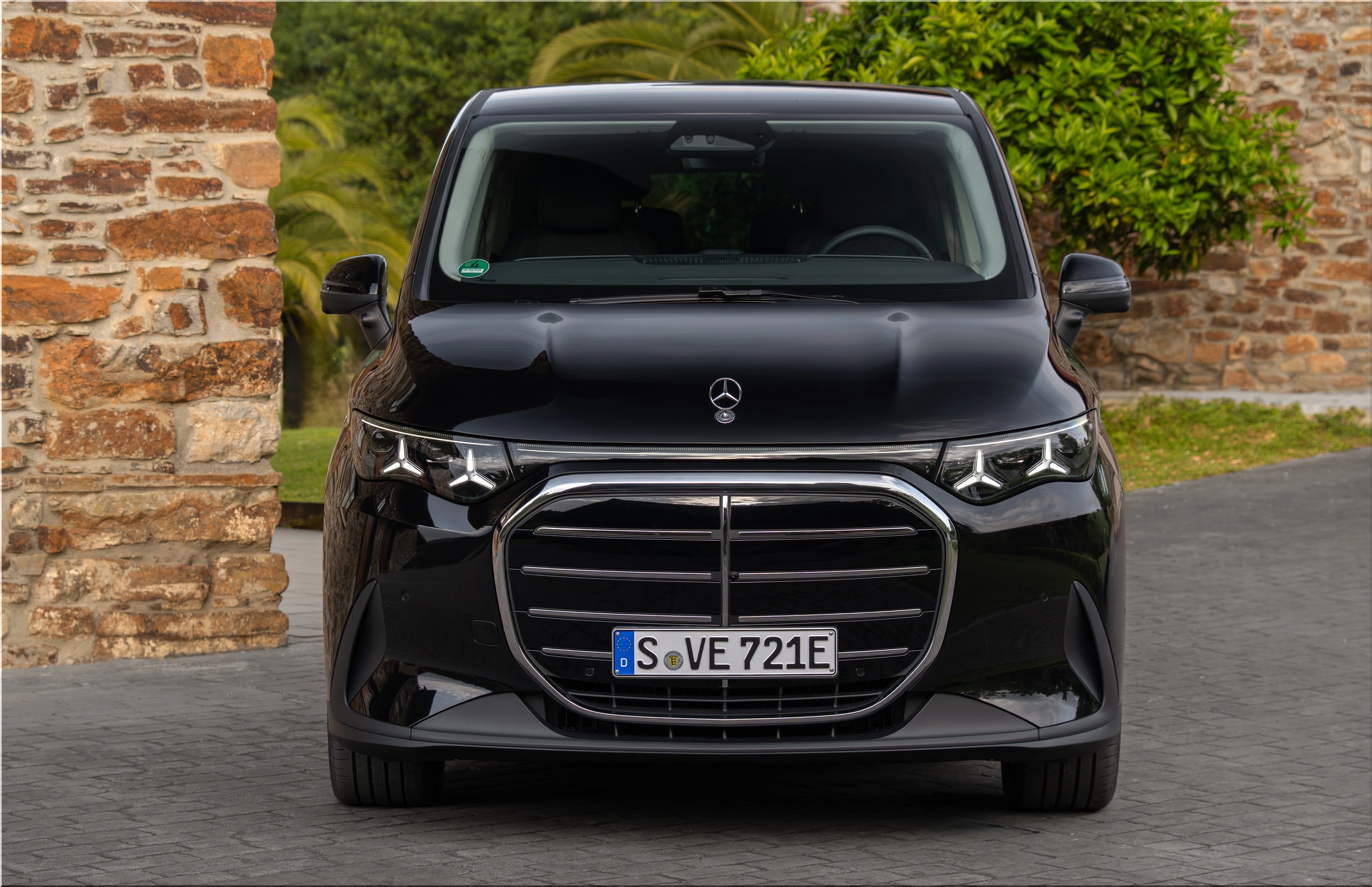
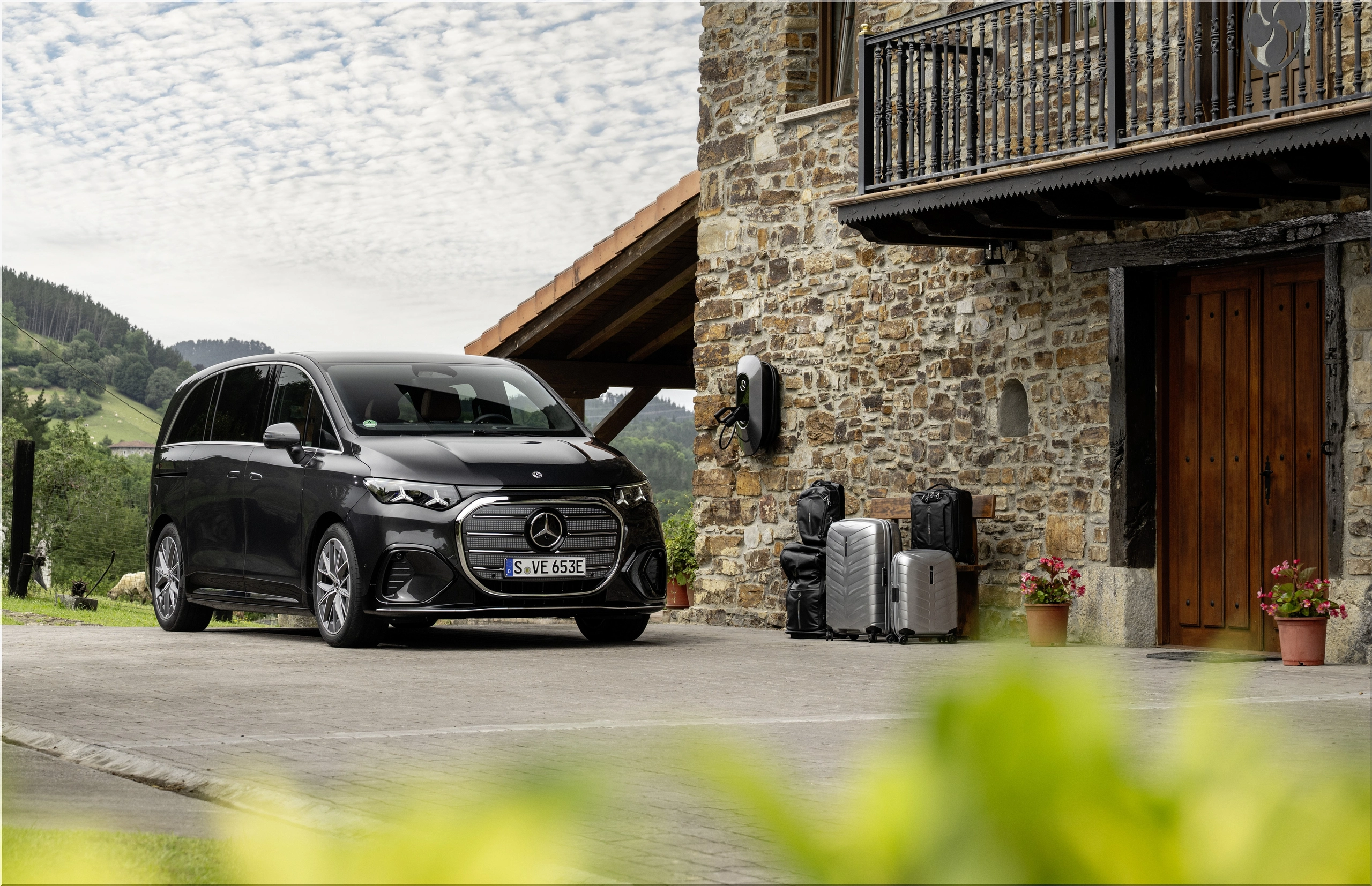
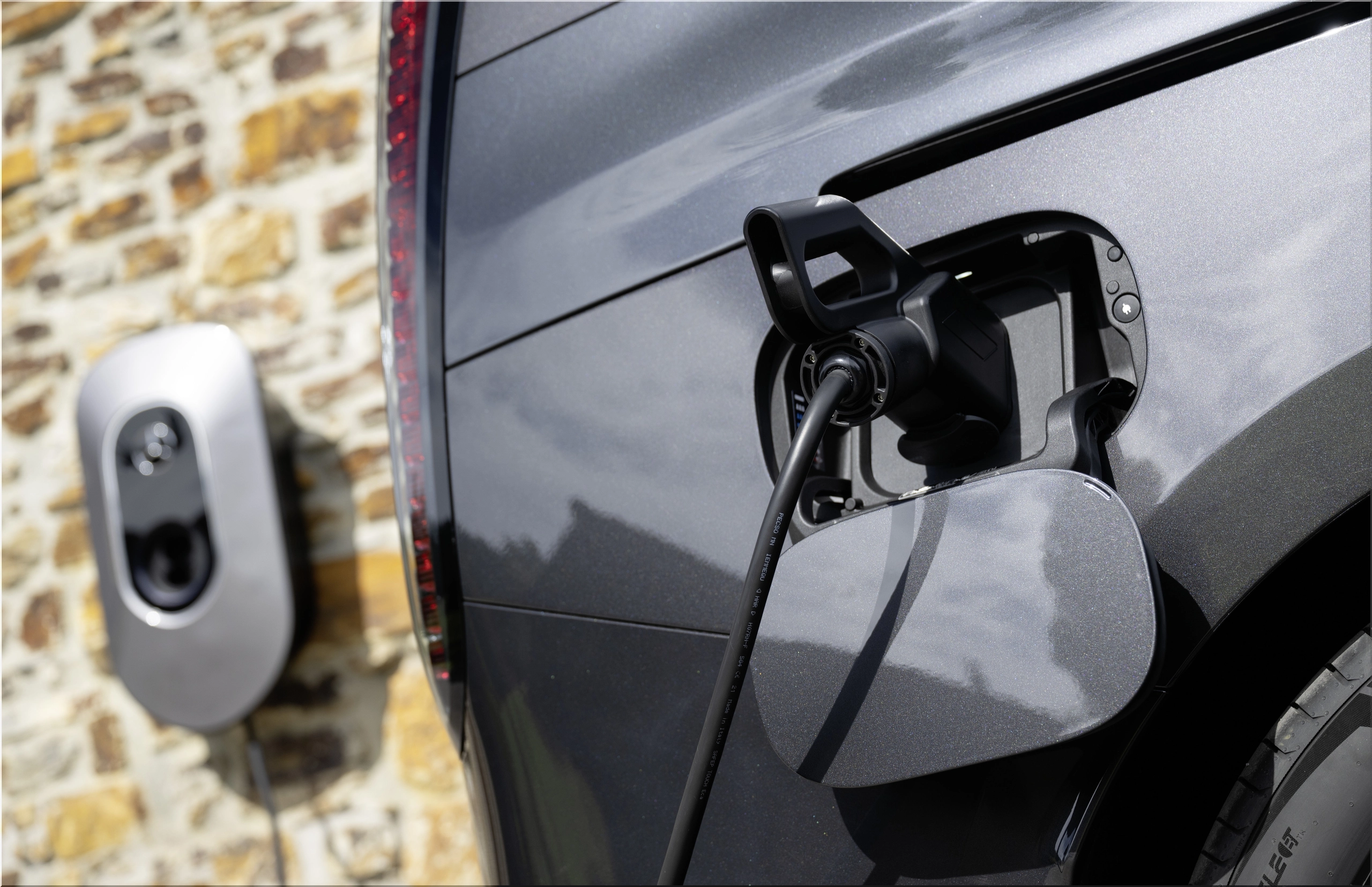
The 800-volt system gives the VLE its most practical advantage. Mercedes says the van can add up to 355 km, or about 221 miles, in 15 minutes at a suitable high-power charger. That changes the road-trip equation because a short charging stop can refill enough range for a full second leg, not merely limp the vehicle to the next plug.
In addition, the 115 kWh battery gives Mercedes room to balance range, charging speed, and thermal control. Large EVs work hard at highway speeds because frontal area punishes efficiency. A low 0.25 drag coefficient helps, but physics still collects its bill at 75 mph with passengers, cargo, climate control, and winter tires.
Pro-Tips For Real-World VLE Range
- Expect U.S. highway range to land well below the 435-mile WLTP claim.
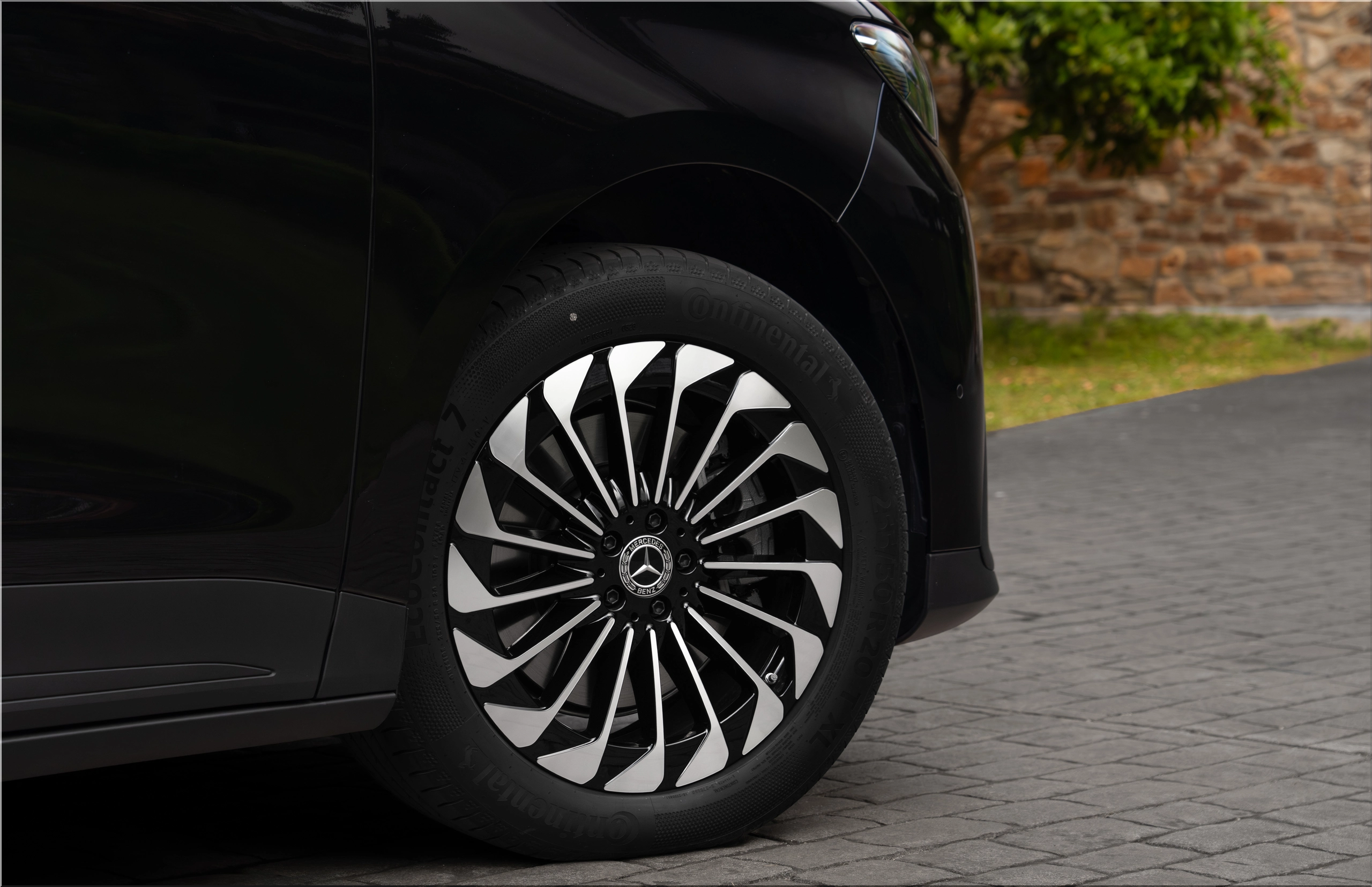
- Choose smaller wheels if range matters more than curb appeal.
- Use 300 kW chargers only when the battery sits in its ideal temperature window.
- Treat the 15-minute fast-charge claim as a best-case figure, not a daily promise.
- For airport shuttle work, charge between fixed runs rather than waiting for deep battery depletion.
Mercedes-Benz VLE Interior: Eight Seats, Rolling Seats, And A 31.3-Inch Screen
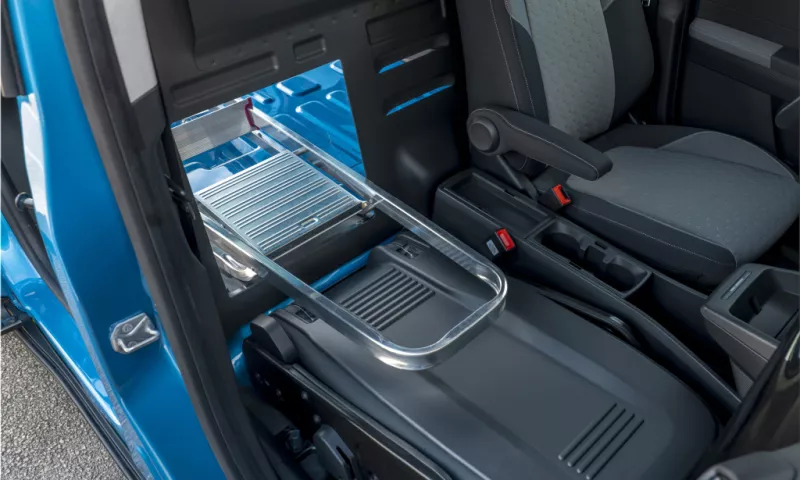
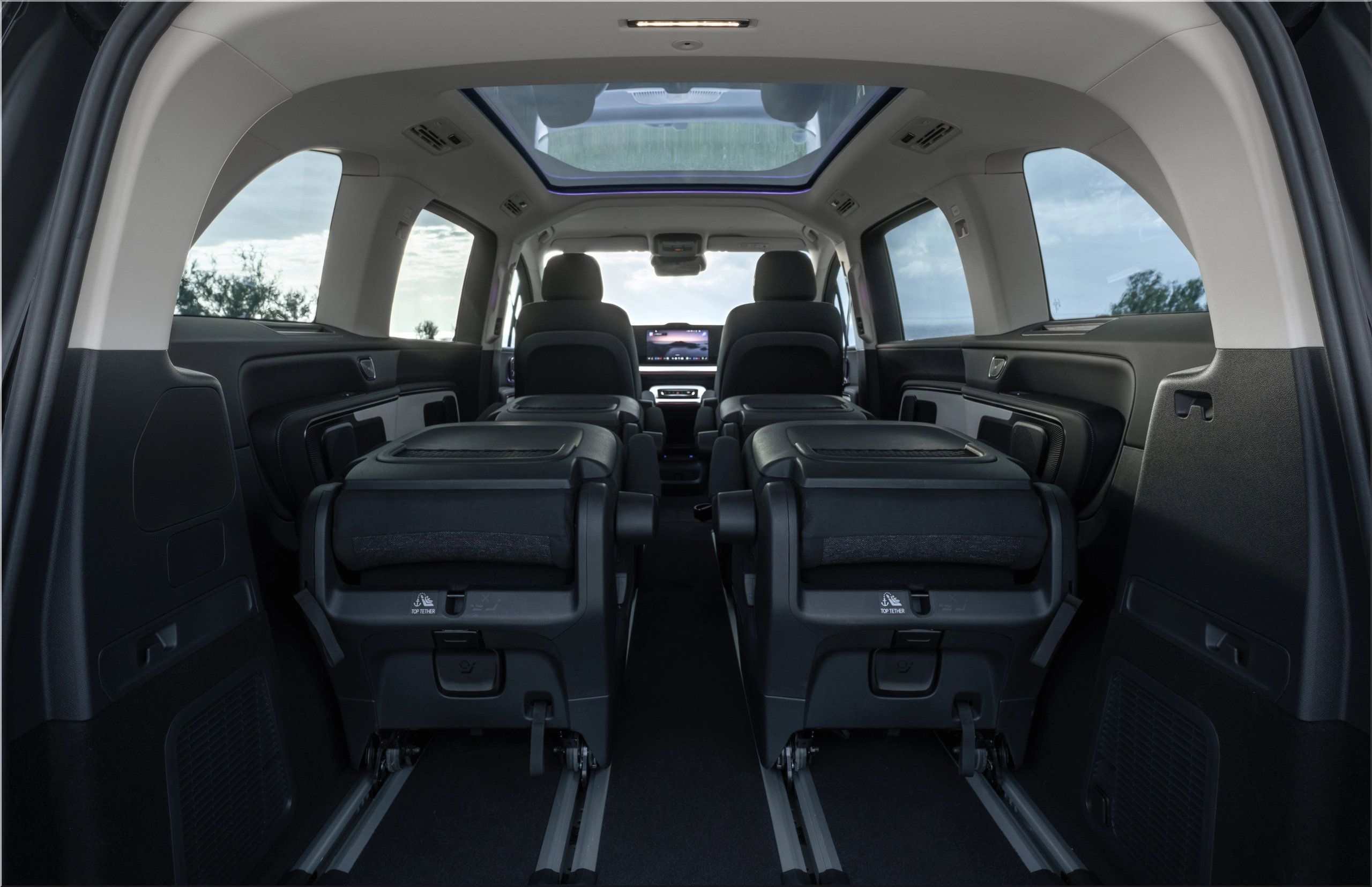
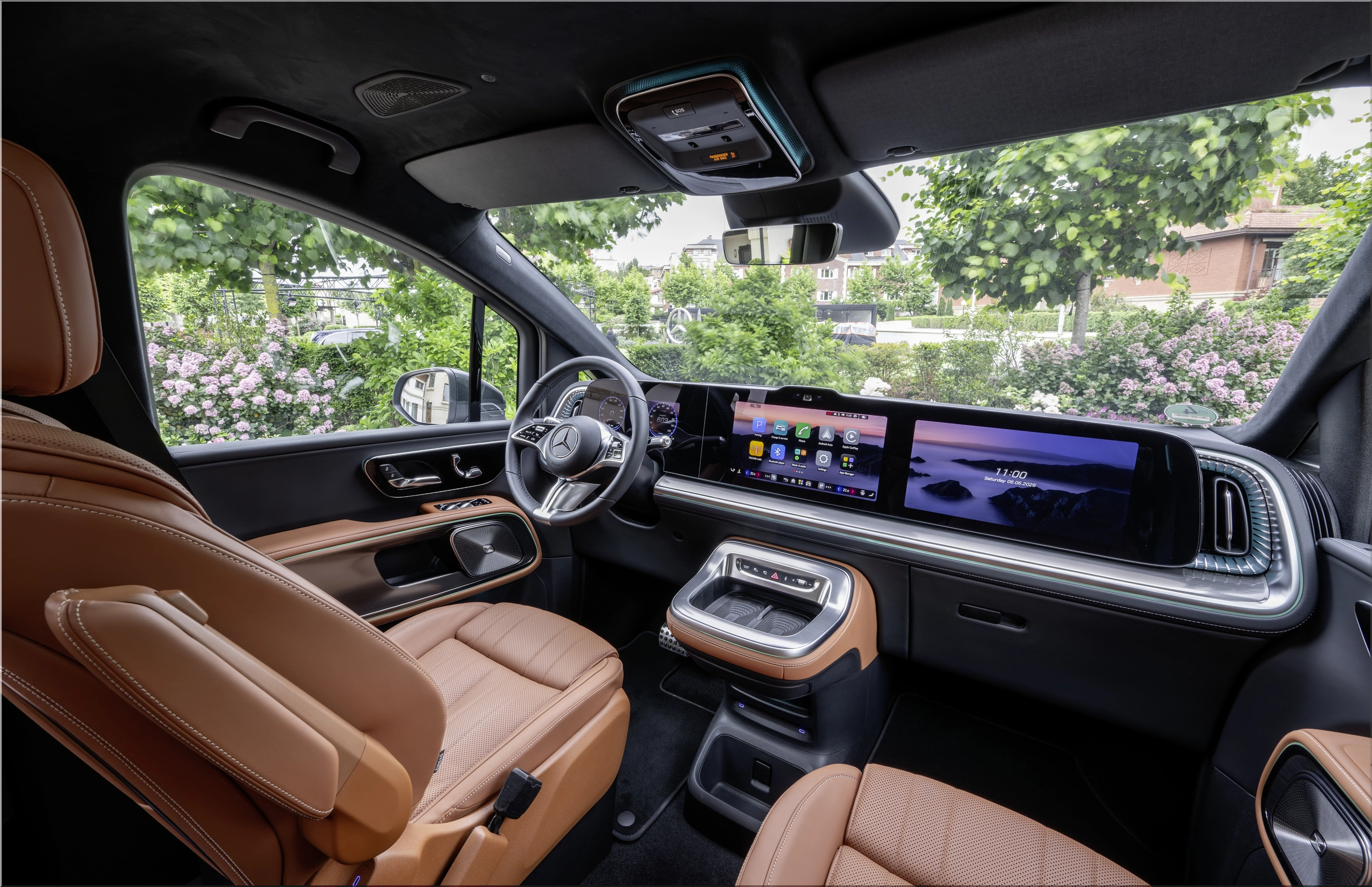
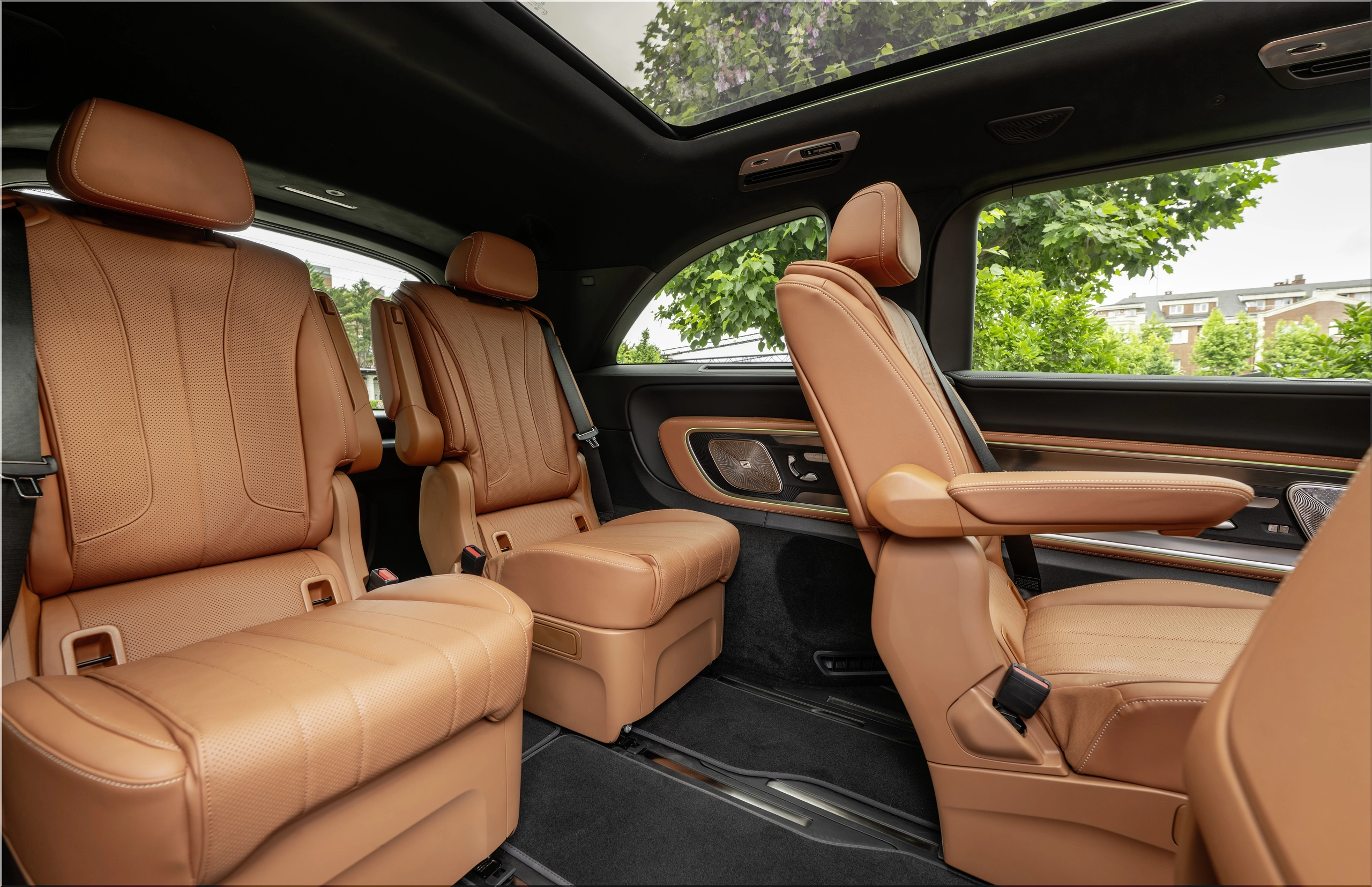
The VLE interior sells the vehicle. Mercedes offers five-seat, six-seat, seven-seat, and eight-seat layouts, depending on market and trim. The Roll & Go seating system lets owners slide, fold, remove, and roll individual seats along cabin rails, which solves the old van problem of heavy seat removal. Nobody enjoys wrestling with a 70-pound second-row chair in a driveway.
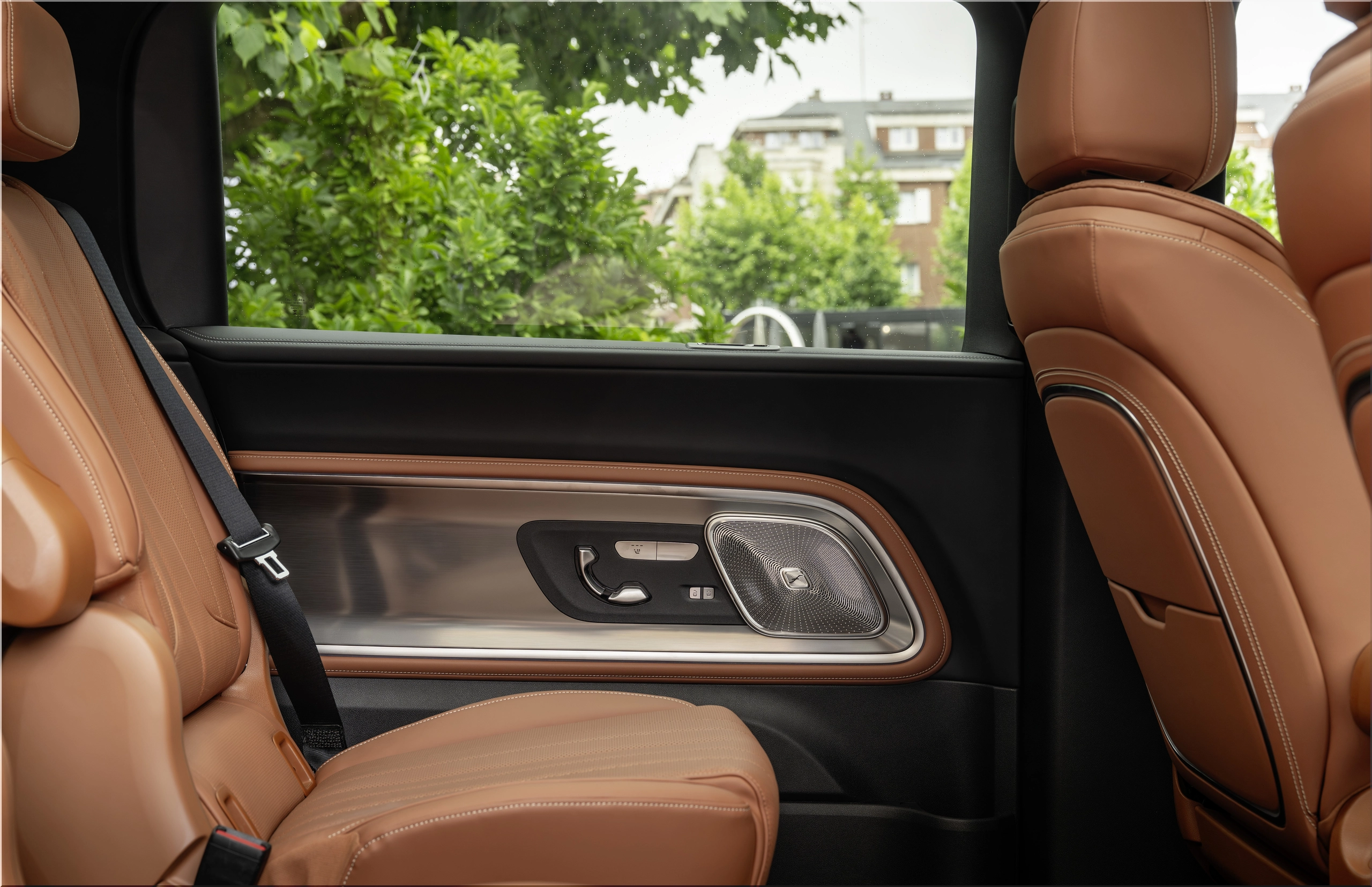
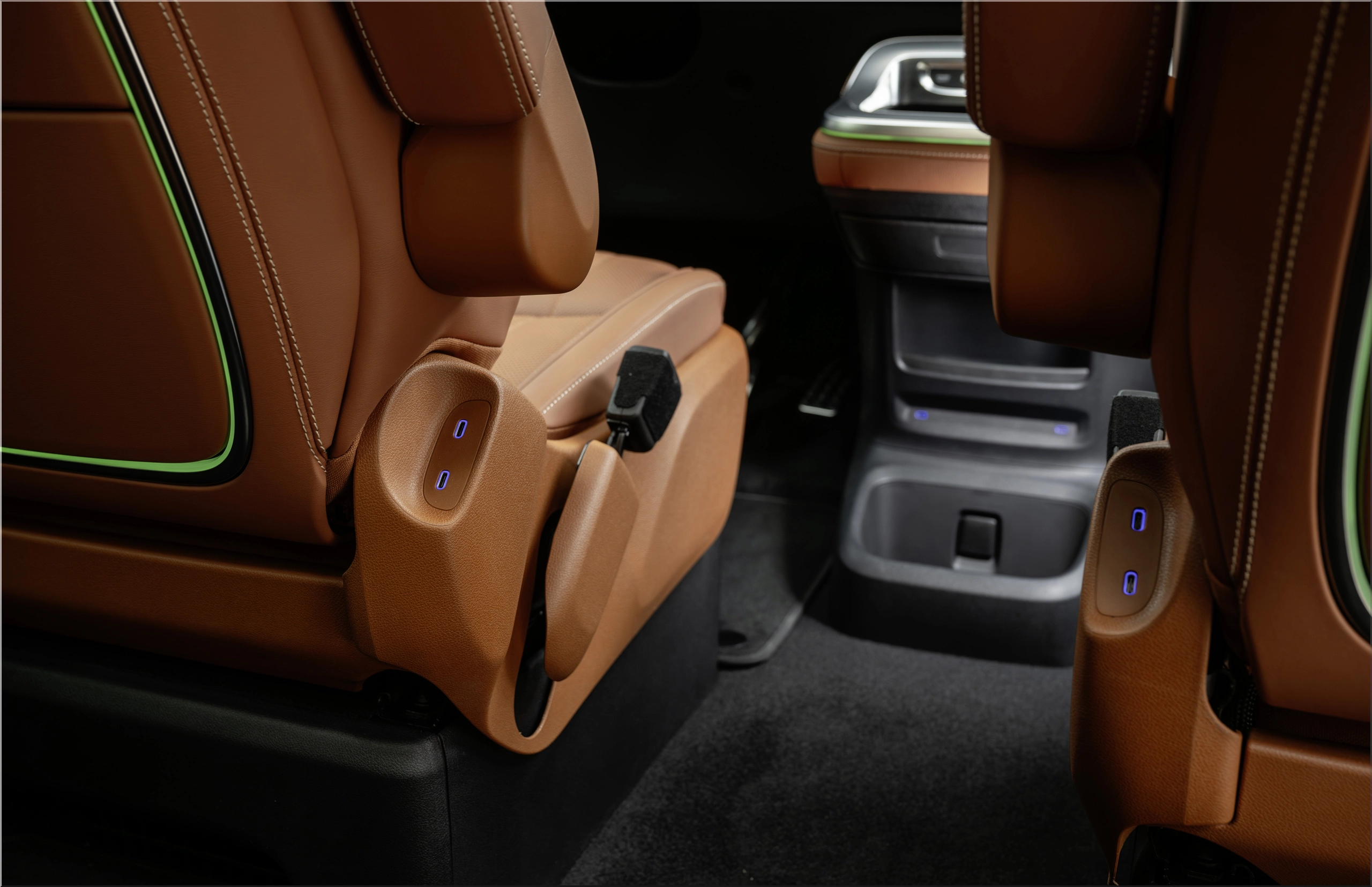
The Grand Comfort Seat pushes the VLE toward chauffeur-duty territory. It brings lumbar support, massage, calf support, armrests, cupholders, wireless charging, and extra cushioning. Consequentially, the second row becomes the money seat, not the compromise row.
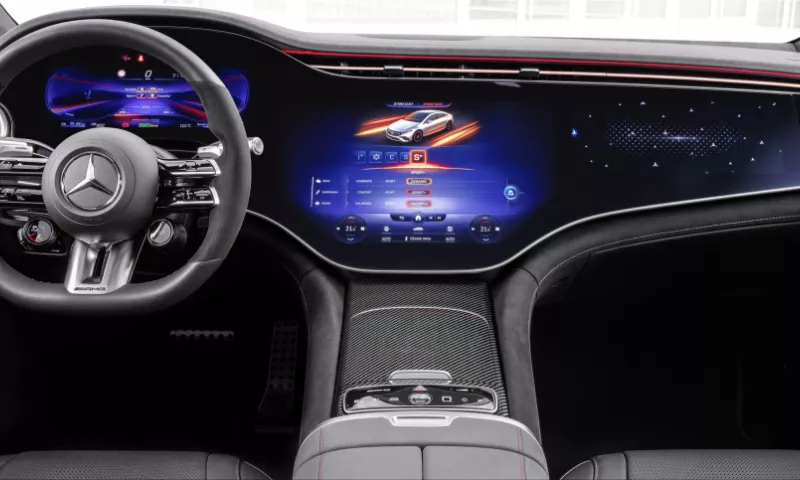
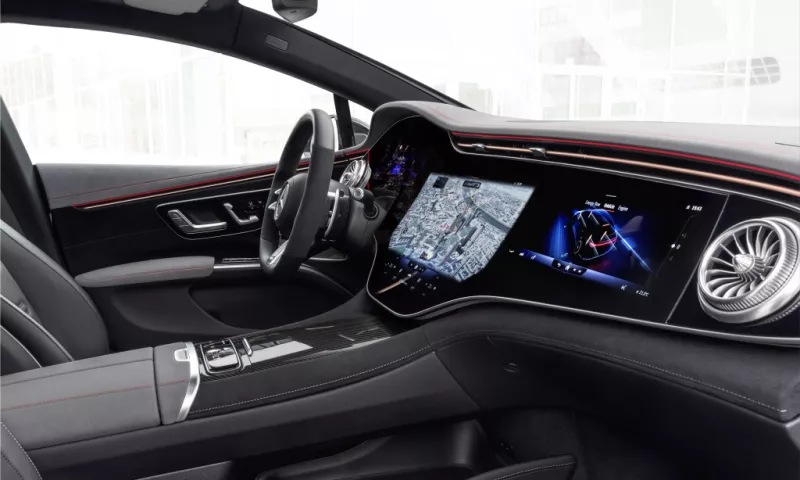
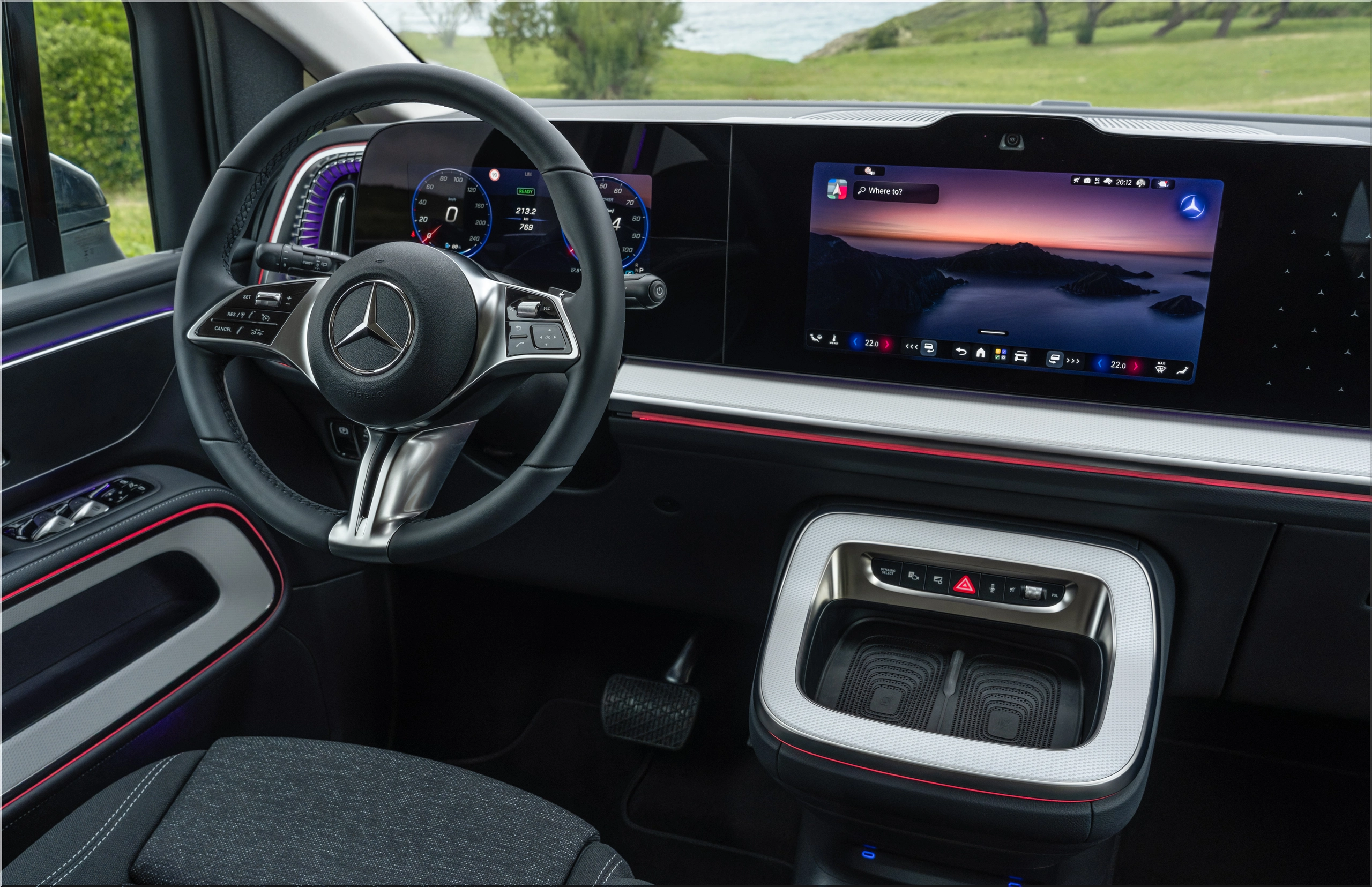
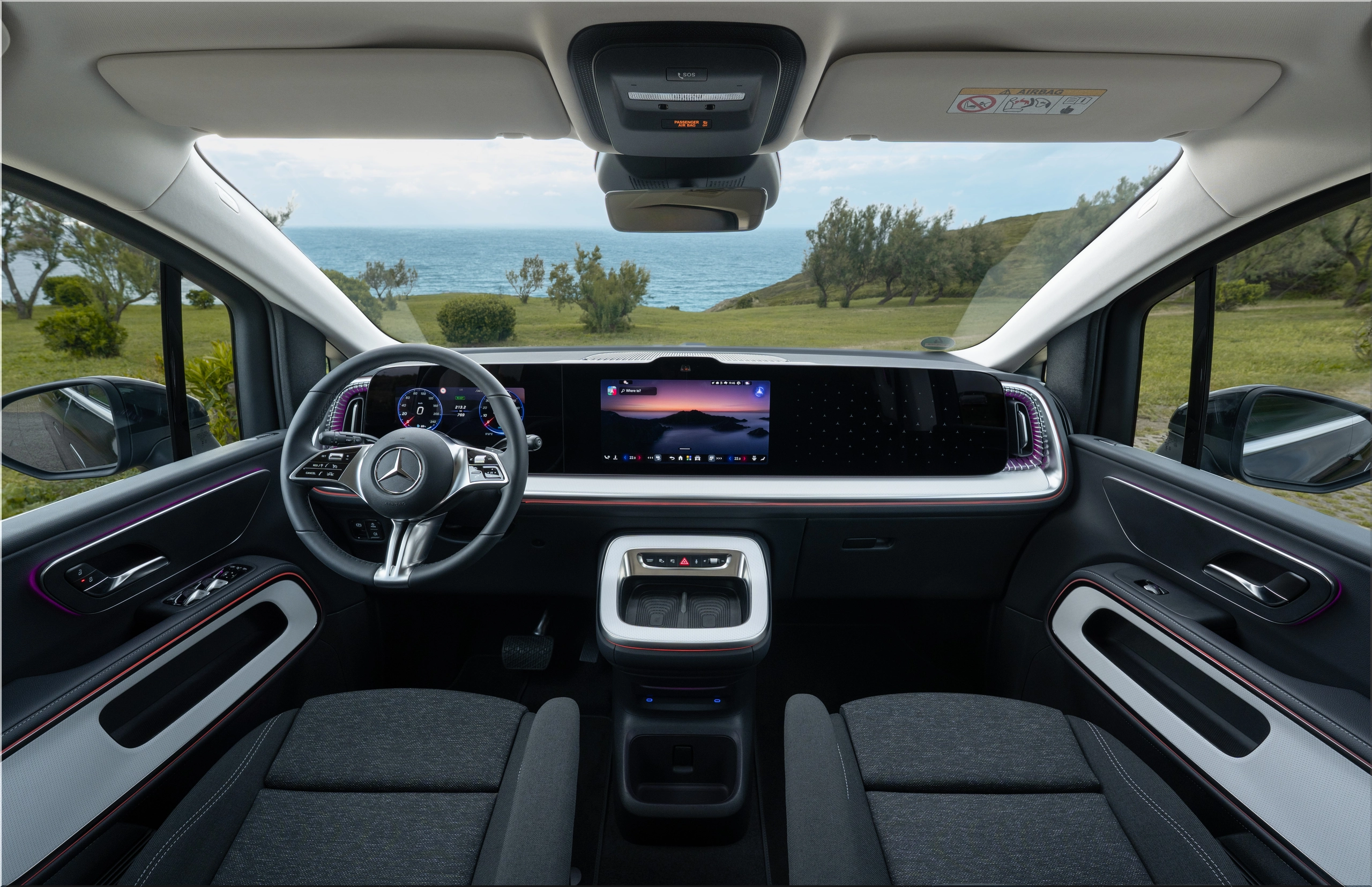
Mercedes also loads the cabin with screen hardware. The dashboard can use a 10.25-inch driver display, 14-inch central touchscreen, and 14-inch passenger display under one glass surface. Rear passengers can get the MBUX Rear Space Experience, built around a retractable 31.3-inch 8K panoramic screen with video, gaming, conferencing, and split-screen functions.
Ride And Handling: Why Rear-Axle Steering Changes The Van Argument
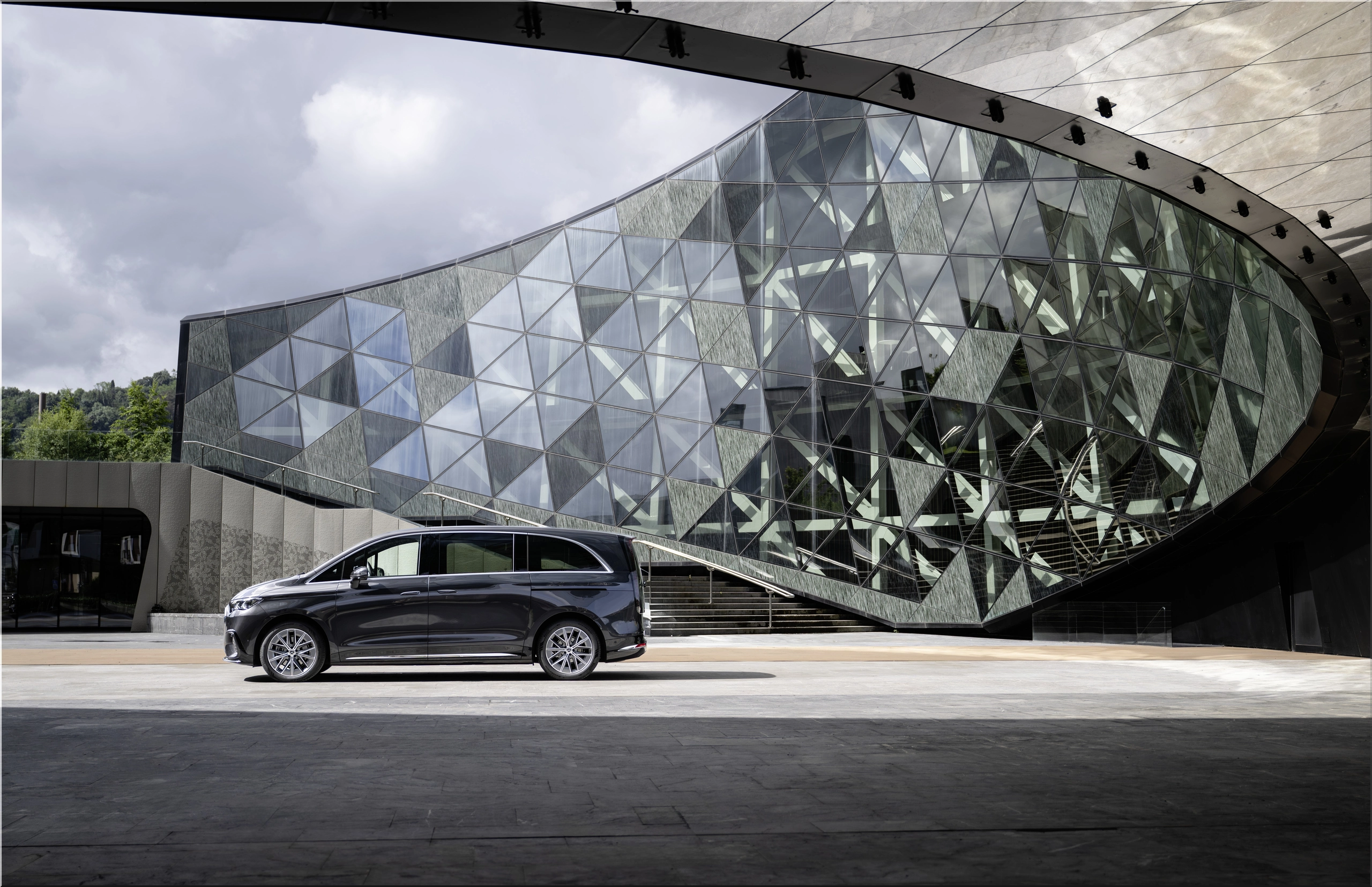
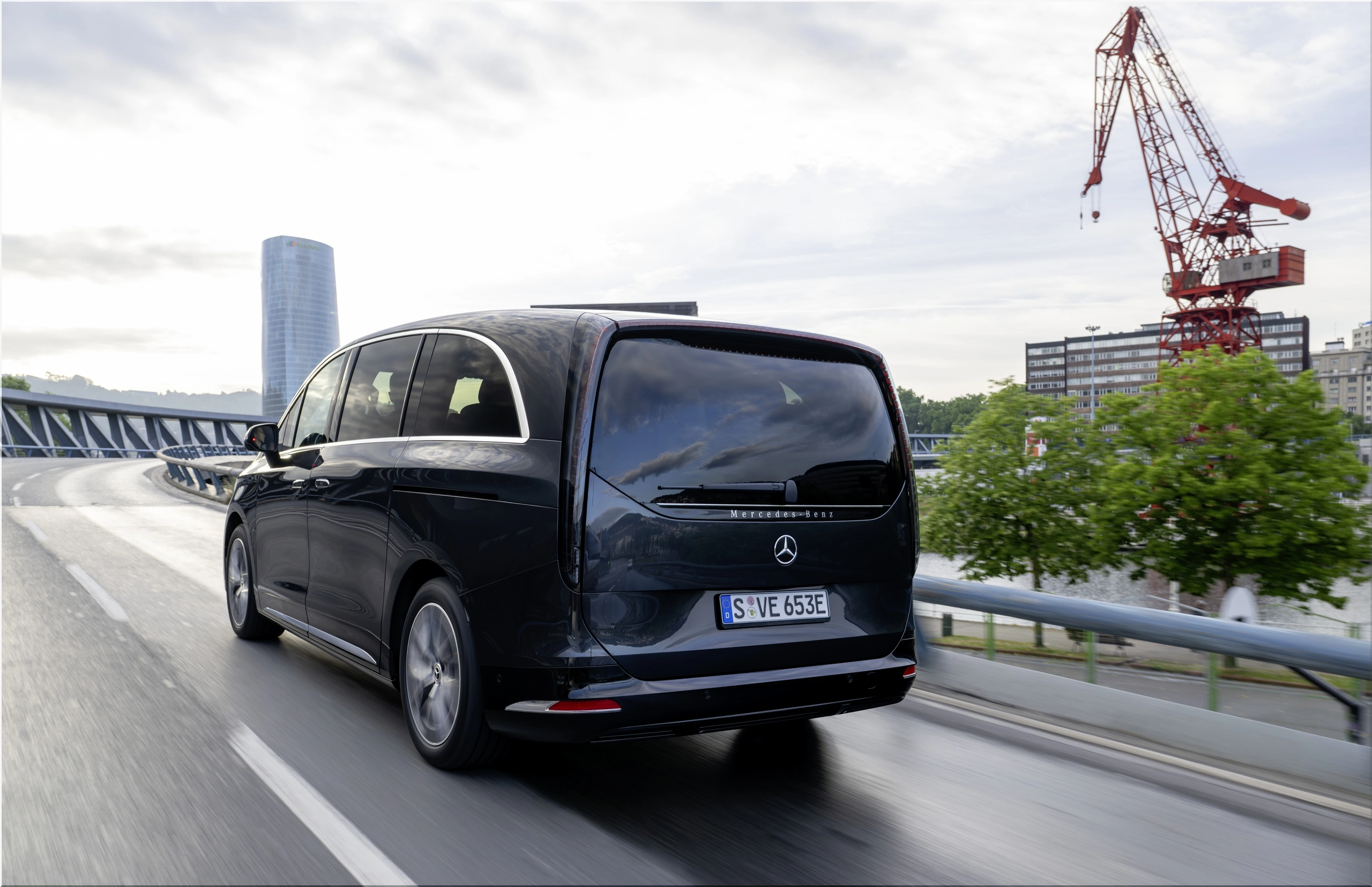
From an expert perspective, the seven-degree rear-axle steering may matter more than the big rear screen. At low speeds, the rear wheels turn opposite the fronts to shrink the turning circle. That gives a vehicle longer than 215 inches a turning circle around 37.5 feet in U.S. long-wheelbase trim.
That number matters in hotel entrances, school lots, underground garages, tight neighborhoods, and city pickup lanes. The VLE also uses AIRMATIC air suspension, which adapts damping and ride height to load, road speed, and driving conditions. At highway speed, lowering the body reduces drag and improves stability.
Definition: Rear-axle steering turns the rear wheels slightly to reduce low-speed turning effort and improve high-speed stability. In a large electric van, it makes the difference between "luxury shuttle" and "large object with leather."
Mercedes-Benz VLE Price: What It Costs In U.S. Dollars
Mercedes has not confirmed final U.S. pricing. Based on Germany's launch pricing, the launch VLE 300 price converts to about $93,711 for the five-seat version and $94,226 for the six-seat version. A lower-priced standard VLE 300 later in 2026 converts to about $80,273 for the five-seat model and $80,788 for the six-seat model.
Those numbers put the VLE into luxury SUV territory. It costs far more than a mainstream minivan, but it also offers more range, more charging power, more luxury hardware, and a cabin built for executive transport. By comparison, a loaded Chrysler Pacifica or Toyota Sienna still wins on value, but neither can offer silent electric shuttle duty with this much rear-seat theater.
Mercedes-Benz VLE Vs ID. Buzz, Kia PV5, And Volvo EM90
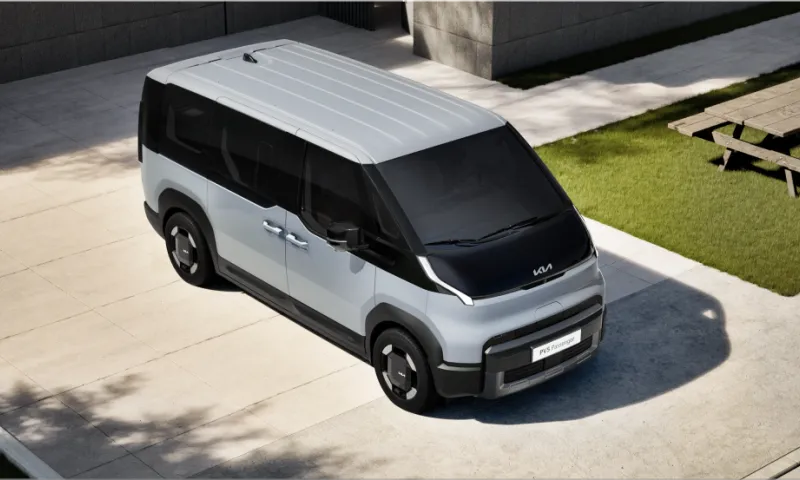
The VLE does not fight only minivans. It fights luxury SUVs, executive airport cars, hotel shuttles, and premium family EVs. The closest electric people movers split into two groups: practical vans such as the Volkswagen ID. Buzz and Kia PV5, and luxury MPVs such as the Volvo EM90.
| Model | Seats | Battery | Range Claim | Charging | Best Win | Biggest Loss |
|---|---|---|---|---|---|---|
| Mercedes-Benz VLE 300 | Up to 8 | 115 kWh | 435 miles WLTP | 300 kW DC | Long range, luxury cabin, 800V tech | High expected price |
| Volkswagen ID. Buzz | Up to 7 | 86 kWh usable | 231-234 miles EPA | About 30 min 10-80% | Retro charm, U.S. availability | Range trails VLE badly |
| Kia PV5 Passenger | Up to 7 | 51.5 or 71.2 kWh | Up to 256 miles WLTP | 150 kW DC, under 30 min 10-80% | Lower cost, family utility | Less power, less luxury |
| Volvo EM90 | 6 | 116 kWh gross | 738 km CLTC | Under 30 min 10-80% | Lounge-grade rear cabin | Limited market access |
The Volkswagen ID. Buzz wins the style contest and attracts buyers who want the modern Microbus vibe. The VLE wins the range, charging, and executive-space contests. The Kia PV5 Passenger should beat both on price and practical family logic, but it lacks the Mercedes power and luxury theater. The Volvo EM90 comes closest in rear-seat luxury, though its China-focused positioning limits its direct U.S. impact.
Should American Buyers Wait For The Mercedes-Benz VLE?
American buyers should wait for the Mercedes-Benz VLE if they need three-row electric space, premium rear-seat comfort, and serious road-trip charging ability. Families that currently cross-shop the Mercedes GLS, Cadillac Escalade IQ, Lucid Gravity, and Volkswagen ID. Buzz should watch this van closely. It may look less aggressive than an SUV, but it packages people better.
Fleet buyers should pay even closer attention. A black-car operator can sell silence, legroom, dual sliding doors, rear entertainment, and lower operating energy costs. The math depends on purchase price, charging access, insurance, and residual values, but the product logic works.
Private buyers face a harder call. The VLE will likely cost luxury SUV money, and early U.S. inventory may skew toward expensive trims. Still, few vehicles combine a 115 kWh battery, 300 kW charging, seven-degree rear steering, AIRMATIC suspension, and up to eight seats. Mercedes did not build a bargain. It built a rolling business-class cabin with plug-in range.
- Add new comment
- 58 views