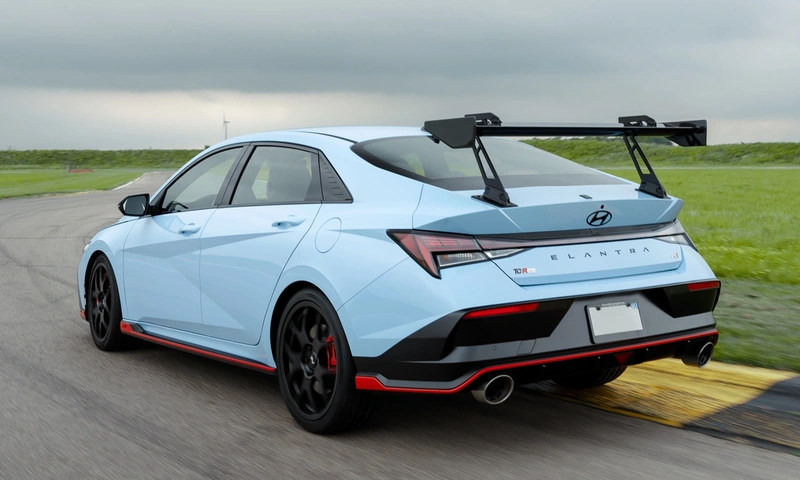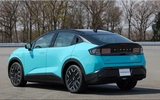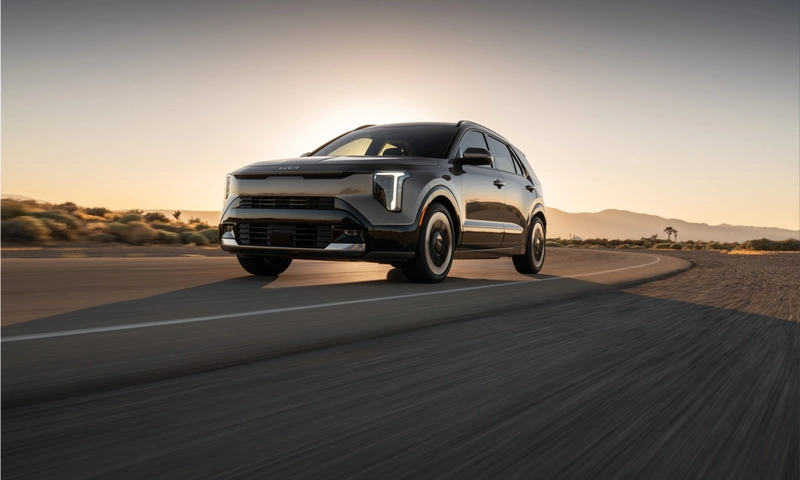
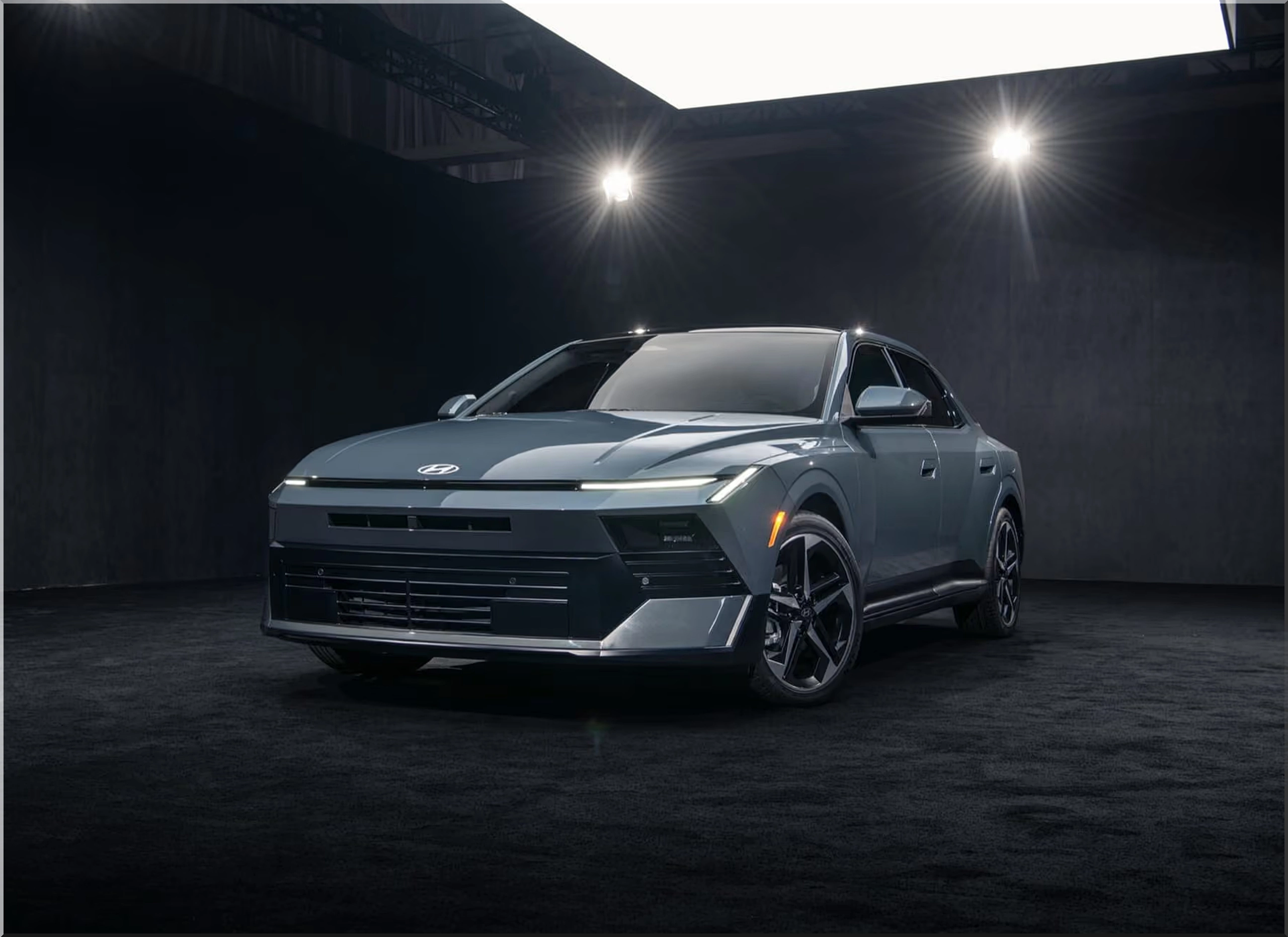
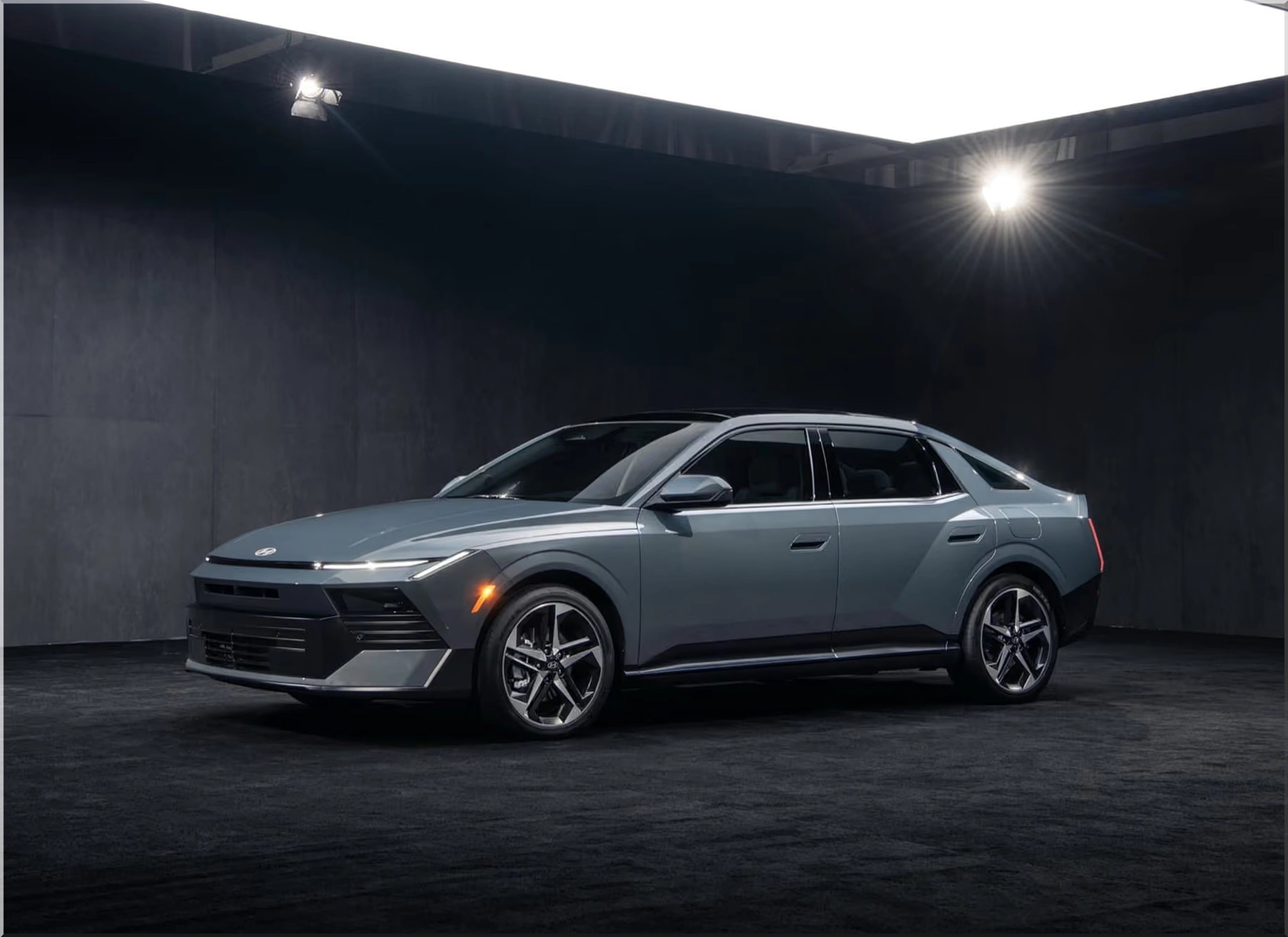
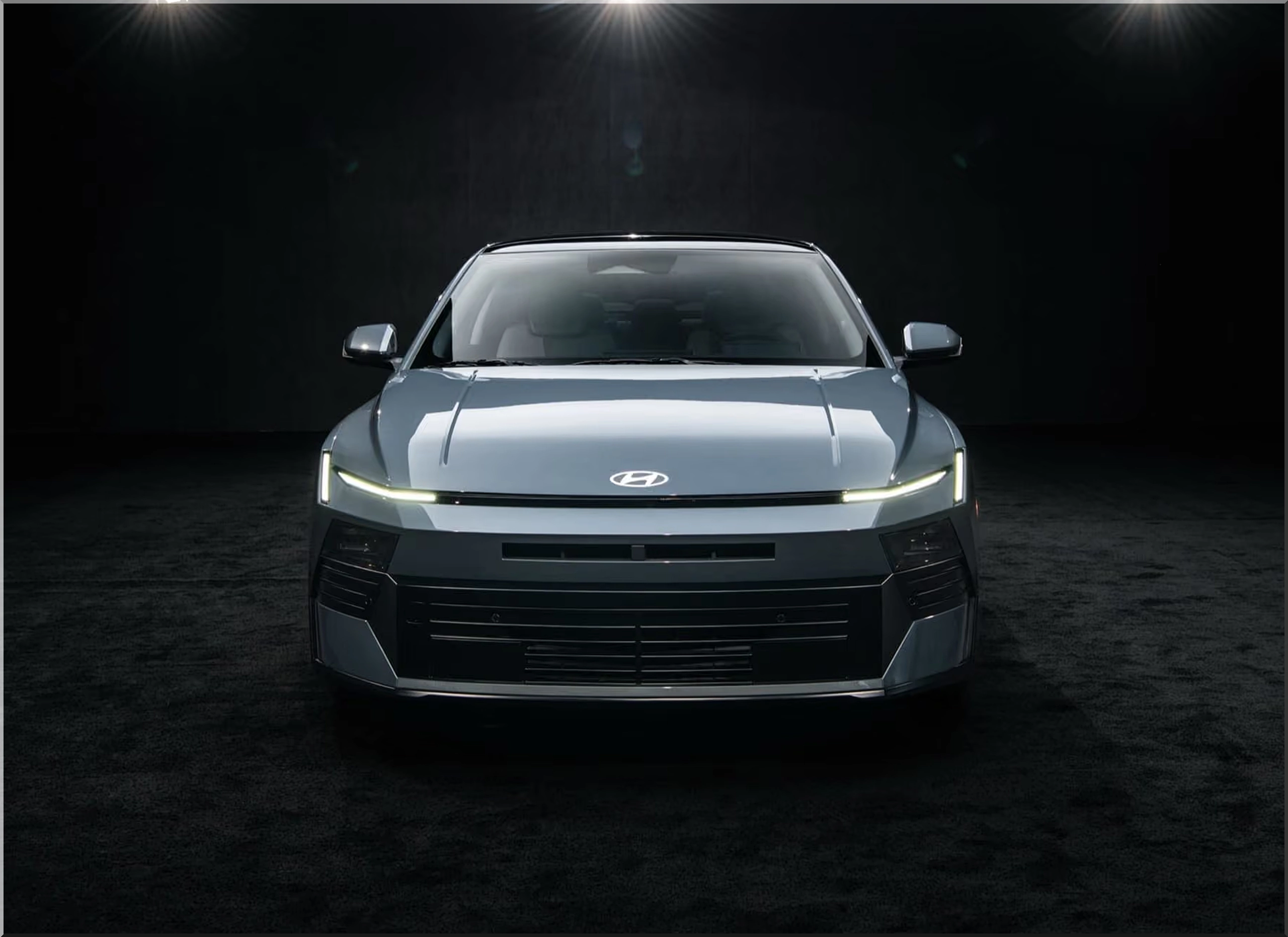
Hyundai gives the 2028 Hyundai Elantra Hybrid more electrical muscle, a larger battery, and 39.1 inches of rear legroom. The redesigned compact sedan makes 155 horsepower and targets 53 mpg combined, pairing stronger acceleration potential with more space for family duty.
Hyundai unveiled the eighth-generation sedan at the Los Angeles Auto Show on November 19, 2026. Its gasoline sibling carries a 2027 model designation; the hybrid carries a 2028 badge. Hyundai still has pricing, final EPA ratings, and U.S. on-sale timing to announce.
A Stronger Motor Does the Heavy Lifting
The 1.6-liter hybrid powertrain retains a six-speed dual-clutch transmission and front-wheel drive. Hyundai increases electric-motor output from 32 to 45 kW, a 40.6% jump, while battery capacity grows from 1.32 to 1.49 kWh, or 12.9%. Combined output rises by 16 hp, an 11.5% gain.
| Powertrain measure | 2026 Elantra Hybrid | 2028 Elantra Hybrid |
|---|---|---|
| Gasoline engine | 1.6-liter four-cylinder | 1.6-liter four-cylinder |
| Combined horsepower | 139 hp | 155 hp |
| Electric-motor output | 32 kW, approximately 43 hp | 45 kW, approximately 60 hp |
| Battery capacity | 1.32 kWh | 1.49 kWh |
| Transmission | Six-speed dual-clutch | Six-speed dual-clutch |
| Best combined fuel economy | 54 mpg, EPA estimate for Blue | Up to 53 mpg, Hyundai target |
| Rear suspension | Independent multilink | Independent multilink |
More motor output should strengthen electric assistance during launches and passing. A larger battery gives the control system a bigger energy buffer, although its usable charge window and discharge limits also affect assistance. These engineering changes support better response; they do not establish a measured acceleration time.
Hyundai has not published a new combined torque figure or 0-60-mph result. Buyers should also avoid adding the engine's and motor's separate peak outputs: those peaks need not occur together.
Does the 53-MPG Target Actually Improve Efficiency?
The 2028 Elantra Hybrid fuel economy story needs a careful comparison. Hyundai targets up to 53 mpg combined, while the outgoing 2026 Blue earns an EPA-estimated 54 mpg. Other outgoing hybrid trims return 50 mpg combined. The new target falls between those figures, and Hyundai has yet to publish final trim-by-trim EPA results.
Looking at the data, the strongest provisional efficiency gain comes against the redesigned gasoline Elantra's 35-mpg target. At 53 mpg, the hybrid would use roughly 34% less gasoline over the same distance.
Assume 15,000 miles annually and gasoline at $3.50 per gallon:
- 35 mpg: Approximately 429 gallons and $1,500 annually.
- 53 mpg: Approximately 283 gallons and $991 annually.
- 54 mpg: Approximately 278 gallons and $972 annually.
That scenario puts the new hybrid about $509 ahead of the gasoline model annually. It also puts the outgoing Blue about $18 ahead of the new hybrid. These calculations illustrate the published numbers; weather, speed, traffic, and final certification will shape actual spending.
Bigger Dimensions Deliver Useful Rear-Seat Space
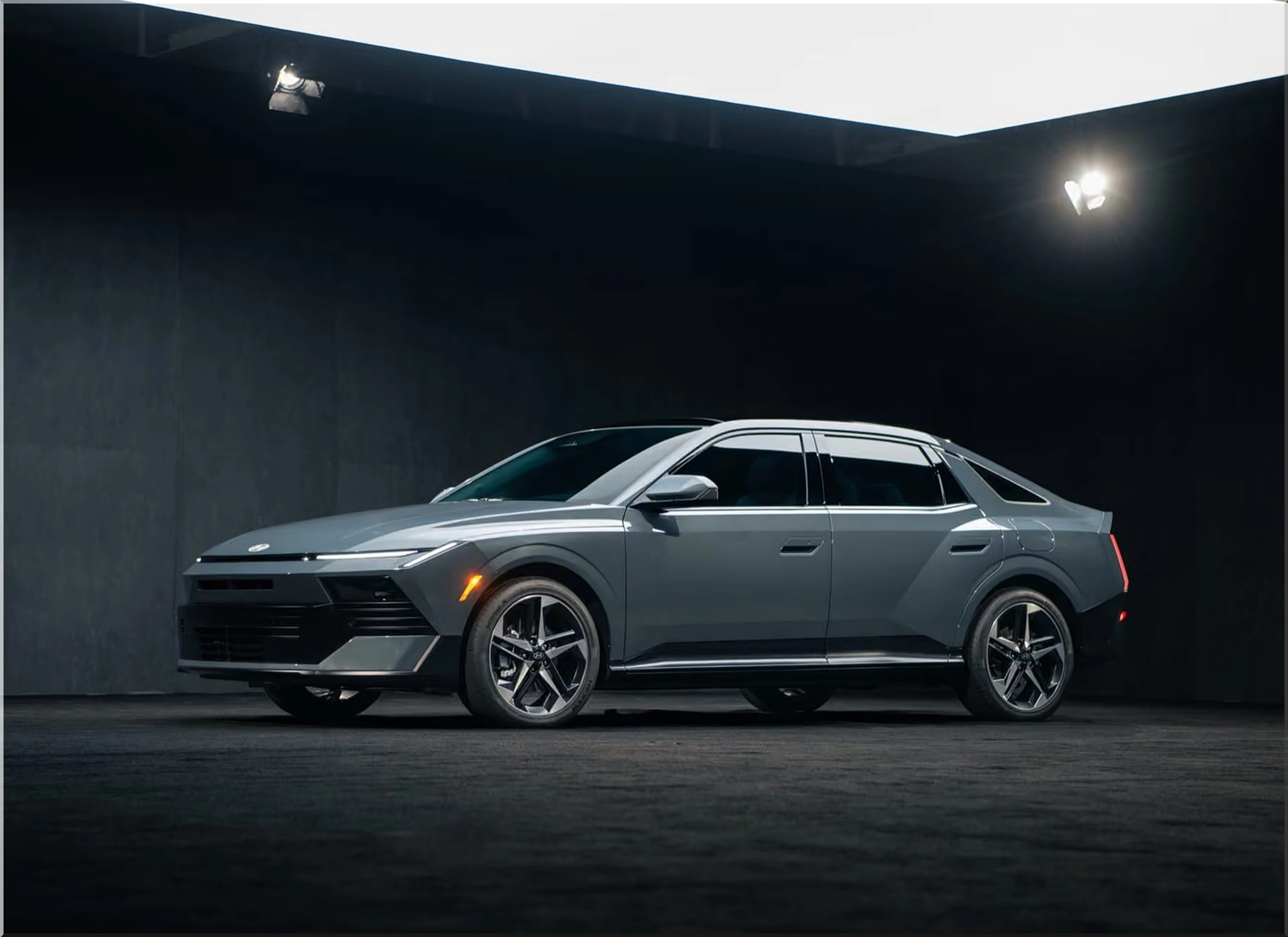
Hyundai's U.S. specifications list a 188.8-inch length, 73.0-inch width, and 108.3-inch wheelbase. The hybrid stands 56.3 inches tall. Rounded metric conversions put those measurements at approximately 4,796 mm long, 1,854 mm wide, 2,751 mm between axles, and 1,430 mm tall.
The wheelbase grows 1.2 inches, while slimmer front seat frames help expand passenger space. Rear legroom reaches 39.1 inches, approximately 993 mm, alongside 37.7 inches of headroom and 56.5 inches of shoulder room. By comparison, the 2027 Honda Civic sedan lists 37.4 inches of rear legroom, giving Hyundai a 1.7-inch paper advantage.
The hybrid retains independent multilink rear suspension. That layout lets engineers tune wheel movement and impact isolation through several links, while revised dampers, bushings, and an acoustic windshield address ride and noise.
Wheel choice deserves attention. The SE Blue wears 215/50R17 tires, whose nominal sidewalls measure 107.5 mm; the upper trims' 215/45R18 tires reduce that figure to 96.8 mm. The smaller wheels leave about 10.8 mm more sidewall between the rim and pavement, a useful reason to compare ride quality on broken suburban roads.
Pro-Tip: Test Your Family's Actual Fit
Bring your rear-facing child seat and set the driver's seat to your normal position before checking installation clearance. Published legroom cannot tell you whether a particular seat shell, stroller, or trunk opening suits your routine. This assessment uses published specifications; a road test still needs to establish highway mpg, clutch smoothness, and cabin noise.
Regenerative Braking, Pleos Connect, and Stay Mode
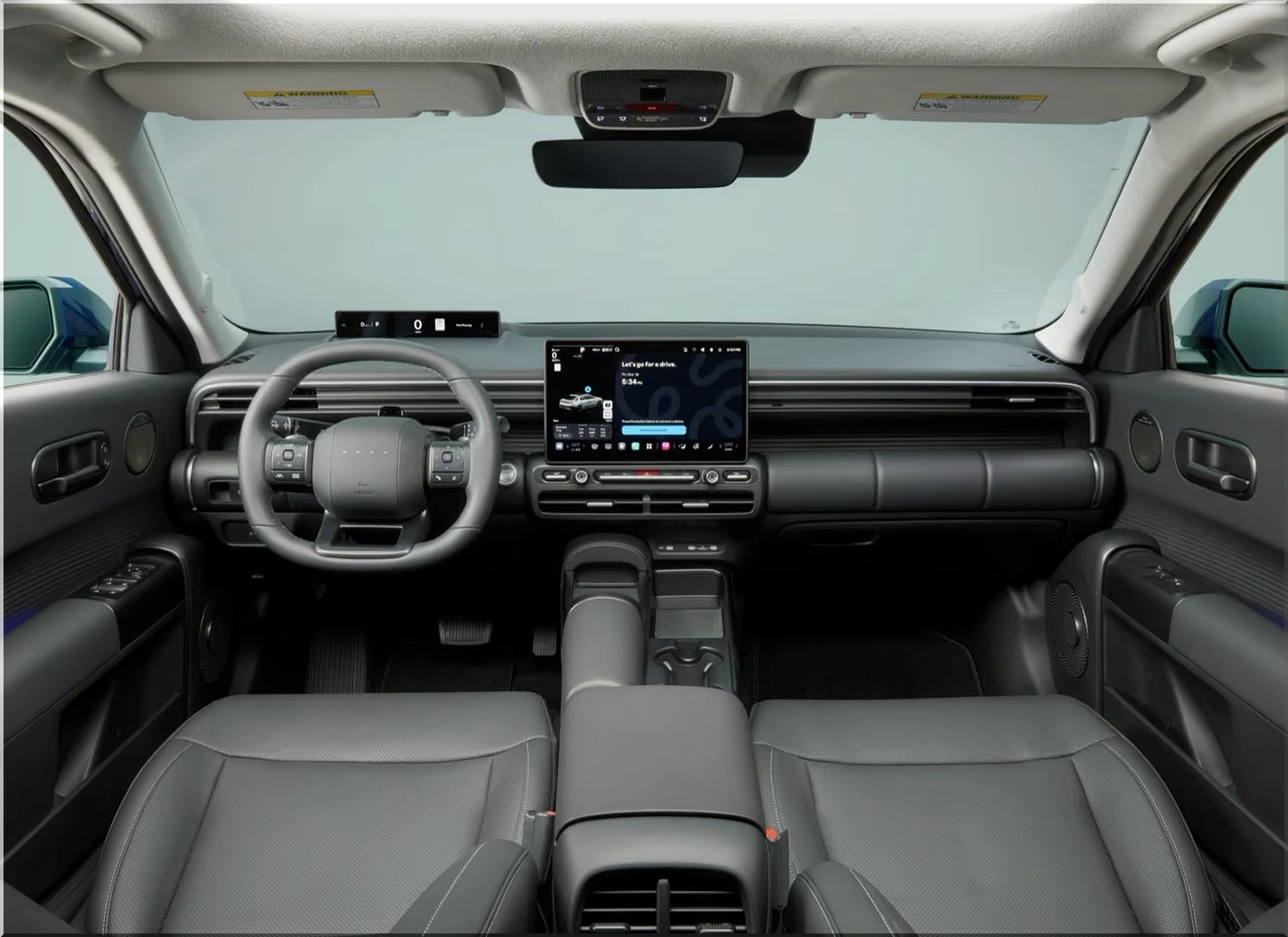
Smart Regenerative Braking 3.0 adds paddle-adjustable deceleration. Its strongest setting can bring the sedan to a complete stop, giving drivers a one-pedal-style option. During regeneration, the drive motor converts vehicle motion into electrical energy that the battery can store, reducing energy loss through friction braking.
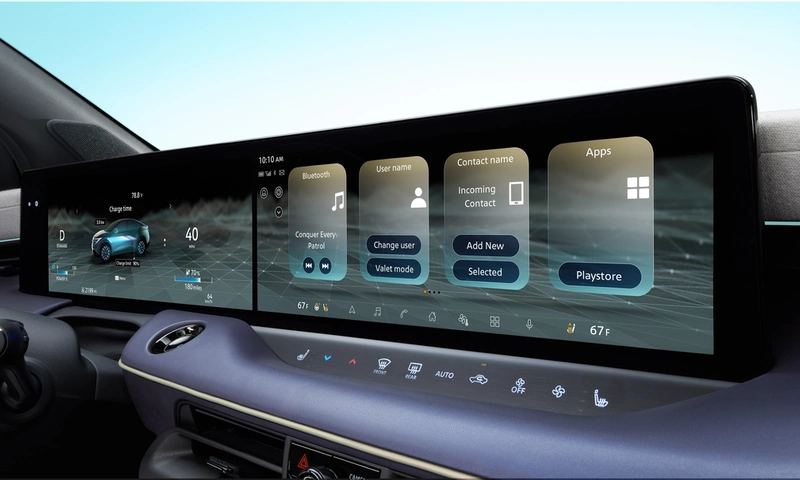
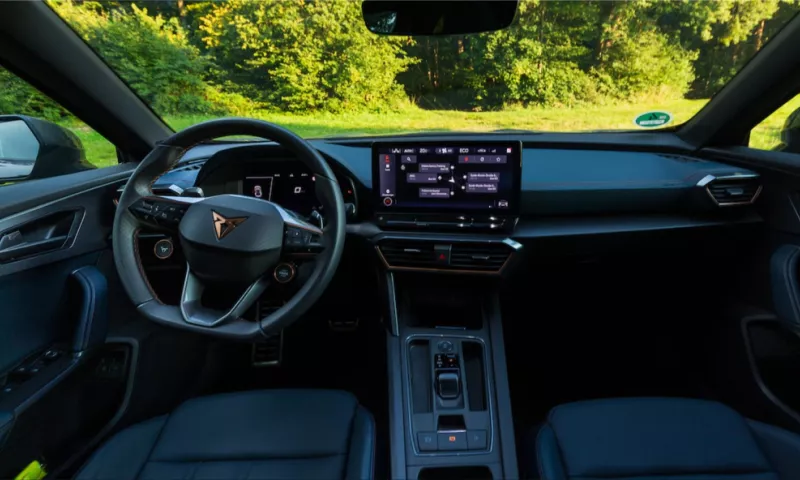
Inside, Pleos Connect runs on Android Automotive OS through a standard 12.9-inch Full HD touchscreen. Hyundai retains physical audio and climate controls, supports wireless Apple CarPlay and Android Auto, and offers a 9.9-inch Slim Information Display. Available Gleo AI voice functions use a data connection.
In addition, the charging hardware addresses households carrying several devices:
- Two front USB-C charging ports share up to 100 watts.
- A separate front USB-C data port supplies 27 watts.
- Two rear USB-C ports each supply 27 watts.
- Limited Hybrid offers dual wireless phone chargers.
Stay Mode uses the hybrid battery to run climate control, audio, lighting, and charging functions while the car sits in Park with the engine off. Hyundai quotes approximately 20-30 minutes under suitable conditions. The feature requires a navigation destination and may pre-charge the battery before arrival; ambient temperature, charge level, and electrical demand affect duration. That pre-charging can also affect fuel economy.
Elantra Hybrid vs. Civic Hybrid, Corolla Hybrid, and Prius
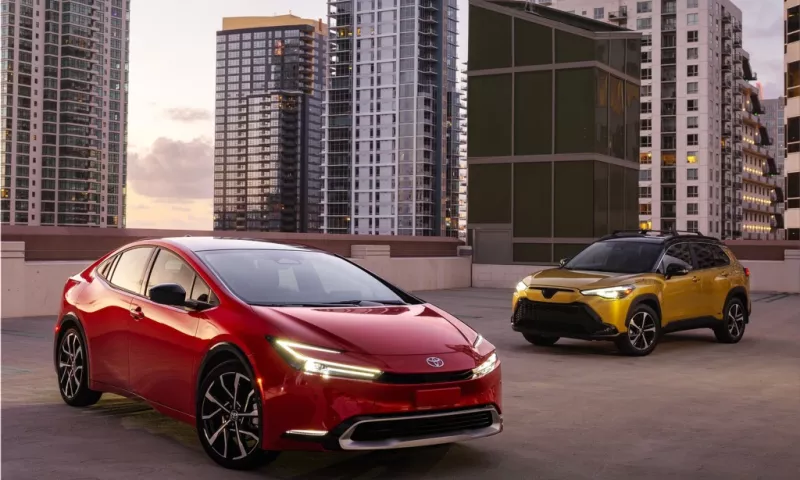
The 2027 Honda Civic Hybrid, Toyota Corolla Hybrid, and Toyota Prius provide useful U.S. reference points. Their 2028 specifications may change. The table separates Hyundai's target from published rival ratings and estimates; all listed mpg figures describe front-wheel-drive configurations.
| Model and configuration | Combined power | Combined mpg and status | Drivetrain choices | Annual fuel cost at 15,000 miles, $3.50/gallon |
|---|---|---|---|---|
| 2028 Elantra Hybrid | 155 hp | Up to 53, Hyundai target | FWD | $991 |
| 2027 Civic Sport Hybrid sedan | 200 hp | 49, EPA estimate | FWD | $1,071 |
| 2027 Corolla Hybrid LE FWD | 138 hp | 50, Toyota estimate | FWD; AWD available | $1,050 |
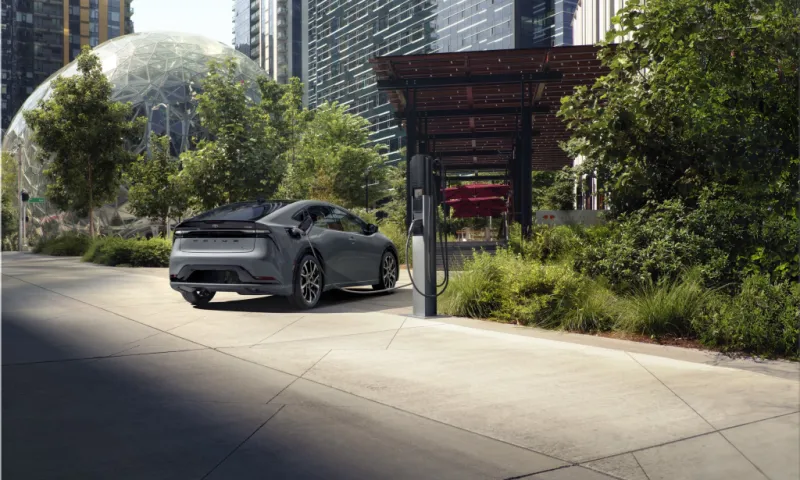
| 2027 Prius LE FWD | 194 hp | 55, EPA estimate | FWD; AWD available | $955 |
Hyundai brings 17 more horsepower than the Corolla Hybrid and a potential four-mpg advantage over the Civic. Honda counters with 45 more horsepower, while the Prius combines 39 more horsepower with a higher combined-mpg rating. Toyota also offers AWD on both nameplates, giving snowbelt shoppers another decision point.
The estimated annual fuel-cost spread between Hyundai and these rivals ranges from about $36 to $81. Purchase price, insurance, seating comfort, and highway behavior can outweigh such small fuel differences.
Should You Wait for the 2028 Elantra Hybrid?
Wait if your priorities include more rear-seat room, stronger electric assistance, and battery-powered comfort during parked breaks. Choose your trim around the equipment you will use:
- SE Blue: 17-inch wheels, dual-zone climate control, rear air vents, adaptive cruise control with Stop & Go, and Stay Mode.
- SEL Sport Hybrid: 18-inch wheels, heated front seats, the 9.9-inch information display, and wireless phone charging.
- Limited Hybrid: Ventilated front seats, seat memory, dual wireless chargers, and a 12-speaker Bang & Olufsen system.
The outgoing 2026 Elantra Hybrid starts at $25,650 before freight, taxes, title, and license fees. Hyundai has not announced a 2028 price. If fuel savings drive your purchase, compare the final EPA label and dealer quote against an outgoing Blue before paying extra for the redesign.
- Add new comment
- 62 views